


The Skoda Enyaq came to market in 2021 sharing the same platform as the Volkswagen ID.4 & Audi Q4 e-tron. We’ve driven one & liked it. Skoda haven’t rested on their laurels though, introducing a coupe Enyaq as well as the smaller Elroq to its electric range. We spent a highly enjoyable week in the latest Enyaq Coupe & here’s what you need to know.
 Exterior
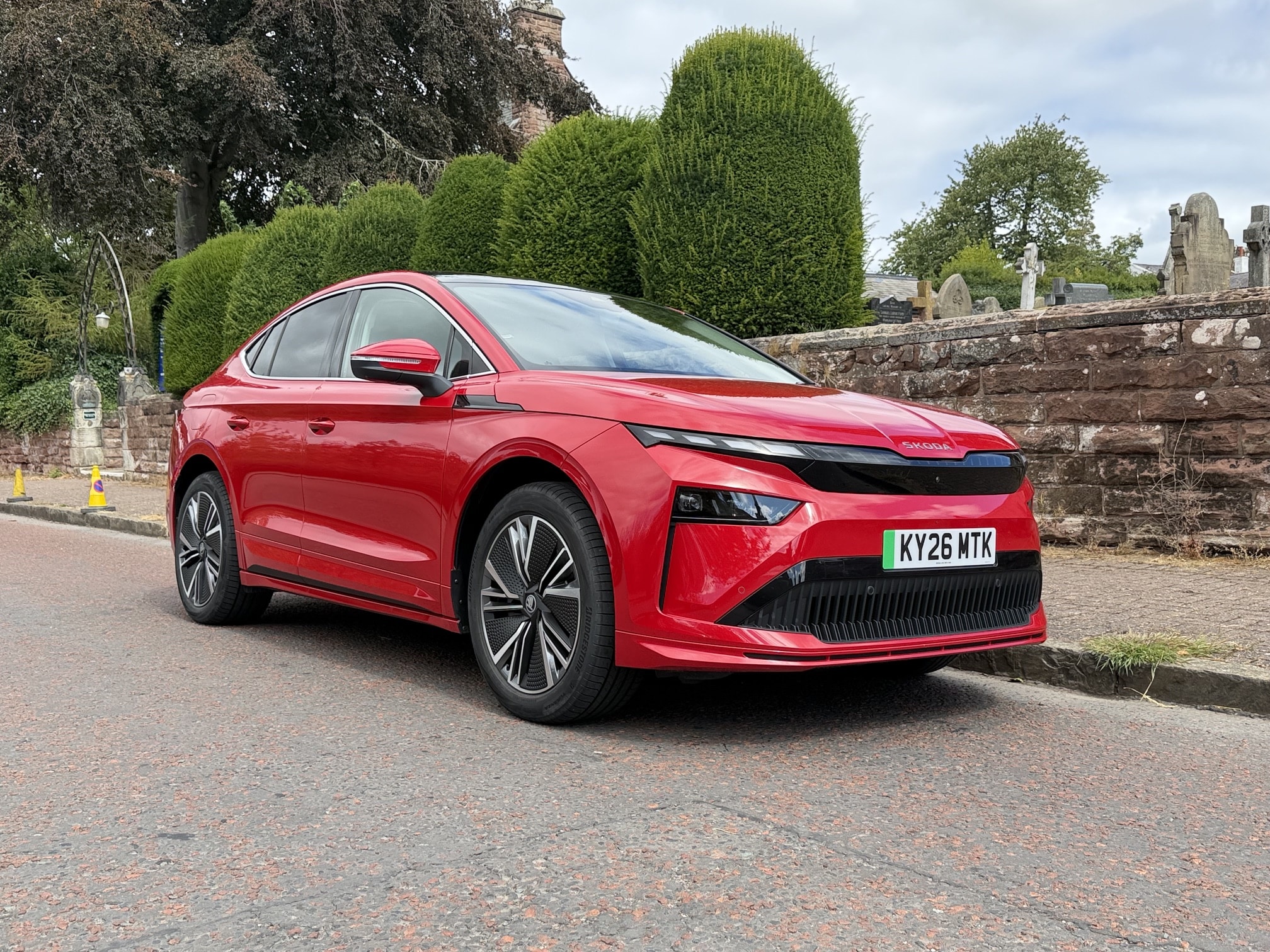
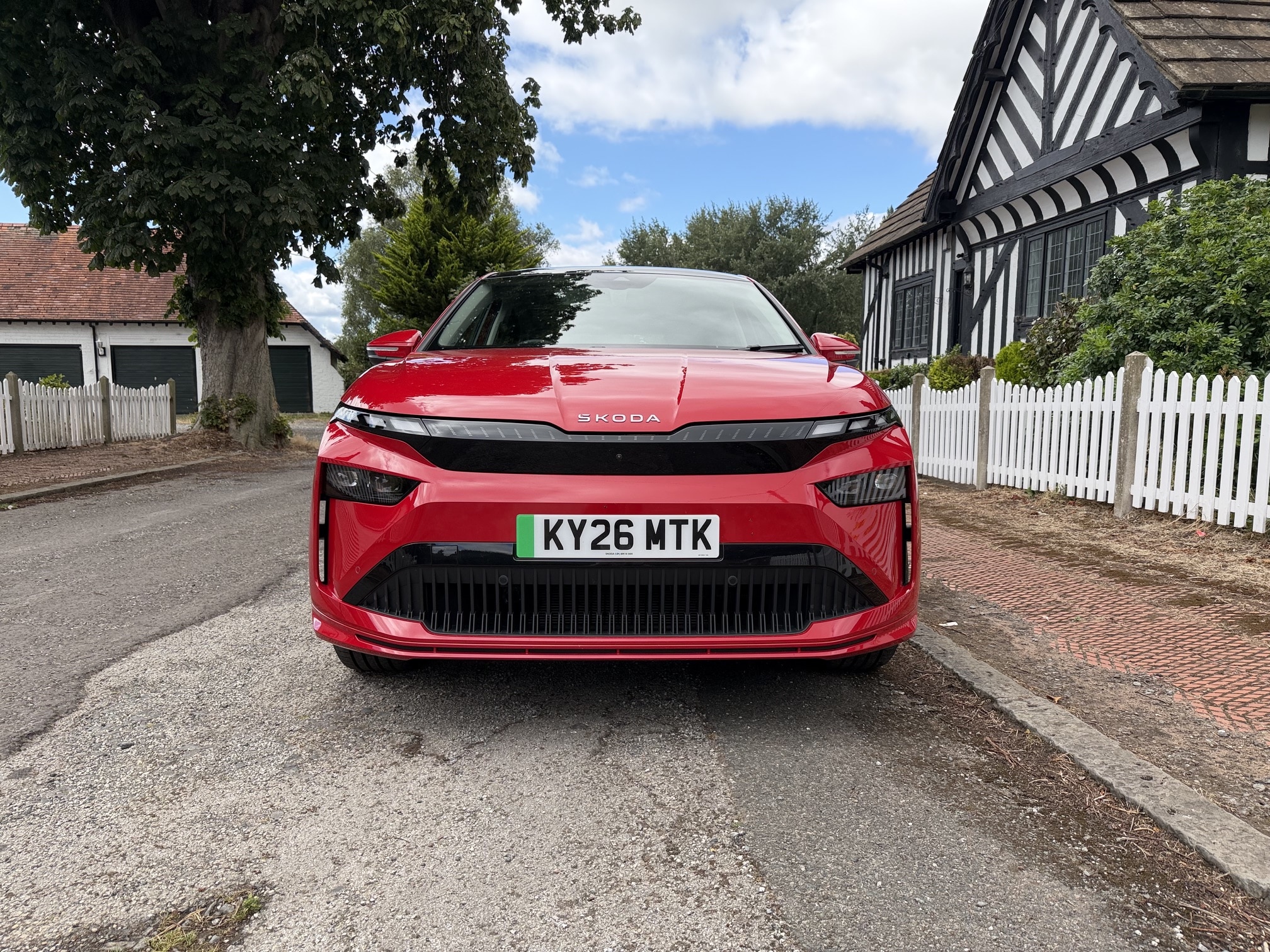
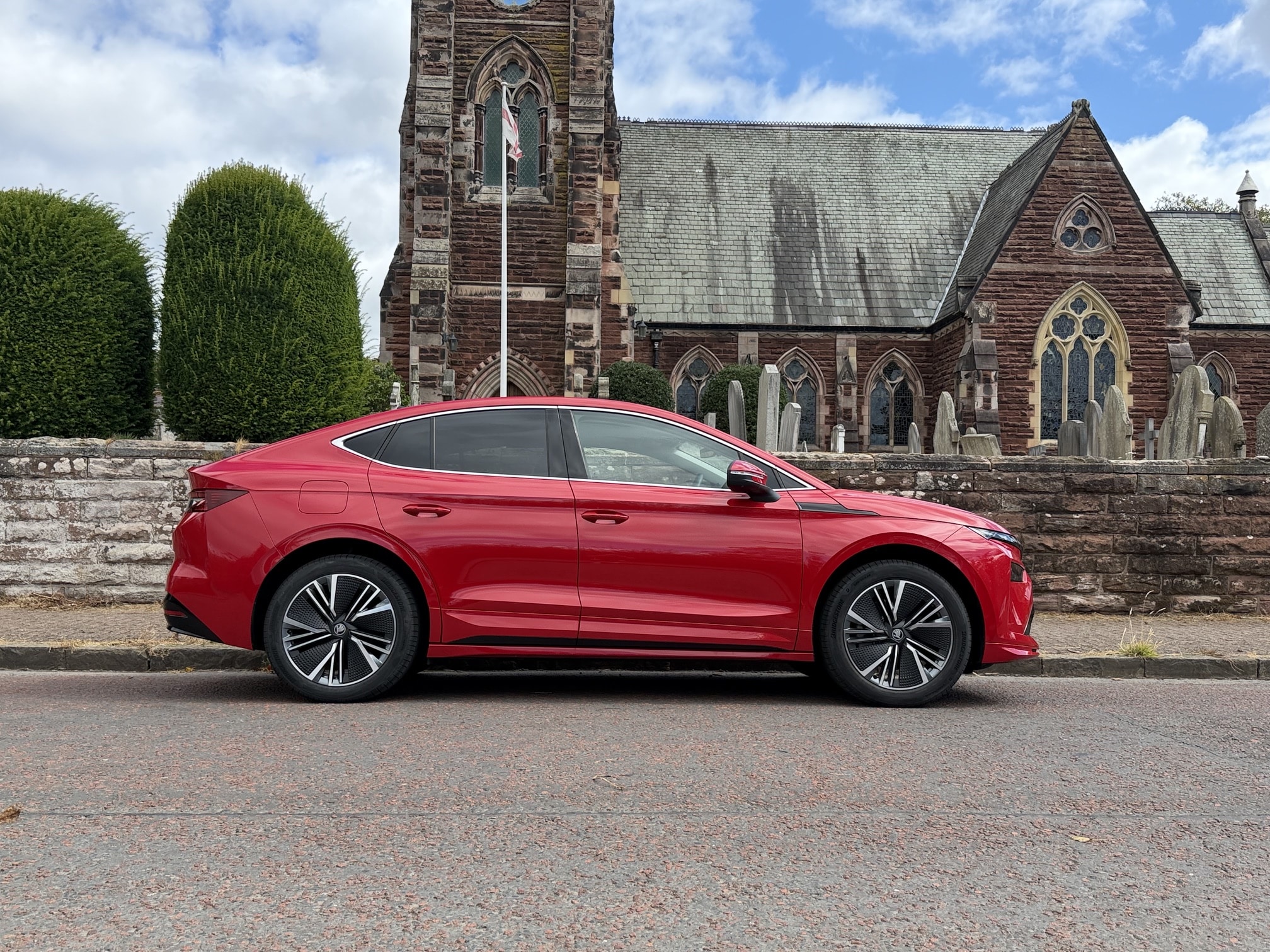
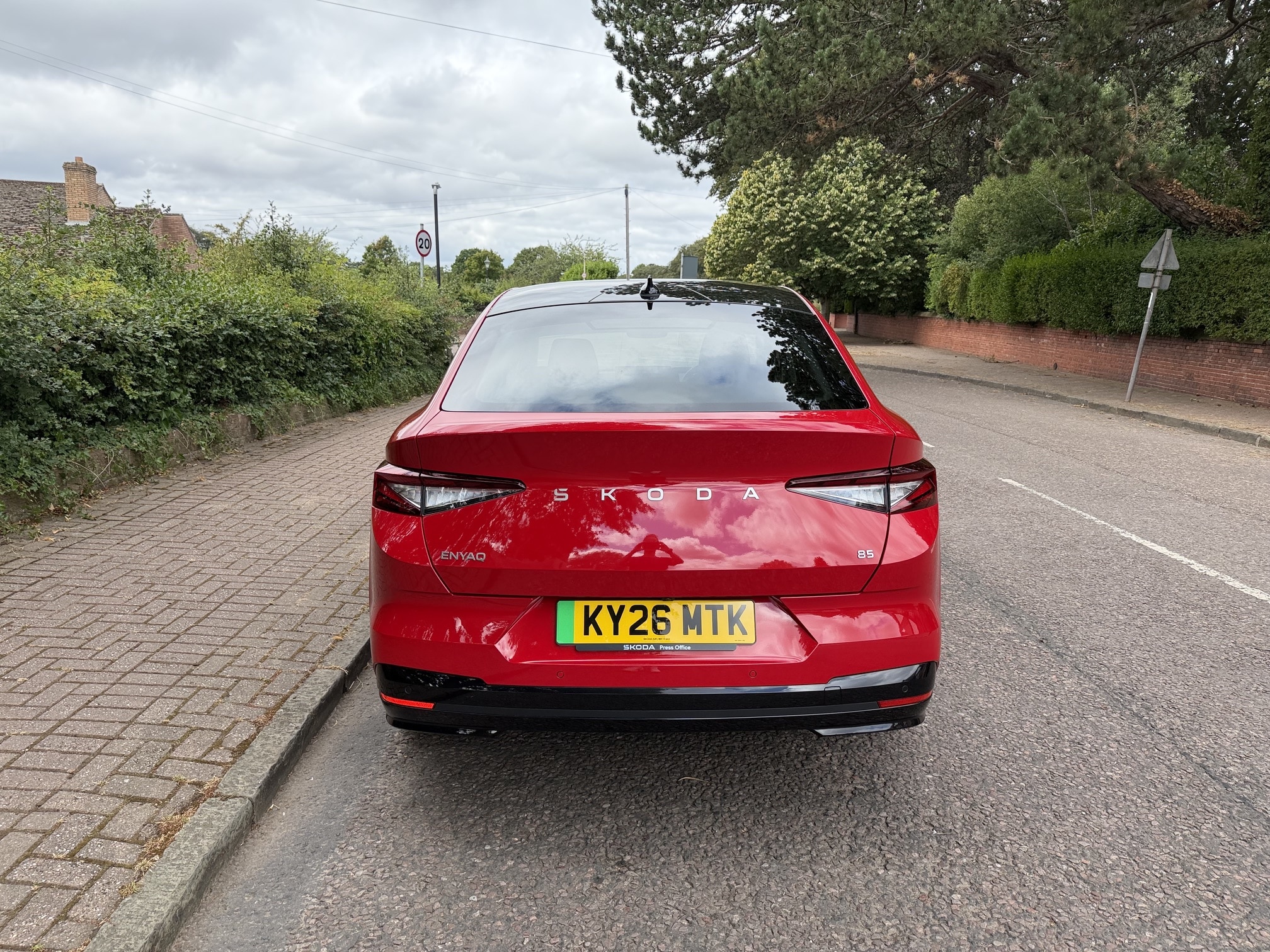
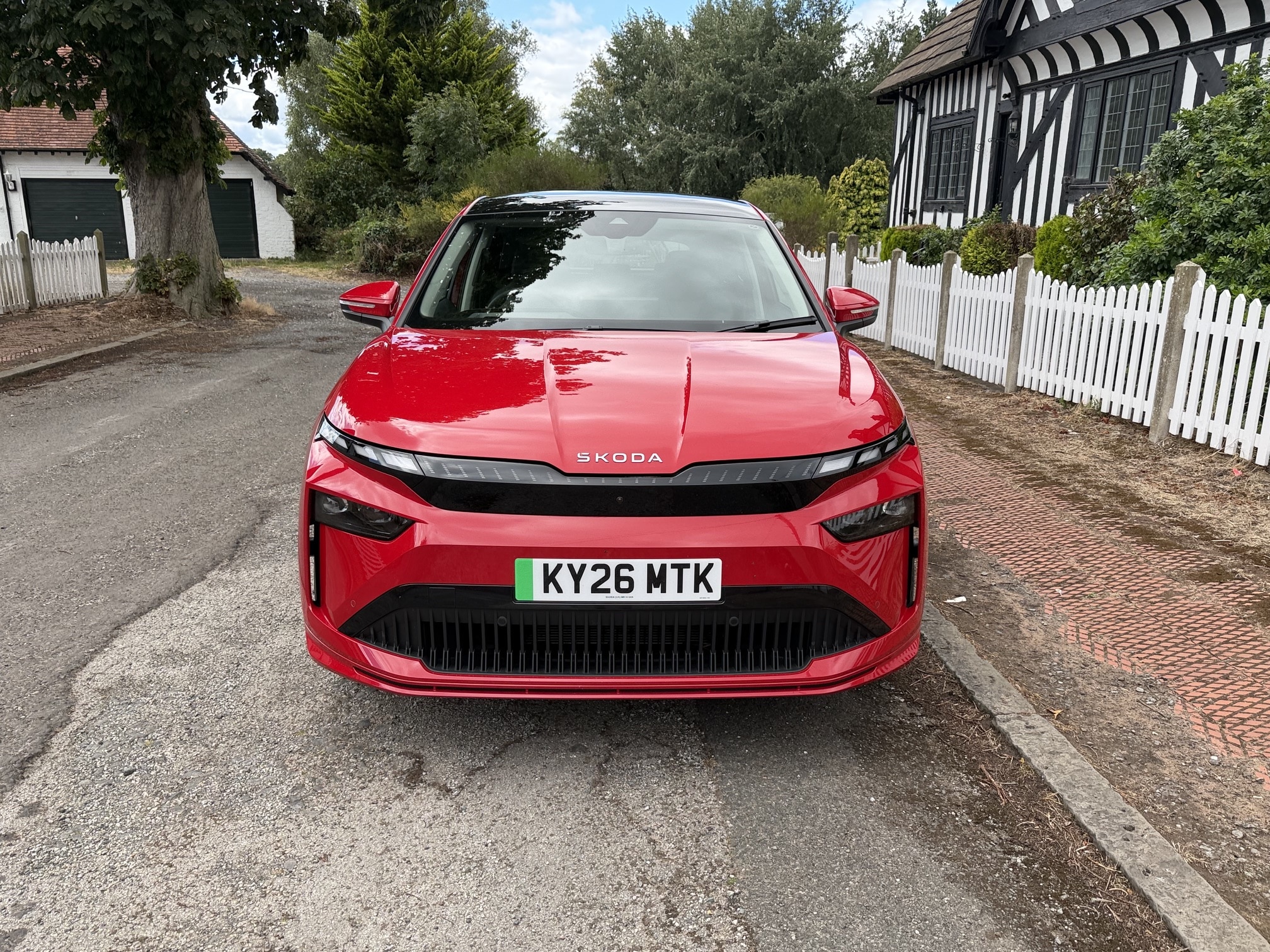
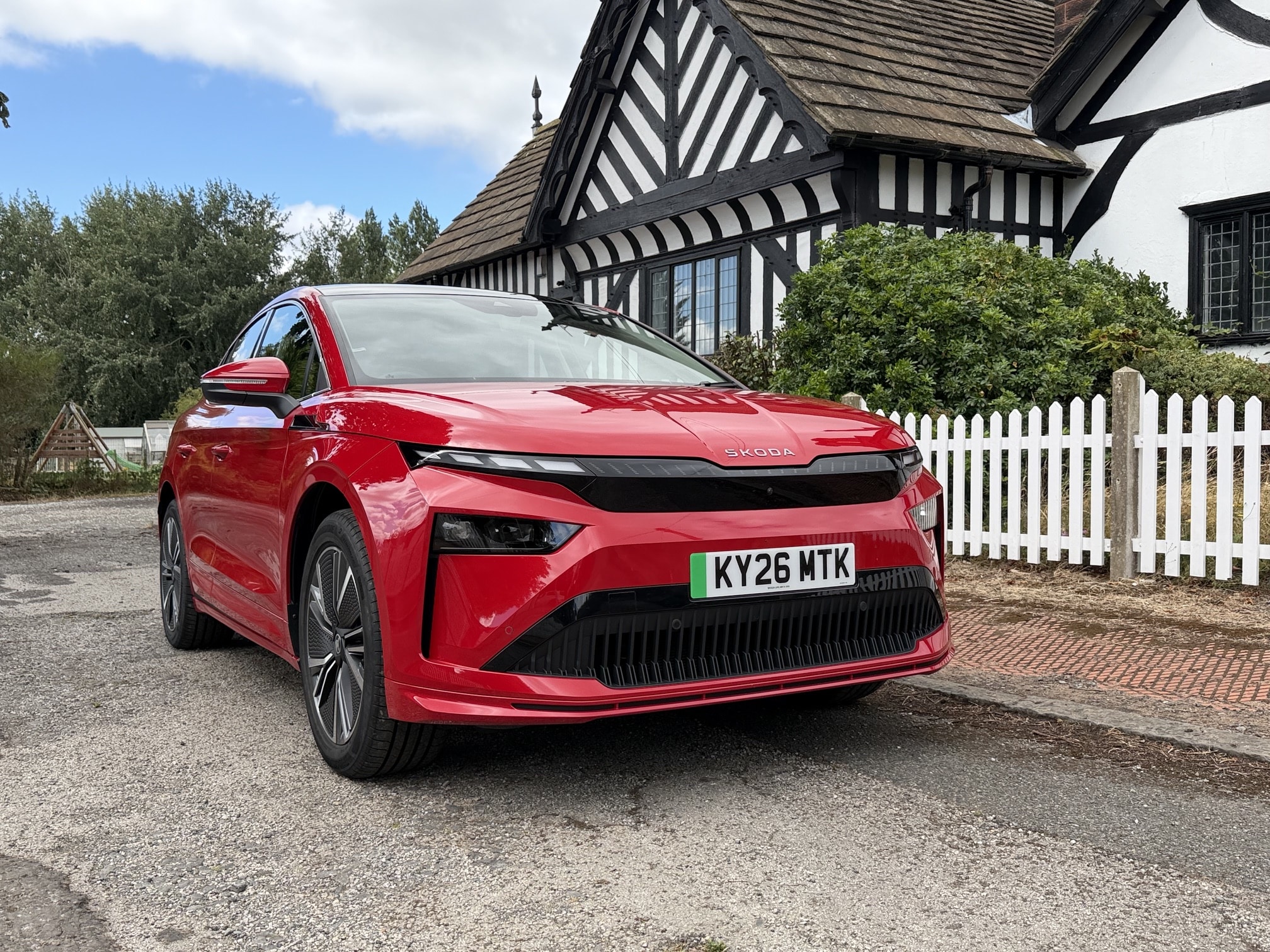
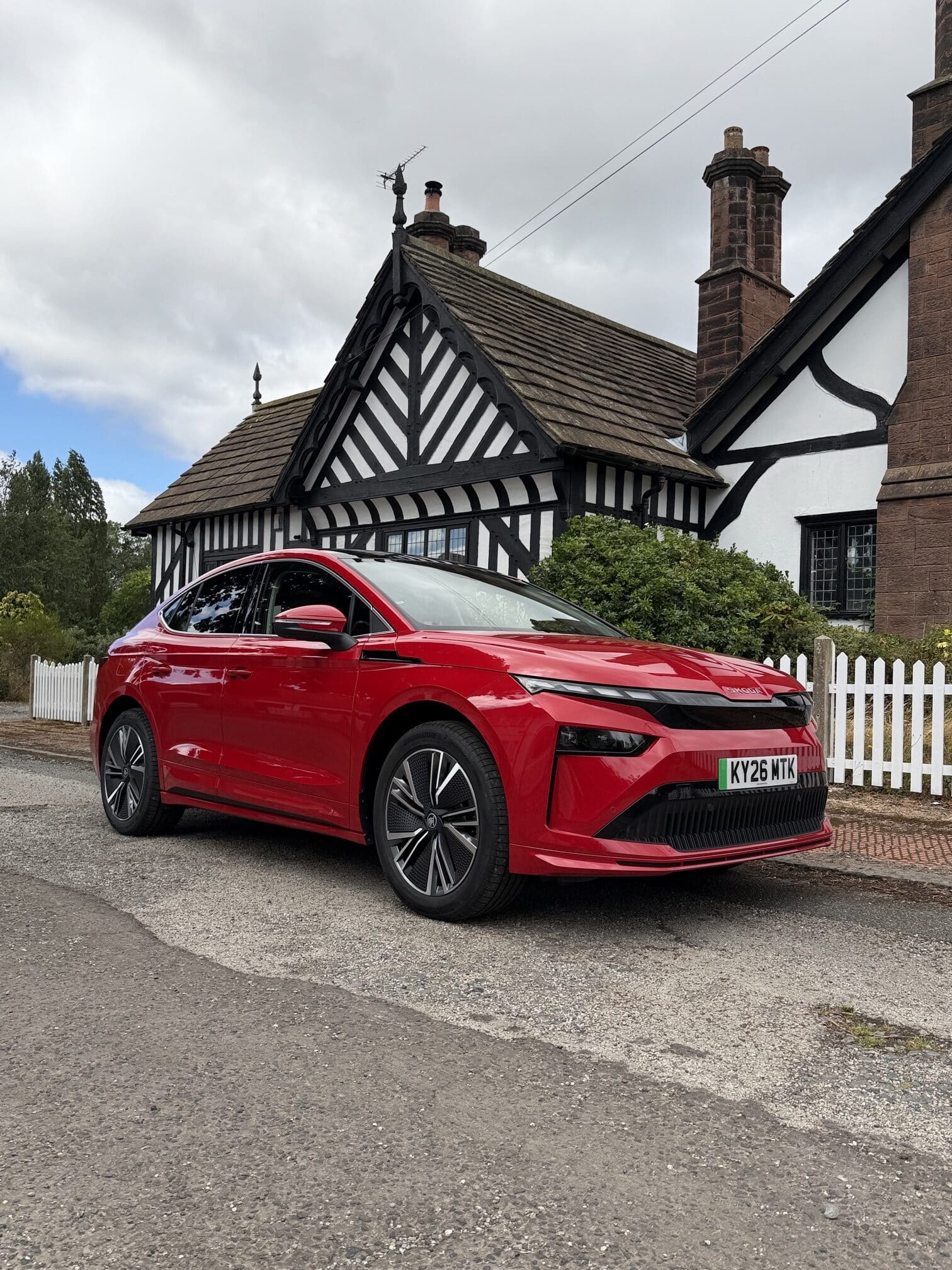
It’s been updated & features Skoda’s Tech-Deck face, so gets a new-look, flush-fit front ‘grille’, a deeper, more chiselled front bumper, thinner LED headlamps & new taillights. From the side it looks more like a normal ICE petrol Octavia saloon. The rear end has a slight boot lip, two narrow triangular rear light clusters & a deep rear window.
Infotainment & connectivity
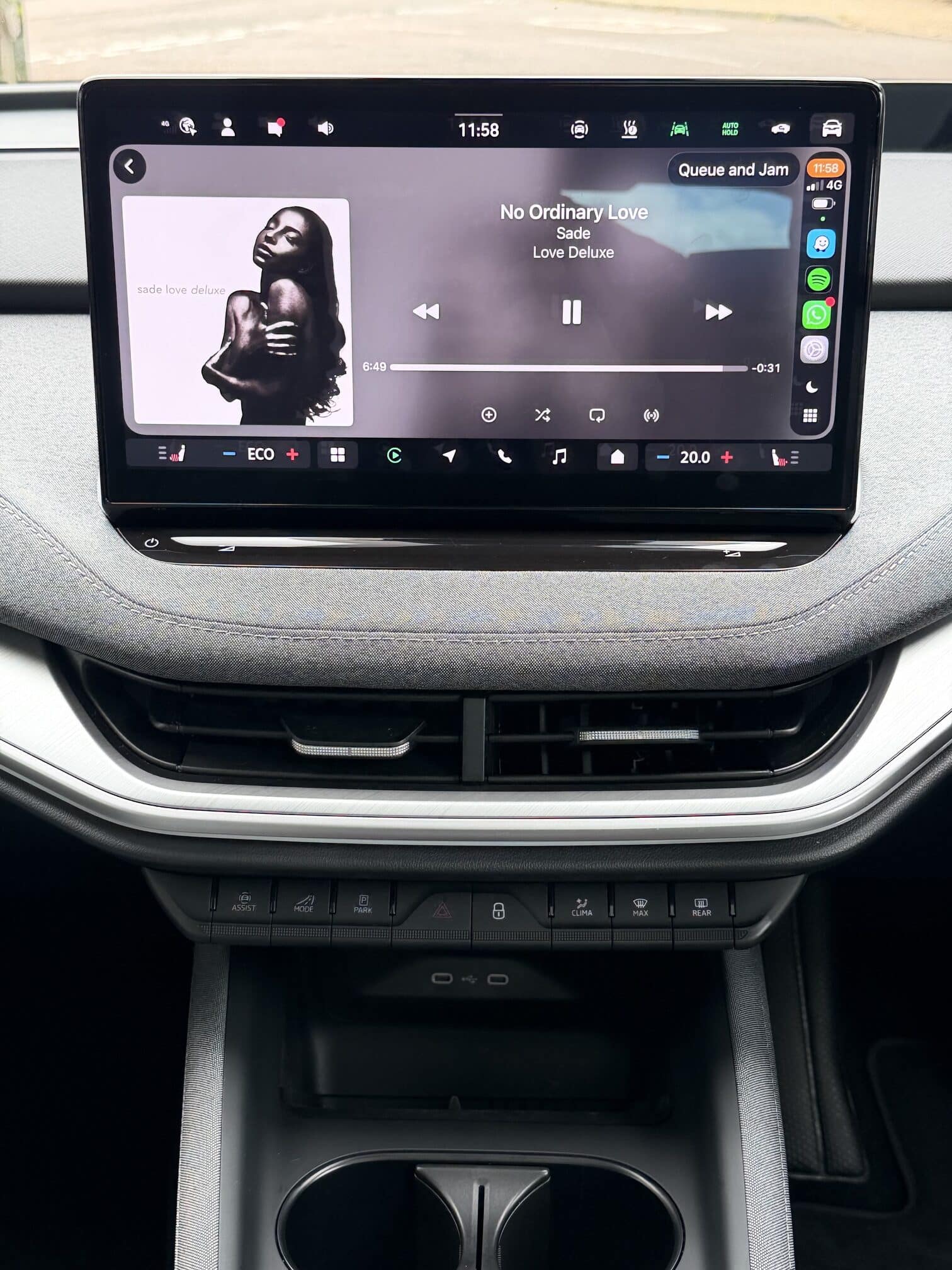
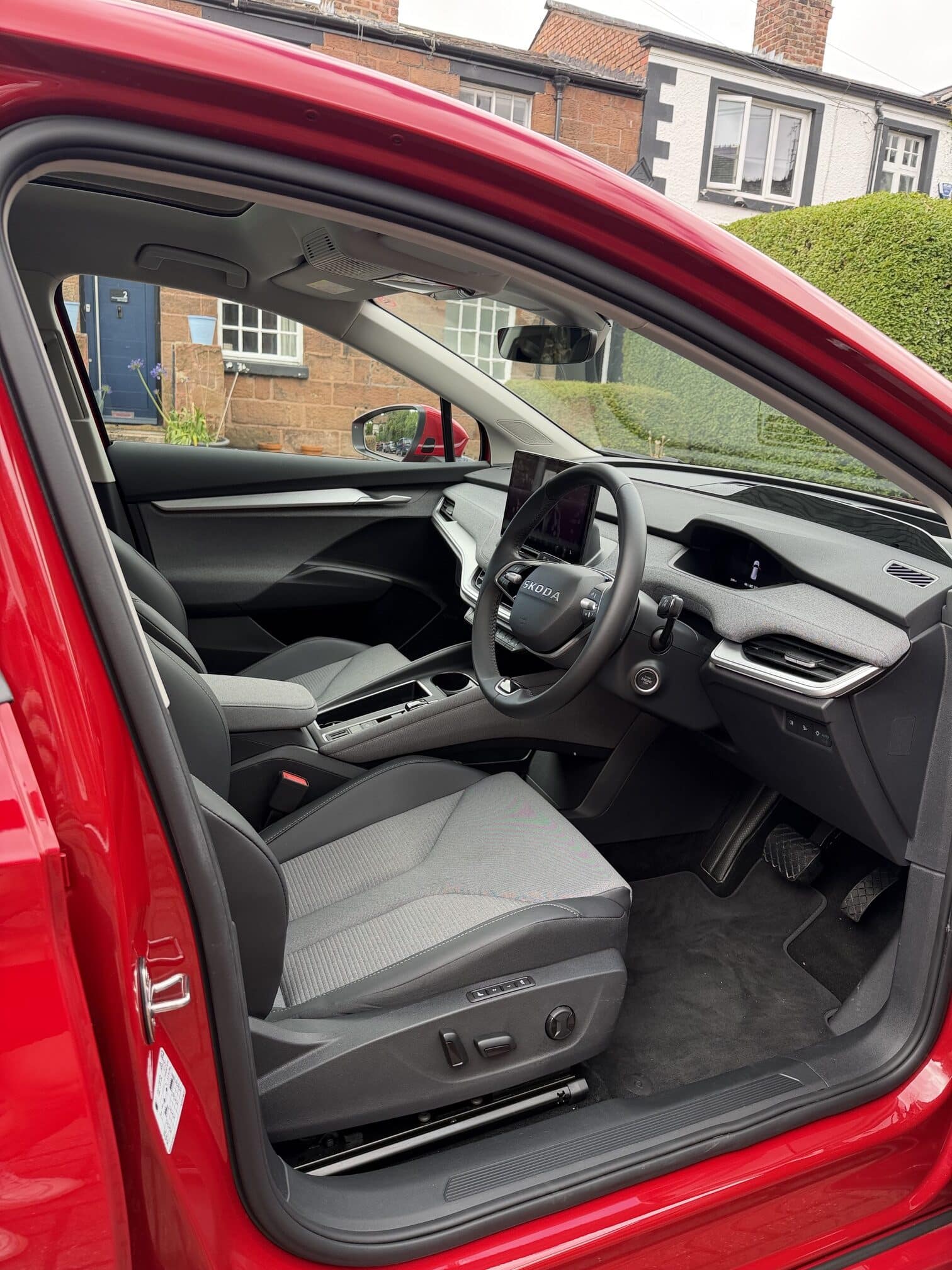
All models feature a 13″ infotainment system with SatNav, Apple CarPlay & Android Auto, dual-zone climate control, keyless go, rear parking sensors & ambient lighting. Up front are twin C USB input’s & an electronic hand brake. Cruise control can be found on the left steering wheel column.
 The infotainment system itself is very intuitive & it doesn’t take to long to grasp its finer points. The screen is easy to reach & the menus are straightforward. The on screen graphics are clear & sharp & the set-up is very responsive.
As long as you have the key on you, the Enyaq will unlock itself & when you push the brake pedal the engine will start. Select Drive & away you go. When you come to stop, you just press Park, get out & the car will switch itself off & lock behind you. Connecting to Apple CarPlay was seamless.
 Interior & specs
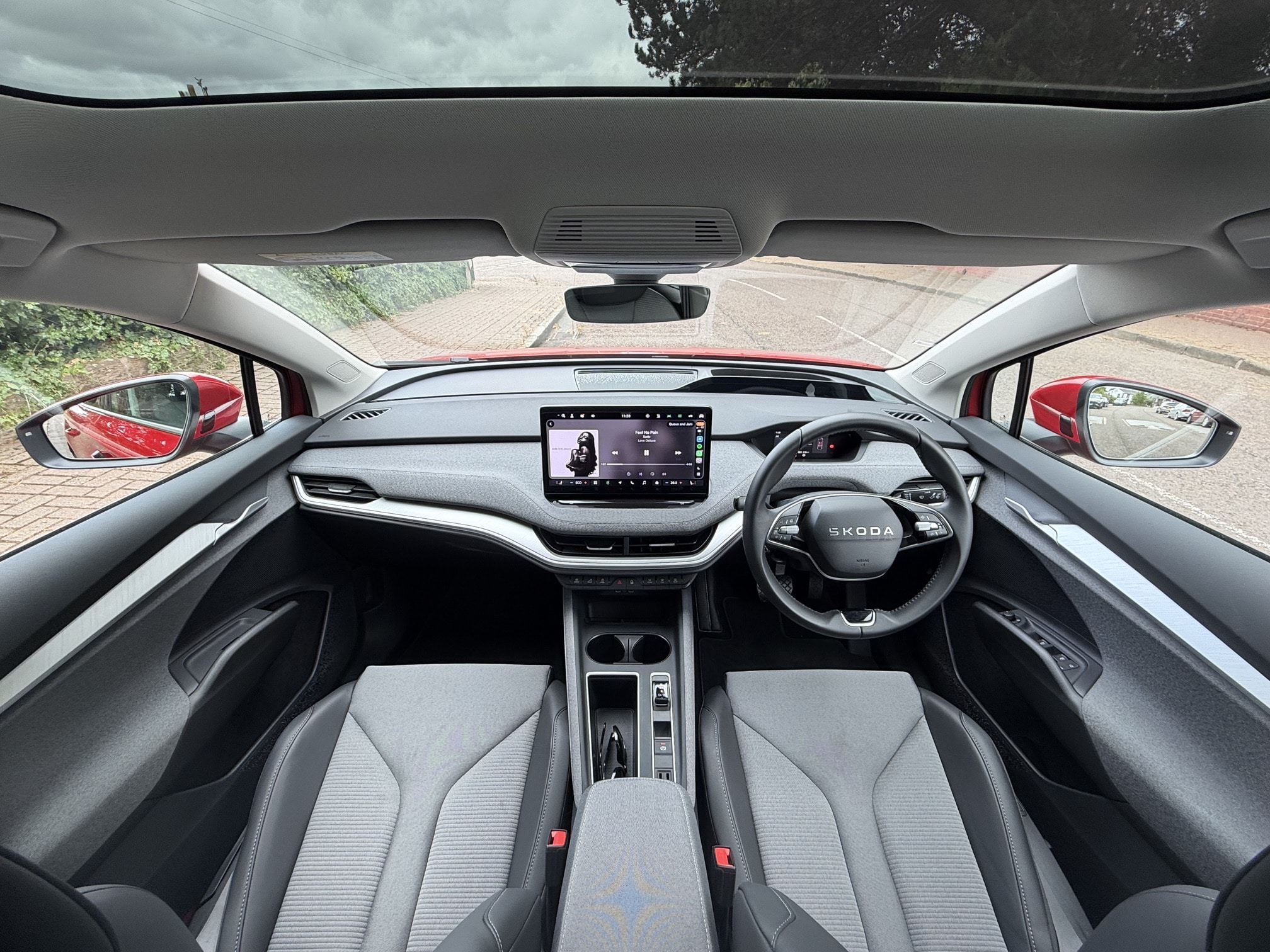
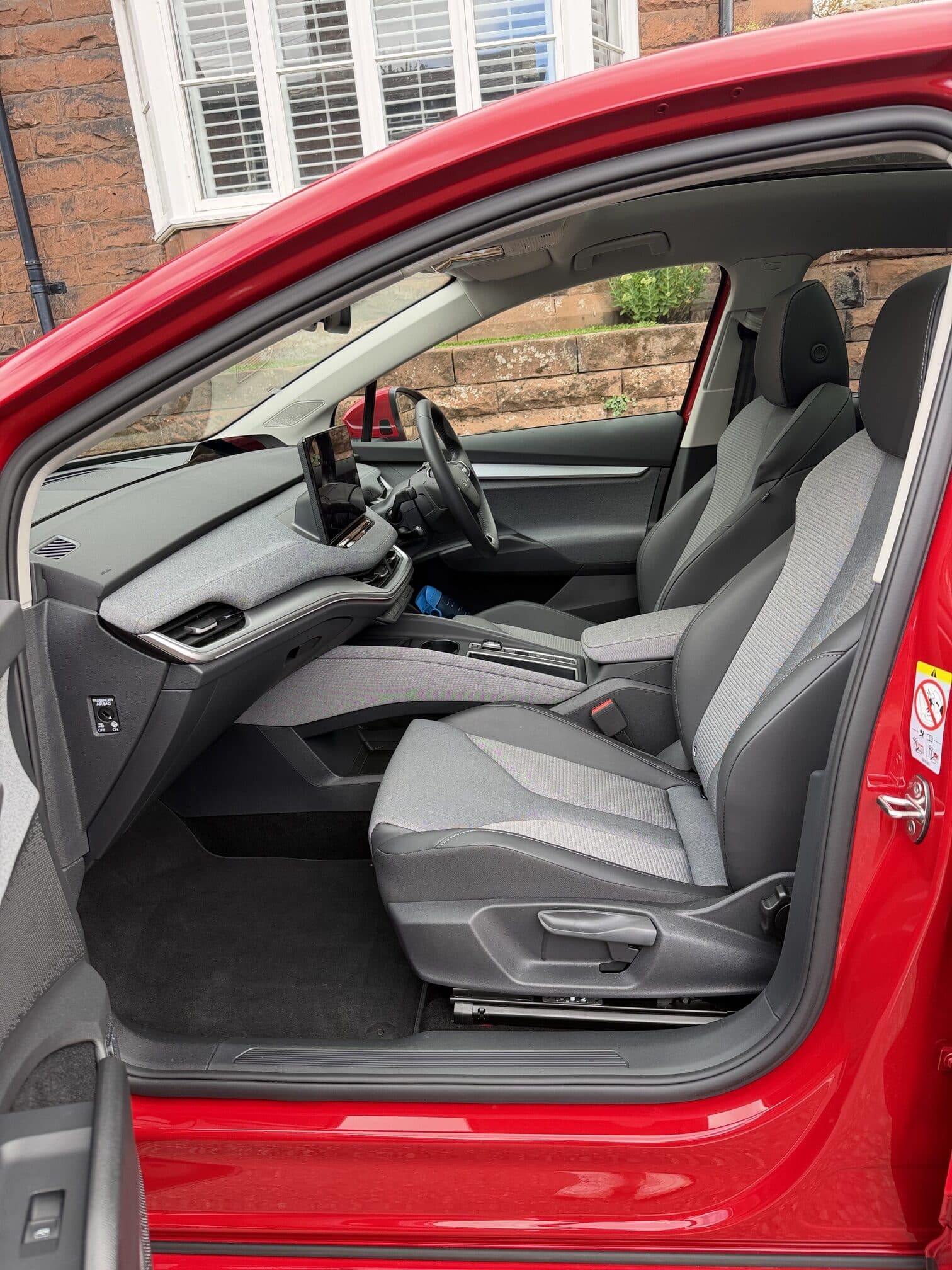
The materials used throughout the car are really high quality & we especially liked the dashboard trim. The colours are a little bland though, grey with grey & more grey.
 Our 85 Edition featured 19″ alloys, a 2-spoke leather steering wheel, 8 speakers, chrome window surrounds, blind-spot detection, Loft interior design, LED Matrix headlights, LED rear lights, a d river seat massage function, a panoramic glass sunroof, keyless entry & start, predictive cruise control, a rear view camera & a Wi-Fi hotspot for up to 8 devices.
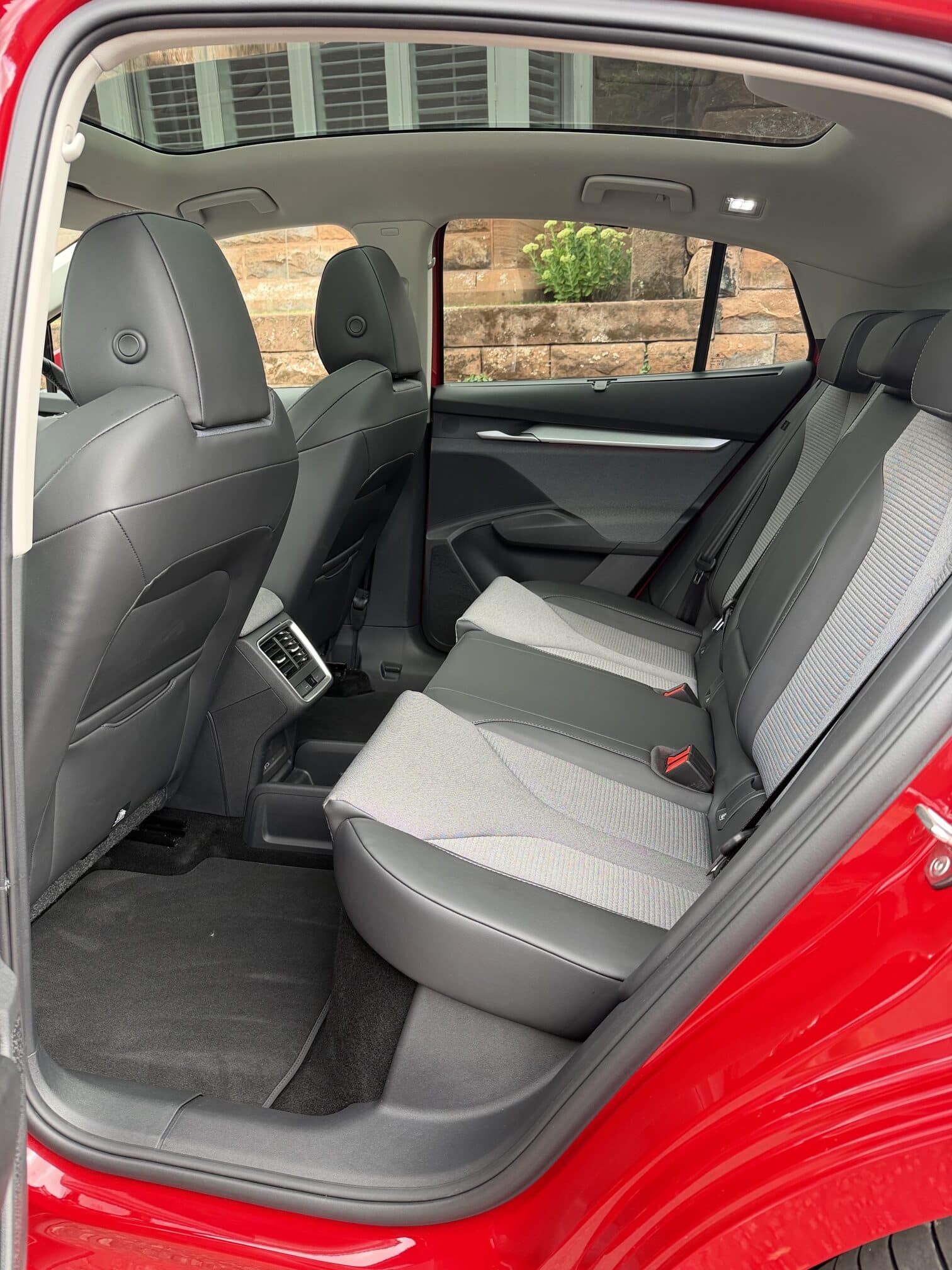
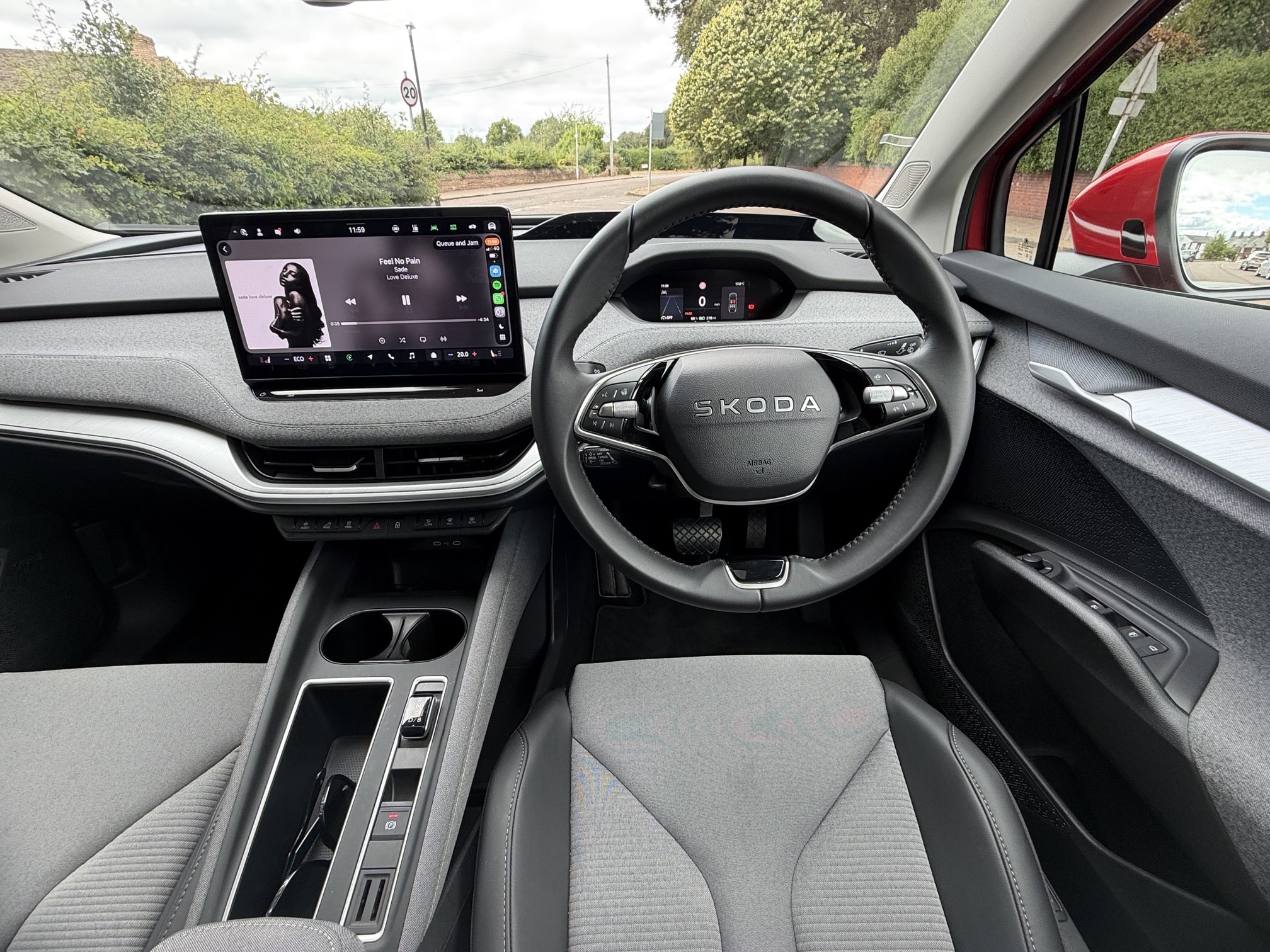 The dash itself is uncluttered with most functions operated by the centrally mounted 13″ touchscreen. There are some function buttons underneath & multi-media & ADAS can be operated via the steering wheel controls. The seats feature a perforated surface, which continues in the rear. Quality at this price point is excellent.
Cabin practicality
 Skoda also offer a selection of extra ‘packages’. These include Advanced, adding the Tech-Deck, a Head-up display & Canton Sound system. The Transport pack which includes a charging cable bag, a variable boot floor & rear back seat release switches. A Maxx package then adds safety features such as park assist, dynamic chassis control & progressive dynamic steering, plus electric front seats with memory & massage function. And the Winter pack is self explanatory with heated seats, steering wheel & windscreen.
 Battery & power performance
A mid-life refresh in 2025 means that battery ranges have slightly increased across the range, while higher-spec Enyaq’s have received a power boost. Trim levels were also revised but Skoda kept the Enyaq range pretty simple to understand. You have the choice of 85, 85x & vRS variants.
All versions are fitted with one 82kWh unit. So the official claimed range on 85 Edition is up to 365 miles, with 85x slightly lower at 334 miles.
Charging & battery range
All Enyaq’s come with maximum AC charging at 11kW, whilst the 85 & 85x will push out DC charging at 175kW. When we did plug our 85 in it was mainly at home overnight to take advantage of cheap electricity tariffs, adding 38kWh for just £3.30.
Boot Practicality
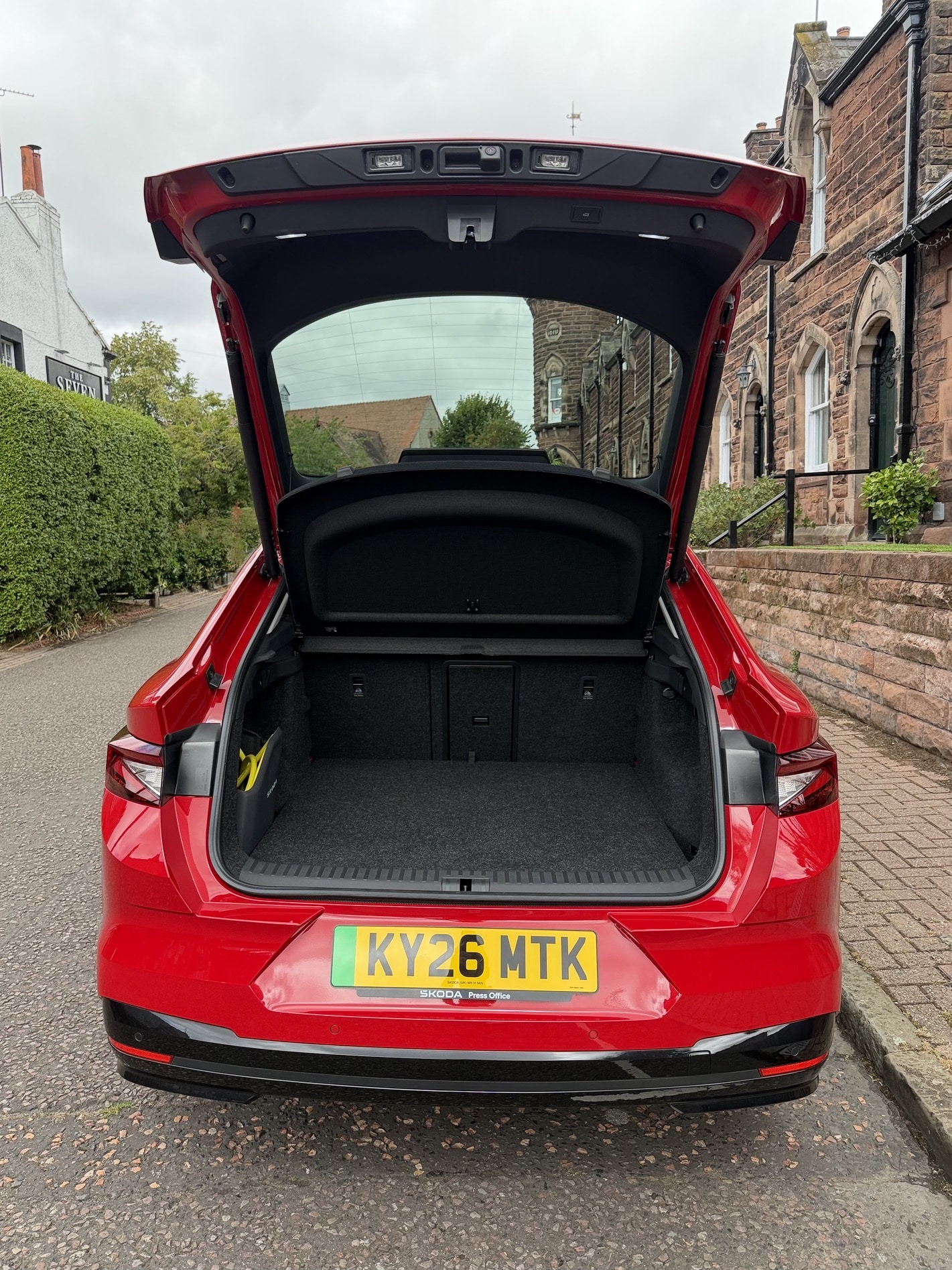
Even with its coupe profile, the Enyaq still offers generous 570-litre boot, which is only 15 litres smaller than the 585 litres in the Enyaq SUV. There’s a fold down rear armrest that opens fully for skis. The boot also features a flat floor with space underneath to store your charging cables.
 Driving
The Enyaq Coupe offers plenty of road holding & comes with accurate steering. The battery weight isn’t that noticeable in the big scheme of things, although the ride is on the firm side. There’s little or no road or wind noise entering the cabin. Lot’s of glass means manoeuvring is easy & forward visibility is excellent.
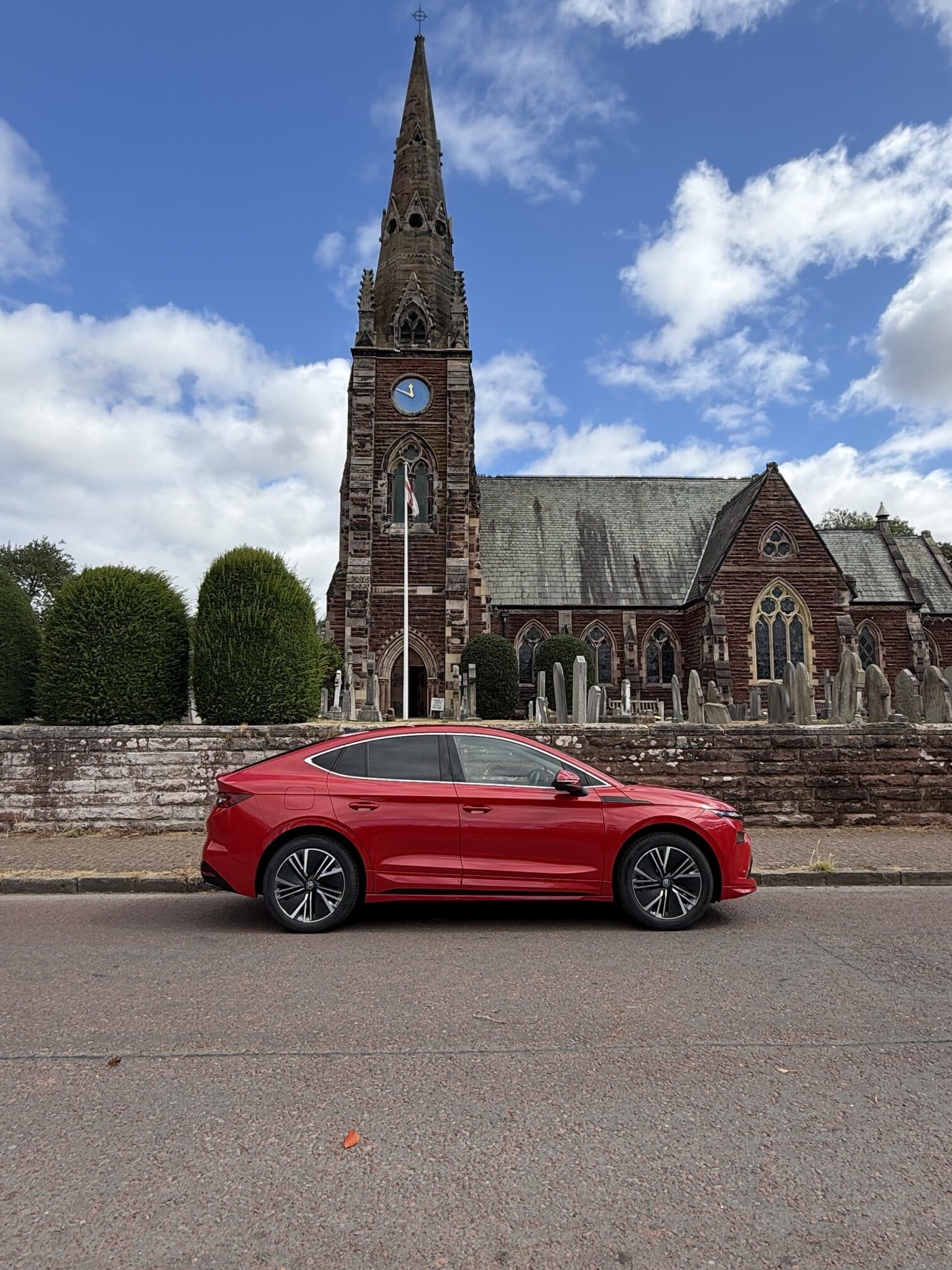 The slim sloping rear window means your rear view is a tad restricted. In town it’s relaxing & on the motorway, a comfortable cruiser. It isn’t exciting though & doesn’t offer up any handling that you’ll remember. It does a job & does it very well.
Connectivity & safety
All of the driver connectivities worked well, so connecting to wireless CarPlay made life easy & on the motorway the Adaptive Cruise Control is easy to work via the steering wheel switches. One beef we had is with the driver safety functions. If you choose autonomous driving the Skoda has a tendency to go into driver alert mode when you least expect it. Travelling at 60mph about ten car lengths from the car in front the Enyaq suddenly slams on the anchors, tightens your seat belt & buzzes to warn you that you are in danger. We weren’t. After the third time we turned autonomous off so Skoda/VW Group need to take a look at this as it’s not enjoyable.
Pros
3% BIK. Definitely stands out in crowd. Coupe looks but SUV practical. Premium both inside & out. Better than an ID. 5 & most everything else it competes with.
Cons
The Enyaq SUV drives just as well but is cheaper. The autonomous driving needs a software tweak. Charging speeds are only average in the sector. No entry level 60 model means prices are relatively steep.
Conclusion
Even in Coupe format, the Enyaq is a proper family five-seater & offers loads of practical space. It’s also well equipped & the subtle updates both inside & out keep it interesting. Furthermore, the BIK benefits of 3% are almost impossible to ignore & if you really don’t want a boxy electric SUV, then the Coupe is a very good alternative.
Almost as good as it gets 4.25/5

