


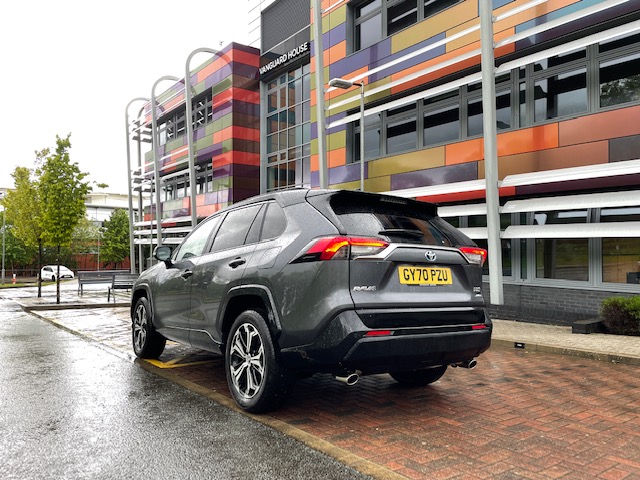
Toyota the ‘Kings of the self-charging hybrid,’ finally launched a PHEV last year, in the form of the RAV4 Plug-In. On the down side it’s expensive, with the range starting at £46,495, so this may not be the retail car for you. On the plus side, it’s class leading, with Toyota claiming a 46 mile pure-electric range. Couple this to CO2 emissions of just 22g/km, which attracts a BIK of just 7% & corporate customers should be salivating, as this clever car really makes financial sense.
Model range
The RAV4 PHEV is offered in a choice of three specs.
Plug-In Design, which retails at £46,495 & features, 18″ Grey Machined-face 5 spoke alloys, 9″ Toyota Touch 2 multimedia system with Smartphone integration, Apple CarPlay, Android Auto, remote controlled dual-zone automatic air conditioning & a 32A Mennekes fast charger
Plug-In Dynamic from £47,395, with 19″ Black Machined-face 5 spoke alloys, a black bi-tone roof, wireless mobile phone charger & the 32A Mennekes fast charger
Or range topping, Plug-In Dynamic Premium, which costs £50,895 & adds a Toyota Skyview panoramic roof, JBL Premium Sound System, driver & front passenger air ventilated seats & also comes with a 32A Mennekes fast charger.

Engine
The Plug-In RAV4 is powered by a 2.5-litre four-cylinder petrol engine developing 182bhp & an 18.1kWh battery, which powers two electric motors. The front motor offers 134kW (176bhp) & the rear 40kW (53bhp). The engine & electric motors don’t produce maximum output at the same time, so peak power is 302bhp, plenty enough for a 0-62mph time of just 6 seconds. Top speed is 112mph or in pure electric mode, it’s 84 mph.
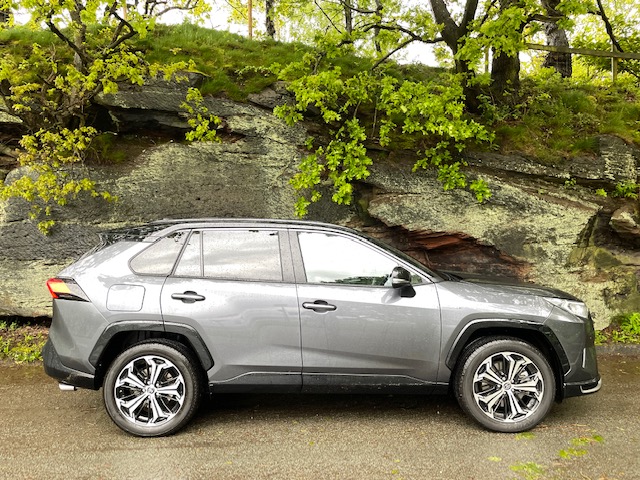
Most of the time, the plug-in RAV4 drives through its electric motors, only occasionally driving the front wheels. The engine is there to mainly generate charge & it will only occasionally send power directly to the front wheels. The driver can flick through three modes – EV for pure electric running, EV/HV, which shuffles between fully electric and hybrid power automatically, HV for solely hybrid running. There’s also a charging mode, which sees the engine top up the battery on the move. You can select this option from a button next to the gear lever, which is easy to do, a bonus, particularly when in many other plug-ins, you need to scroll through numerous touch screens to select this option.
Electric & combined range
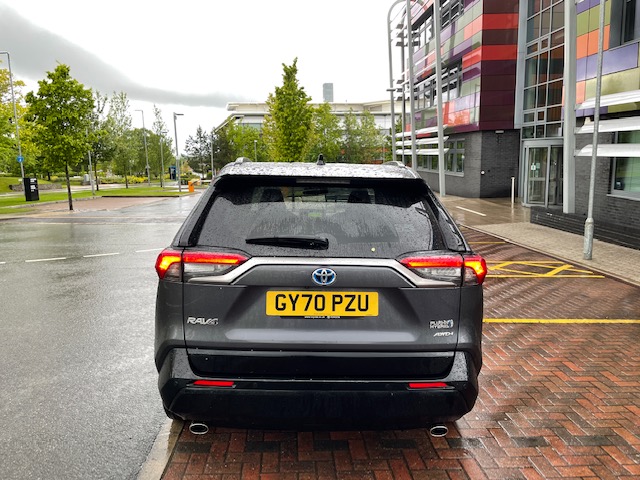
If there’s enough battery charge, the RAV4 defaults to EV mode, only switching as required. Home charging means it takes 2.5 hours to charge to full on a 7.2kWh wall box, http://www.rolecserv.com/home-charging which compared to many other plug-ins, is quick.
Toyota claims up to 46 miles of pure-electric driving is possible. We averaged 36 miles, lower, but this is still in the words of Wayne Campbell, ‘way’ better than most other compatible plug-in’s pure electric range. The trick as we found out, is to save the EV charge for urban driving, whilst going full Hybrid on the motorway & utilising EV/HV in slower moving traffic. The RAV’s digital display shows you just how well or how bad you’re doing in this regard & improving on this becomes a bit of a challenge for each journey as you try to do better then the previous one.
Toyota claims fuel economy of 282.5mpg, which is nigh on possible to achieve. In a wet & windy May driving 300 miles on combined roads, with 200 miles of that on the motorway we averaged 56mpg. Plug-in on a daily basis, drive locally or in town & this could easily reach 70mpg.
Exterior
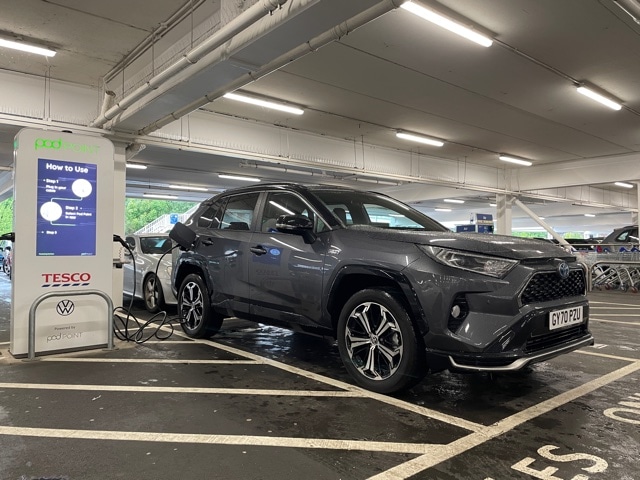
There’s not much to differentiate the PHEV RAV4 from its hybrid sibling. There’s dark plating at the bottom of the car, a dark mesh grille & Plug-In has been added above Hybrid on the badging, but that’s about it.
Interior
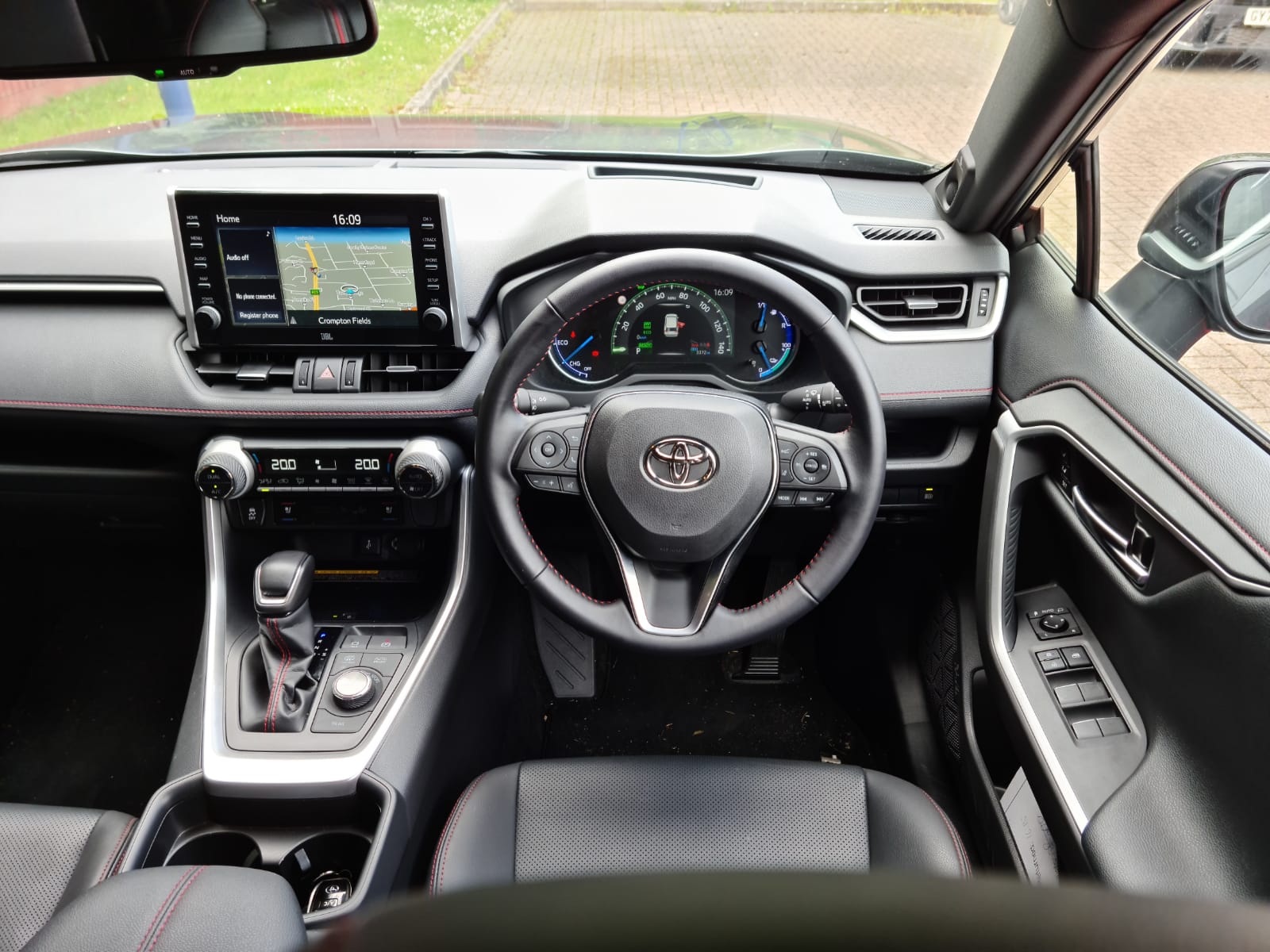
We were testing the range topping Dynamic Premium, which comes with a pair of comfortable red-stitched front leather seats & some matching dash trim. Toyota’s general build quality on it’s fixtures & fittings has certainly improved & almost all of the plastics you can touch & see in the RAV4 are of good quality. Cheaper plastics adorn the door pockets & lower down on the centre binnacle.
The latest Toyota infotainment system now offers Apple CarPlay & Android Auto which are both simple to access through a USB. And, our Dynamic Premium test car also featured a Wireless Mobile charger in front of the gear stick, where you can leave your smart phone whilst on the move.

Practicality
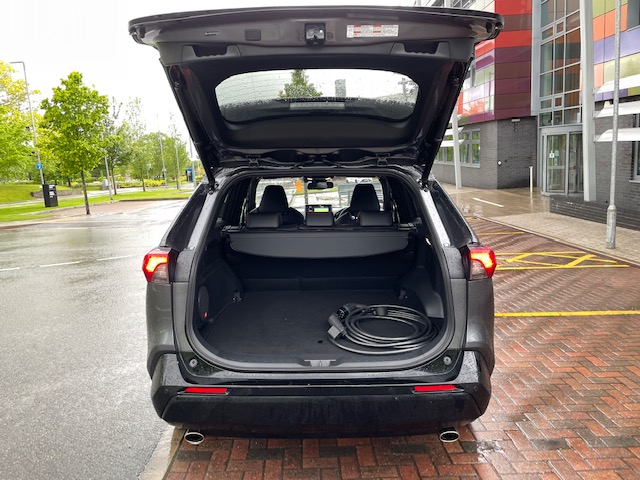
Storage options include a cubby under the front armrest, four decent-sized door bins, twin cup holders, space for keys or your phone in the dashboard front, average sized glove box & rear seat pockets as well. Thanks to the larger electric battery, you lose 60 litres of boot space over the standard hybrid RAV4, so 520 litres is on offer.
There’s plenty of room inside for five adults to get comfortable. The rear seats are split 60:40, not individually & tilt, but don’t slide. The boot doesn’t feature quick-release seat lowering, which could put some off.
Driving
The CVT gearbox can be a bit whiney on the Toyota-Lexus self charging range, but in the plug-in, the transition between petrol-hybrid & pure EV is smooth enough not to notice, which makes driving it very relaxing.
Around town & in slower traffic the RAV4 really shines. Start the engine & well, there’s nothing & as you pull away the car moves forward on battery power. As your speed increases & you switch to Hybrid mode, the petrol engine kicks in. In traffic it’s sublime & ever so quiet. On the motorway there’s enough power on offer to comfortable join the carriageway at motorway speeds & plenty of power to overtake slow moving vehicles.
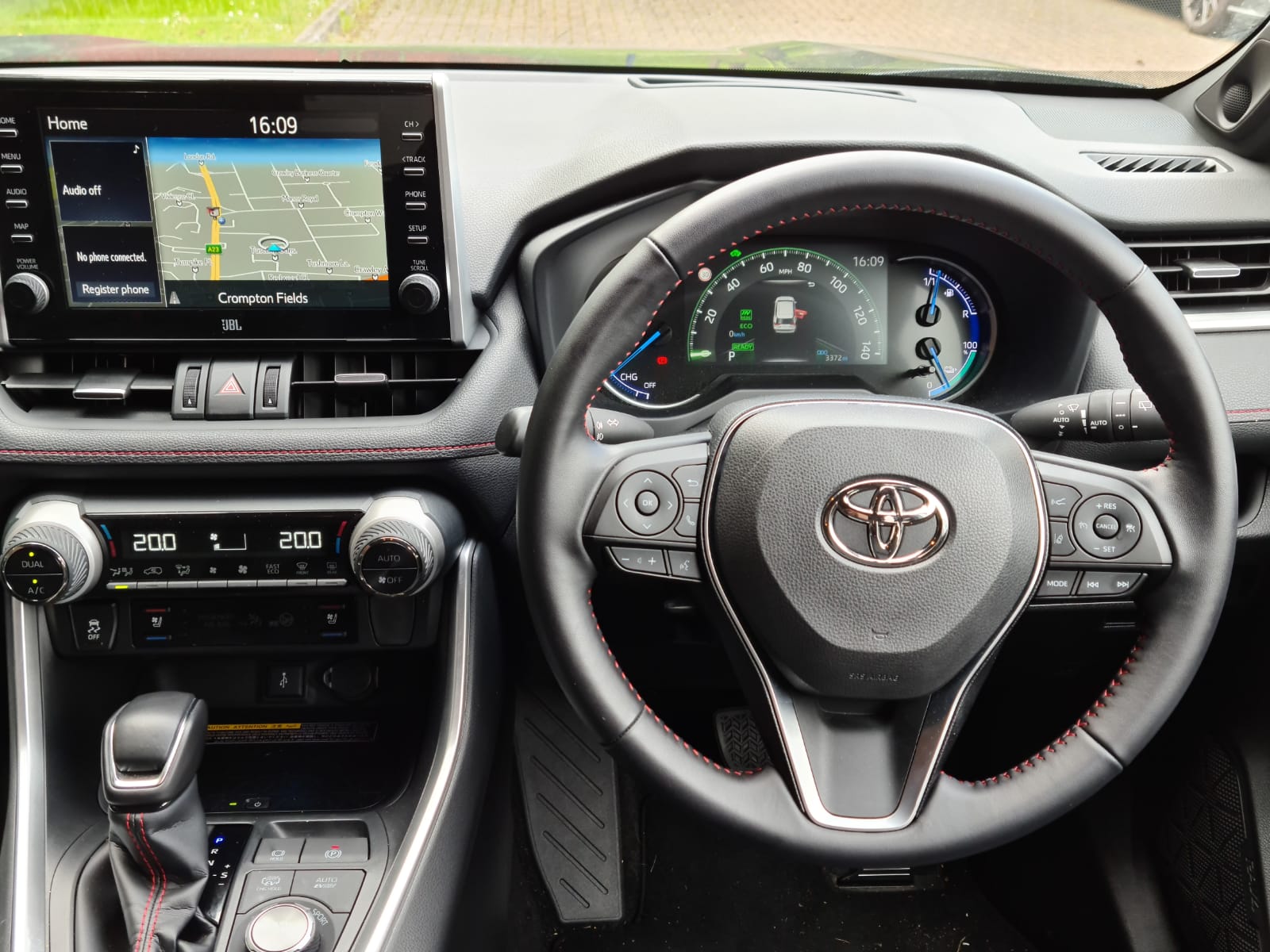
Some wind & road noise does enter the cabin, but its not loud enough to prevent the use of your Bluetooth device, or Apple CarPlay to make hands-free calls.The excellent JBL sound system fitted to the Dynamic Premium model allowed me to listen in clarity to my favourite DAB radio stations.The built in SatNav was easy to programme & the touchscreen functions worked well, but as with others SatNav’s, Google Maps via Apple CarPlay looks & works better. It’s hard to criticise the dashboard & its functionality except to say that it’s a little bland.
We took to the motorway in Eco mode, which dulls the throttle, but increases fuel economy. Sport mode adds a bit of fun & when you put your foot down, this plug-in feels rapid, with screeching tyres from a standing start a testament to this.

Like all cars containing batteries, the RAV4 plug-in is heavy, so it feels a little more sluggish into & out of tight corners & is a little less forgiving at slower speeds, especially when your’e driving over pot-holed roads. On the plus side, the power steering is light & with the rear view camera, it’s easy to park. It’s built for comfortable city dawdling & straight line relaxation at which it excels.

Conclusion
With a retail price close to £50,000, the RAV4 plug-in, IS most definitely a company car proposition & not one for retail. With just 7% BIK, any business customer who selects one, will pay a lot less to the Treasury – around £1250 -£1500 per year as a 40% tax payer – than a standard self-charging RAV4 would set you back.
Inside it’s spacious, well put together, features on trend safety & the latest tech. Toyota’s rock solid reliability is a given.
Most importantly, it’s pure electric range of 35-46 miles puts it right at the top of the tree compared to many other PHEV’s, especially when you consider, its a large SUV built to carry a family of five.
4/5
