


As a previous owner of an an Alfa Romeo Guilietta, I am well aware of what makes an Alfa an Alfa & whilst the new Tonale has been designed to be more practical than it’s predecessor, I’m pleased to say it’s still most definitely an Alfa.
 What is it ?
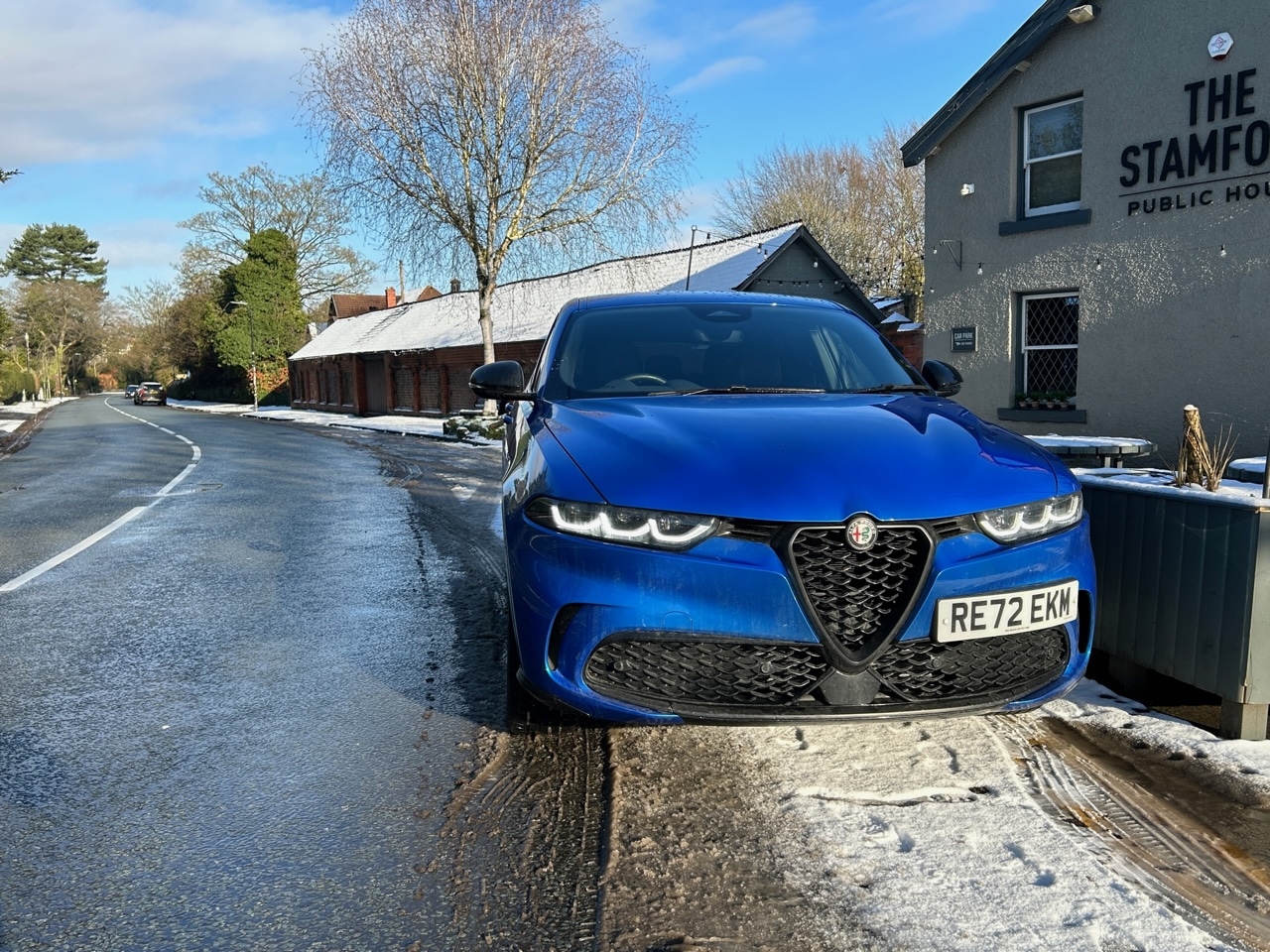
It’s a small family car in the C sector. Based on the same underpinnings as the Jeep Compass it effectively replaced the Giulietta in the Alfa Romeo range. Looks-wise, its almost a baby Stelvio, which has to be a good thing.
 Engine
A Plug-in hybrid is on the way, but until then we were driving the mild-hybrid 1.5 litre petrol Veloce, which uses a 0.8kWh battery, together producing 158bhp & a 0-62mph time of 8.8 seconds accessed via a seven-speed auto box.
 Model range
Choose from either entry level Ti, or Veloce which we were driving. Alfa have juiced up the cars suspension, so the Tonale gets frequency-selective dampers co-developed by Koni, with our test car the Veloce adopting adaptive suspension.
 Driving modes
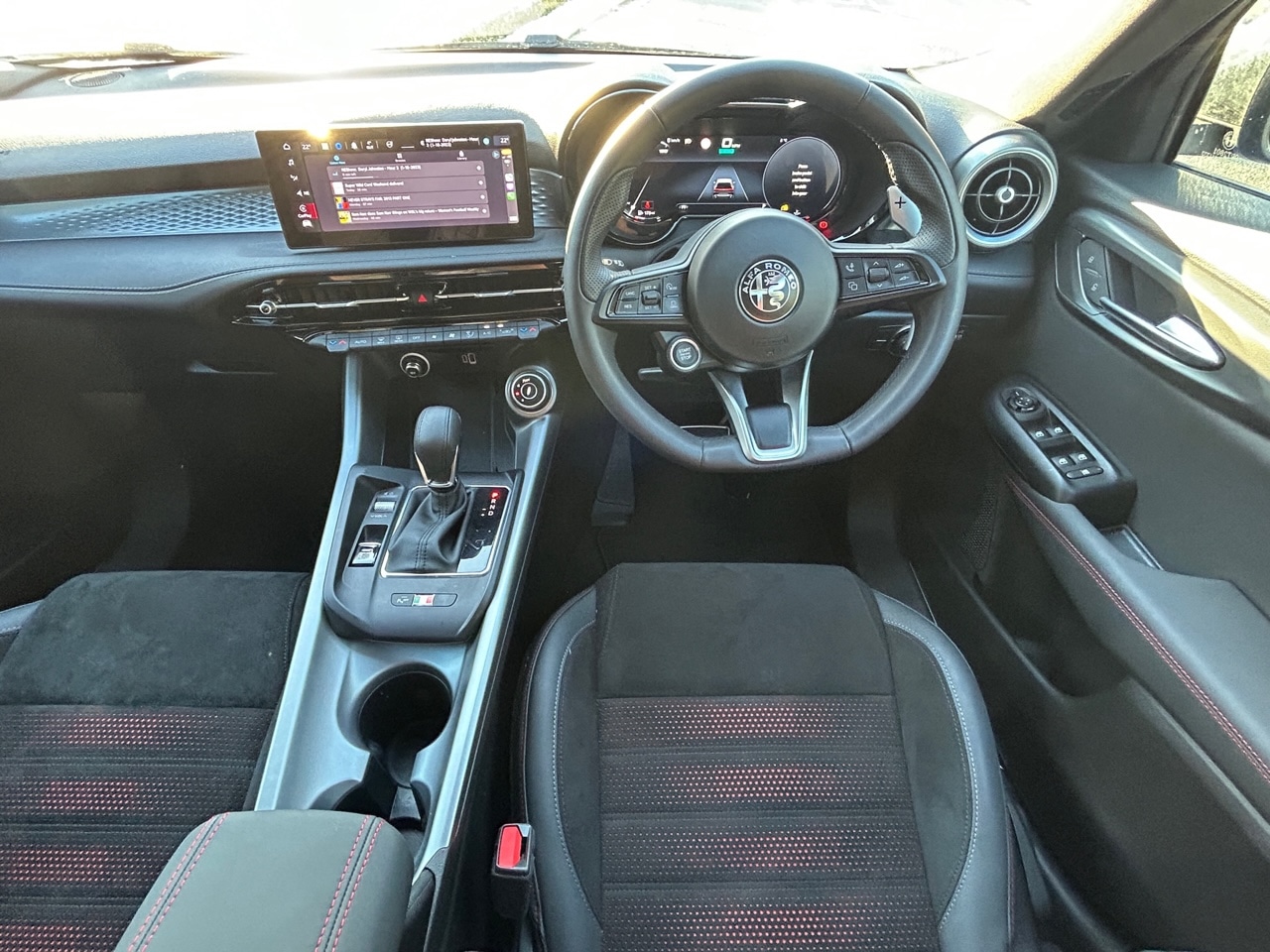
Alfa still offers it’s DNA driving selector, this time it’s via a rotary dial to the left of the steering wheel. Here you can control the cars performance with A, Advance Efficiency, N Normal & D Dynamic are the three options. Furthermore, you can control the car’s adaptive suspension independently of the drive modes via a button in the middle of the ‘DNA’ rotary selector.
 Exterior
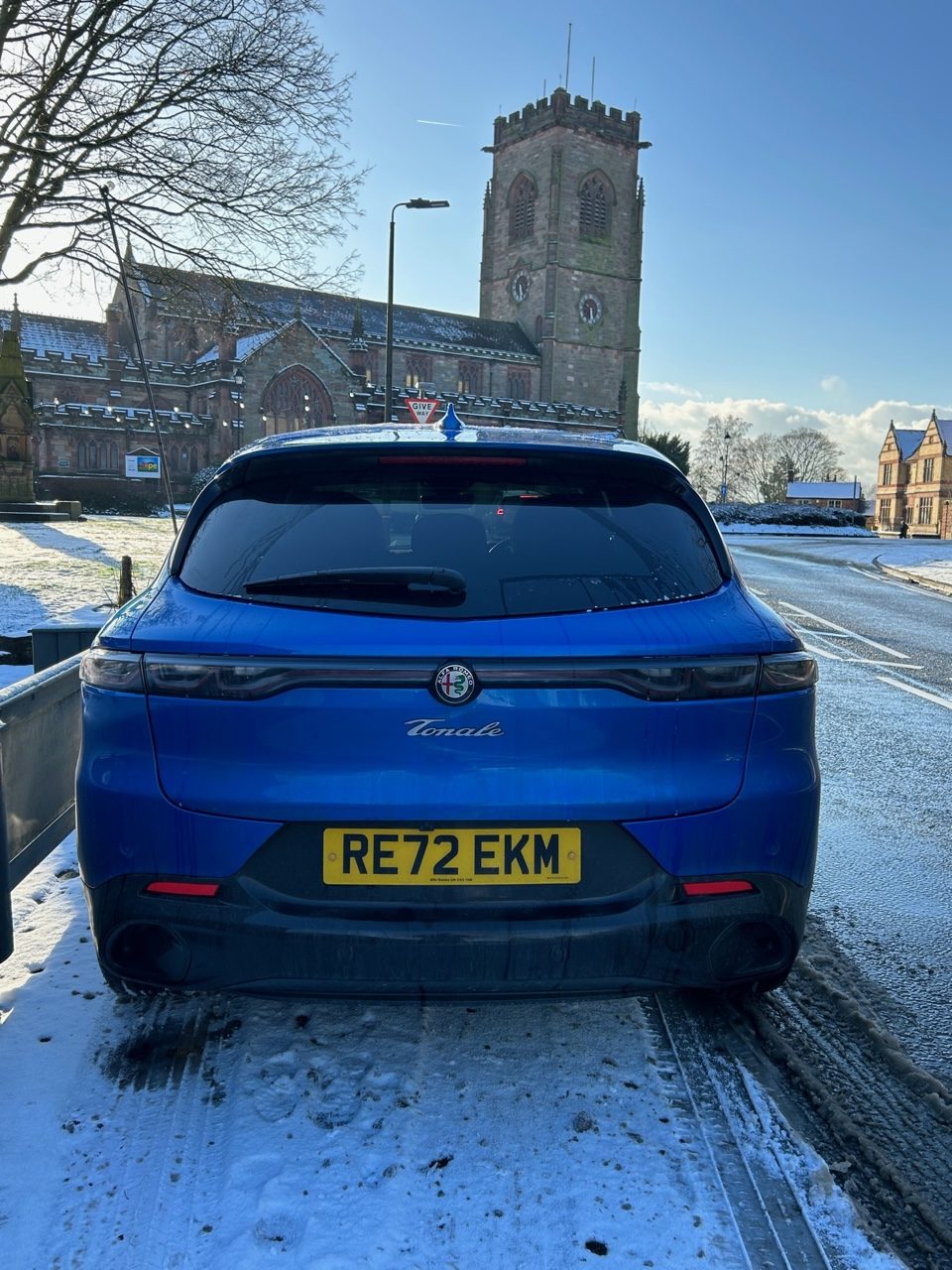
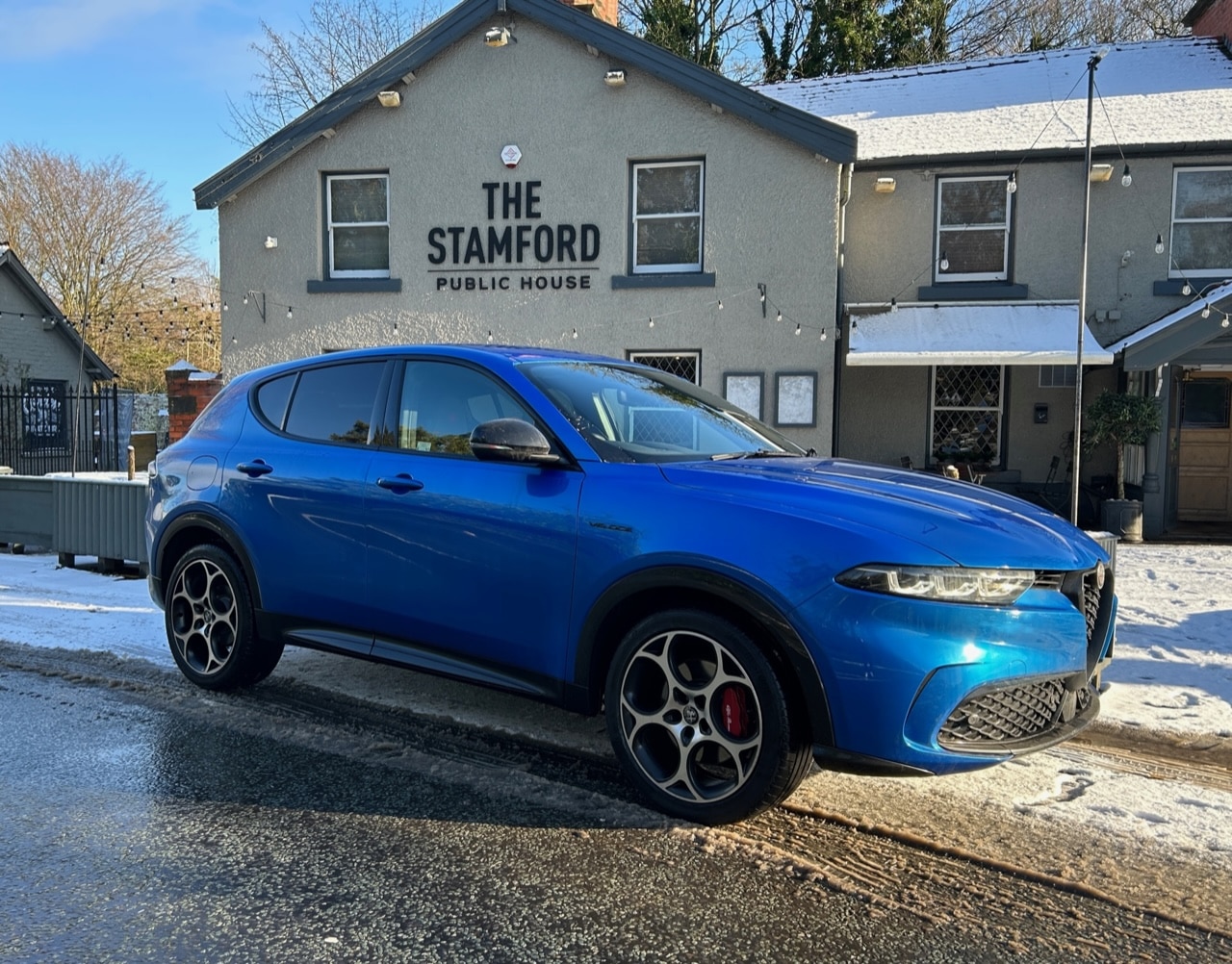
The Tonale looks better in the flesh than in pictures, combining a mini-Stelvio profile, with Alfas V shaped front grille, narrow front LED light clusters, slim rear light strip & low roofline.
 Inside
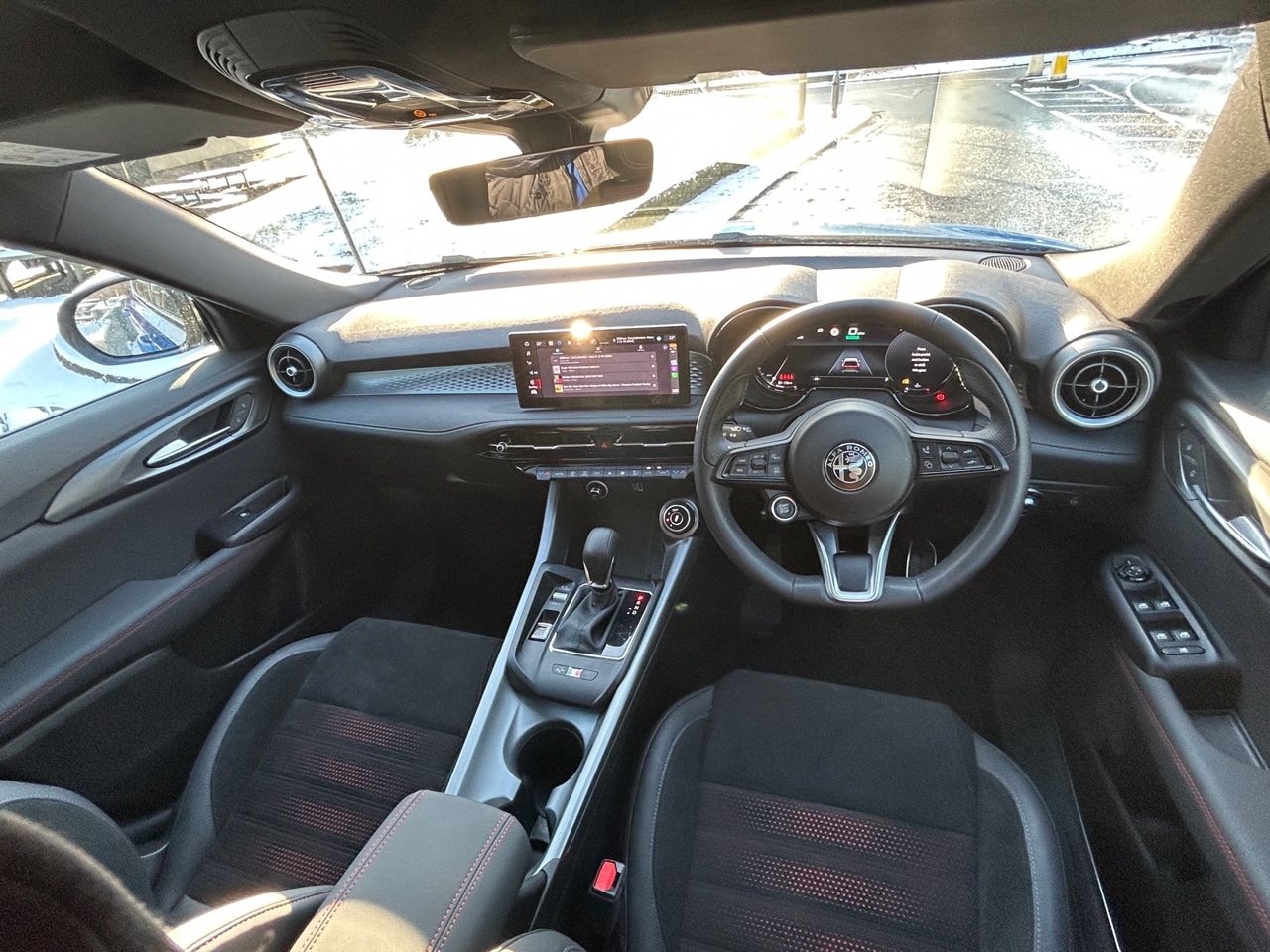
Amongst other things you get a tabloid shaped phone charger, steering wheel start button & rotary DNA selector. More standard fare includes a slick leather gear lever, electric hand brake & steering wheel controls for the cars ADAS system & the infotainment.
In the centre of the dash is a 10.25″ touchscreen, perhaps a little small for our liking, but certainly attractive & you also get a 12.3″ digital instrument cluster in front of the driver. This can be alterred to feature one of three different screens, plus on Veloce you also have twin metal gear shift paddles on either side of the steering wheel.
Quality wise it’s pretty good, with some decent finishes on top of the dash & doors & funky red on black dotted seat bottoms. The cheaper trim is hidden lower down. Overall it’s refreshingly different if a little ungainly in places.
 Infotainment
We’ve alluded to the screen size, which feels small, but it’s mile’s better than what we had on our Giulietta & both the graphics & response speed are excellent. You can connect wirelessly to Apple Car Play or Android Auto too.
On the downside, the layout takes a little getting used to. There is a row of buttons underneath the screen for the climate control,which we like, but the shortcut screen icons are quite small & not that easy to select on the move. It’s very easy to choose the wrong one.
 Practicality
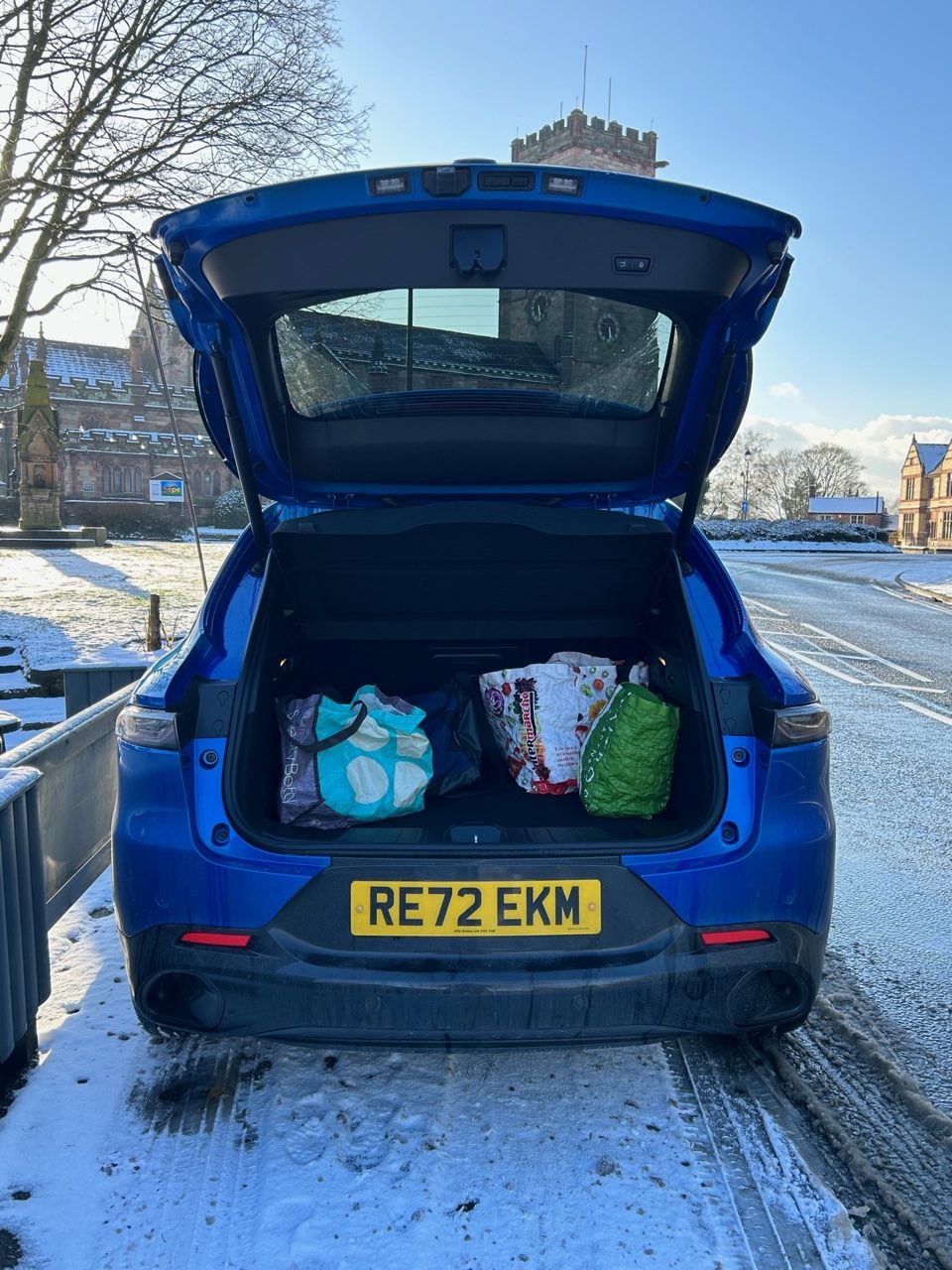
Front passengers sit quite high have decent had & legroom. The rear is only large enough for two adults & a combination of the high, narrow side windows & black roof lining make it a little gloomy if you’re sat in the back.
Up front, you get a surprisingly large glove box, twin centre drinks holders, a meagre armrest with some storage underneath, small front door pockets & tiny rear ones. Twin USB’s feature in the front & the rear plus a fold down rear armrest with ubiquitous twin cup holders within. The Tonale 500-litre boot features an adjustable floor.
 Fuel economy & emissions
Combined WLTP mpg is 47.9, CO2 emissions 135g/km.
Equipment & prices
Entry level Ti costs from £39,995 & features LED headlights, a rear parking camera, keyless entry, a powered boot lid, the 10.25″ touchscreen & the 12.3″ digital instrument cluster. Our test car Veloce adds the aluminium gear shift paddles, adaptive dampers, an Alcantara trim & 19″ dark alloy wheels. Asking price is £42,295.
 Driving
There are three driving modes. Dynamic, Normal & Advanced Efficiency, DNA.
Dynamic does introduce an element of fun to proceedings, but it’s offset by a harsh ride & you’ll notice the car crashing somewhat over poorer road surfaces. Normal feels better & the car doesn’t get quite as boisterous, certainly on bumpy roads & even feels more confident on corners. On the motorway, the ADAS systems easy to select & you can happily cruise along in Advanced Efficiency mode to conserve your fuel. At motorway speed, road noise does enter the cabin from the tyres. A real highlight is the sound system which is possibly the best I’ve ever encountered in car of this asking price.
As far as the mild-hybrid engine goes, it’s hard to notice the battery at all. It certainly doesn’t spoil the drive. What does let it down however, is the lack of delivery when you put your foot on the accelerator. Even from a standing start it’s incredibly slow, with a noticeable delay every time you exit a roundabout or side road. It takes some getting used too, but it’s worth noting that you are never winning a drag race in a Tonale & you need to adjust your driving accordingly. At the opposite extreme, the brakes are incredibly good, with the slightest touch halting your progress in milliseconds. Together it creates a rather bizarre combination.
 Real world economy
Driving in sub-zero January, 250 miles in the Tonale, saw us average just 37.7mpg, some way off the official combined. Alfa’s should be fun & the Tonale does tick that box sometimes & perhaps my attempts to drive in Dynamic to see if the Tonale would respond better to my right foot might be to blame for this lowish result.
Pros
Looks like a mini Stelvio. Designed to be different & is, succeeding in making all of it’s competitors seen dull in comparison.
 Cons
Lack of throttle response does let the performance down. Fiddly screen icons are annoying. For company car drivers the plug-in’s the one to have.
Verdict
The Tonale is a big step-up from the Giulietta & offer’s the brand a foot in the door in a very competitive sector. If you want different, then its definitely the one to choose. A cracking exterior mixed with an Italian designed cabin offer plenty of Alfa Romeo for your buck. It’s only let down by the overall driving experience.
A Trofiette 3.5/5
