


In 2021 the Isuzu D-Max had a major update making it at that the time the safest pick-up on the road. Interior tweaks were also on the agenda as was the addition of a ladder chassis. But as competitors launched their new pick-up’s the updates needed an update & in early 2025 Isuzu launched a revised model range.
 What’s new ?
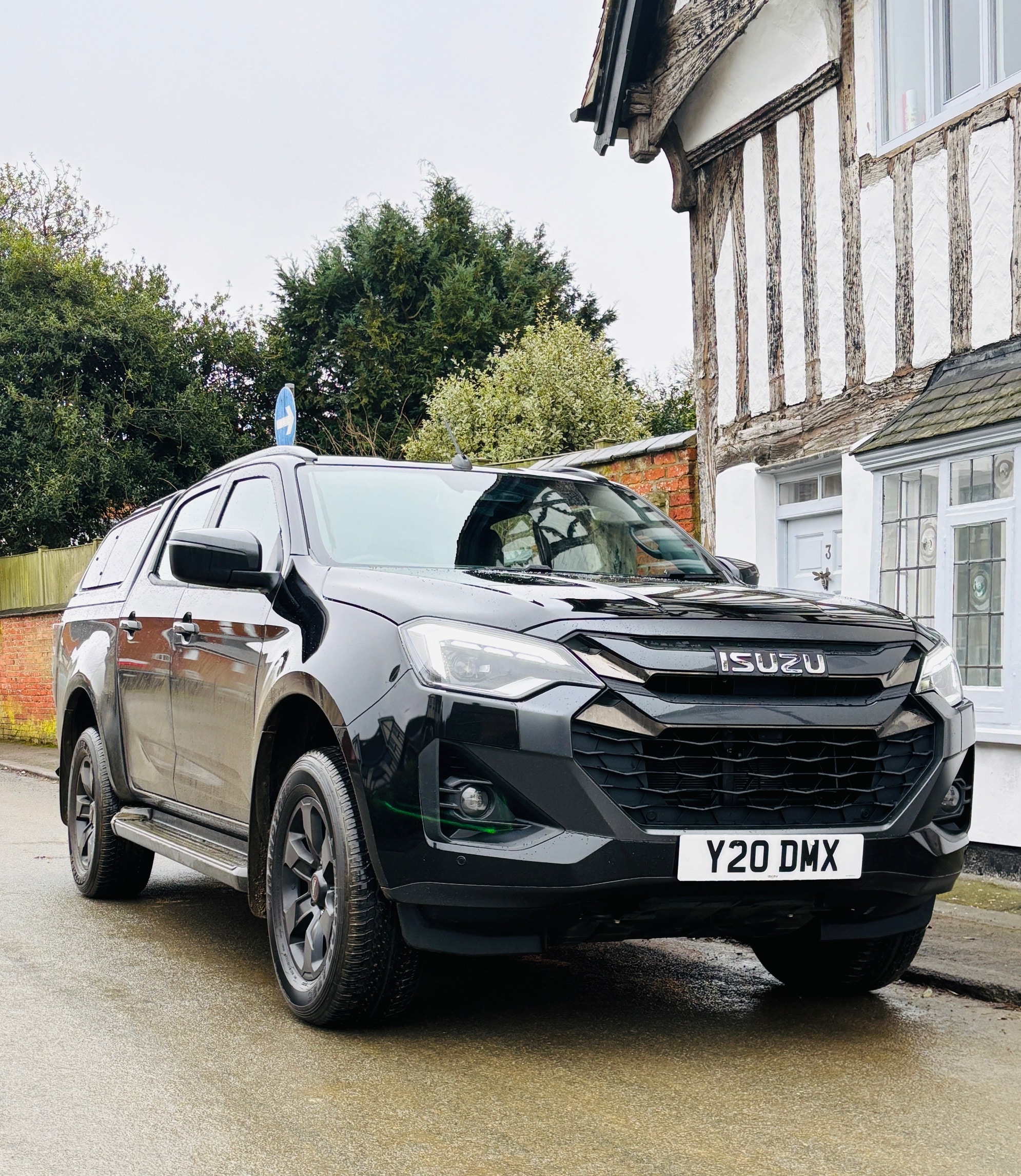
Outside there’s a new bonnet, radiator grille, tail lights & bumper design. A re-designed tailgate, & an upgraded ADAS system with a wider viewing angle also feature.
 Infotainment & tech
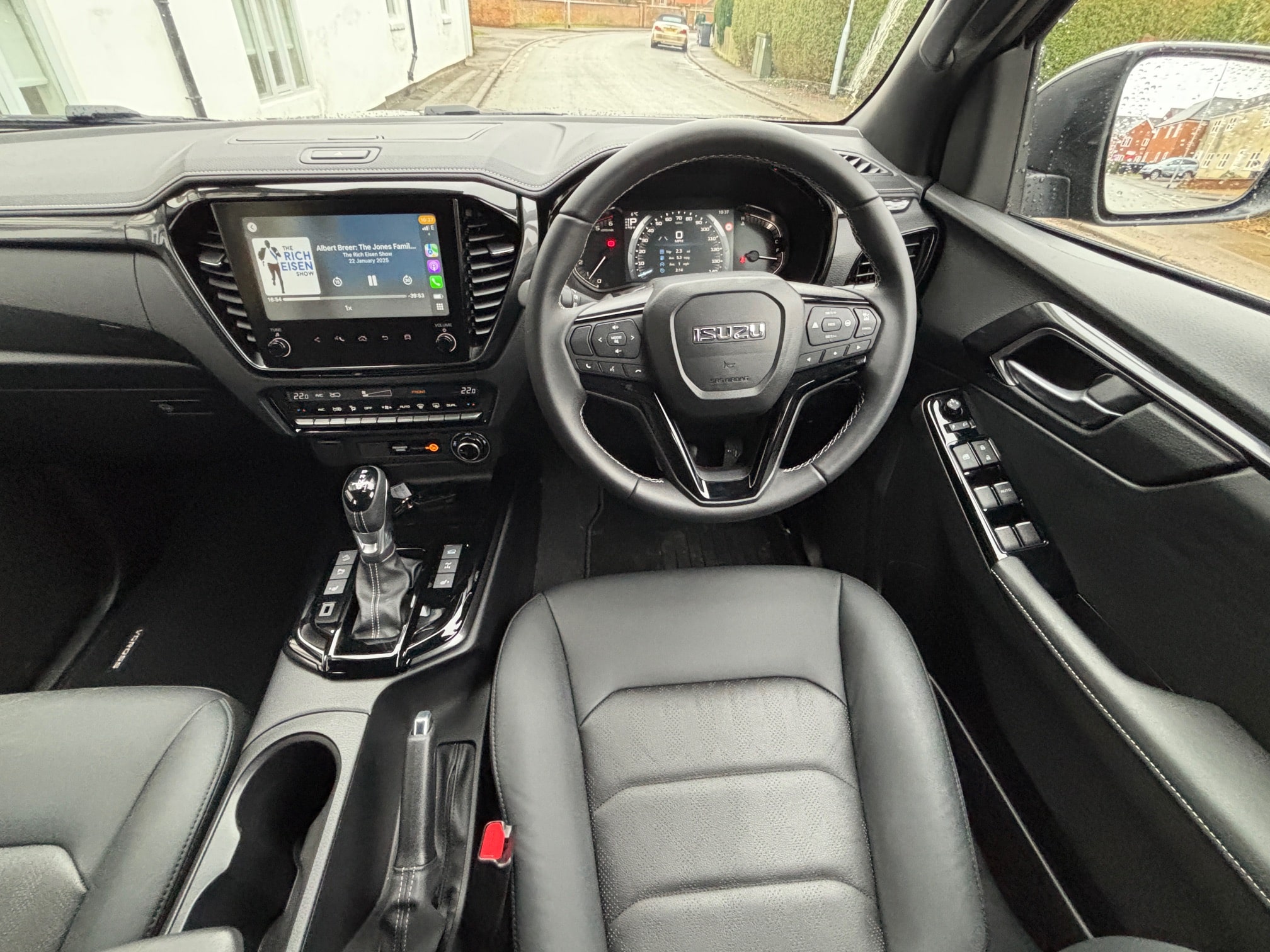
The D-Max’s technology has been upgraded across all versions. You now get wireless smartphone mirroring on every model with part-digital instruments on top of the range V-Cross. Isuzu have also added a new Rough Terrain mode for the electronic traction control offering customers extra help on slippery surfaces or steep inclines.
 In more detail
Right across the range the D-Max infotainment systems been upgraded. So Utility & DL20 get an 8.0″ screen with wireless smartphone mirroring, DL40 & V-Cross models a 9.0″ version with wireless device charging. The systems more logical too, with DAB, AM & FM radio all located in the same place & you also get screens that illustrate your off-road performance.
 Model range
The D-Max comes in 2 Ranges; Business & All-Purpose with 4 Trim Levels; Utility, DL20, DL40 & V-Cross. Plus the steroid injected Arctic Trucks AT35. Company Car & Van had the opportunity to drive the recently updated V-Cross model which is leading the way for the brand in pick-up sales.
 Better news is that the Single & Extended Cab bodies won’t be subject to the BIK change coming in April 2025 as they’ll still qualify as commercial vehicles after that date. Note though that single cab models sit 20mm lower than extended or double cabs so aren’t as adept off-road.
 Prices
The single cab Isuzu D-Max Utility starts from around £27,500, the V-Cross double-cab from £38,000 plus £2,000 if you select the auto version.
 Engine & chassis
The 1.9 litre 162bhp engine has been carried over from the previous model. The ladder frame chassis has made it stronger whilst the current models longer wheelbase has increased load space both inside & out.
A rear-differential lock option is available on all manual 4×4 Utility models in the range. This feature was first made available for the 2022 Isuzu D-Max pick-ups & has been continued in the 2025 model.
With 360Nm torque there’s ample power for most, but thanks to a very short first gear on the manual, you’ll need to change up quickly. The auto’s better but you need to adjust accordingly when pulling out of a junction.
 Payload
Every version has a payload rating of at least 1070kg, which is important for commercial vehicle tax purpose.There’s also a 3.5 tonnes towing capacity. Another interesting point is that, every variant of the D-Max weighs under 2,040kg. Therefore Extended & Double Cabs are subject to normal passenger car speed limits. Many double cab pick-up trucks – Ranger & Hilux included – exceed this weight limit so must comply with goods vehicle speed limits which are 10mph lower on single & dual carriageways. A fact that many pick-up customers are still unaware of.
 Will it get me through the tough stuff ?
The D-Max is still perfect for anyone who need’s to use their truck off-road. All versions offer selectable shift-on-the-fly 4WD drive & on all models bar entry-level Utility, the mechanical rear diff lock give the D-Max plenty of ability. The new Rough Terrain function, plus hill descent control & hill start assist also help & you also get a wading depth of 800mm.
 Safety
All double-cabs get a radar system, with Isuzu choosing to use stereo-imaging via a pair of cameras at the top of the windscreen enabling the AEB, lane keeping, traffic sign recognition & intelligent speed limiter to work more accurately than offered elsewhere. Plus, the new system enables cross traffic alert, blindspot monitoring & emergency lane keeping, all new to the pick-up sector. And if that’s not enough, Double Cabs get eight airbags, Single & Extended Cabs seven. On our test drive we utilised the Adaptive Cruise Control & autonomous Driving on the motorway & it works brilliantly.
 Emissions & fuel economy
Pick-up emissions & fuel economy are not a selling point. V-Cross manual offers 33.6 mpg/auto 30.7 mpg with emissions of 220g/km & 241g/km respectively. Move up to a high-spec model with an automatic gearbox & that drops to 31.4mpg & 235g/km of CO2.
 V-Cross specifics
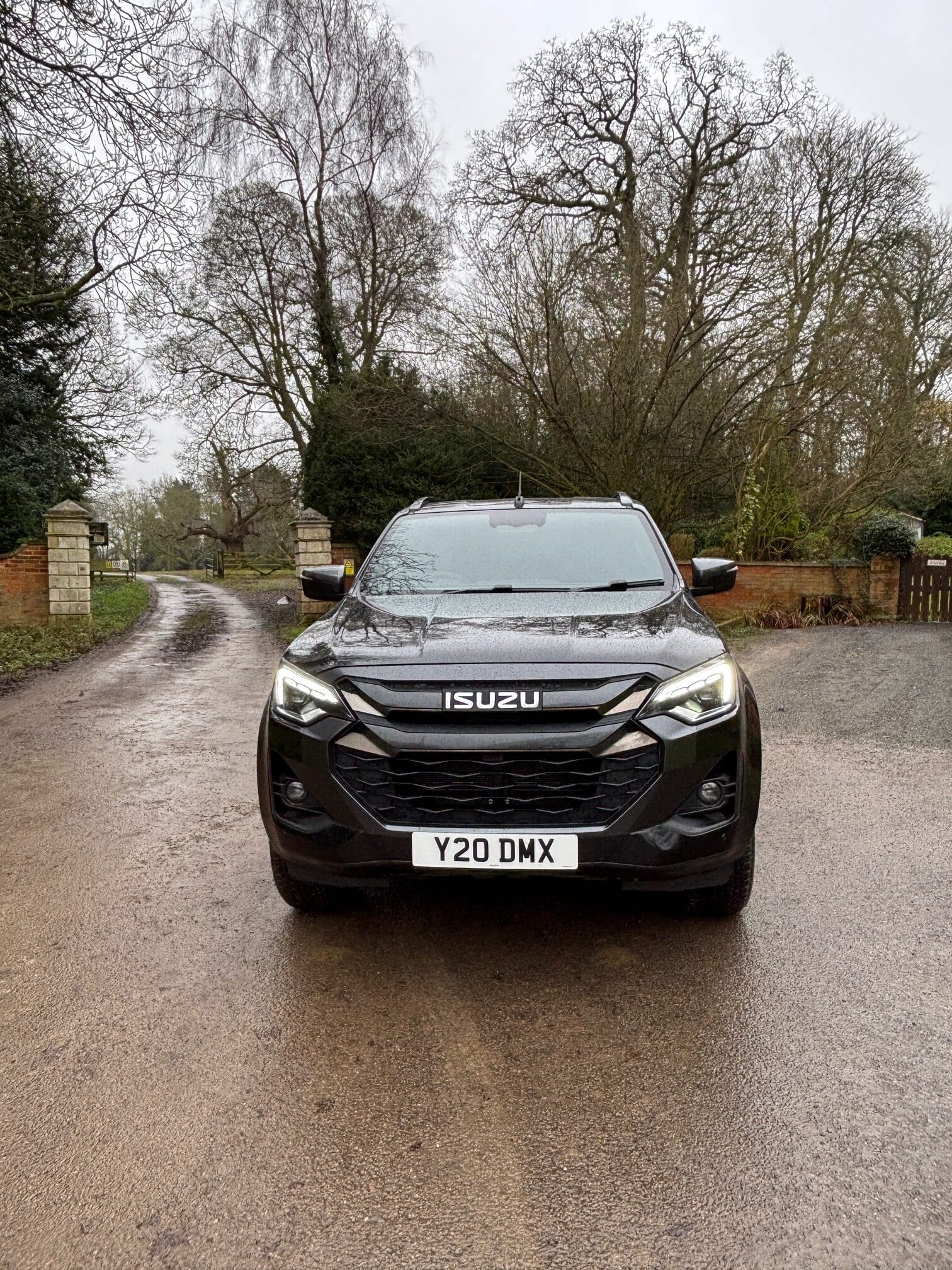
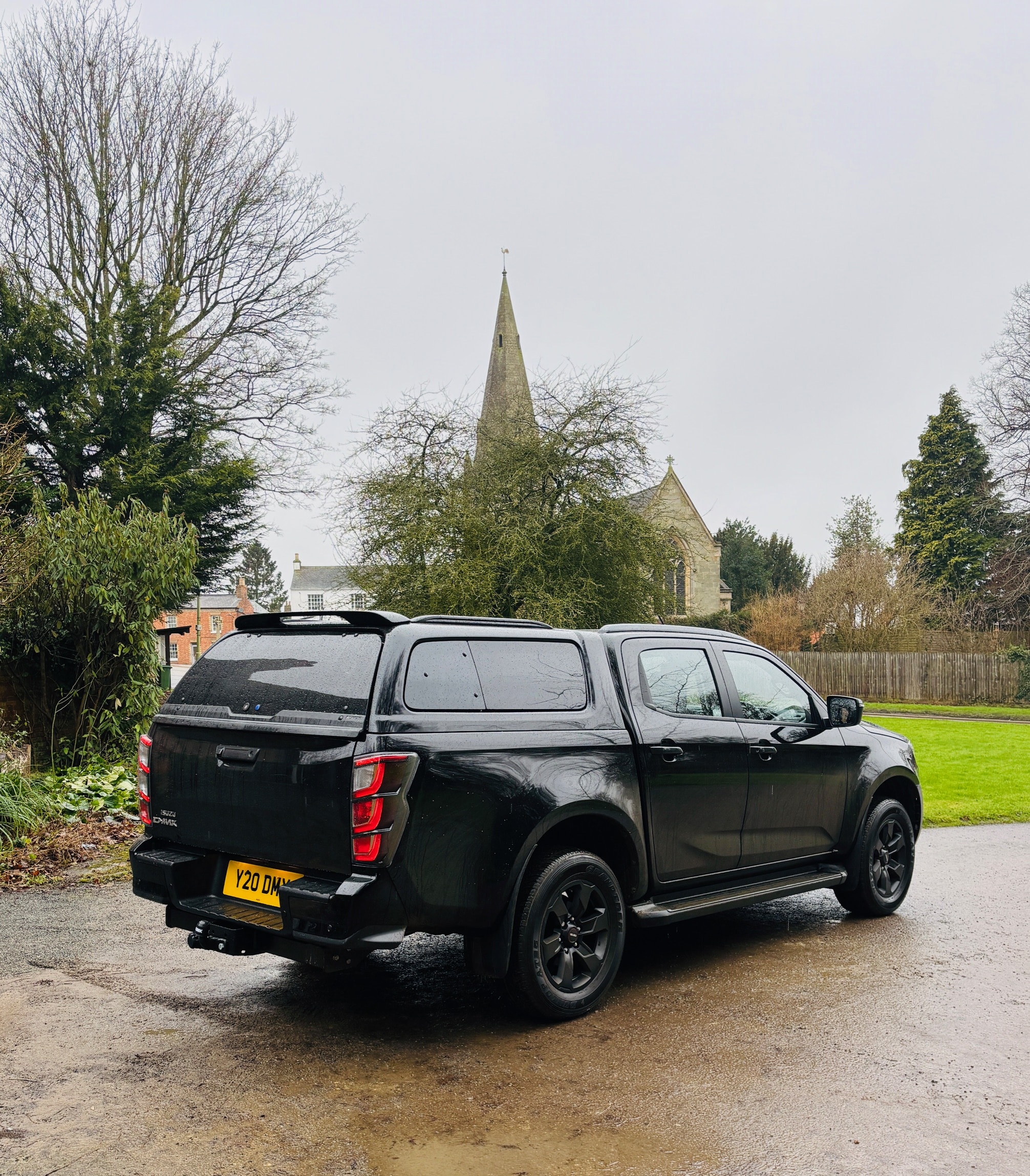
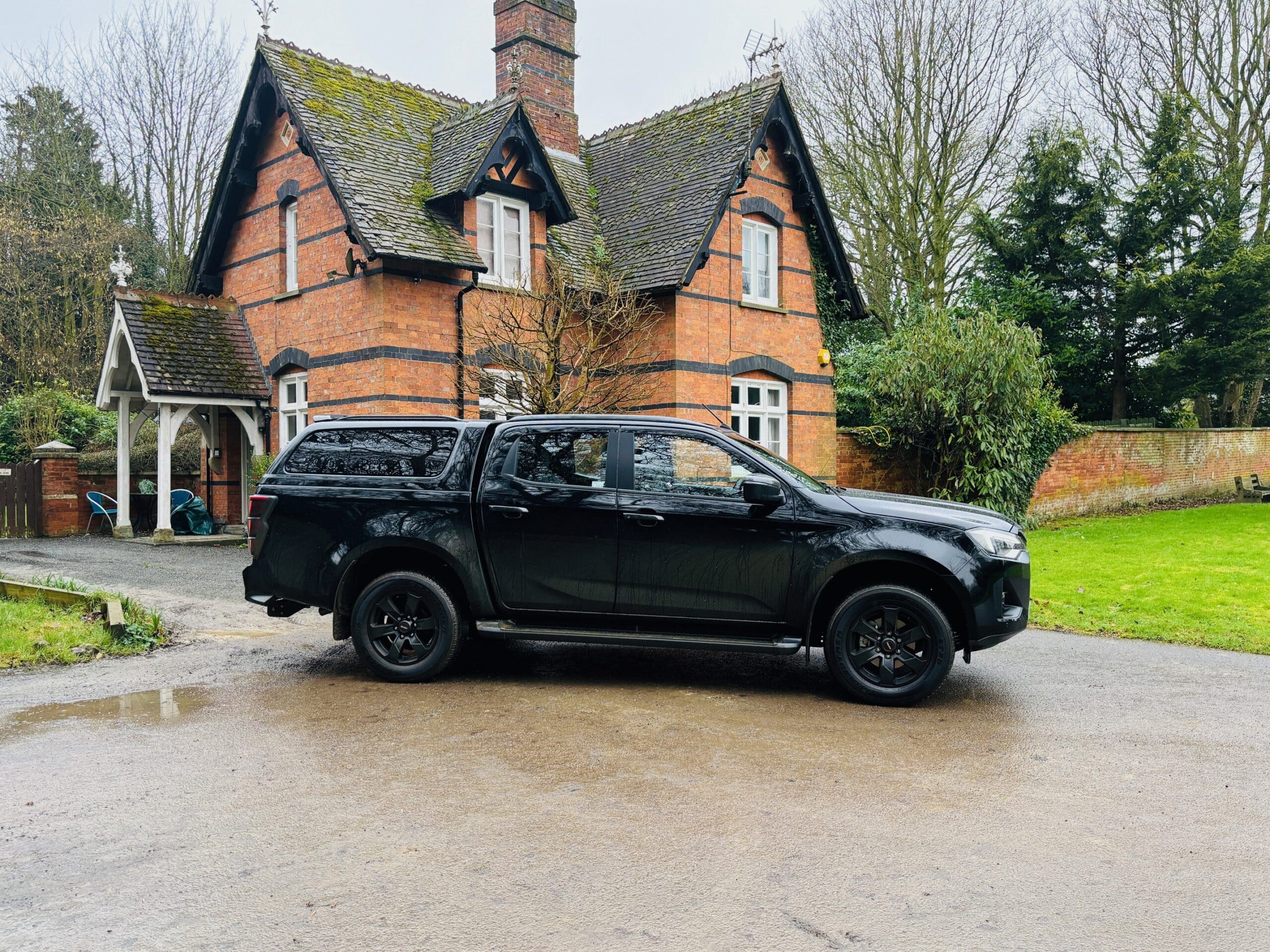
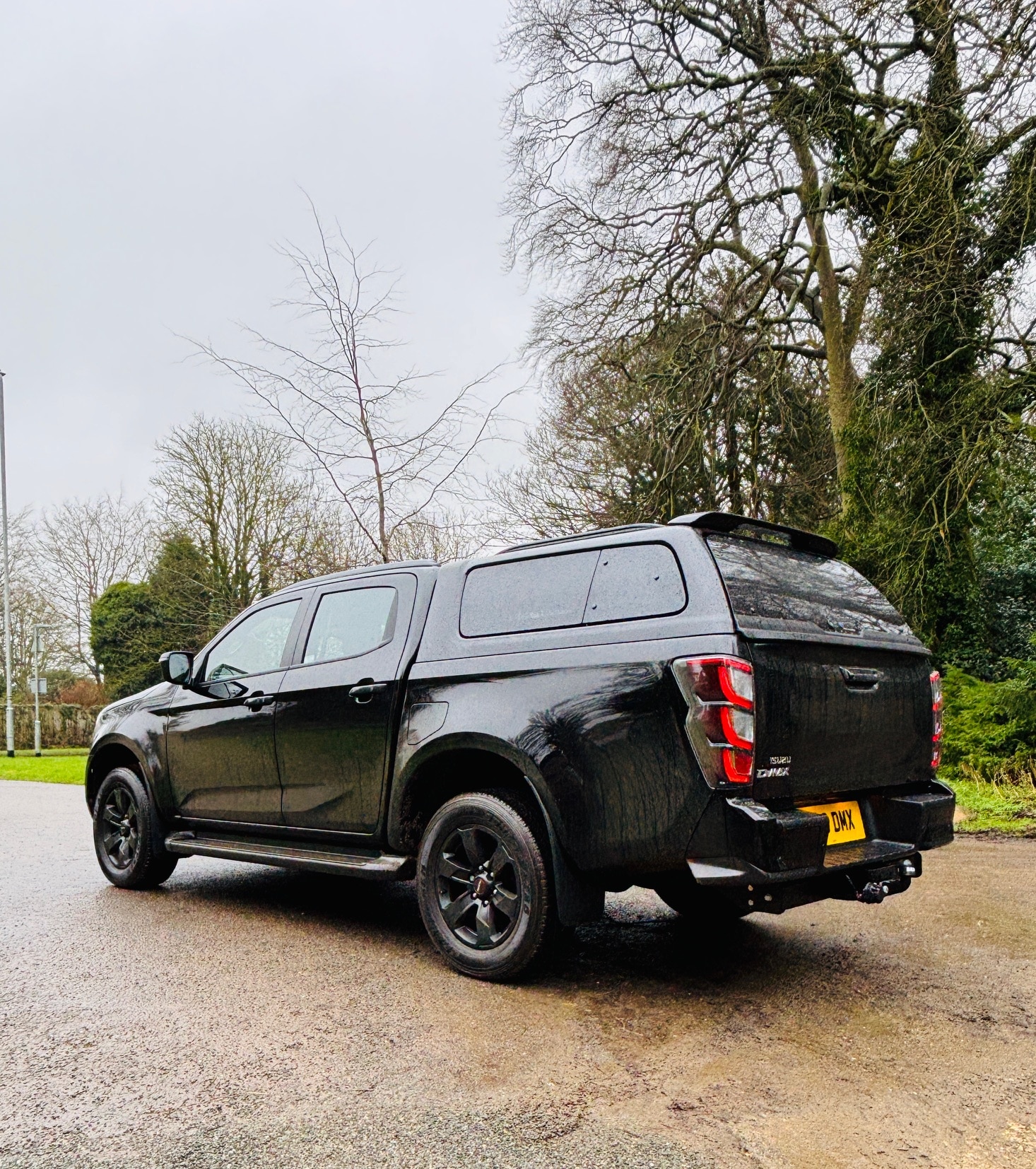
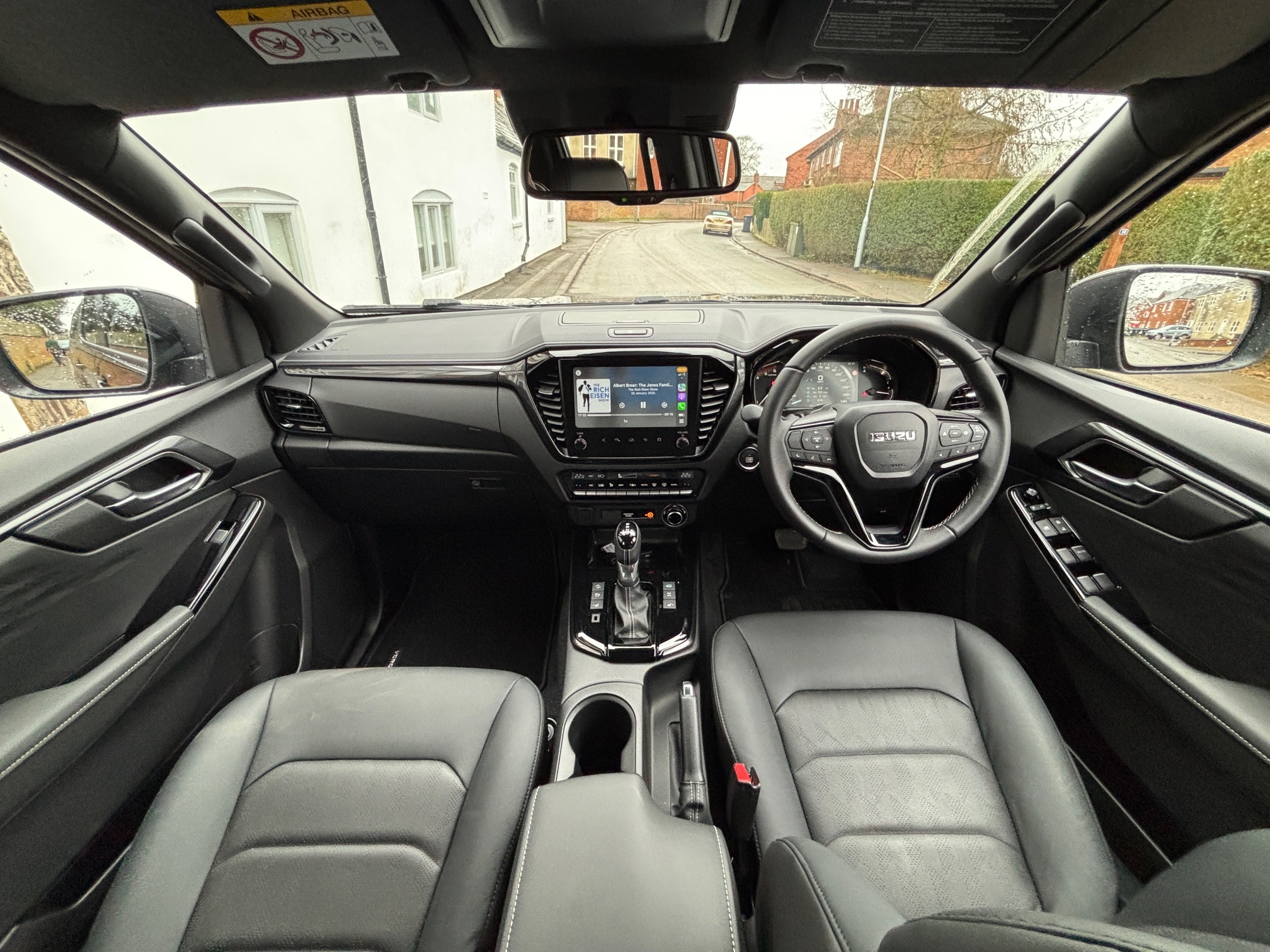
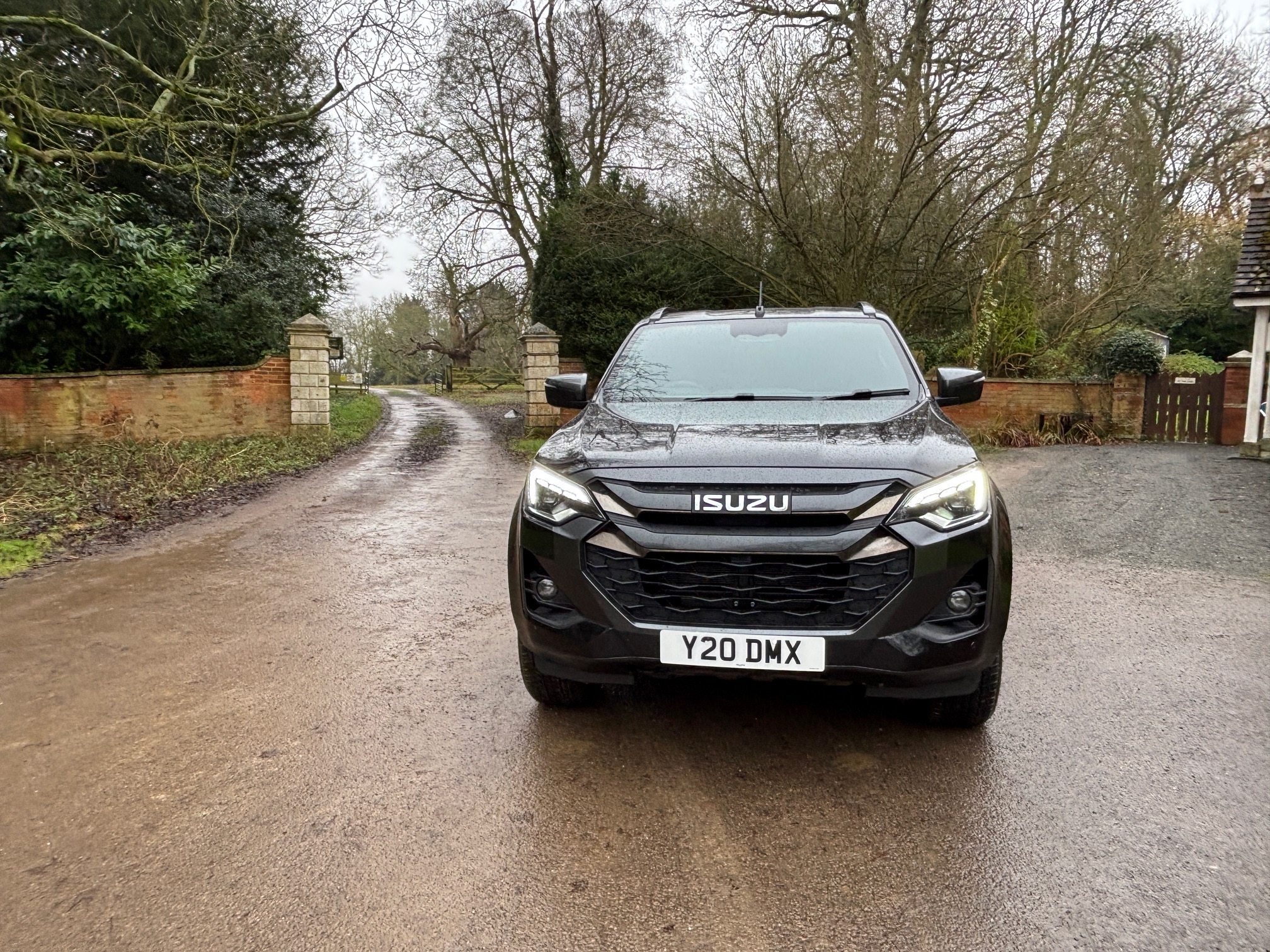
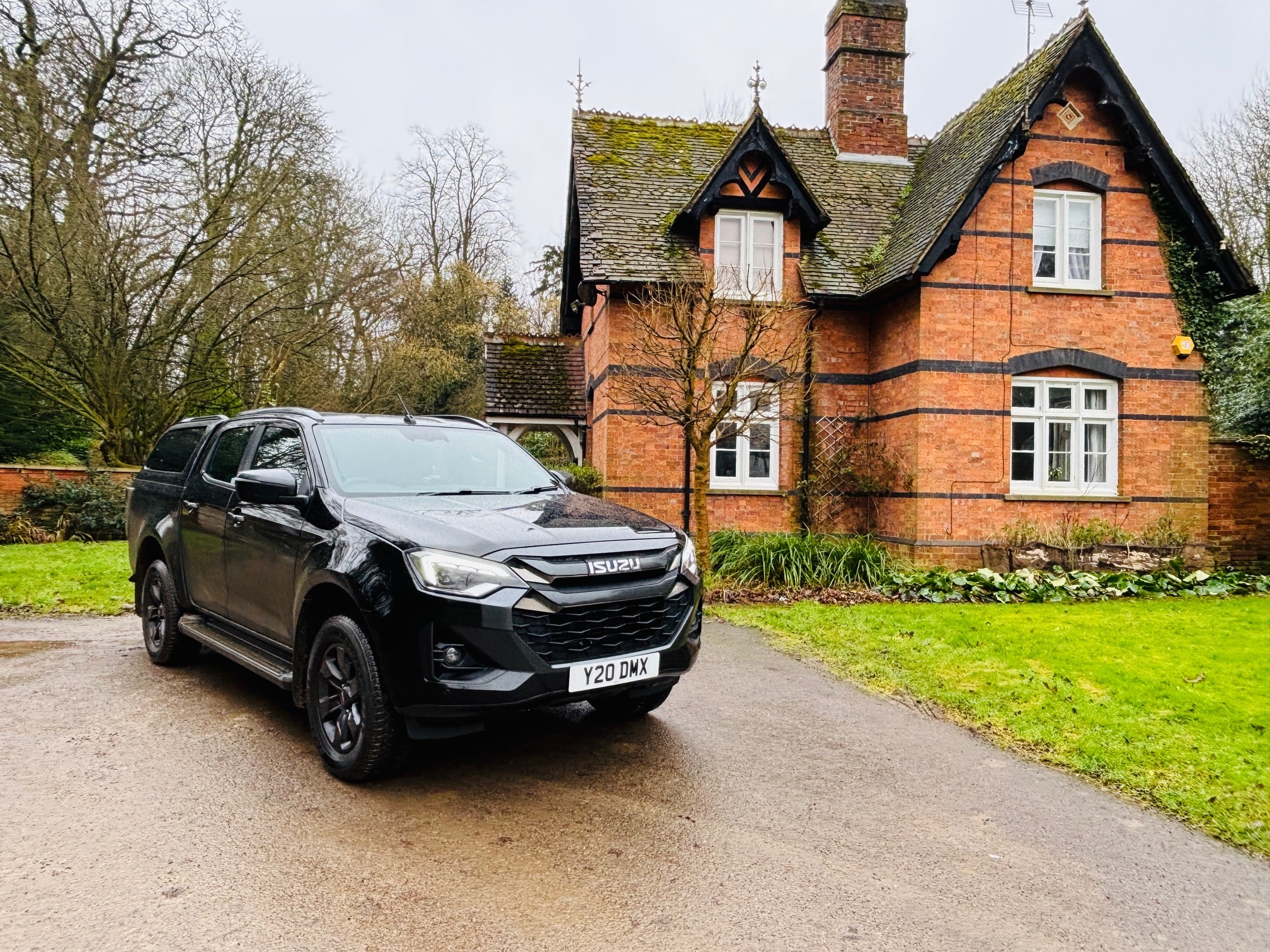
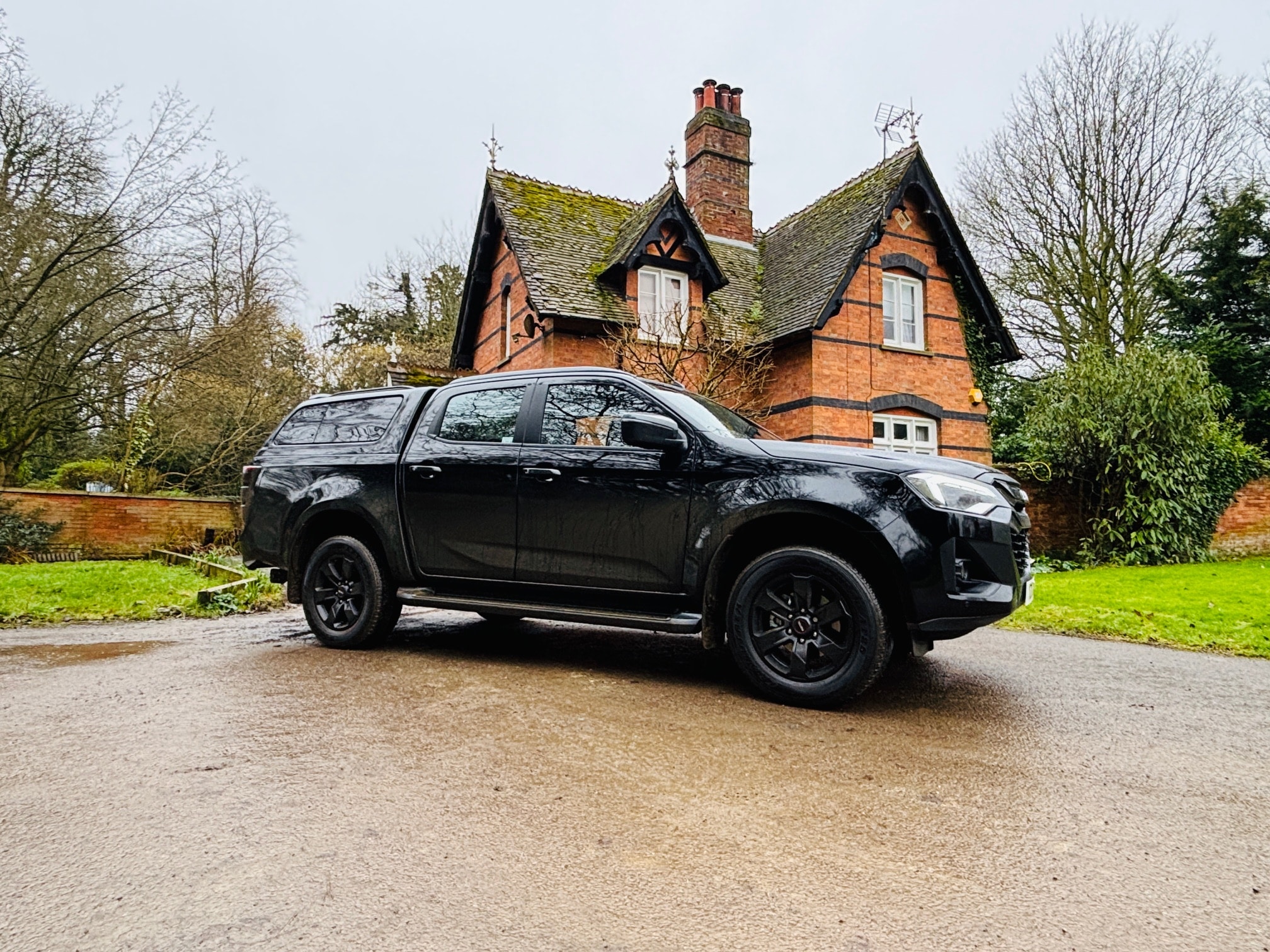
V-Cross certainly looks the part & features 18″ dark grey alloys, very dark grey radiator grille & side steps &gun metal door handles It’s also very well equipped with keyless entry & start, new leather upholstery, dual zone climate control, heated front seats, rear parking sensors, a reversing camera, Bi-LED headlights, LED front fog & an 8-way electrically adjustable driver’s seat. The multifunction colour touchscreen is compatible with Apple CarPlay & Android Auto & comes with 8 speakers, plus 2 front & rear USB ports. There’s also an auto-dimming rear-view mirror & automatic headlight levelling. This is a pick-up tailored to the lifestyle sector.
 Build quality & infotainment
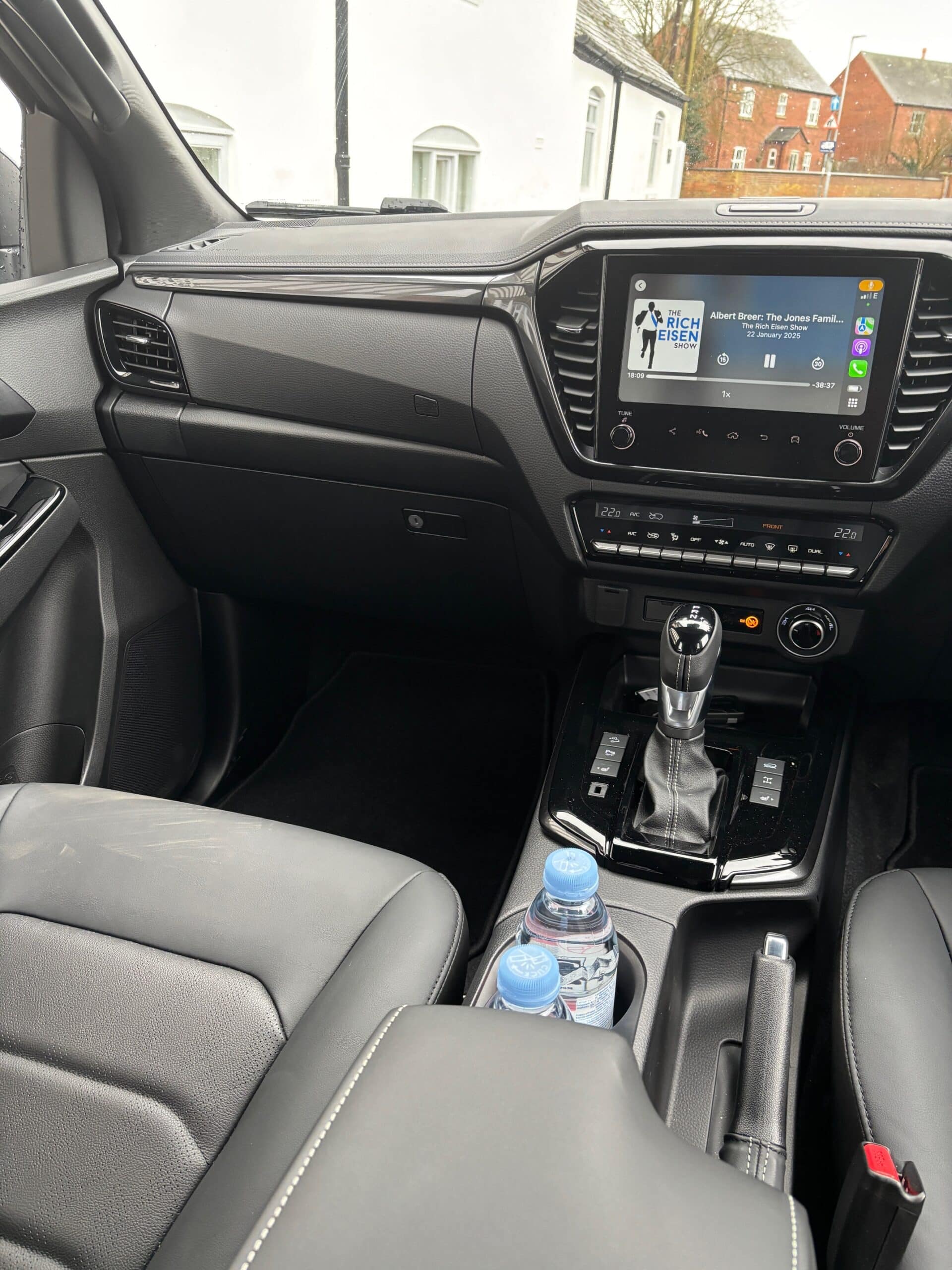
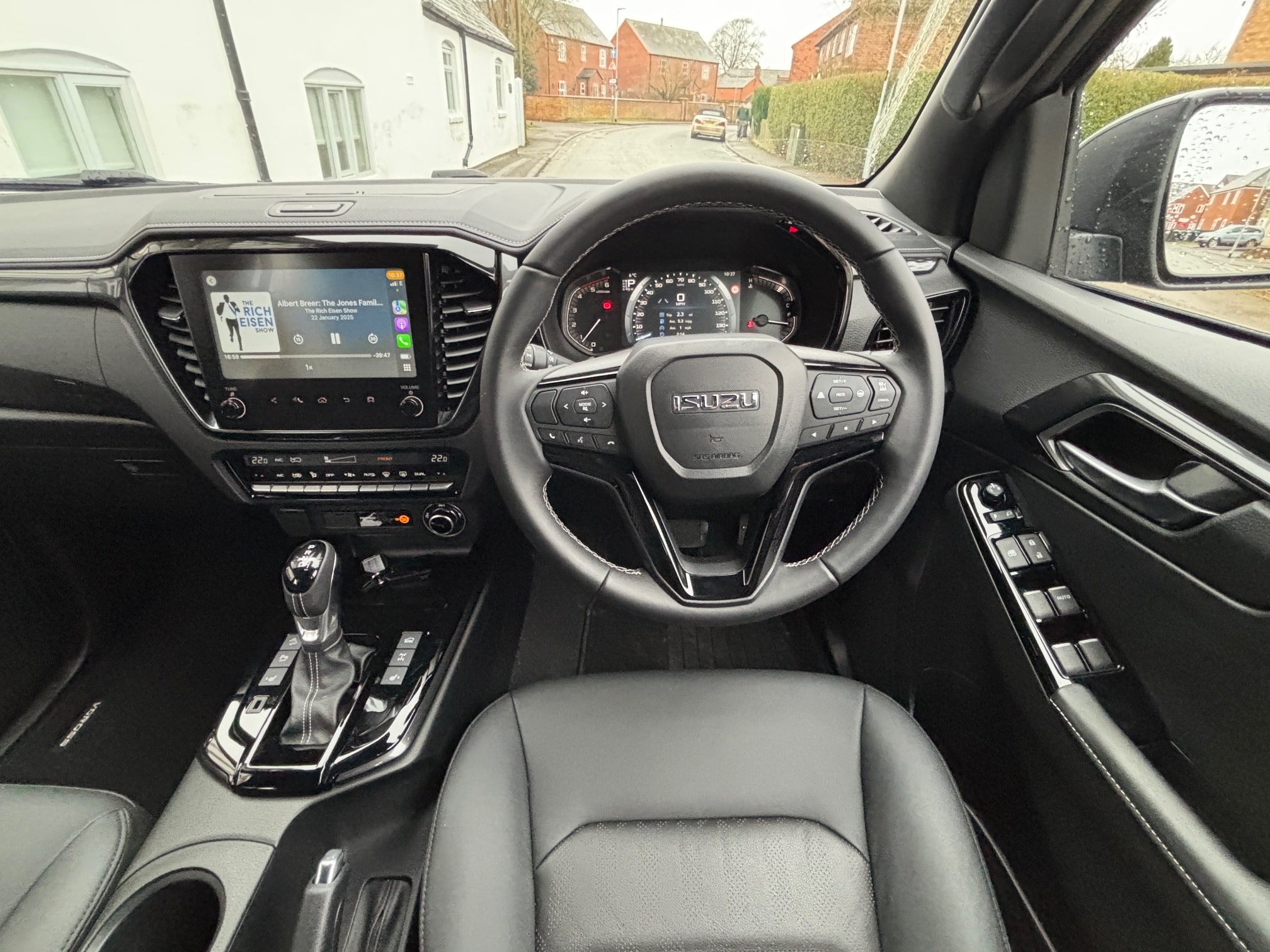
The dashboard, fixture & fittings quality is excellent, with just a few cheaper plastics used lower down. The seat finishes have been designed to be practical as well as hard wearing. More good news are the short cut switches & stand alone climate controls which sit underneath the screen itself. No fiddling with complicated on-screen menus whilst on the move.
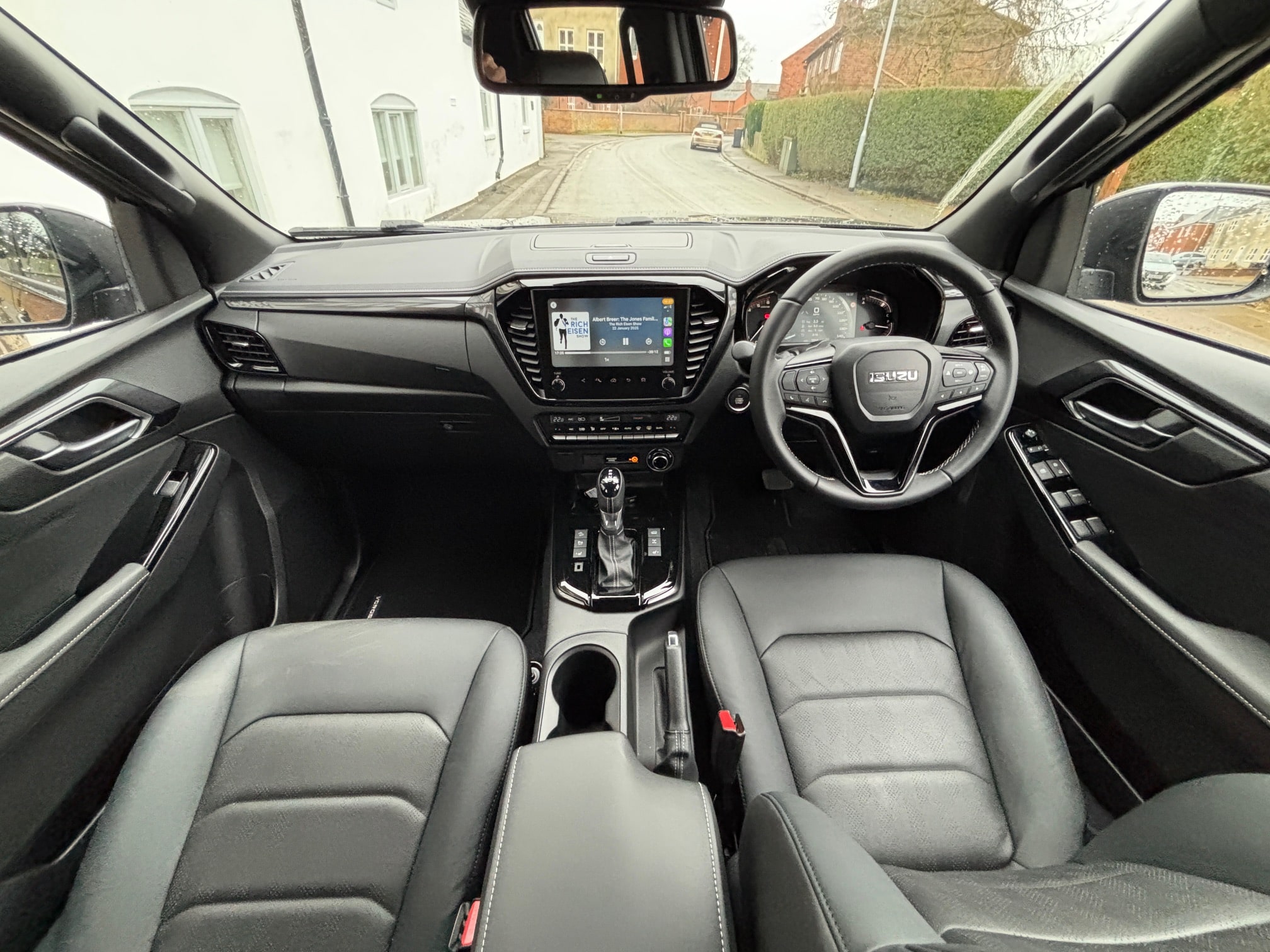 The infotainment system works wirelessly with Apple CarPlay & we were able to connect our iPhone to the V-Cross in about 30 seconds, enabling us to utilise Google Maps & Waze. We also made & received several hands-free phone calls via Apple CarPlay, listened to our favourite podcasts & kept abreast of goings on through What’s App. As far as the touchscreen itself, the graphics are clear & response time is decent too if not class leading.
 Cabin practicality
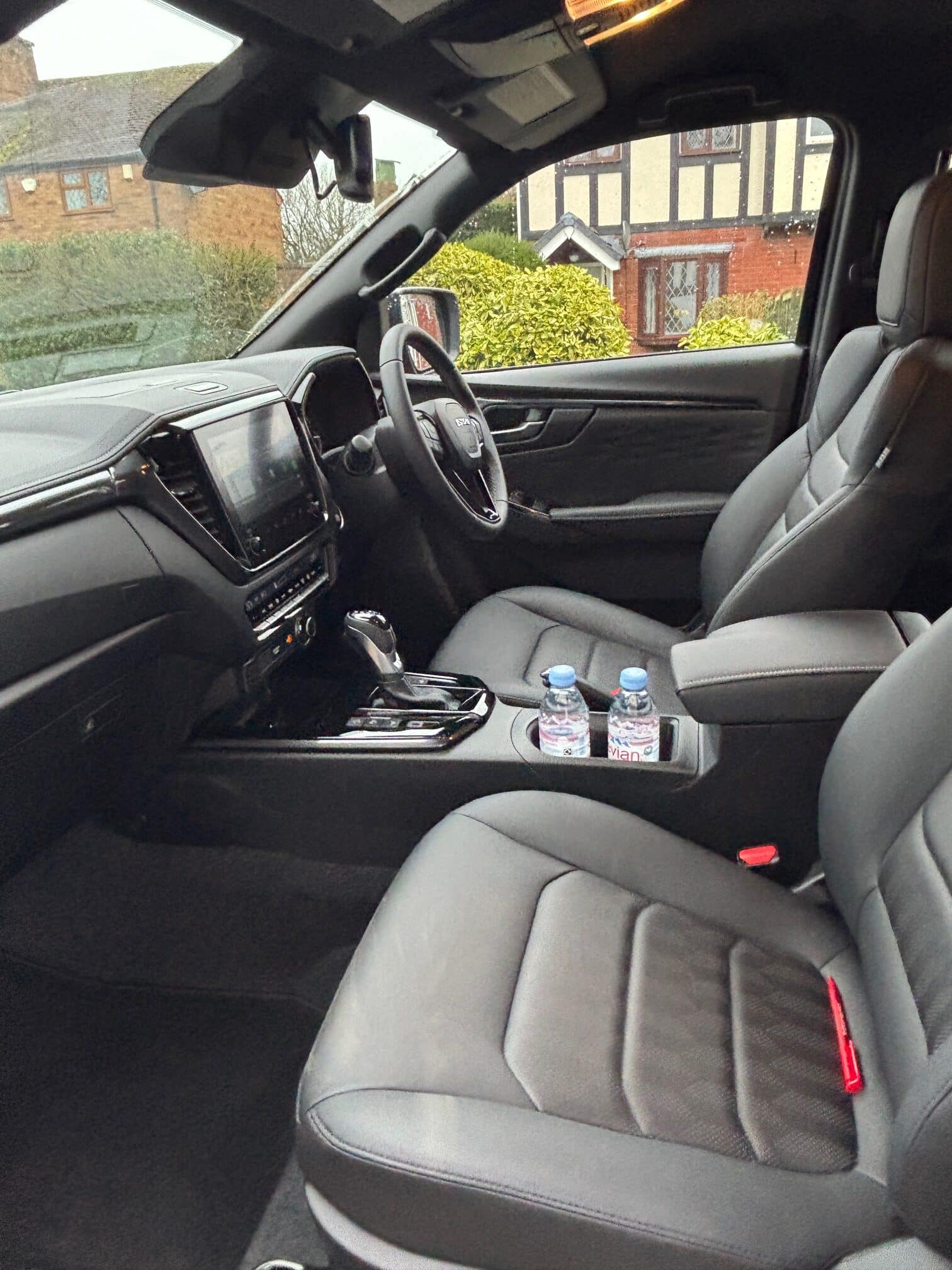
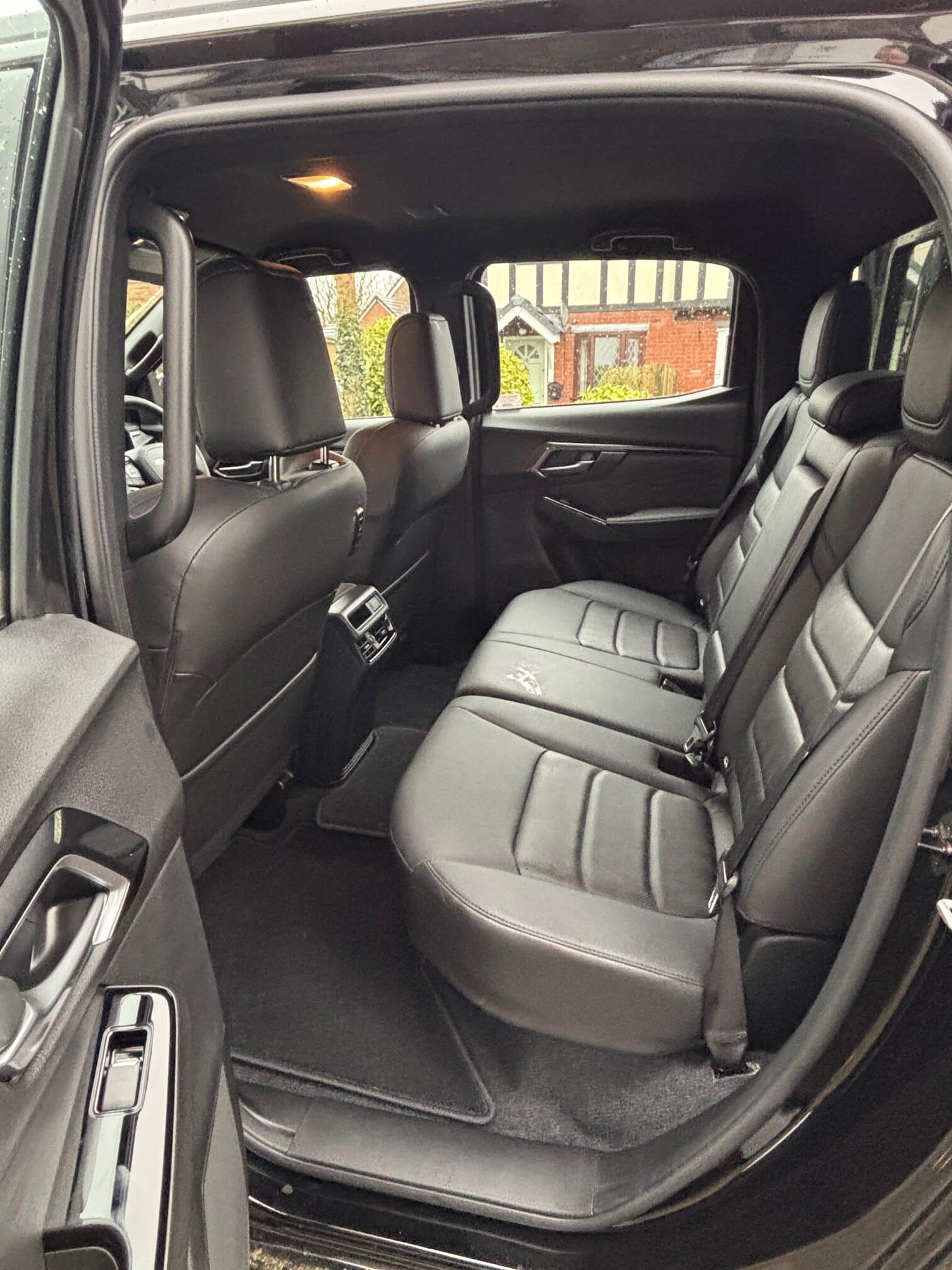
All double-cabs feature two gloveboxes, a storage cubby on top of the dash , under armrest space, pop-out cup-holders with two more in the centre console.
 What’s it like to drive ?
The latest D-Max V-Cross is so much better to drive than the old Blade model & offers far stiffer competition to the established players such as the Ford Ranger, Toyota Hilux & Volkswagen Amarok . It handles the road much more like a large SUV than a pick-up. It’s easy to drive & manoeuvre & also features excellent brakes. The latest seats are comfortable & coupled with the improved body structure, there’s far less body-roll than on previous incarnations.
 Rear passengers get good legroom & the rear seats are cleverly angled to make the rear more comfortable as well. On the motorway the V-Cross will cruise along happily at motorway speeds without the previous models’ tendency to be very loud. The inclusion of ADAS means that you can select your speed & let the V-Cross do the thinking for you.
 In town it’s surprisingly agile & thanks to the reverse parking camera, easy to park as well. From start-up you do encounter a diesel growl & as you change up through the gears this continues as it delivers it’s power lower down than rivals, until you hit the magic 25mph. when things get better. Is it as smooth as the larger engines found on competitors, probably not & it doesn’t have the torque of some either.
None the less, the current D-Max is by far the best Isuzu pick-up yet & a CC&V favourite based on price, availability, model choice, conversion options & a family-friendly dealer network.
 Off road
Our driving day concluded with a 60 minute off-road trail taking in grass, mud, more mud, water & steep hills. The D-Max passed with flying colours just as awe expected it to. For the building site, farm or forest worker it get’s the job done.

Pros
Excellent model choice of single, extended & double cabs. Isuzu pride themselves on their ability to convert your D-Max to the likes of cherry-picker, by offering a bespoke service to suit the needs of customers. Isuzu also has an extensive dealer network of pick-up experts to help you buy & service your D-Max. The latest upgrades only add to the D-Max’s appeal.
 Cons
Cons
The 1.9 engine works fine in almost every situation, but it’s lack of out & out pull could be an issue for some & competitors do offer more oomph. In common with all pick-up’s, there’s still some cheaper plastics adorning the lower part of the dashboard even on the V-Cross. And, if the load bed is empty, as per all pick-up’s, rear seat passengers should expect the occasional bumpy ride.
Conclusion
Whilst other pick-up manufacturers have shied away from the sector, Isuzu are to be congratulated for making their very popular truck, even better than before. The amount of choice across a range of single, extended & double cab model’s means that there’s a D-Max priced for everyone.
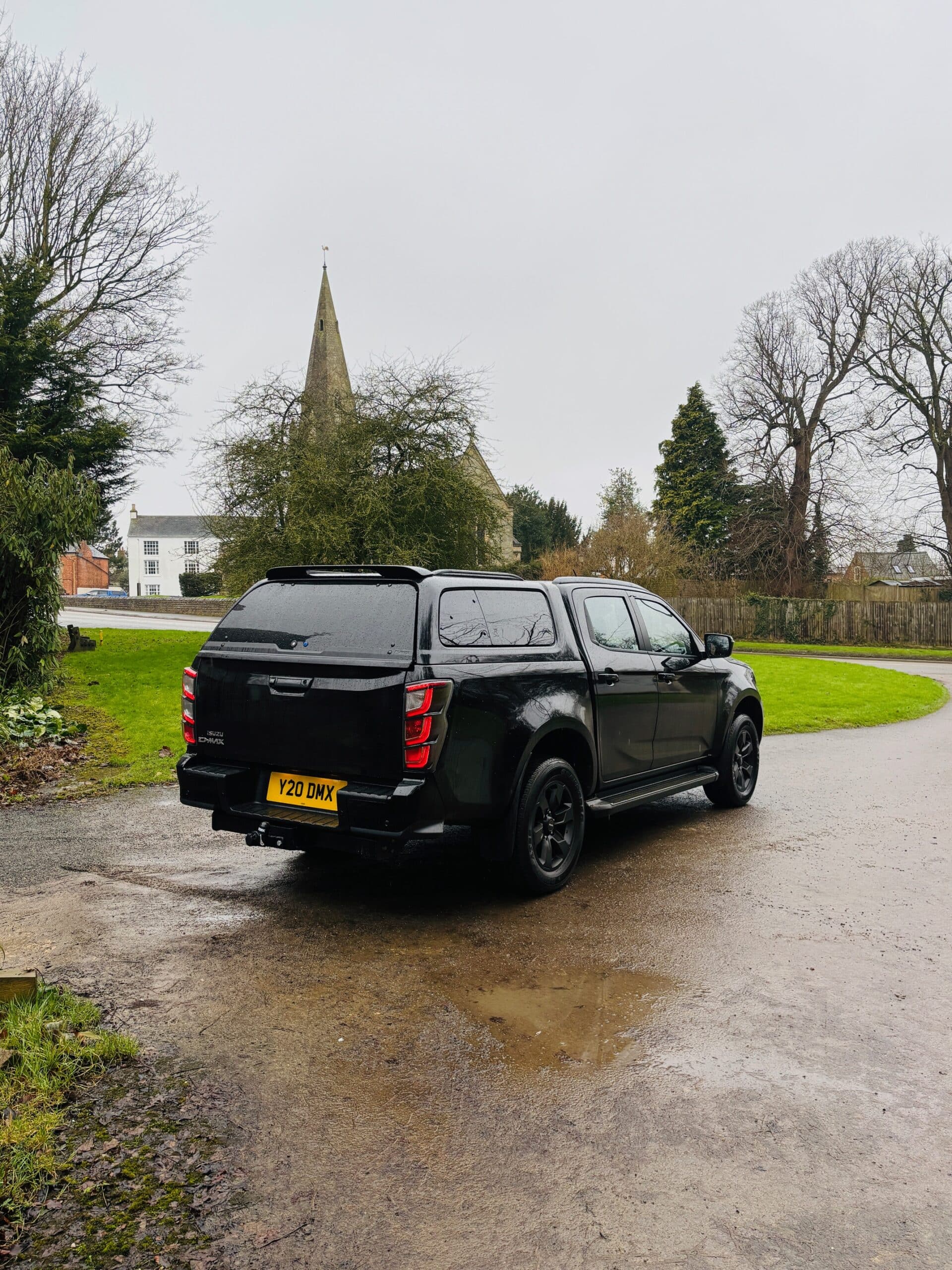
Furthermore, the latest upgrades to the D-Max means that it now looks better than before, & our test V-Cross with a Truckman rear, gun-metal alloy wheels & after market add ons, it’s definitely a contender for those looking for a lifestyle pick-up.
Nicely done 4/5
| Dimensions | |
| Length | 5,280mm |
| Width | 1,810mm |
| Height | 1,790mm |
| Number of seats | Five (double cab) |
| Bed dimensions (LxWxD) | 1,520×1,530x500mm |
