


A chance to drive Kia’s new Niro hybrid & plug-in hybrid models arrived for Company Car & Van this July. Niro is Kia’s second best selling UK model with 23,800 sold in 2021, so it’s an important one for the brand. The Niro EV is set to arrive later in 2022, so for now we’re reviewing the petrol & PHEV versions.
 Model range & engines
A choice of three electrified powertrains; hybrid, plug-in hybrid & pure electric & three trim levels; ‘2’, ‘3’ & ‘4’ The PHEV & HEV feature a 1.6 GDi petrol engine paired with Kia’s six-speed dual-clutch transmission (6DCT). The four-cylinder 104bhp 1.6-litre GDi petrol unit produces 139bhp when paired with the HEV’s 32kW (43bhp) electric motor. A 62kW (83bhp) e-motor in the PHEV version results in combined maximum power of 180bhp with an electric-only range of up to 40 miles.
 What’s new ?
Built on Kia’s third generation ‘K’ platform, this platform has been specifically engineered to accommodate the three available powertrains. The K architecture allows for various battery mounting options depending on the powertrain; beneath the rear seats for the HEV, boot floor for PHEV variants & centrally for the EV version. New Niro has also received suspension & steering improvements & additional insulation & padding have been inserted around the vehicle’s structure to help combat unwanted engine & road noise. Body weight has been reduced by 6 % which equates to 20.3kg over it’s predecessor.
 Exterior
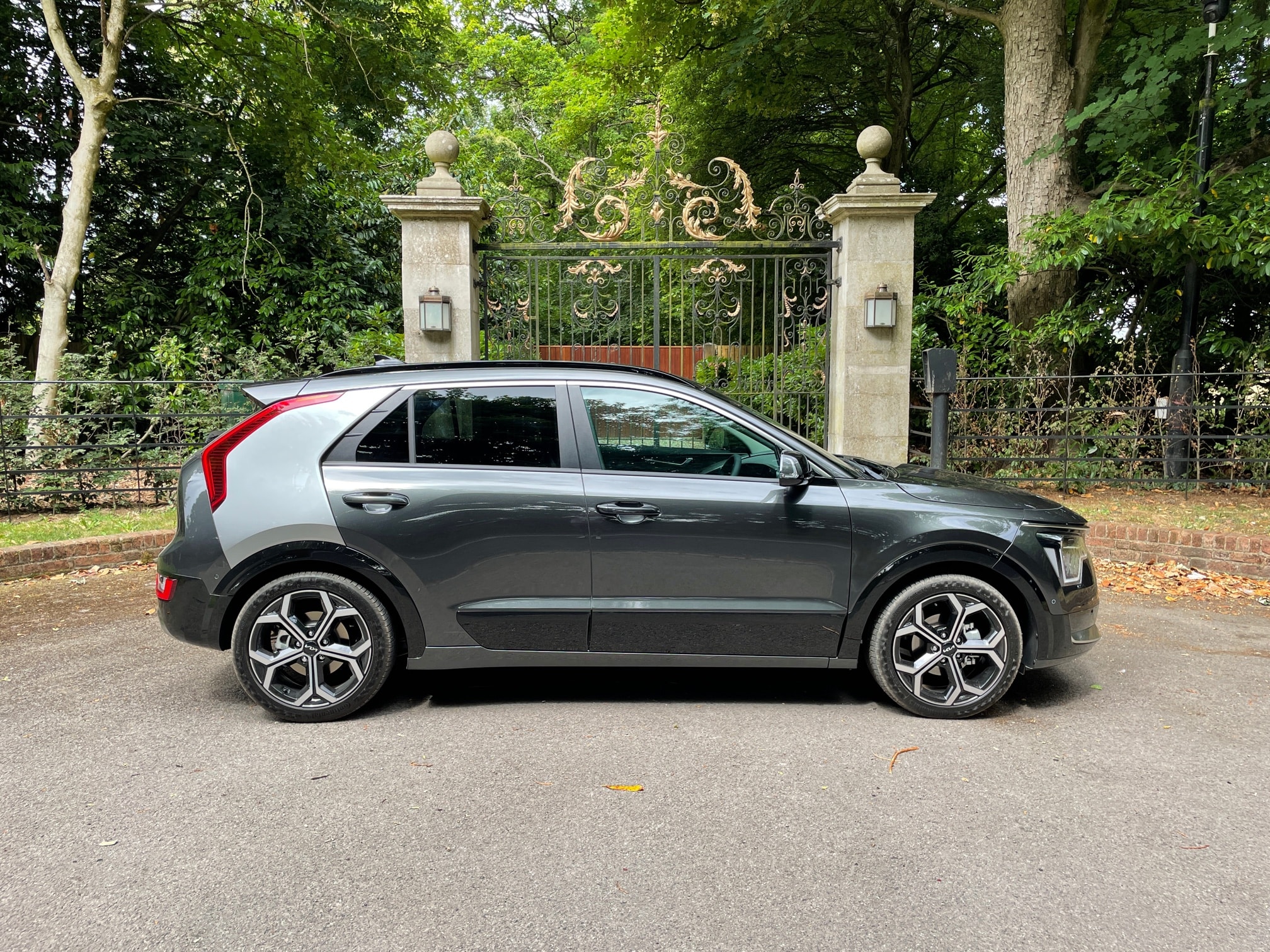
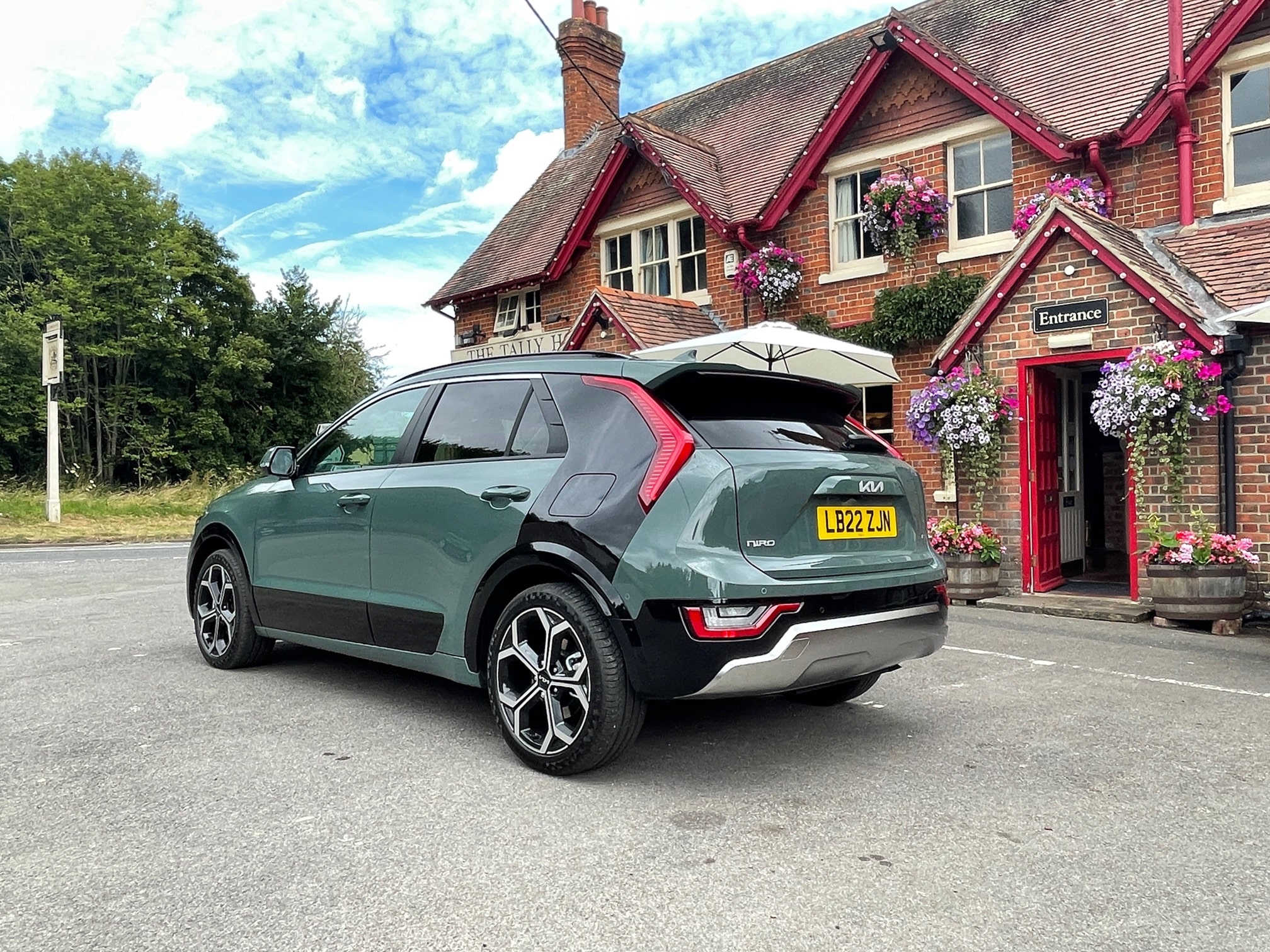
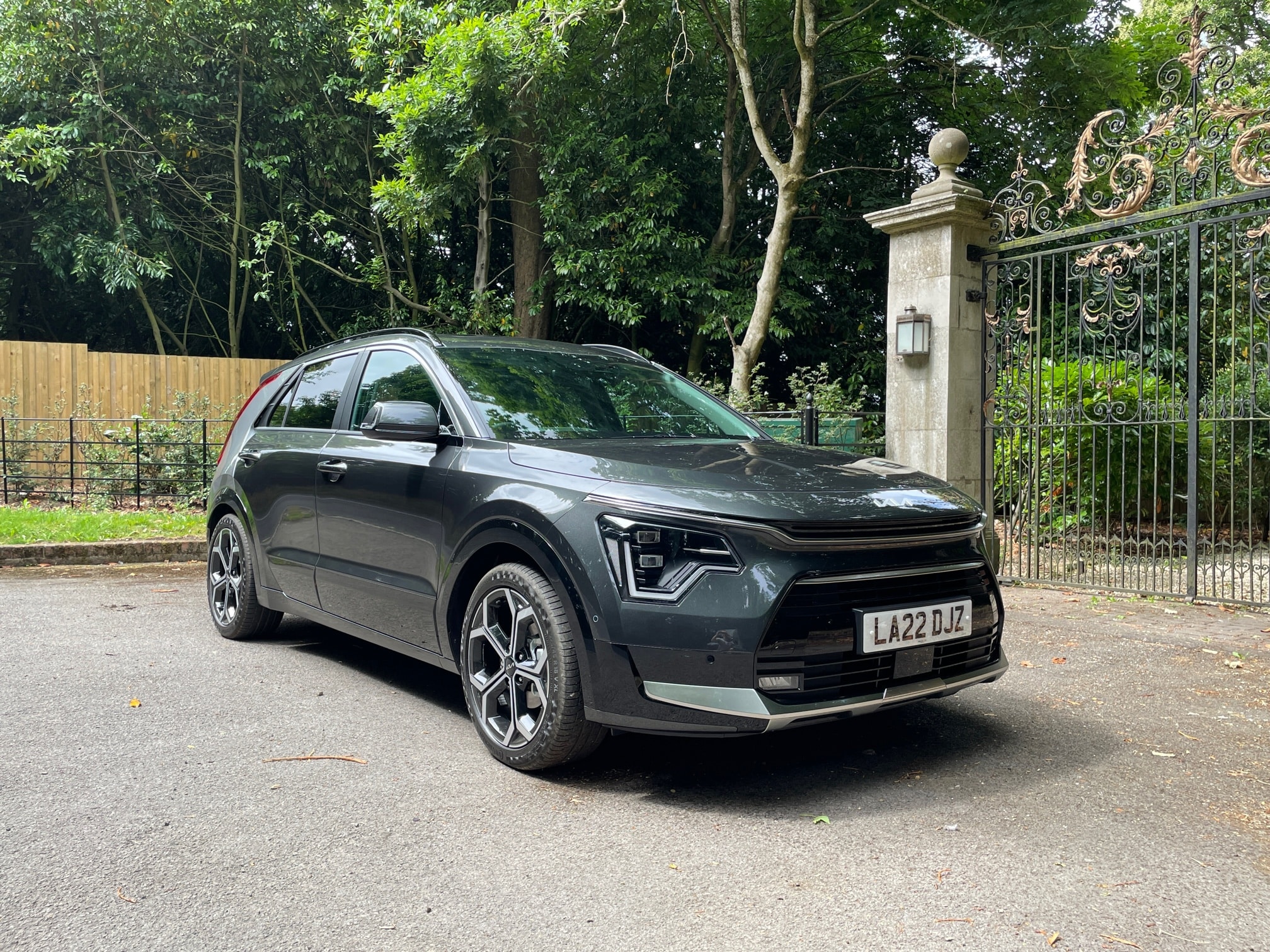
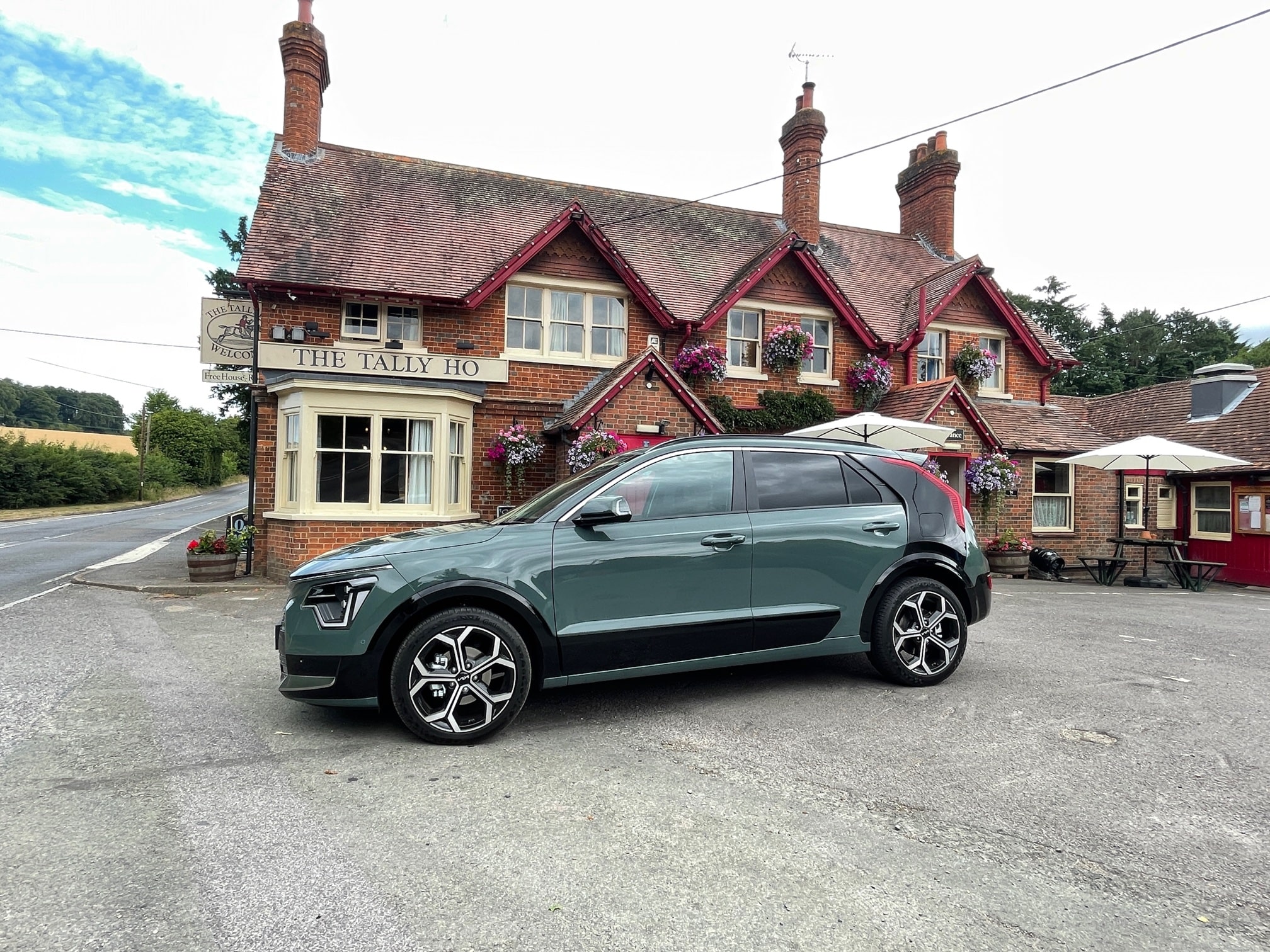
The new Niro is a much better proportioned car than the outgoing model. At the front there is the latest evolution of Kia’s signature ‘Tiger Face’, which now extends to the front wings. The windscreen features a double-cowl design where the top and bottom mirror each other. Angular ‘Heartbeat’ daytime running lights, skid plates, boomerang rear lights & an aero C-pillar towards the rear also feature. Customers can choose from eight exterior colours & a choice of ‘C’ pillar colours that contrast or complement the body colour.
All Hybrid & Plug-in Hybrid ‘2’ grades feature 16″ alloys, automatic LED headlights, an electric hand brake, climate control, rear parking sensors & camera, an 8.0″ touchscreen display with DAB radio, six speakers, Android Auto & Apple CarPlay & 4.2″ supervision cluster.
 Move up to ‘3’ grade & you’ll add 18″ alloys wheels, a 10.25″ touchscreen with SatNav, Kia Connect services, privacy glass, a wireless smartphone charger, heated steering wheel, 4.2″ TFT instrument cluster, front parking sensors & keyless entry & start.
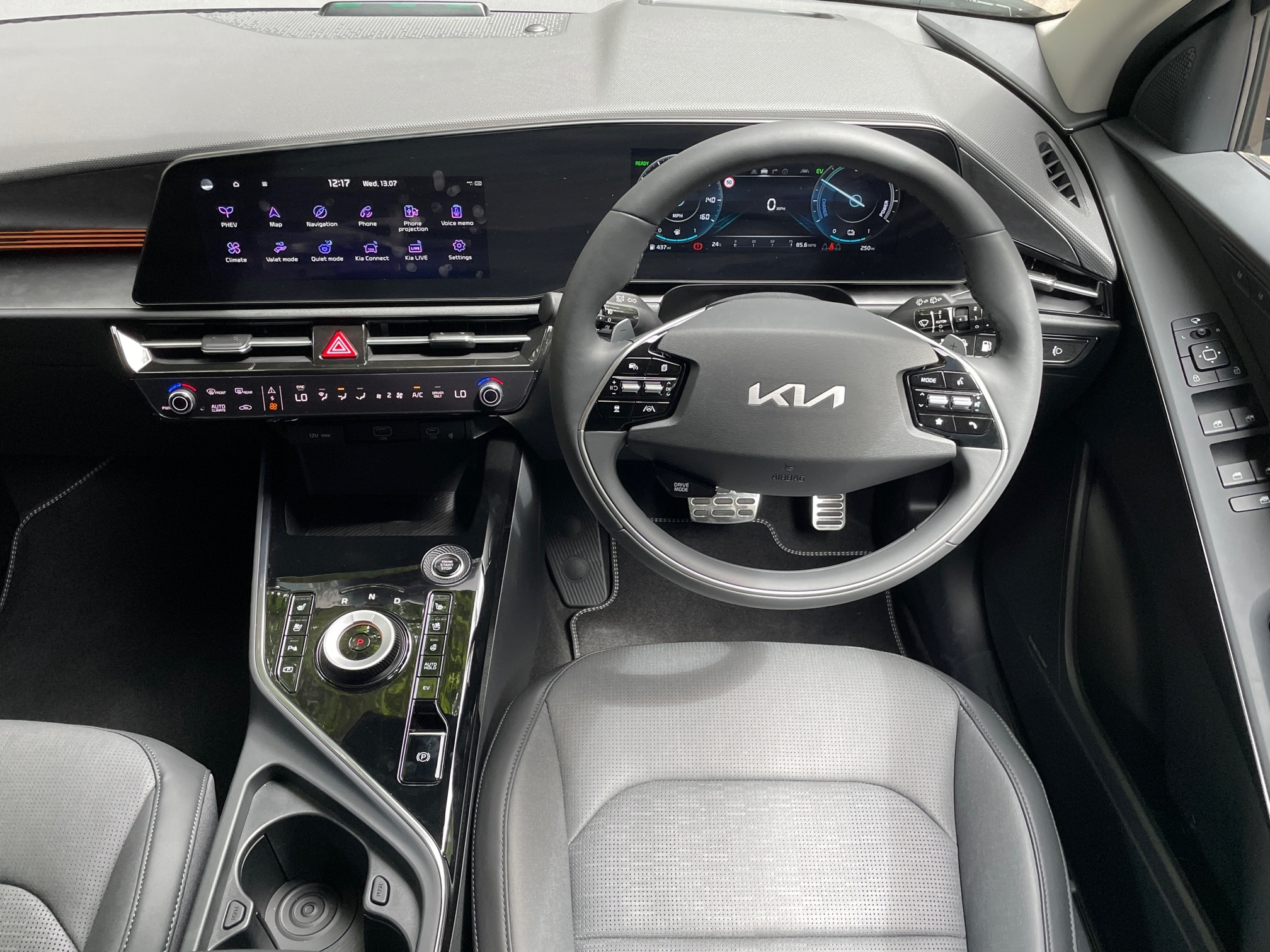
‘4’ grade further enhances the goodies, with a head-up display, dual 10.25″ touchscreen & instrument cluster, heated outer rear seats & ventilated front seats, power tailgate & electric sunroof. Additional technologies include Remote Smart Parking Assist (RSPA) & Parking Collision-Avoidance Assist (PCA). The optional contrasting C-pillar is also available.
 Safety
The all-new Niro comes equipped with Kia’s ADAS system known as DriveWise. So you get Forward Collision Avoidance Assist, Smart Cruise Control with Stop & Go functionality as standard on all grades. Lane Follow Assist, rear parking sensors, a reversing camera & Lane Keep Assist are also included across the range. Front sensors, Highway Driving Assist & Blind-spot Collision Avoidance Assist are included on ‘3’ & ‘4’ grades, with Parking Collision Avoidance Assist & Remote Smart Park Assist on ‘4’ versions.
 Interior
We drove two ‘4’ grade models at launch, hybrid & plug-in hybrid.
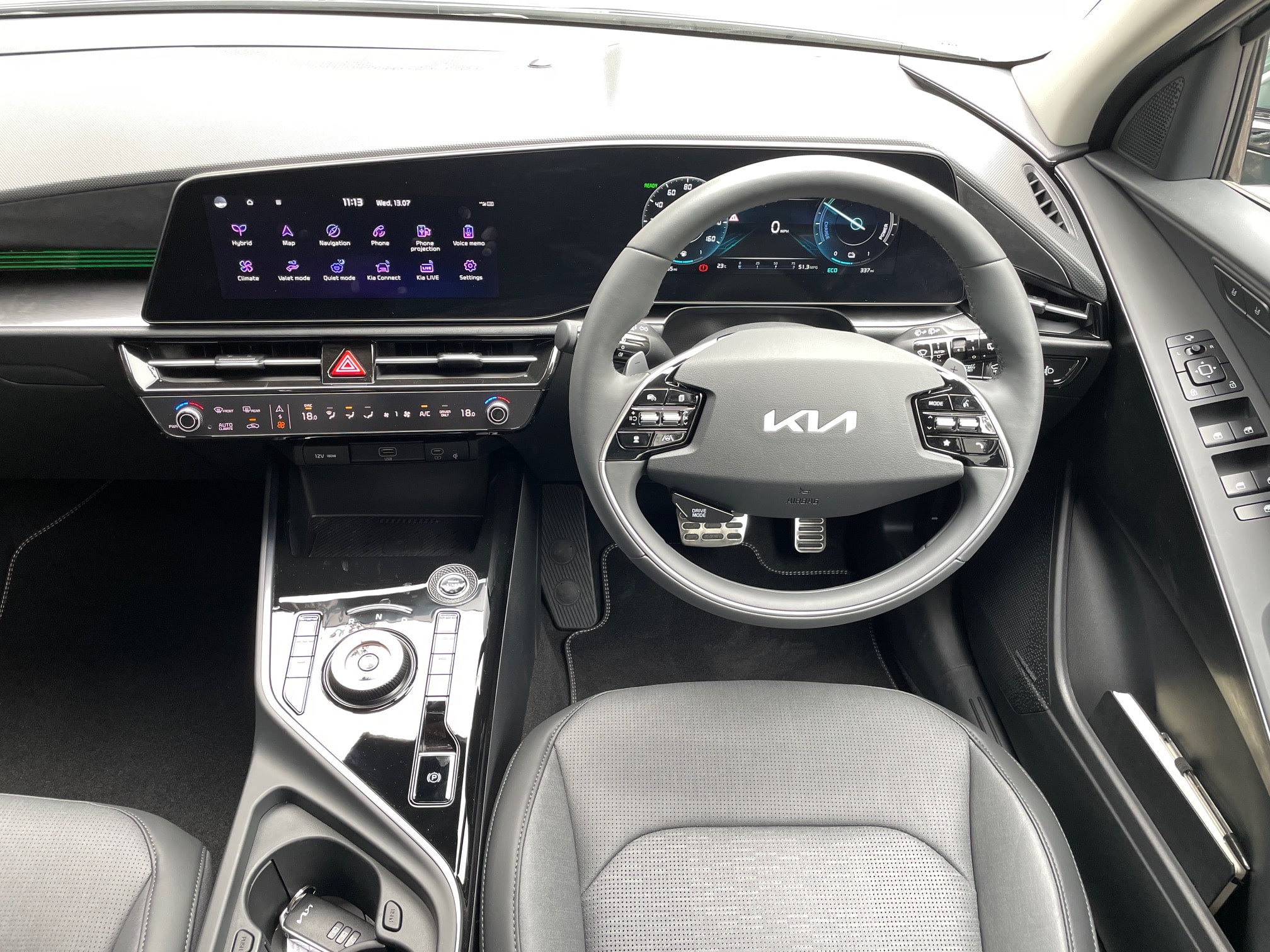
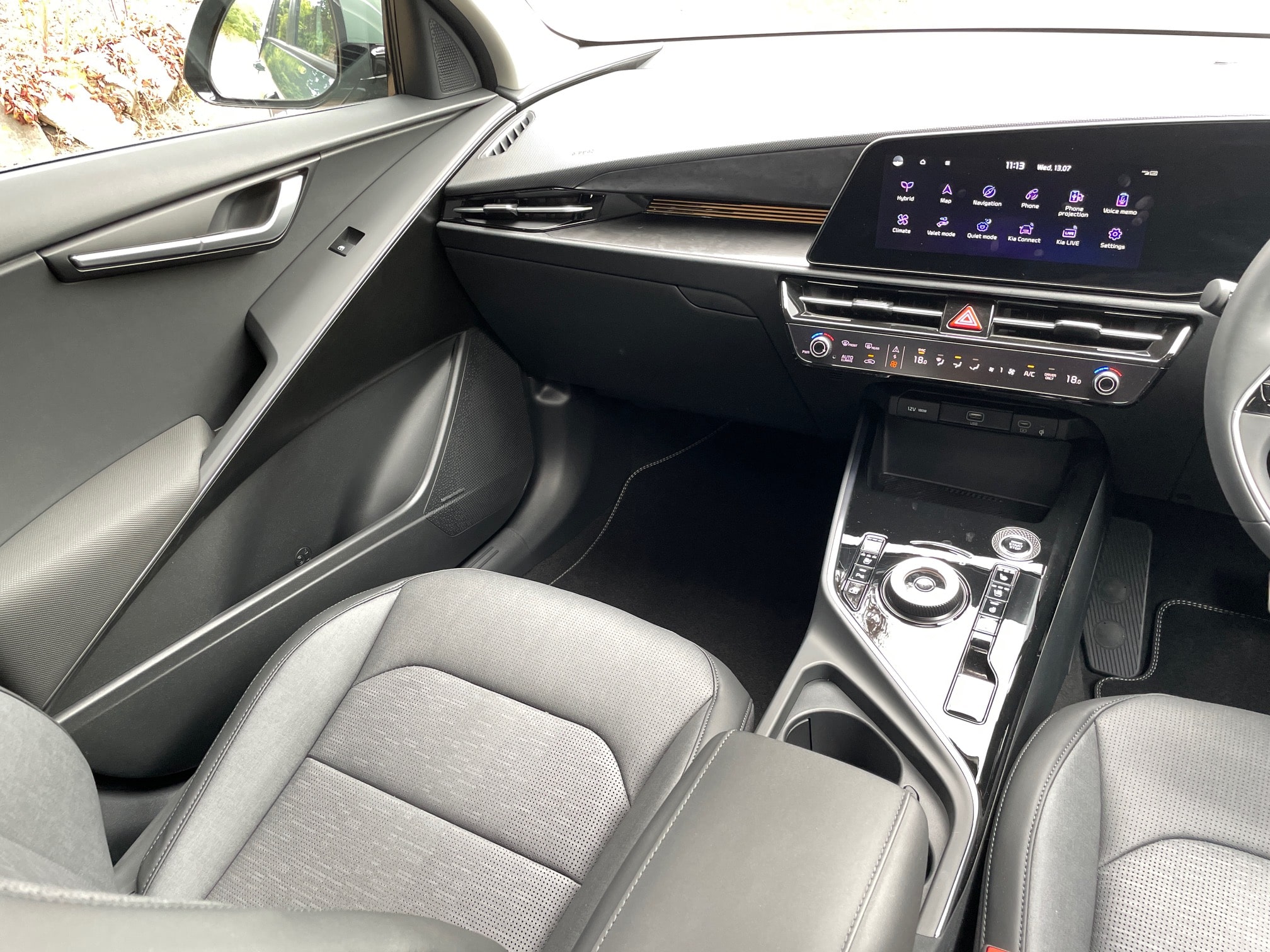
The interior is in keeping with Kia’s new design philosophy so you get an upmarket finish with good quality plastics used throughout. The dashboard on ‘4’ grade, is dominated by the car’s infotainment & instrument cluster screens, which stretch across two-thirds of the car. Below the central touchscreen, sits the car’s multi-mode display. This replaces physical buttons with a dedicated ‘haptic’ touchscreen, providing shortcuts to control the cars climate control, infotainment & SatNav. The good news is, that you don’t need to delve into too many sub-menus to choose what you want. It’s easy to work, with a small arrow which when pushed, switches from climate to the cars functions, which helps free up dashboard space.
 Practicality
Up front you get twin cupholders between the front seats. On some versions, the cup holders rotate outwards & can be pushed back in when not needed, creating more space in the cabin. In front of this you get two USB connections & a 12v socket. The door pockets will also hold a bottle, but the glove box is slim. The front armrest lifts up to add more storage. Front & rear head & legroom is good as well.
The cabin now offers an integrated hanger-type design within the headrests, allowing clothing or bags to be hooked into place. Sitting next to these, are twin USB ‘C’ inputs located on the inside of the front seat sides. The cabin is more spacious than any previous Niro. The 60:40 split rear seats fold down by pulling a lever & the boot features up to 451 litres of luggage space with the seats up. The boot floor can also be lifted to reveal some useful storage space underneath. The PHEV’s 11.1kWh battery cuts into the load space, which means the PHEV gives up 103 litres to the hybrid version as a result.
 On the road
Niro Hybrid
The Niro Hybrid prioritises pure-electric running at low speeds, so you get smooth & near-silent progress from the off. The petrol engine kicks in with an audible growl, but the transition is hardly noticeable & as you increase speed the electric motor adds some welcome power. On a series of A & B roads, the hybrid Niro performs well, handling corners & adjusting to road situations with aplomb. On the motorway the hybrid will travel quietly & comfortably at motorway speeds, with the standard adaptive cruise control making light of a long journey. It’s the lightest Niro & offers the best handling, largest boot, but not the most fun.
 Performance
0-62 mph: 10.8 seconds
Top speed: 100 mph
Top speed in EV only mode: 74 mph
Fuel consumption & emissions
Combined: 60.1mpg
CO2: 106g/km
Pros
Cheapest way into a Niro, largest boot, big improvement all over to outgoing Niro. Great cabin, latest tech & safety fitted as standard, much better looking car than last Niro & plenty of cabin space for five.
Cons
As we enter an EV world, both the PHEV & EV Niro’s, with their low BIK, are the far more attractive company car propositions. It’s a bit bland to drive.
Niro PHEV
We always felt that the old Niro plug-in felt heavy, especially on winding roads. Thankfully, the new version doesn’t feel as heavy & feels much more pleasant to drive. The PHEV is more powerful then the hybrid & it feels quicker & punchier, especially when overtaking.
The six-speed dual-clutch automatic gearbox is smooth & the steering wheel-mounted shift paddles double up to adjust the level of regenerative braking, which adds a few miles to your battery range.
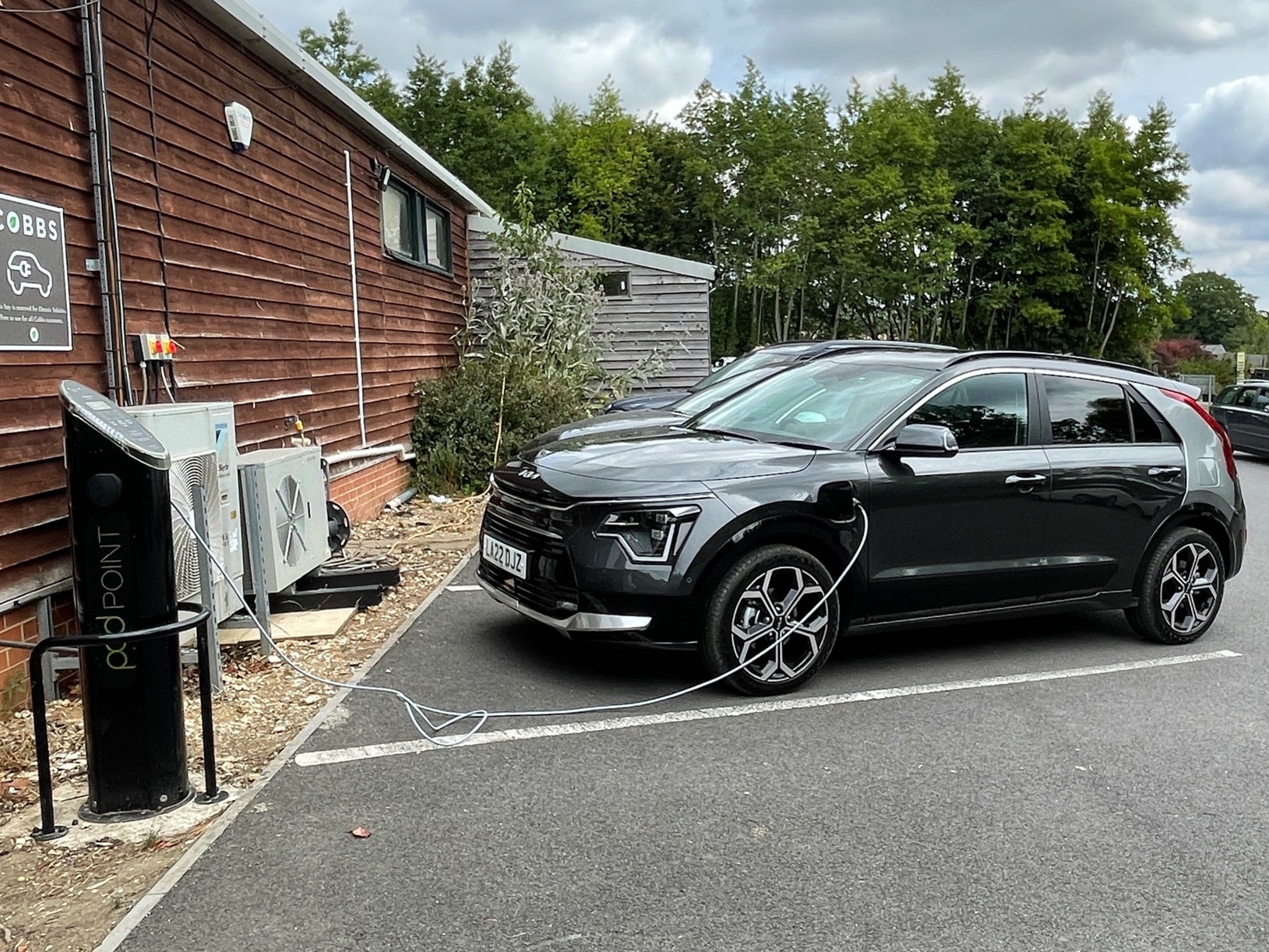 If you drive using just the e-motor, as we did on our way back from Hungerford on a B road, it provides smooth motoring.On the motorway with it’s extra electric power, the PHEV provides more effortless performance than the hybrid & offers more fun too. The six-speed DCT gearbox is smooth with a hardly noticeable delay when the engine takes over from the battery. Outside noise is there, but it’s not that noticeable & importantly the new Niro PHEV offers a much better ride than it’s predecessor.
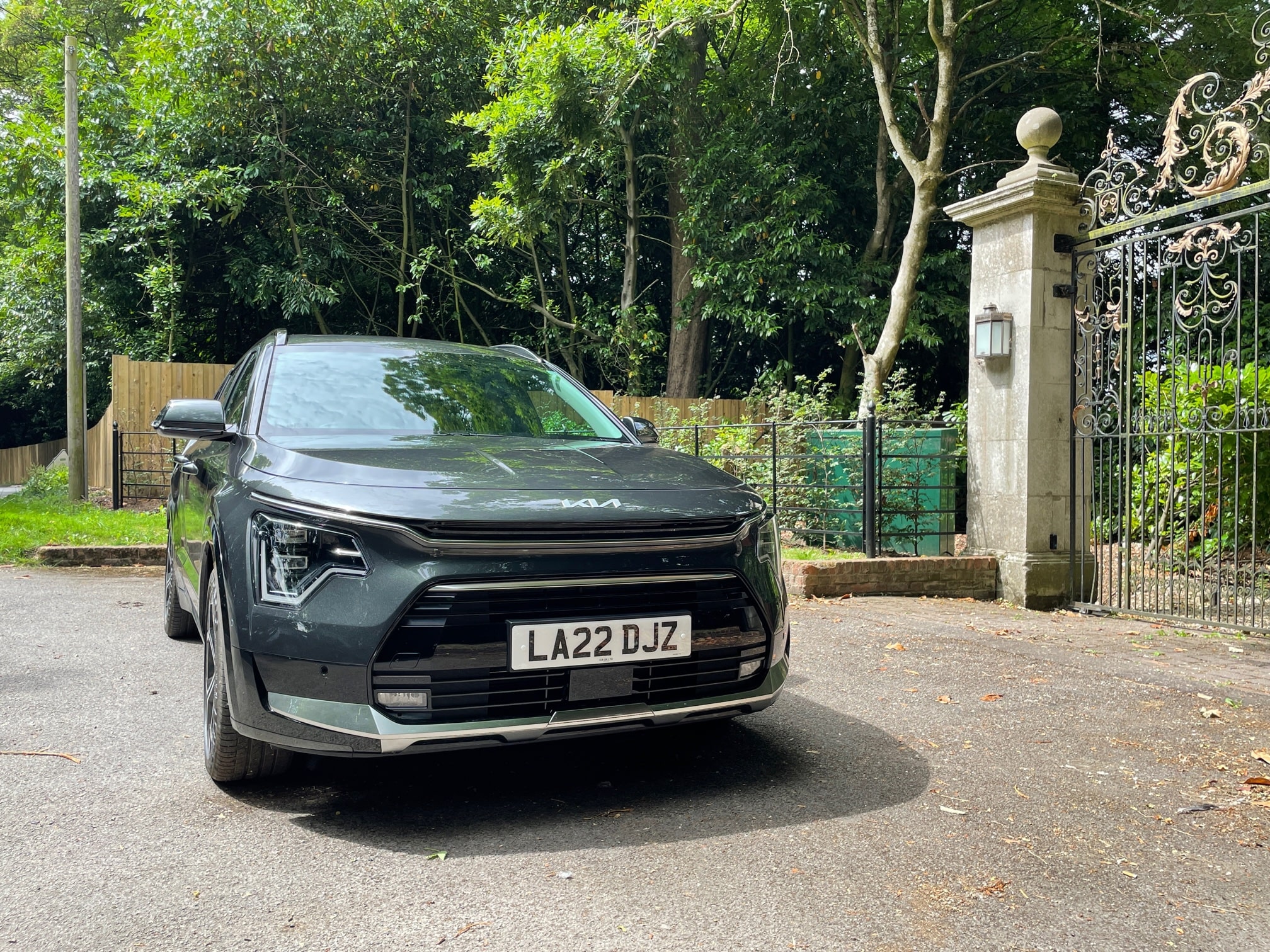
The PHEV has the same 1.6-litre petrol engine as the previous Niro, but now partners a more powerful 83bhp electric motor for a total output of 180bhp. Kia claims a near 40 mile electric range, but on our test drive in July, we’d say that 33 miles is a more accurate reading. As ever, with a PHEV, plug it in at home as often as you can whilst utilising discounted night time charging rates.
 Charging fuel economy & emissions
AC Charge Time: 3.3kWh 15 – 95%: 2h 55m. 7kWh home charger 0-100%:
Combined mpg : 282.5mpg
CO2 : 22g/km
Pros
Low BIK from 8%, make it great company car choice for those who aren’t ready or can’t have a home charger. It’s much, much better everywhere over the previous version. On trend infotainment & the latest safety features also impress.
 Cons
Cons
Even though it’s a major improvement over the old Niro PHEV, it’s actually not that exciting to drive. It’s also expensive, with our ‘4’ grade costing at £39,025 & therefore is similarly priced to the Niro EV, which comes with a bigger boot, offers better performance & a lower BIK.
 Conclusion
For company car drivers & fleet managers alike, the PHEV is our choice, at least until the EV version lands in late 2022. The plug-in hybrid can travel up to 40 miles on pure electric power & on the combined cycle, will achieve a real world figure of 55-60mpg, which is pretty impressive. Both models feature a top class cabin with excellent safety & infotainment features, with almost all of it standard across the range.
Kia can do no wrong at moment & are producing cars that tick every box, especially in the company vehicle sector.
A fleet -friendly plug-in 4/5
