


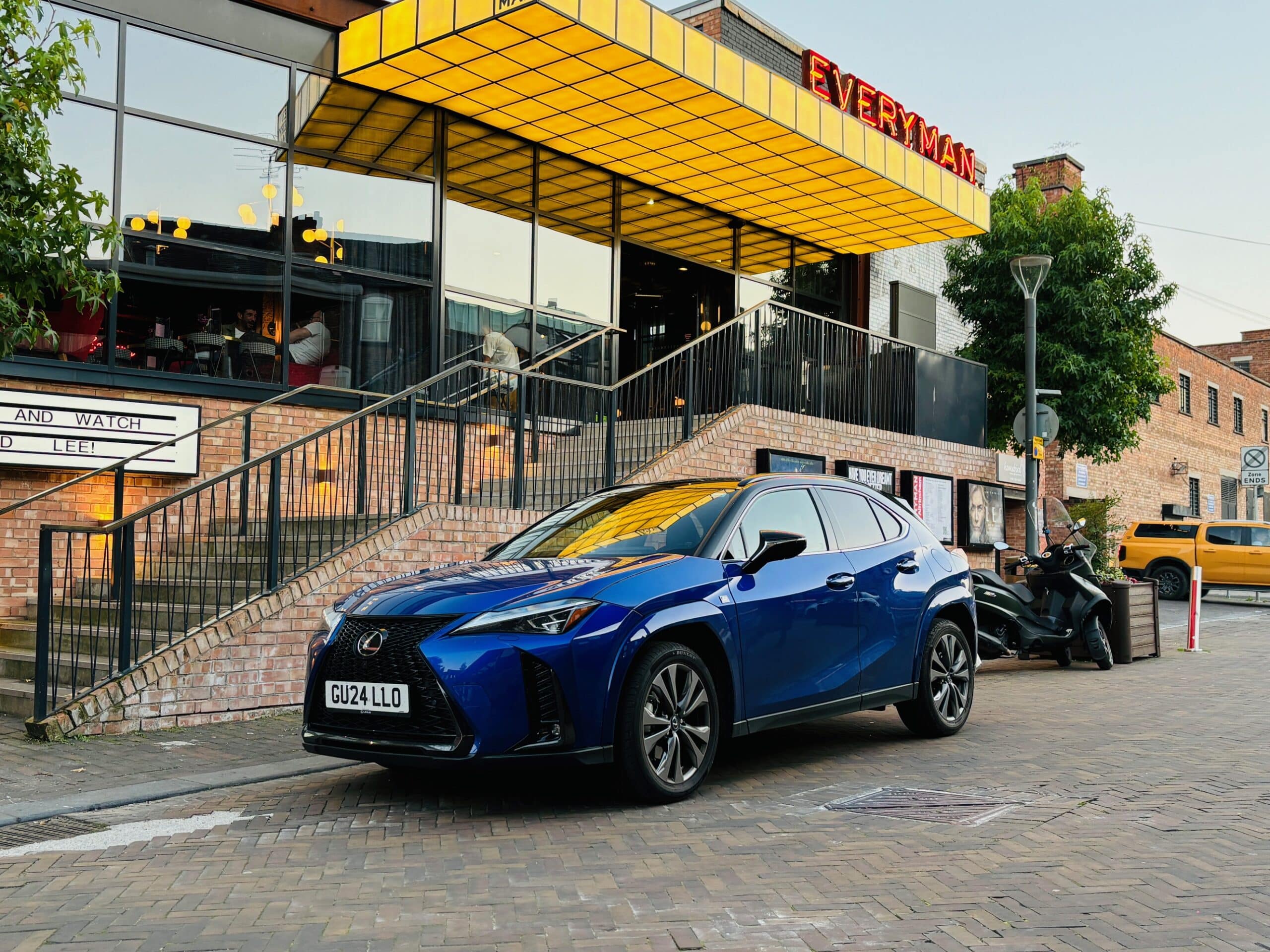
The smallest Lexus crossover the UX landed in 2019 & with an all-electric version is proving a popular user-chooser company car choice. We drove the hybrid version the UX300h recently & here’s how we got on
 Model choice & engine
Eight versions are offered. Urban, Premium, F Sport Design, F Sport Design Tech, Premium Plus, F Sport, Takumi & F Sport Takumi.
There’s just the one powertrain for UK customer’s, a 2.0-litre petrol-electric hybrid, although it is offered with both a 2WD costing from £34,895 & a 4WD costing from £43,895.
 Economy & emissions
Like the majority of the brands hybrid’s, it offers impressive fuel economy, which on the model we were testing, the UX300h 4WD, comes with a Combined WLTP fuel economy of 54.3 mpg, impressive.
 Performance
Top Speed is 110mph & 0-62 mph takes 8.1 seconds. CO2 Emissions are 119g/km
Exterior
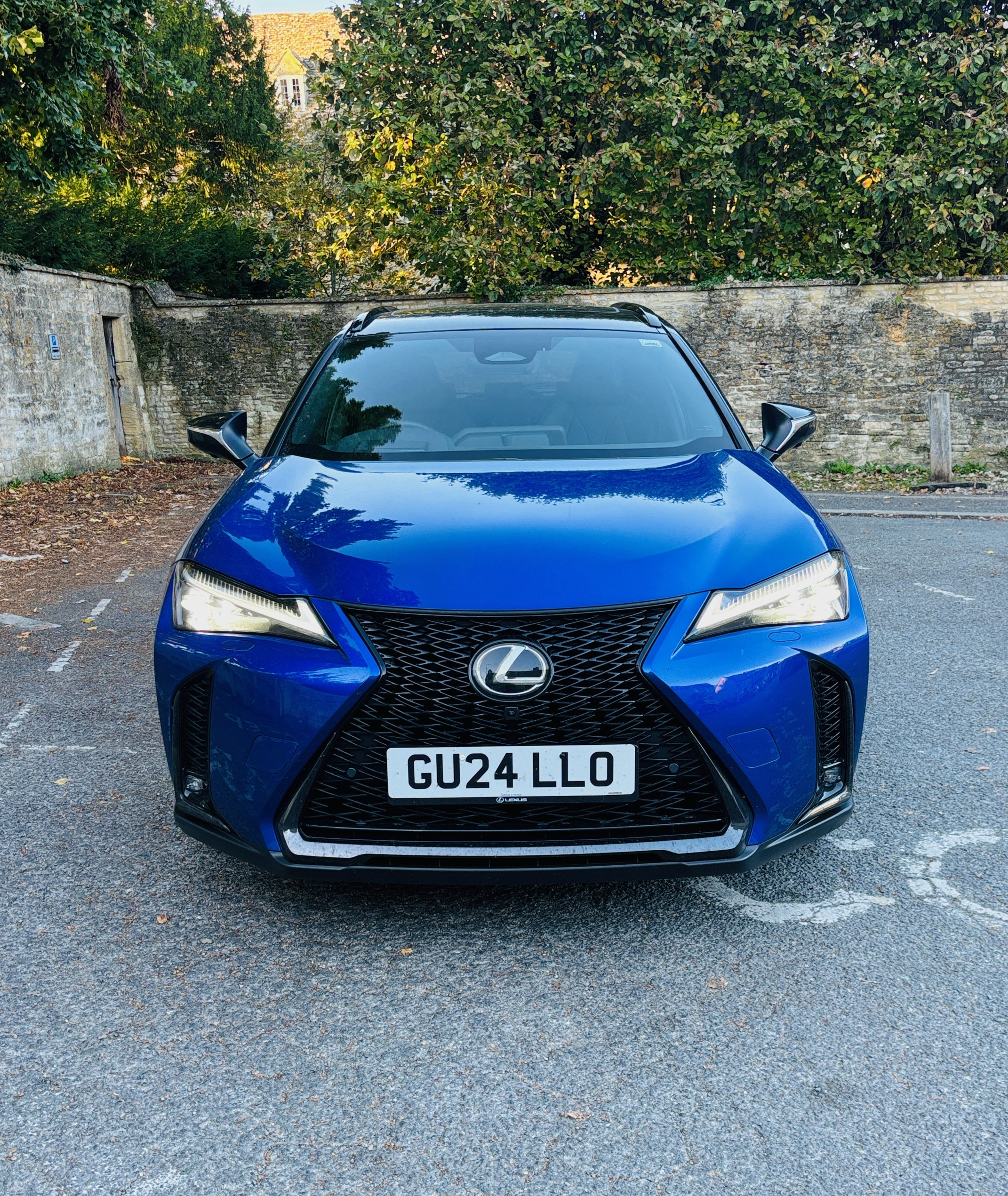
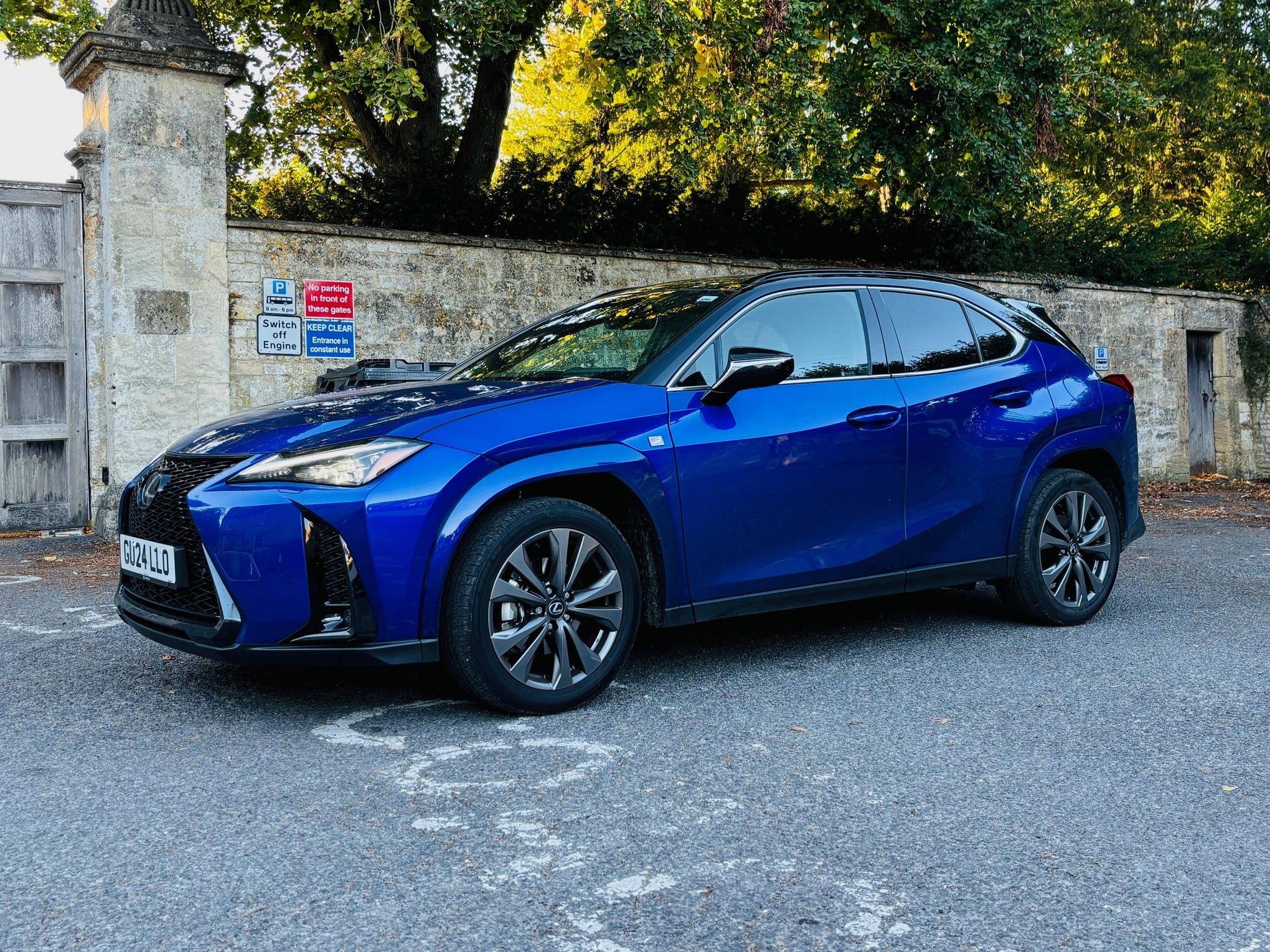
In a sector of mostly bland looks, the UX makes a fine fist of standing out. Up front, the familiar Lexus spindle grille features a mesh pattern & there’s narrow LED headlights on the front corner’s, which are standard across the range. It also features large wheel arches &
rear lights that span the full width of the hatch back, ending with a bulbous finish at either side.
 Specifications
The UX 300h comes very well equipped. Entry model Urban offers 17″ silver alloys, an 8″ touchscreen display, Lexus Link Cloud-based Navigation & wireless smartphone integration for Apple CarPlay & Android Auto. Premium adds 17″ black alloys, smart entry & start, front & rear parking sensors & a heated steering wheel. F Sport Design includes 18″ alloys, privacy glass & a wireless smartphone charger. F Sport Design Tech includes a blind spot monitor, electronic climate control, heated front seats & heated steering wheel. Premium Plus has machine finished 18″alloys, a larger 12.3″ touchscreen & an 8-way electrically adjustable drivers seat. F Sport up’s the ante adding a rear performance damper & Adaptive Variable Suspension. Takumi gives you a 13-speaker Mark Levinson premium surround sound system & a 360⁰ panoramic view monitor. Range topper F Sport Takumi combines some of these with Adaptive Variable Suspension , a blind spot monitor a rear performance damper & the e8-way electric drivers seat.
 Interior
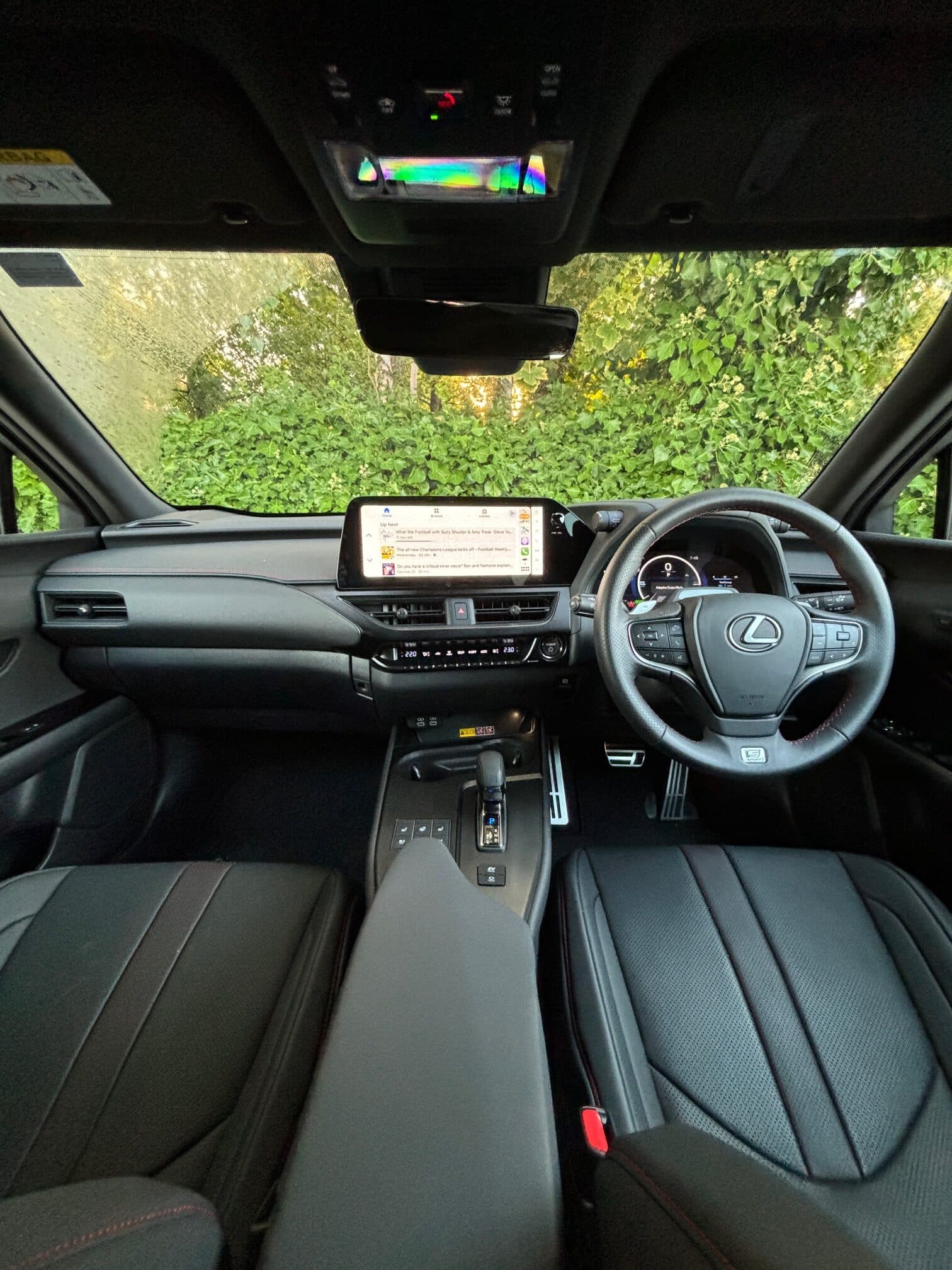
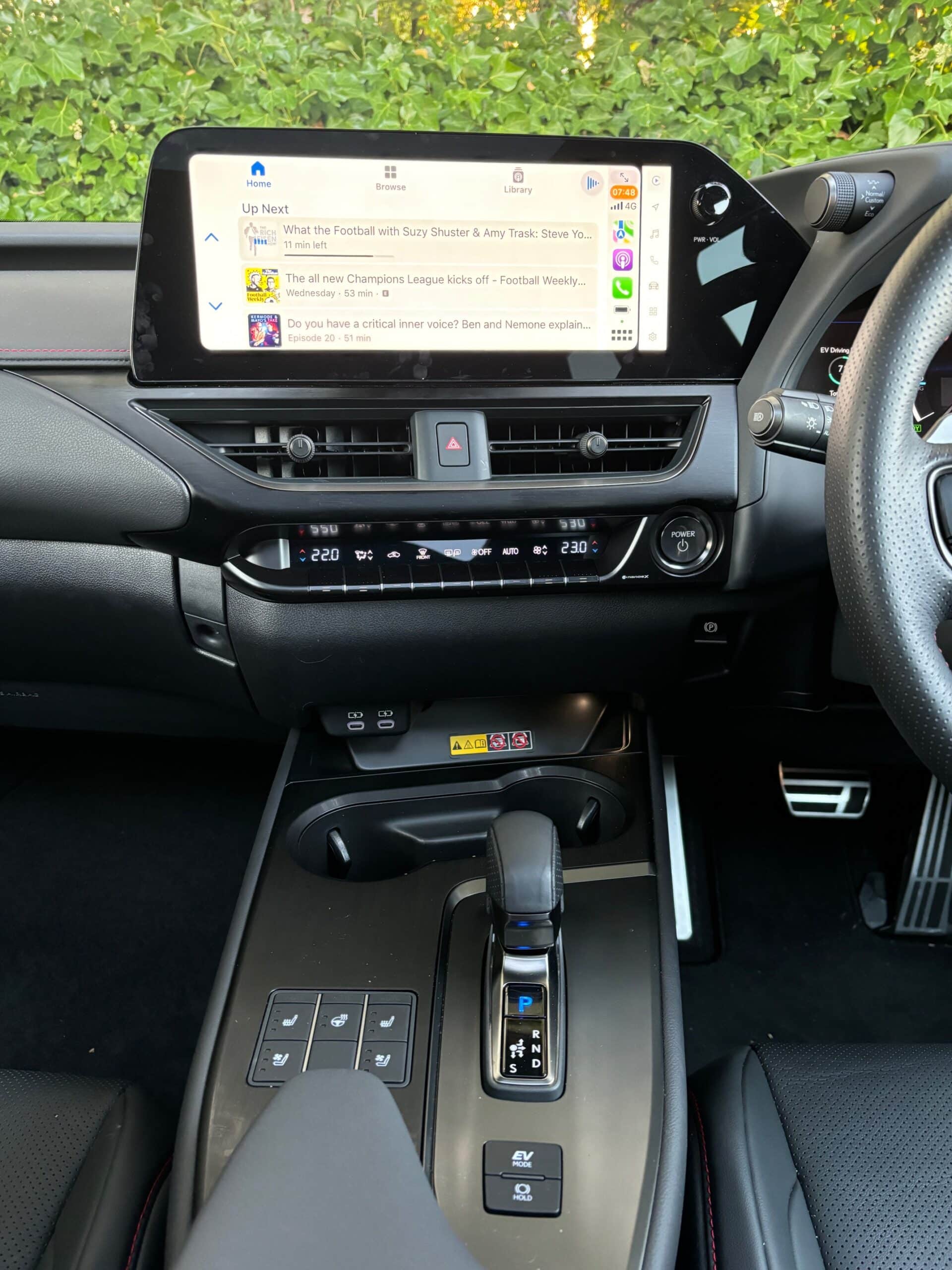
The Lexus 12.3″ infotainment screen sits in the centre top of the dashboard & allows access to all of the cars main functions. Design details include two cylindrical buttons above the steering wheel which jut out like horns from the dash, one of which controls the driving functions, Normal, Eco & Sport; the EV function is selected by pressing a button between the front seats.
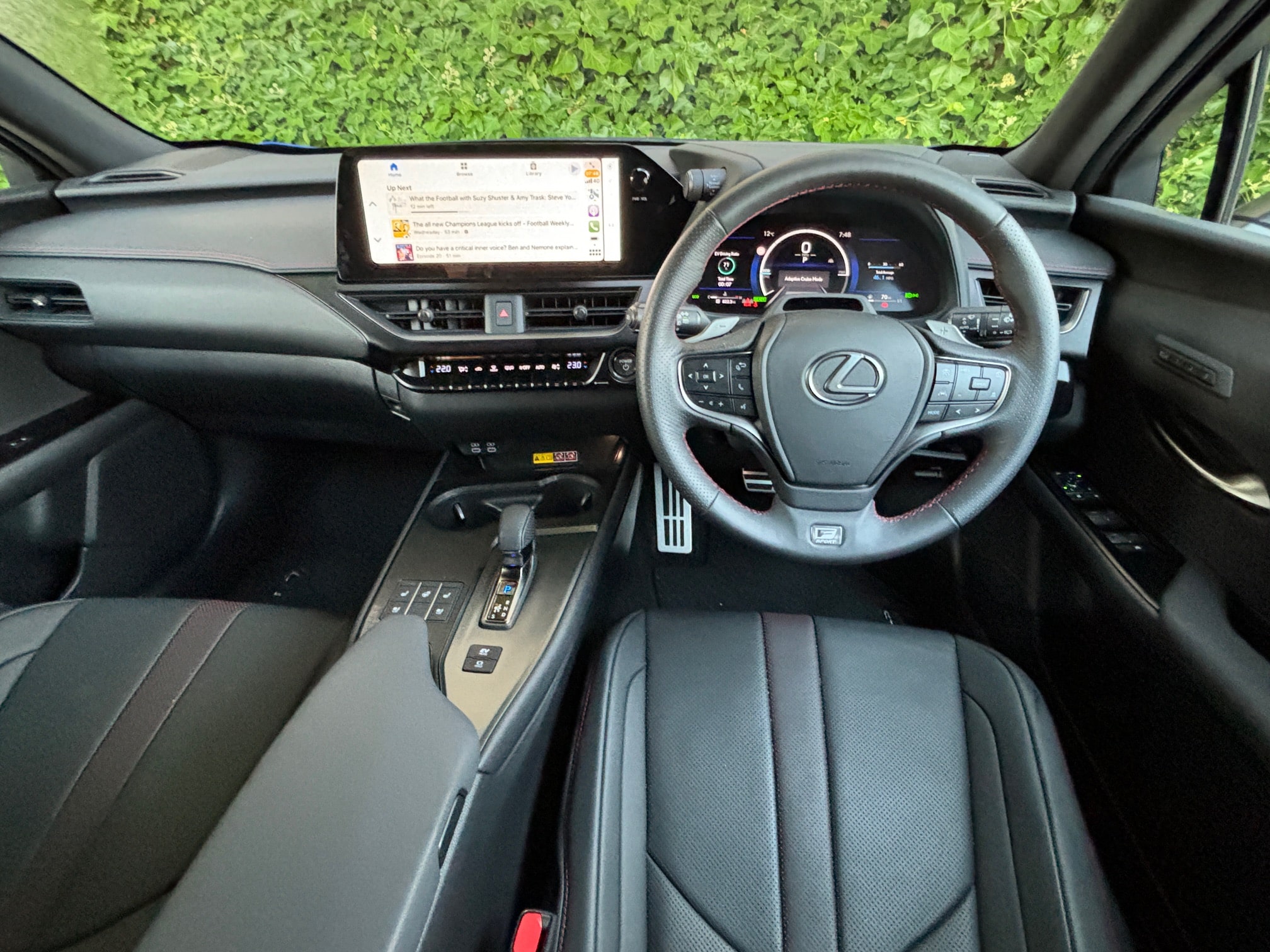 There’s also some function buttons located at the front of the opening armrest. These are located in an awkward place. A week in the UX allowed us to get used to both of these, so don’t let that put you off. Luckily, the climate controls are separate & are straightforward, located underneath the screen, which is always a blessing.
 Infotainment
The Lexus SatNav is pretty good & the option of Bluetooth & CarPlay makes accessing music or podcasts from your phone simple. Menu is easy to understand.
 Cabin practicality
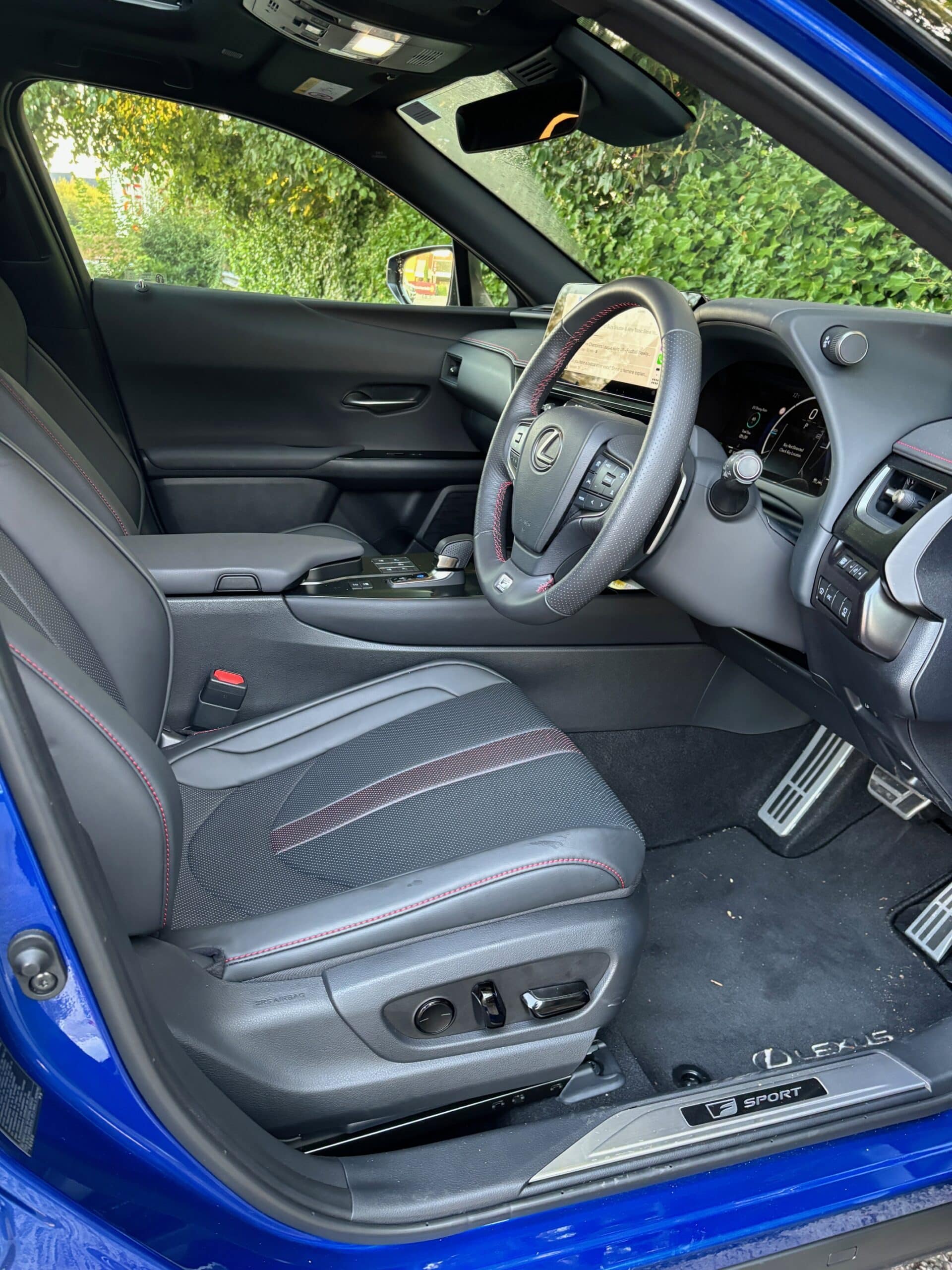
Interior space up front is great, with the wraparound dashboard still leaving plenty of knee & legroom. You don’t actually sit as high up in the UX as many competitors & it doesn’t feel like you’re in an SUV. Rear passenger space is a little compromised, especially if you’re sat behind a tall front passenger. The centre most rear seat suffers the most, as it’s higher than the outer seats & is only large enough for a small teen or younger.
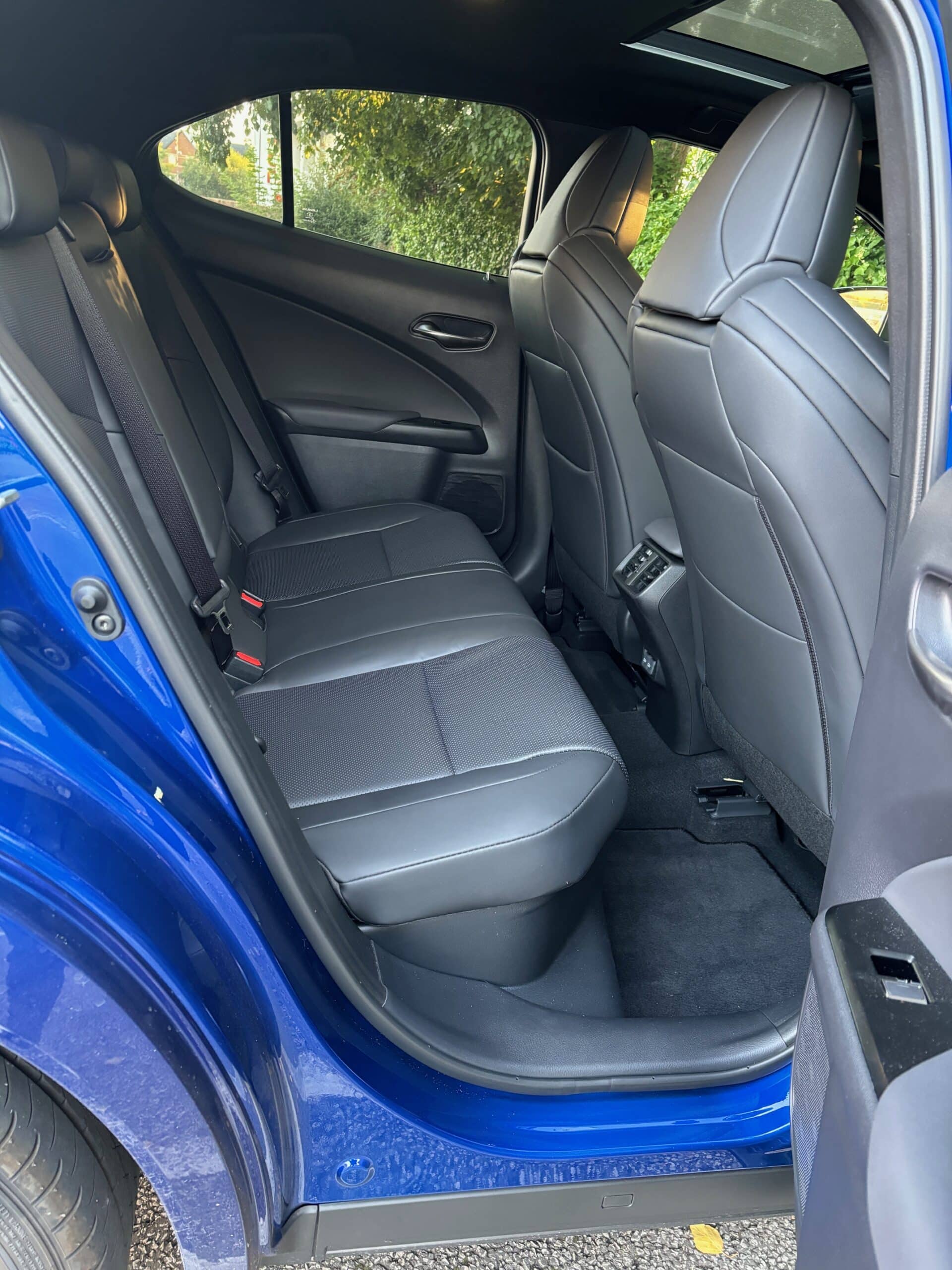 Cabin storage is also average. There’s a smallish glovebox, twin front door bins, a decent cubby under the central armrest which cleverly opens both ways & hides the USB connection plus a couple of cup holders. Rear-seat passengers get nothing other than two rear seat pockets.
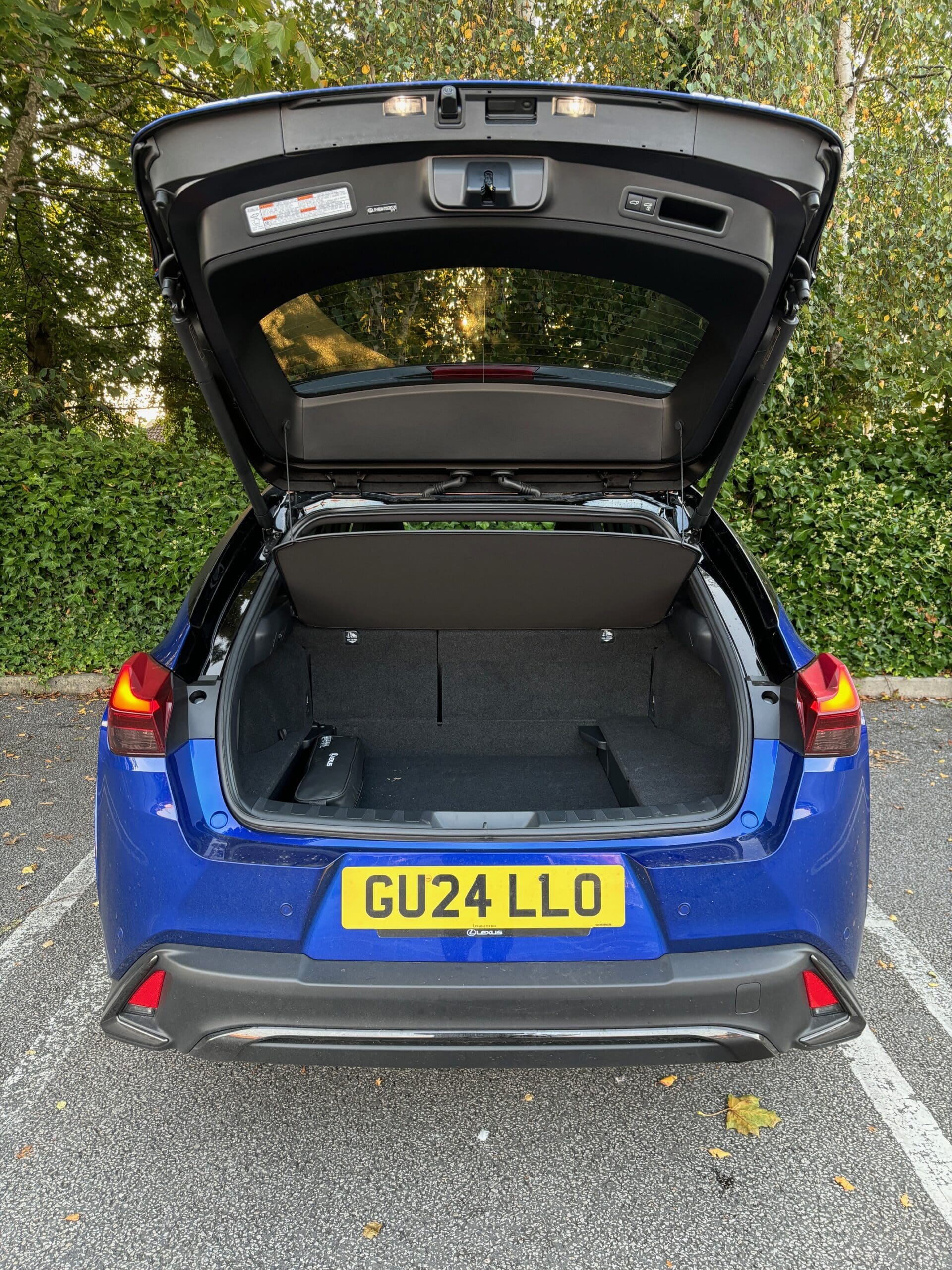 At least the rear seats split 60:40 & there’s a useful removable flat boot floor enabling easy loading/unloading. With this removed, the UX offers 320 litres of space which, when you look around, isn’t great. For example the similar sized VW T-Roc offers 445 litres.
 Driving
The best thing about the UX is it’s handling. Whilst the ubiquitous CVT gear box in the Toyota/Lexus model line-up can be a little frustrating when it comes to all-out fun, fitted on the UX however , it actually works better than in some larger Lexus models. The UX although a crossover/SUV, sits quite low to the ground & is a lot of fun to drive when you’re lucky enough to find some winding B roads. It hugs corners tightly & springs out of them quickly, putting a smile on your face. In the confines of metropolitan driving it’s also a hit. The cabin is well insulated from outside noise & in the city, especially at lower speeds or stuck in traffic, the EV function can be utilised. At anything under 20mph progress is serene & the UX’s smallish size makes it easy to park as well.
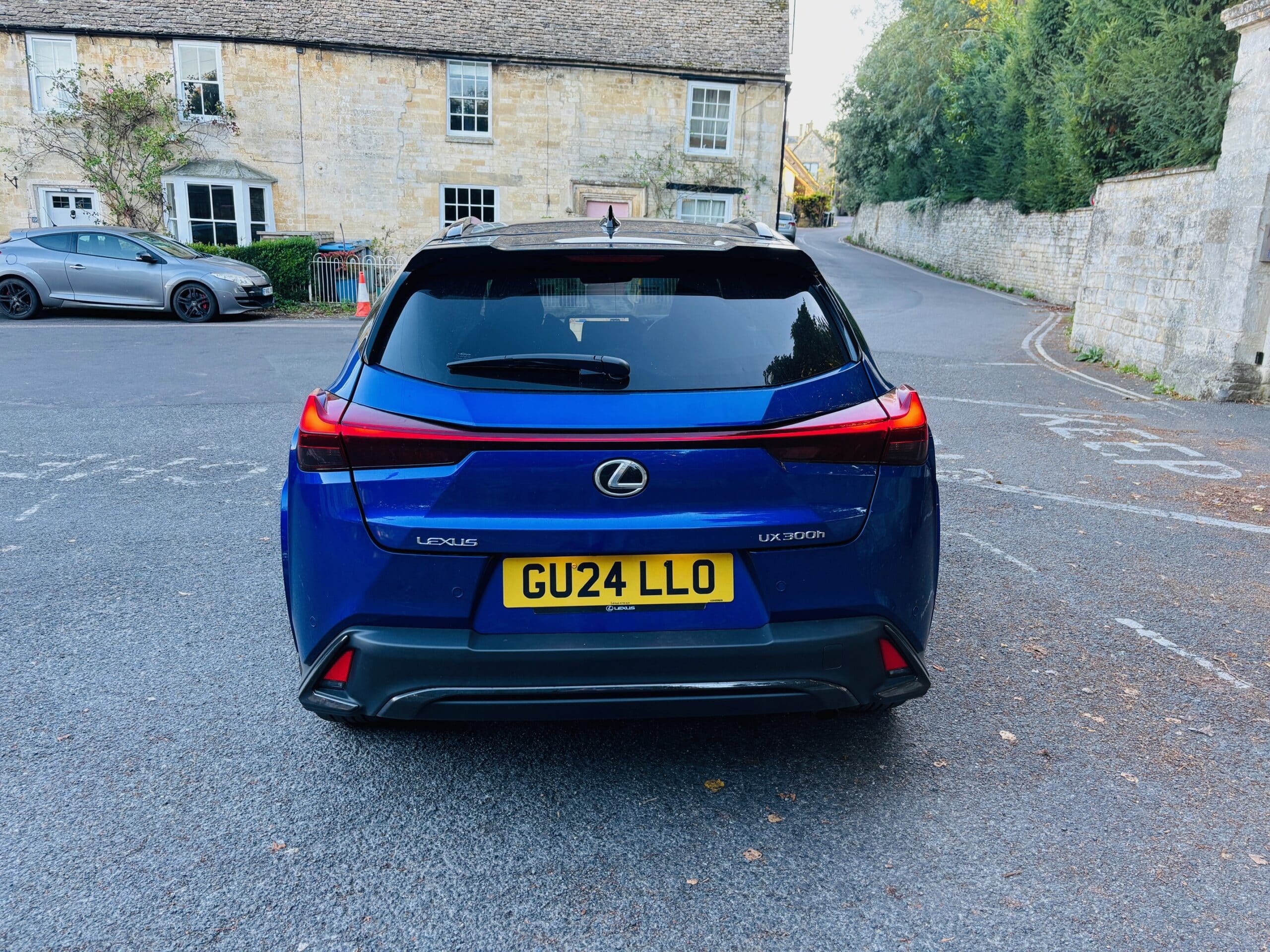 The UX also performs admirably as a motorway cruiser. Large distances are eaten up with adaptive cruise control a real bonus when traffic gets heavier, or you enter a speed restricted section of the road. The driver’s seat is incredibly comfortable & with my test car featuring electric seat adjustment. Furthermore, you’d struggle to find a more enjoyable cabin in the class to be in.
Economy
We drove 879 miles in a week & averaged 49.2mpg. This included a lot of motorway driving plus 4 hours crawling around London, so all in all, a decent return.
 Pros
Pros
Hewn from granite. Very quiet & comfortable. Very, very reliable.
Cons
Do Lexus really need 8 versions ? Higher spec models are expensive. CVT gearbox doesn’t offer much fun. Boot is small. The Electric UX is more company car friendly.
 Verdict
In conclusion, the baby Lexus SUV is great to drive, is brilliantly put together & with a larger touchscreen & connected Apps which it didn’t used to have, ticks even more boxes. Our only criticisms are that the CVT gearbox is dull to use & the boot is on the small side. As a company car driver we’d suggest choosing the electric UX & opting for a mid-spec model. Simples.
3.5/5
