


As the first model from Mercedes-Benz’s EQ electric range, the EQC has already found plenty of fans, especially in the company car market, where it’s Benefit in Kind of just 1% make’s it a very attractive proposition. However, as a company car driver currently driving a premium petrol or diesel SUV, how does the electric EQC stack up & are the tax savings alone, great enough for you to consider the switch to electric ?
Design & engine
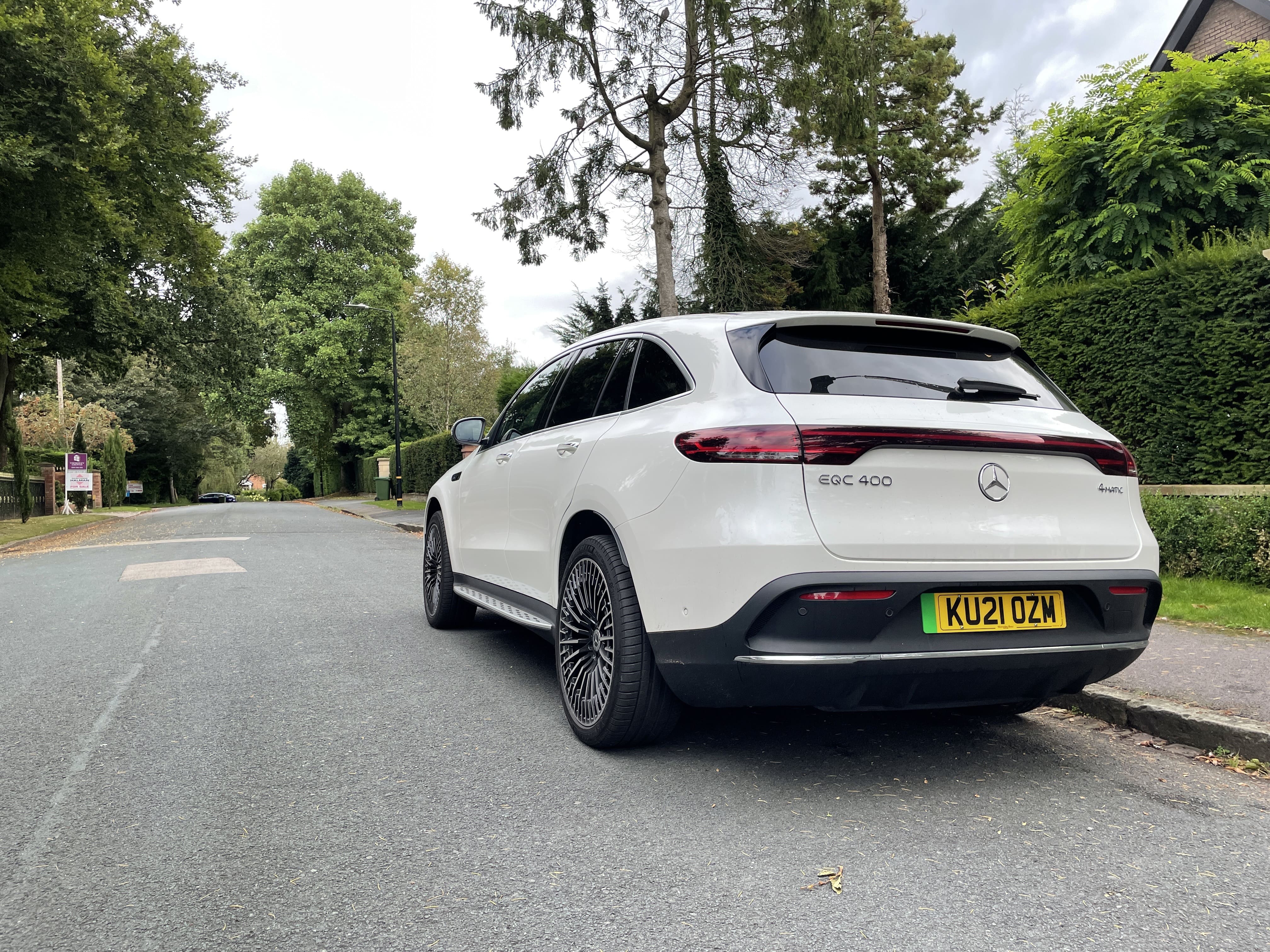
Mercedes hasn’t built the EQC on a new platform rather it’s been designed on the same architecture used on the existing GLC model. The difference is though that it’s powered by an 80 kWh battery, with an electric motor on each axle. That gives the EQC 300kW, or 408 bhp & a frankly crazy 760 Nm of torque, which in turn means a 0-62mph time of 5.1 seconds, from it’s single speed automatic transmission. It’s quick, particularly in a straight line, but as with all EV’s, you’ll need to dampen down that heavy right foot in order to get the maximum range from the battery. The main reason why, is that the EQC is heavy, at nearly 2.5 tonnes & very much like the Audi e-tron, it feels it too.

Model range
There are four trim levels; Sport, AMG Line, AMG Line Premium & AMG Line Premium Plus. Entry level Sport model comes equipped with 19″ alloys, keyless entry & start, LED headlights, leather trim, front & rear LED brake lights, SatNav, DAB, twin 10.25″ digital screens, a parking package, a reversing camera & heated front seats.
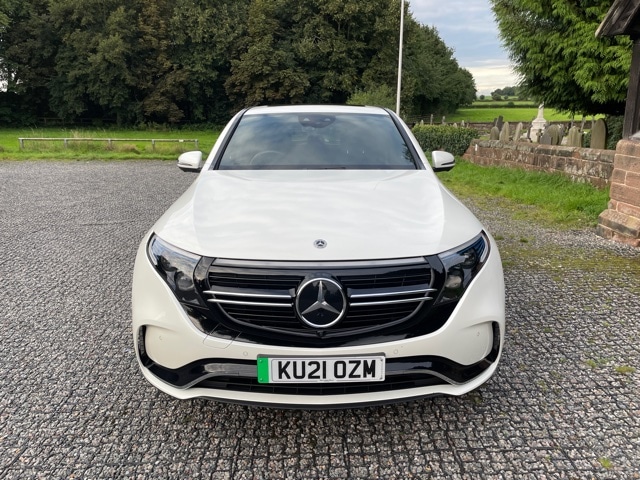
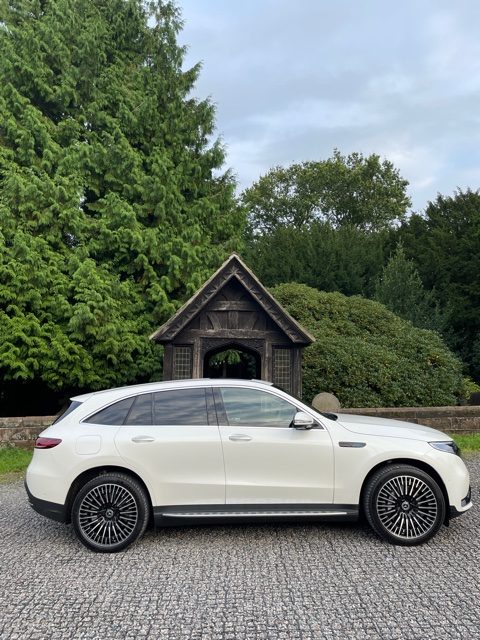
AMG Line adds an AMG black panel radiator grille, running boards & 20″ AMG alloy wheels. Inside you get AMG leather sport seats & carbon fibre trim. Premium comes with sth addition of Apple Car Play & Android Auto, whilst range topping Premium Plus up’s the ante, with 21″alloys, an AMG styling package, sports seats, sports steering wheel, Burmester surround sound audio system, electric sliding sunroof, augmented reality navigation & wireless phone charging.

Interior & Infotainment
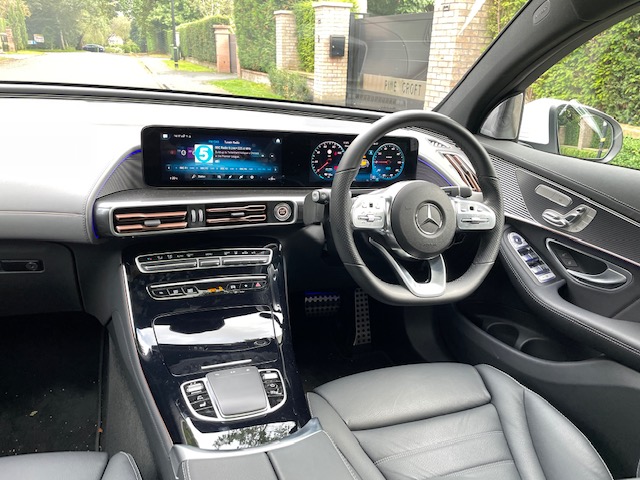
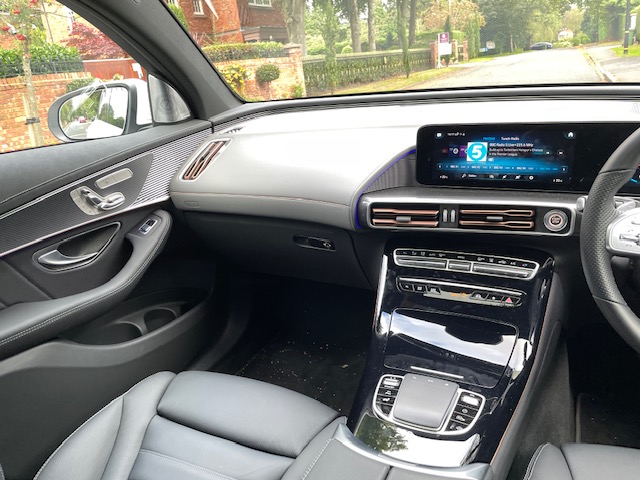
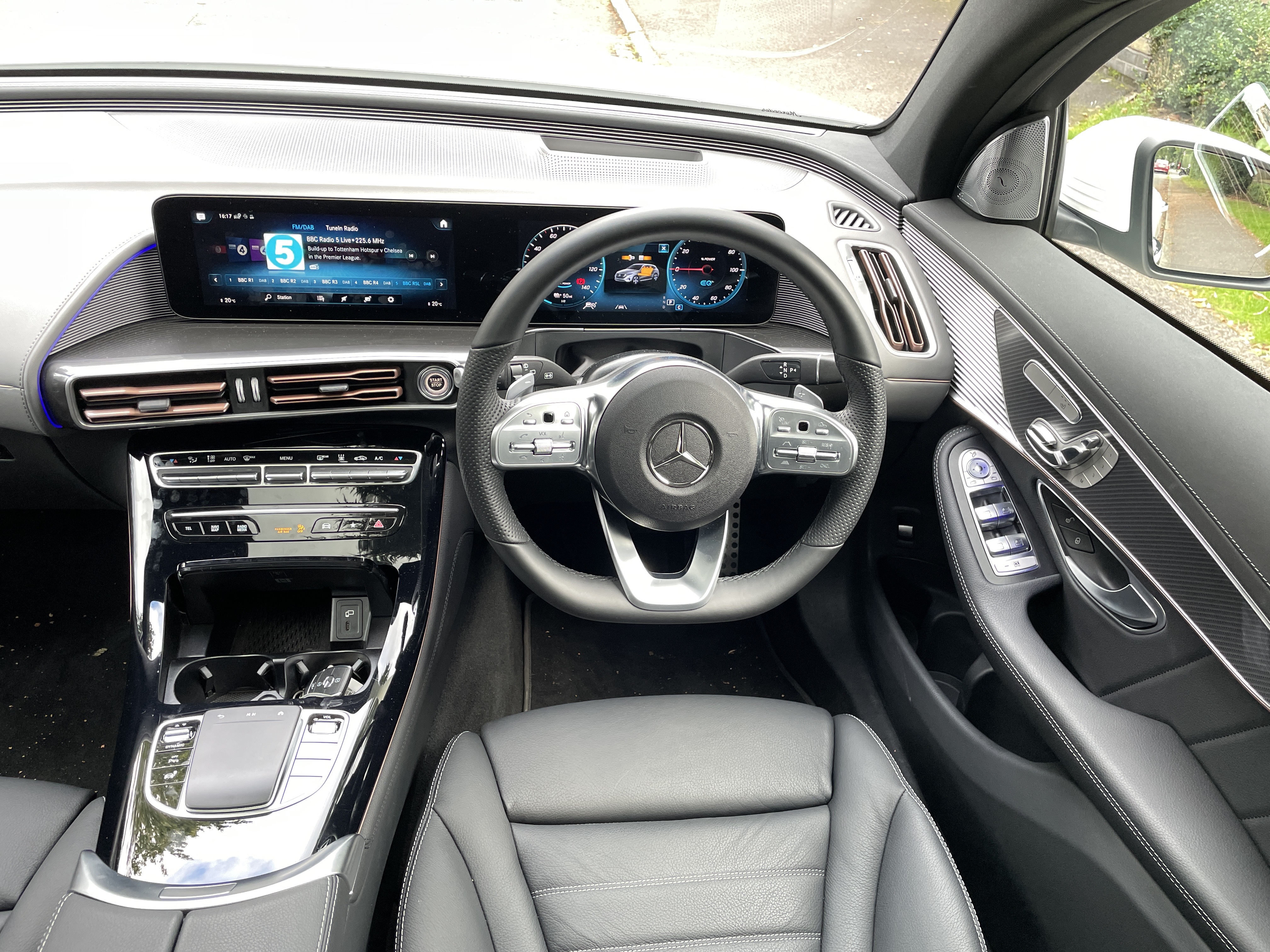
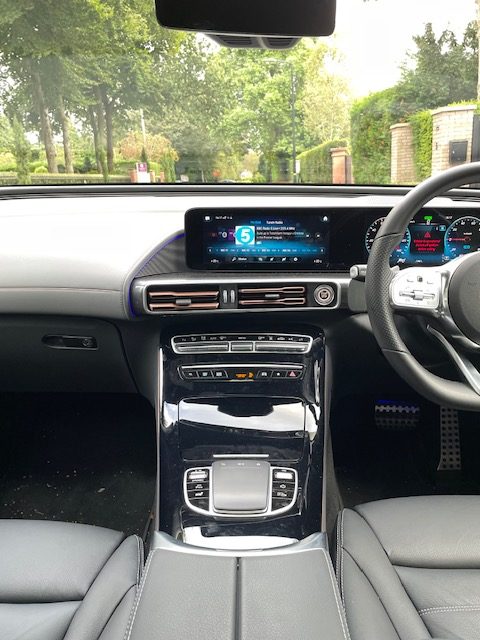
The inside of the EQC doesn’t feel too different from any of the current Mercedes models, so you get is plenty of top quality soft touch plastic, the familiar Mercedes-Benz dual screen across the dash & MB’s excellent infotainment system. New additions include a rubberised finish on the dash & square air vents rather than the round ones found on the GLC.
The central touchscreen display is intuitive & makes selecting the correct menu easy. There’s also a touchpad on the centre console, plus additional controls within the steering wheel, allowing you to select the menu you’re after without taking your eyes of the road. The highlight is the ‘Hey Mercedes’ voice-control feature, which allows passengers to adjust the cabin temperature, change the mood lighting or set the SatNav, without moving their hands.
Practicality & comfort
Both front door bins will hold a 1.5-litre bottle & a smaller one as well. The glove box is a decent size, there’s a cubby at the base of the dash, two cup holders behind that, under armrest storage, plus a central rear armrest with two more cup holders located within. The boot comes with 500 litres of space, but it’s quite shallow thanks to the battery & noticeably smaller than some of the competition. Under the boot floor, there’s a compartment to store the two charging cables.

The drivers seat comes with plenty of adjustment & the rear seats will comfortably take two adults, offering both good head & leg room. A combination of the battery weight & the 21″alloys fitted to our test car, the Premium Plus, meant a noticeable shudder over poorly maintained roads & there’s a tendency when sat in the rear, for passengers to sway around a little on winding roads. On the motorway though, the ride is excellent.
Range & cost to charge
The EQC has an official electric range of 255 miles between full charges. It takes 75 minutes to charge your EQC to an 80% charge, using a 50kWh fast charger, whilst at home, plugged in to a home 7.2kWh charger, We recommend Rolec; http://www.rolecserv.com/home-charging, this increases to nearly 13 hours. Charge at home using the standard day time rate of about 15p a kWh & it will cost you about £13 to fully charge your EQC.

However, get yourself an EV car night time discounted rate offered by the likes of Octopus Go, who charge just 5p a kWh between 00.30 & 04.0o am & it’s only a fiver. One caveat worth noting though, is that EV’s fitted with larger batteries, generally work out more expensive to charge, than those fitted with a smaller battery.
Real world range
We spent an enjoyable week in the EQC, driving 250 miles in it. It was delivered with an 80% range which showed 200 miles & with several visits to the local gym, handily located next to my local Tesco Extra, where there are four 7kWh chargers, I topped it up for 90 minutes five times free of charge ! A motorway drive of 85 miles saw the 200 mile range, fall to 102 miles, so as to be expected. In town or on local roads, where I was able to utilise the brake regen of D- – & D -, I saw a steady one mile driven for one mile of range. Compared to other EV’s, the Mercedes battery range is pretty accurate, but I was driving in a warm September & mostly alone. We’d surmise that if driven carefully, an 185 mile range is very achievable all through the year.
Brake regeneration
Mercedes has a number of features to help make the EQC more efficient. These are lead by the cars brake energy recuperation system. This features two levels of regen, all controlled using the paddles behind the steering wheel. Once you’ve selected Drive in the gear box, you can then choose which level of region you want it engage. The strongest is D- -, which offers a strong region, meaning that when driving in town, you don’t need to use the foot brake. Below his is D-, which offers a slightly lighter regen & was my preferred choice. Why ? D- – is very heavy & prolonged driving in this makes your right foot ache as it’s heavier under foot.

Normal driving can be selected in D & for a sportier feel, you can go up once more to D+. Furthermore, the EQC also features a radar-based regen with an automatic setting & a Max Range setting, both useful when selected for a long journey.
Handling
Whilst the EQC is a brilliant motorway performer, quiet, comfortable & quick if required, take it onto some winding B roads & the battery makes it’s presence felt. This though should not come as too much of a surprise. Batteries add excess weight & the larger the battery, the heavier the car. In comparison, the Audi e-tron is even heavier & more stodgy to drive, whilst the Jaguar I-PACE, defies convention, by being brilliant to drive in any situation, on any type of road. So, what you get with the EQC is something in between the two. What you definitely get, is the refinement associated with all large Mercedes-Benz cars & it’s a standout in the sector in this department.
Pros
Beautifully built, top notch infotainment, relaxing to drive & a BIK winner.
Negatives
Smallish boot, doesn’t like bumpy tarmac & expensive to buy.
Conclusion
The Premium electric SUV sector is starting to get crowded. What the EQC offers then is plenty of what most Premium SUV customers want; space, comfort, practicality & quality. It’s built for the city & the motorway, but like most electric cars fitted with larger batteries, it’s ride quality is mixed & the battery weight is noticeable. In effect, it drives like many petrol & diesel large SUV’s, so any existing Mercedes SUV customers would be at home with an EQC. And, from a company car perspective, it’s definitely worth looking at the EQC, to see if the 200 mile range plus tax savings, would work in your favour.
A Timo Werner 4/5
Model tested: Mercedes Benz EQC 400 AMG Line 4Matic Premium Plus.
EQC range from £65,720
Price as tested: £77,200
Engine. Twin Electric Motors
Power/BHP/Torque: 300kW/ 408 bhp / 760 Nm
Battery capacity: 80 kWh
Wallbox charging (400 V/16 A) 10-100%: 11 hours
Public rapid charging (110 kW) 10-80% : 40 minutes
CO2: 0 g/km
BIK: 1%
P11d: £74,555
