


The latest eSprinter comes with almost three times the driving range of the Mk1 eSprinter plus a number of other improvements. We spent somer tome in one recently & here’s what you need to know.
Range improvement
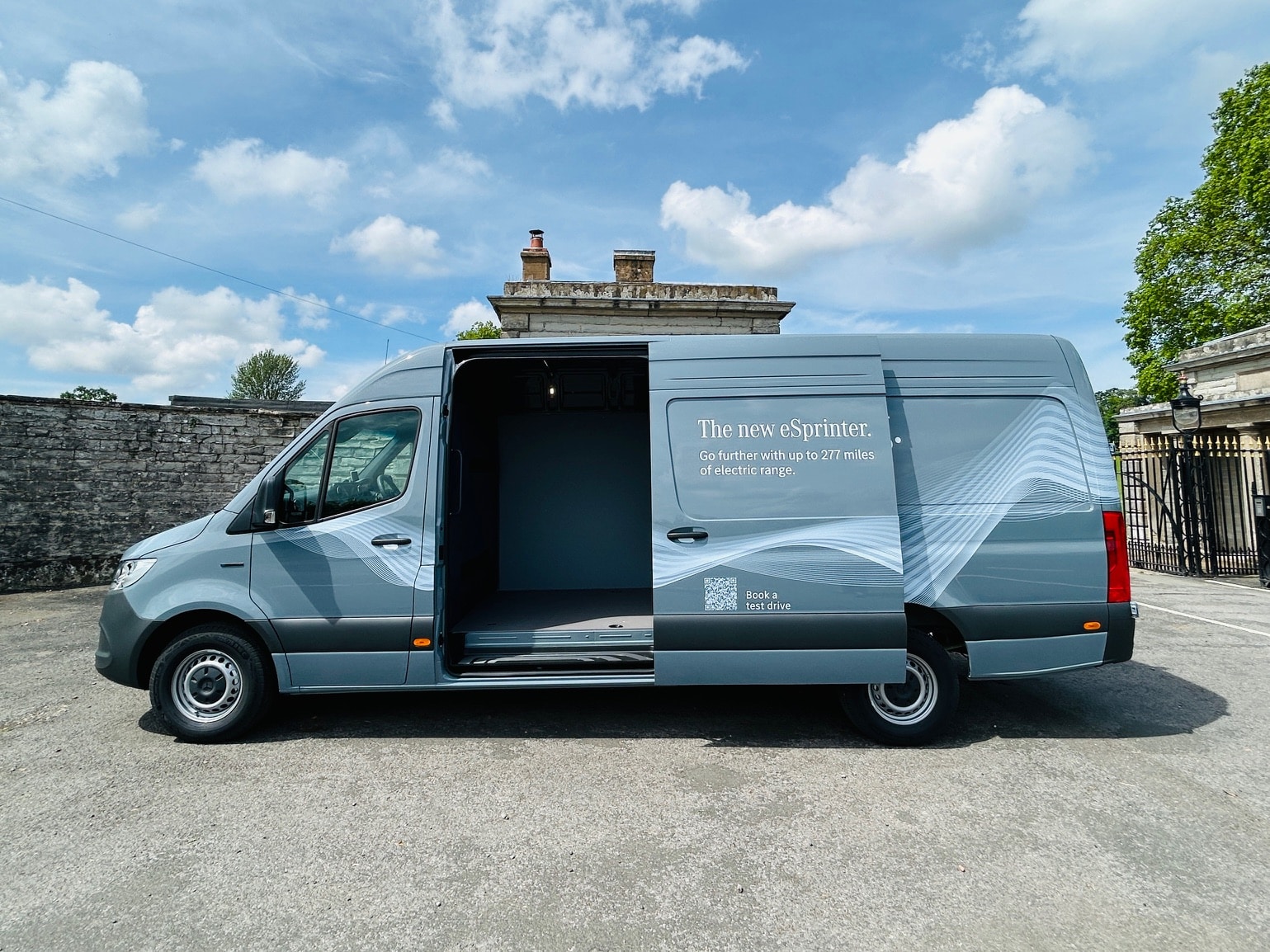
With the addition of a 113kWh battery the eSprinter range is now as high as 271 miles, plus the smaller 81kWh battery version is good for 185 miles.
 Model choice
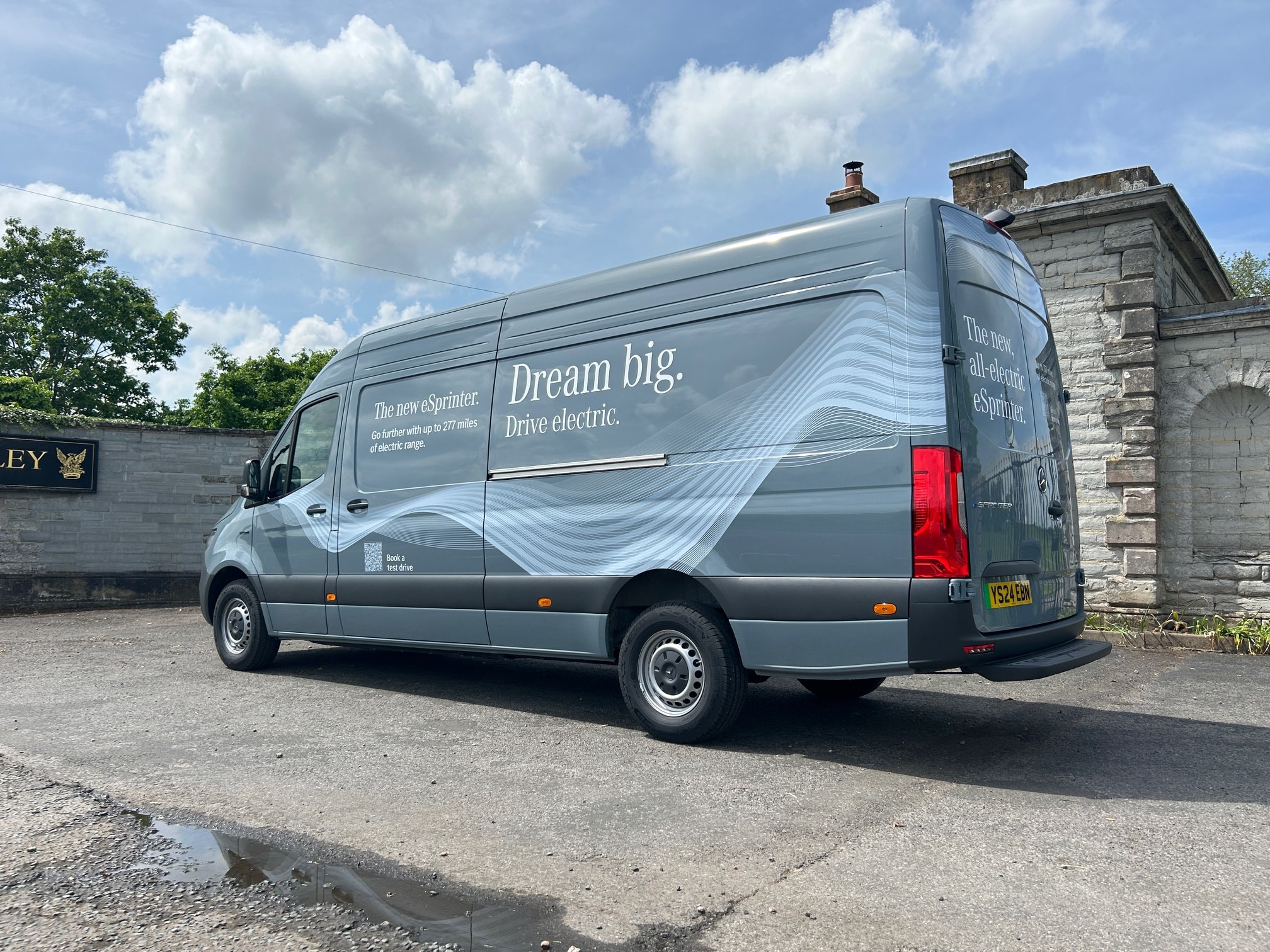
The original eSprinter came in one spec Progressive & one size L2 H2. With eSprinter Mk 2, as well as two batteries, there are also two vehicle choices panel van & chassis, two trim levels PRO or SELECT, two vehicle lengths L2 & L3 & two motors 100kW or 150kW, so there’s clearly been an evolution.
 Specifications
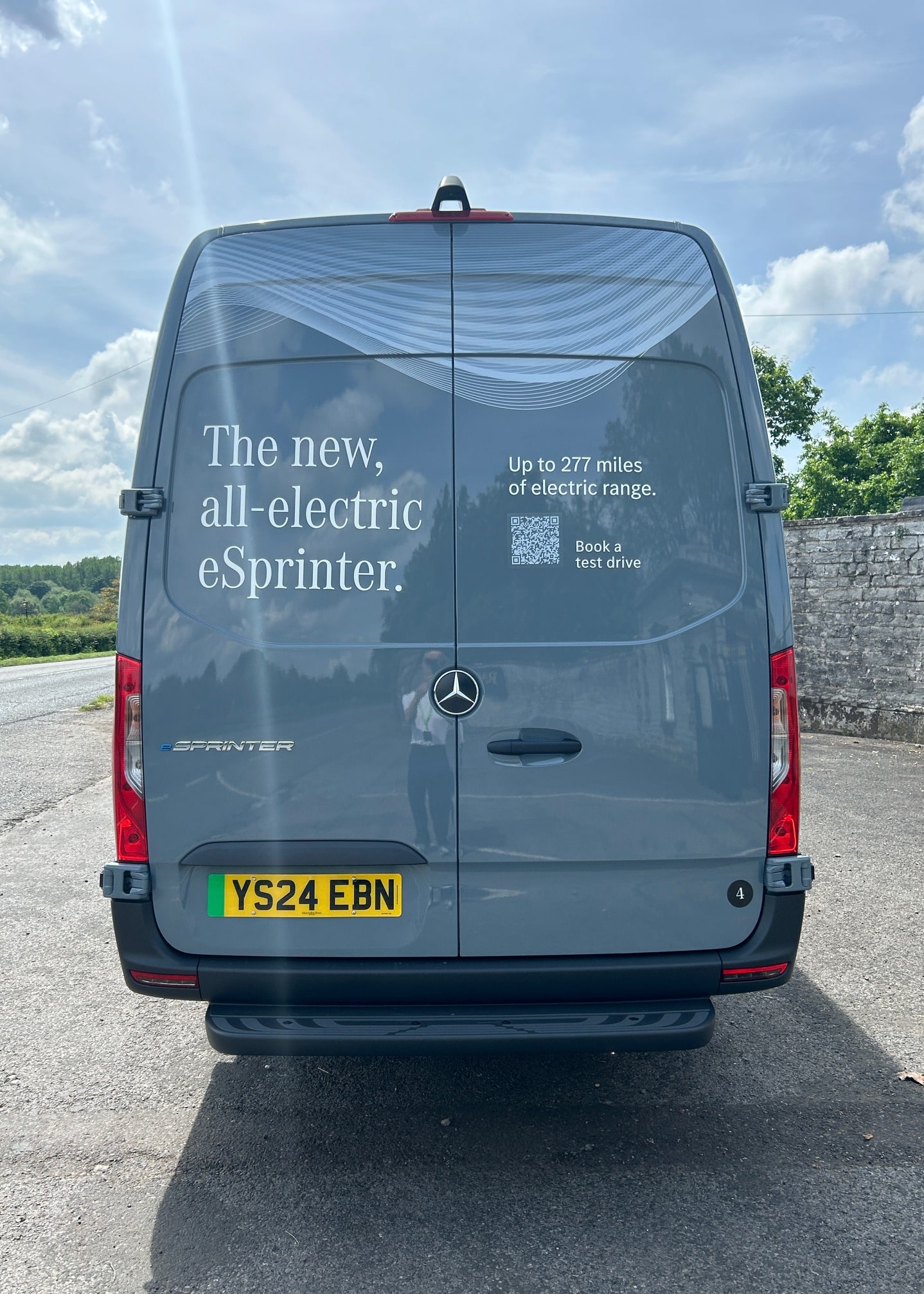
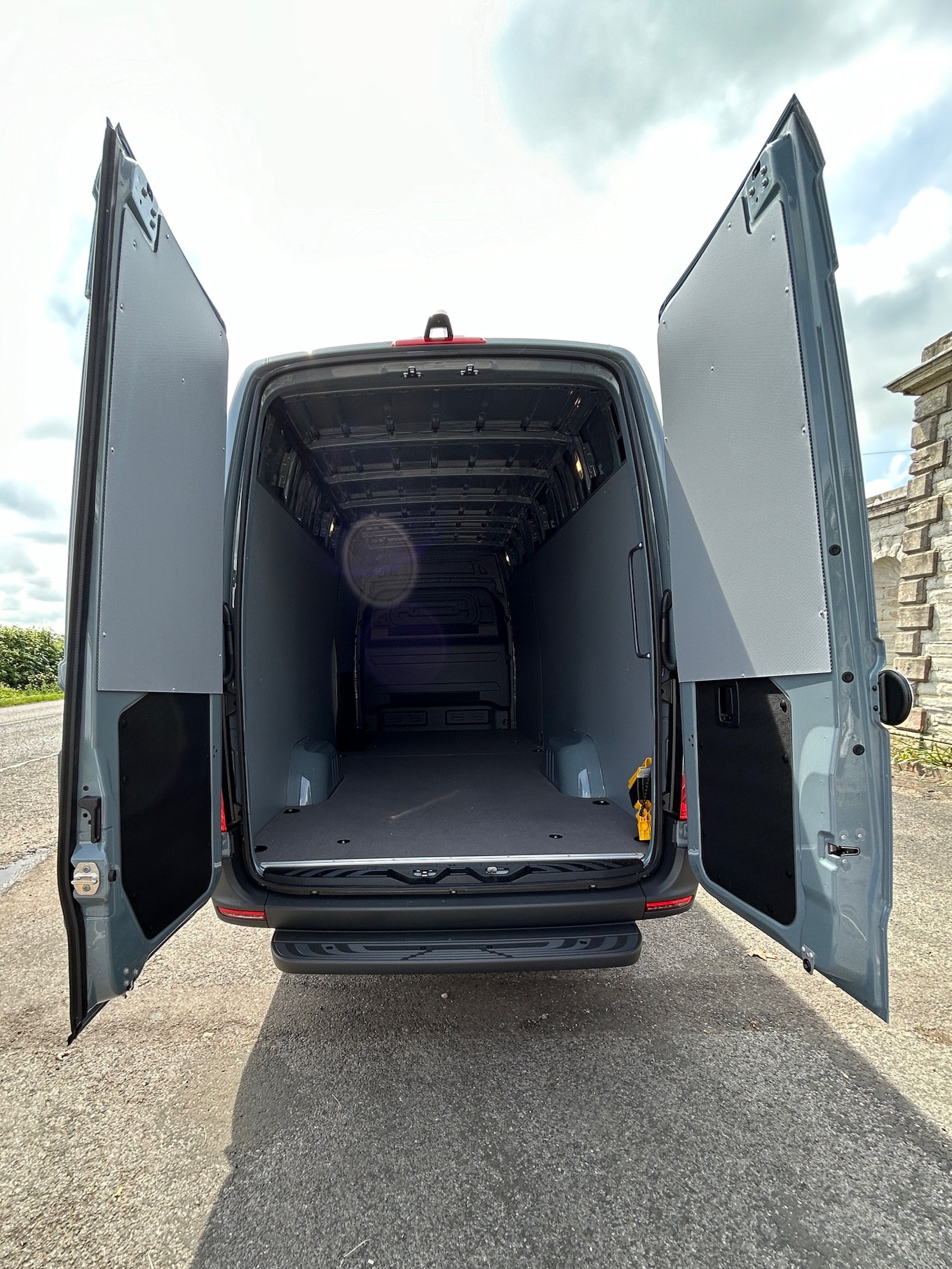
Entry level PRO comes with plenty of driver friendly features including, the MBUX multimedia system with 10.25″ touchscreen, DAB, Bluetooth, electric parking brake, air-con, a heated drivers seat with armrest, a multifunction steering wheel & a double passenger seat. From a practical point of view there are double side-opening doors to 270 degrees, a full head bulkhead, loading bay wall lining, a wooden floor & a towing eye rear.
Step-up to SELECT & this adds a leather steering wheel, a comfort drivers seat with lumbar support, a drivers head restraint, twin cup holders, a hinged lid stowage compartment, high beam ASSIST, LED headlamps & a charging package dashboard.
 Safety
Safety features include, Active Brake ASSIST, Attention ASSIST, Crosswind ASSIST, Emergency eCall, Blind Spot ASSIST, Sideguard ASSIST, Intelligent Speed ASSIST & Active Lane Keeping ASSIST which I’m pleased to say you can turn off from the steering wheel.
 Infotainment
The latest eSprinter runs the updated MBUX system, which includes a 10.25″ touchscreen, AM/FM/DAB radio, Bluetooth with audio streaming, voice control, over the air updates, a wi-fi hotspot & a multi-media interface with 3X USB C ports. With the £45 Smartphone Integration Package you also get wireless connected Apps for Apple CarPlay or Android Auto, an extra well with considering.
 Charging
The mode 3 charging cable plugs in under the MB logo on the front grille. Charging speeds are 11kW AC & 115kW DC. Charging times for the 113kWh model are from 0-100% in 11 hours on an 11kWh wall box, with DC charging from 10-80% in just 42 minutes at the maximum 115kW charging speed. For the smaller 81kWh battery version, these times are reduced to 8 hours & 32 minutes respectively, with home charging on a 7.4kWh charger taking 12.3 hours. As ever utilise an EV charging electricity tariff & plug-in as much as you can overnight when rates are cheaper.
 Driving modes & brake recuperation
These are quite interesting with three available, Normal, Eco & Max Range which turns off the heating etc.. to give your eSprinter just a little more range. Normal mode replicates normal driving conditions, so there’s no brake regen offered & travelling in this mode will use the battery up faster. For those operators wanting to keep their large electric van on the road for longer, you can remove this mode when you order your vehicle, leaving just Eco & Max Range.
Utilising the paddles behind the steering wheel, the driver can also select from four regeneration levels. These run from D- offering the most regen with maximum recuperation & fastest deceleration, through D or D+, which both reduce the braking force. There’s also the option to choose D++, which turns the regen braking off. For those of you who want to take the thinking out of the equation, Mercedes have introduced a new setting, called D Auto. This will automatically increase or decrease the amount of brake regeneration by using various outside signals, so it reads the road ahead & detects slower moving traffic, thereby increasing the brake regen to slow you down. It’ll also consider navigation inputs & adjust the regen accordingly as you go up or down steeper roads. We tried it, it works & it’s great !
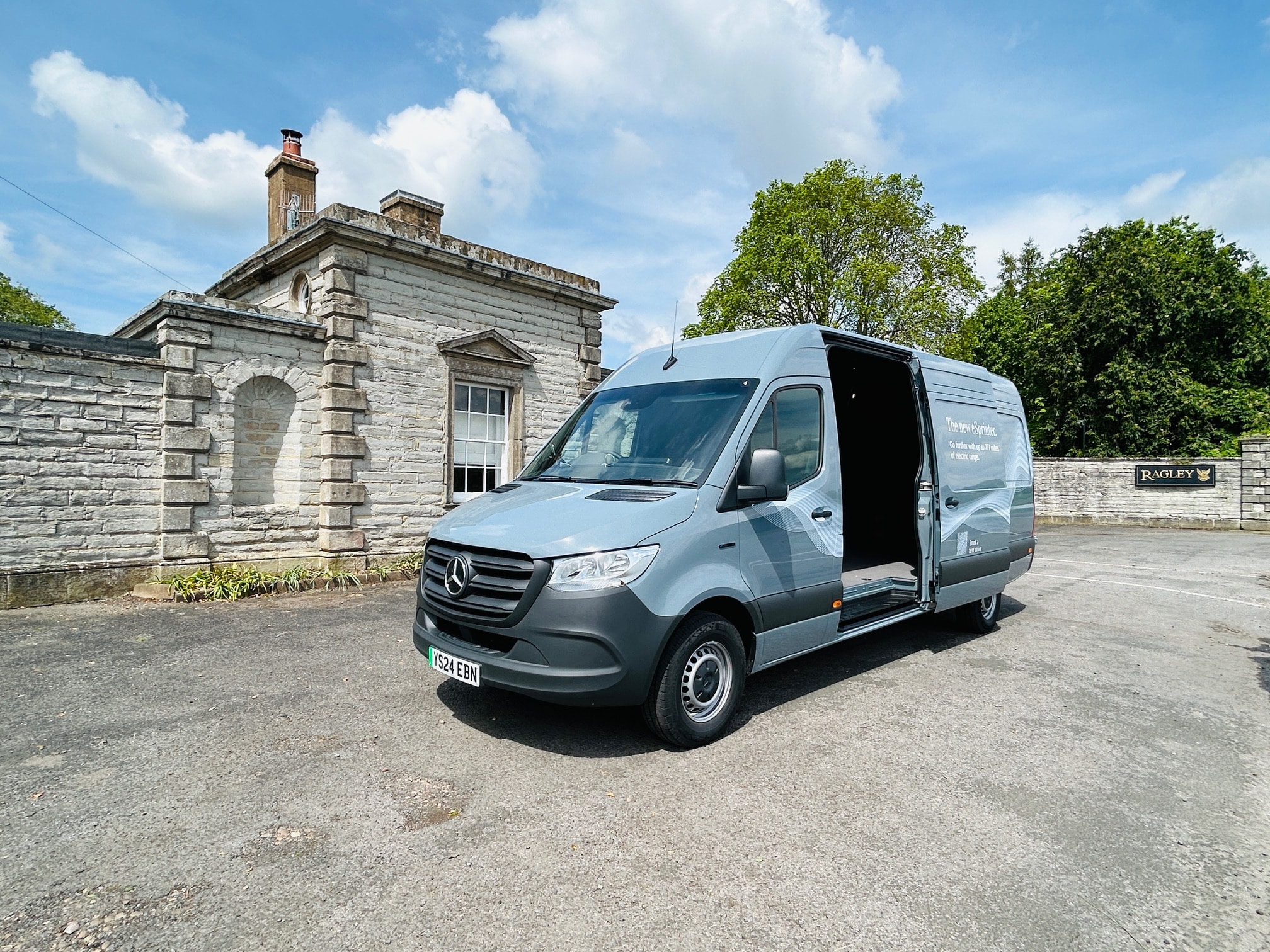 Exterior & interior
The latest eSprinter hasn’t really changed in how it looks so is unmistakably a Benz. Inside factor in a neat & tidily designed matt black interior, hard wearing seat fabric, a multi adjustable drivers seat & steering wheel & the lovely clutter-free dashboard with the centre infotainment screen in the centre. Steering wheel controls are for the cruise control, infotainment, volume & the settings for the information screen in front of the wheel. Even the air-vents look cool. All in all it’s our favourite large van interior with an almost Danish design philosophy making it a very car-like cabin to be in.
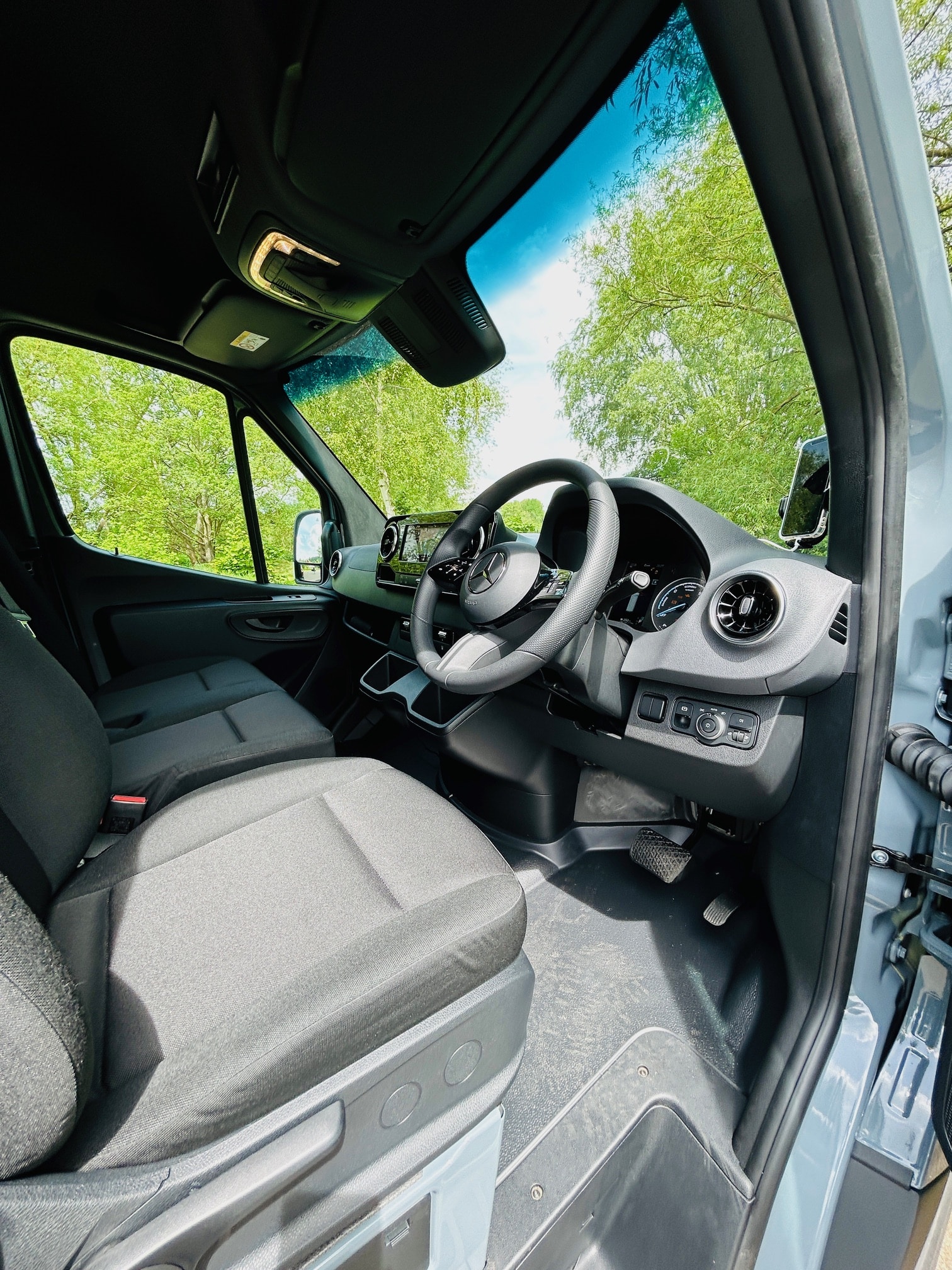
Cabin storage & ease of use
The top of the dash features three storage cubby’s, the larger central one hiding the USB connection. Further storage comes in the form of door pockets large enough to hold a couple of bottles, two storage spaces underneath the dashboard controls, shelving above both driver & passenger & two smaller spaces under the central air-vents. on the dash The touchscreen & functions therein, do take a little while to get used to, but it’s not as complicated as most modern cars. Once you’ve spent some time behind the wheel, everything clicks into place with the the toggle heating controls for example, becoming second nature to adjust. Everything you need, is within easy reach from the drivers seat as well. For three passengers only the centre-most loses any leg space & for delivery drivers you can squeeze across to the passenger side if you need to.
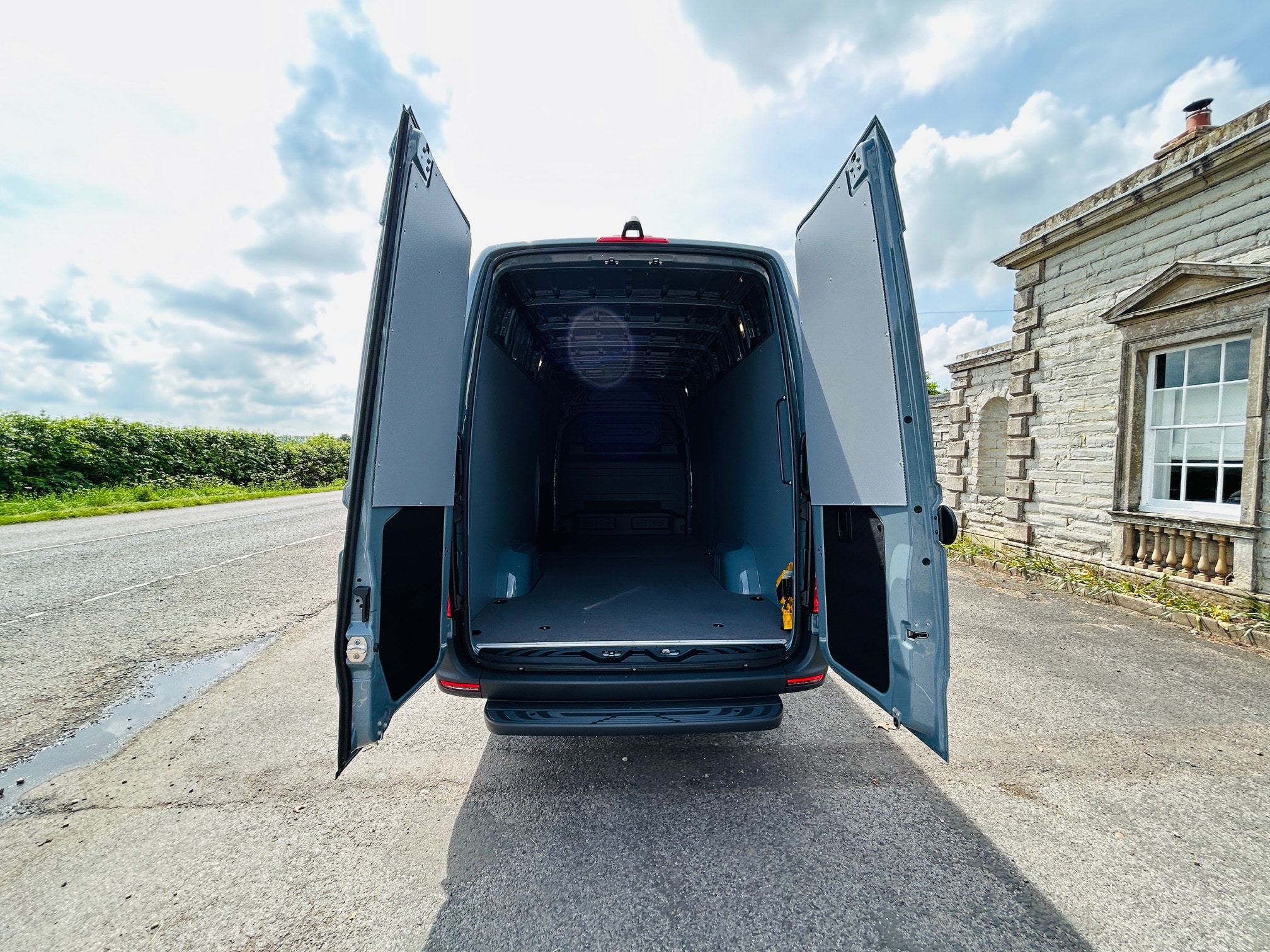 Practicality
A big, heavy battery, equals payload issues. Mercedes has therefore classified all of the 115kWh versions with a 4.25 tonne gross vehicle weight & one 81kWh model the 420 van L3 Pro as well. The smaller 81kWh battery versions come with either a 3.5 tonne or 4.15 tonne gross vehicle weight. In more detail.
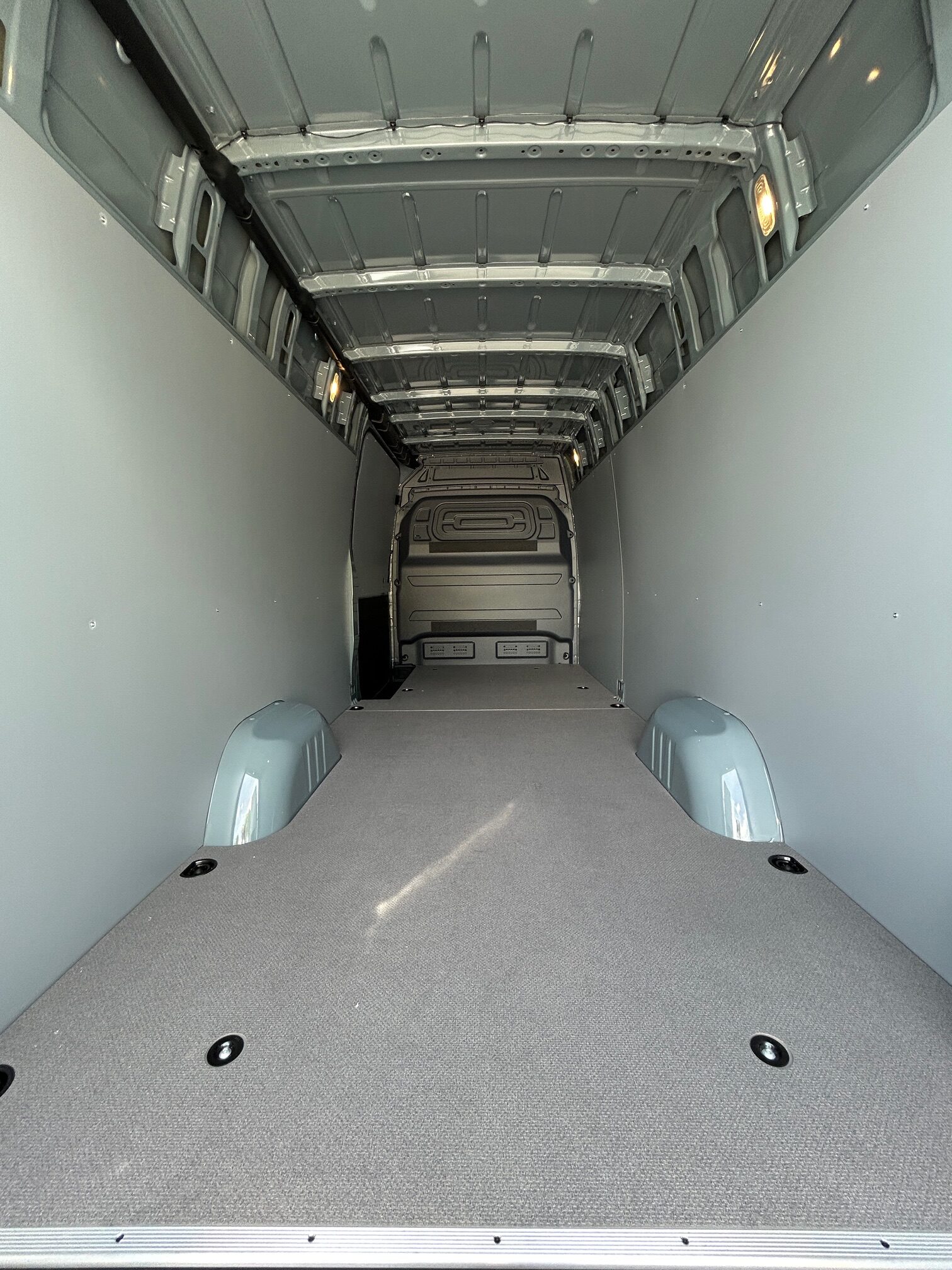 L2 load compartment
Length 3,375mm
Load volume 9m3
Max. width 1,787mm
Width between wheel arches 1,350mm
Height 2,009mm
Rear loading height 727mm
Gross Vehicle Weight (GVW) 3,500kg

L3 load compartment
Length 4,410m
Load volume 14m3
Max. width 1,787mm
Width between wheel arches 1,350mm
Height 2,009mm
Rear loading height 729mm
Gross Vehicle Weight (GVW) 4,250kg
 Mercedes Me
Operators who are thinking about an eSprinter should note that the Mercedes me app has a number of features that can help you get more out of your electric van, including, remote pre-conditioning, navigation with electrical intelligence route to the fastest, most efficient charger, a charge point map & real time user data. It also offers intelligent route planning, including planned charging stops, gives you real time battery & charging status, with remote locking & vehicle position at all times.
 Service & maintenance
The eSprinter comes with an Integrated Service Package: 4 free services included – two-year A (minor) & two- year B (major) services & is transferable with ownership. There’s also a 3-year unlimited mileage warranty, 3-years breakdown cover & an 8-year 100,000 miles/ battery guarantee.
 Driving
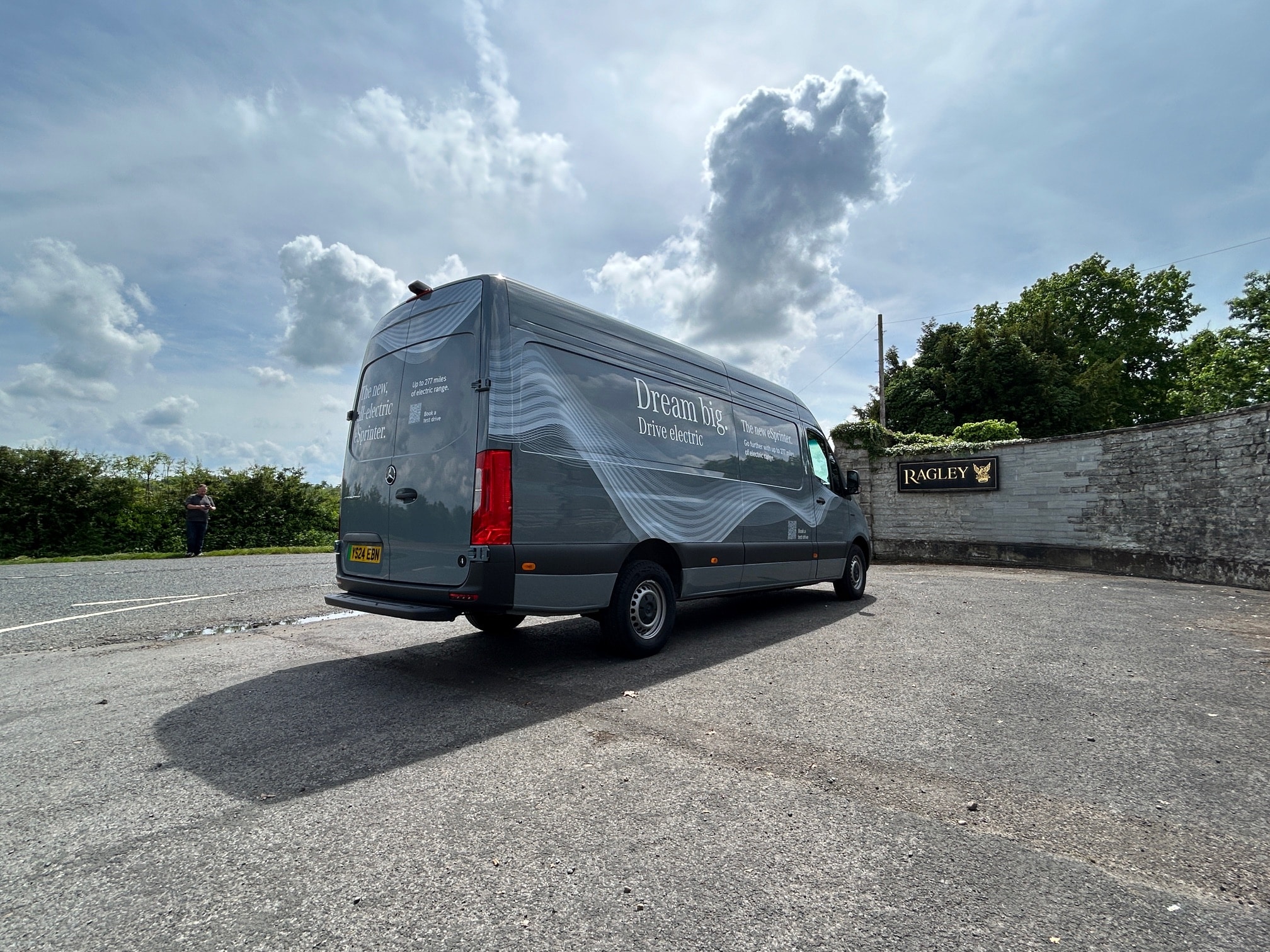
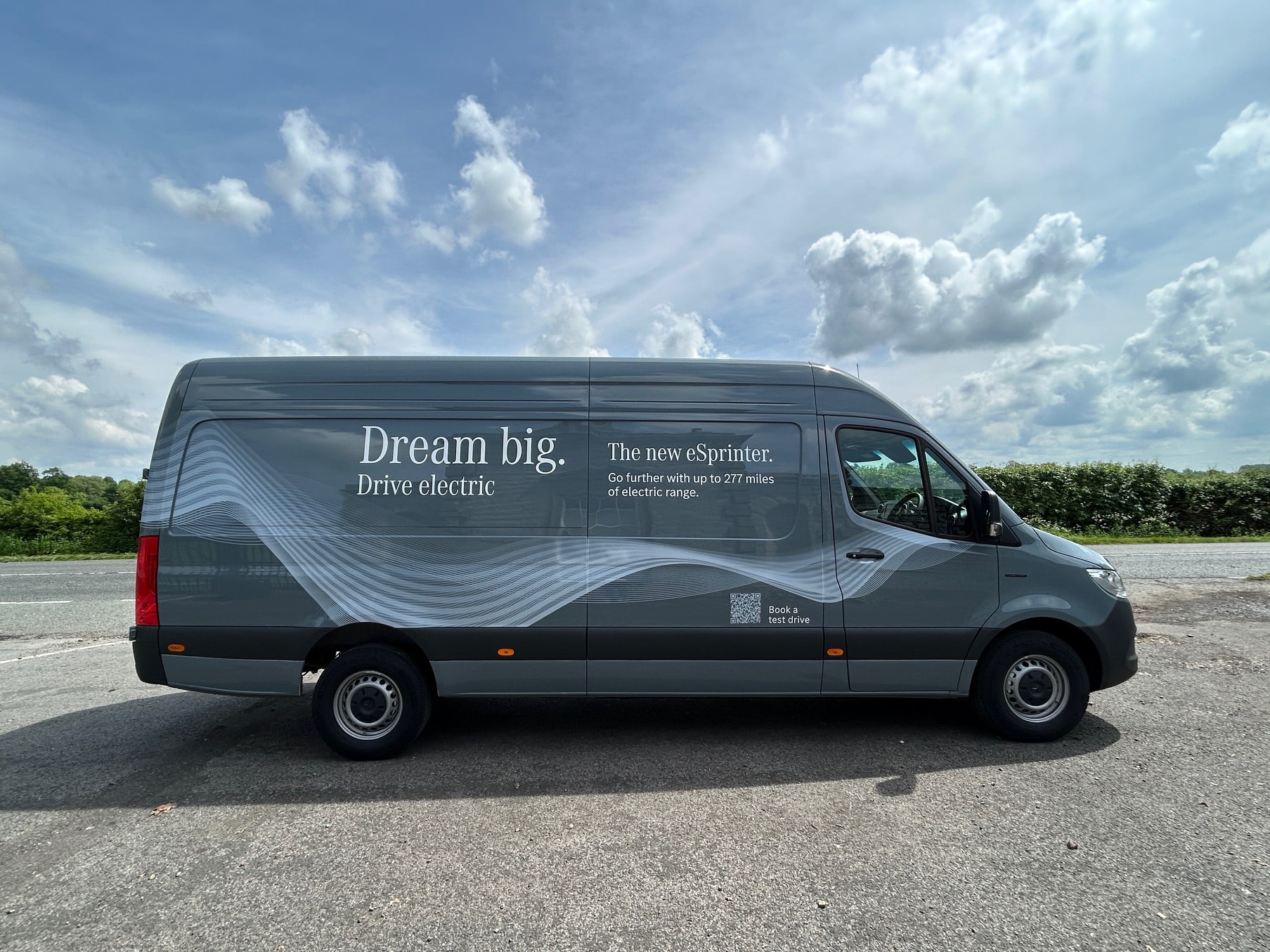
We drove the L3 model which is a long van. Remarkably it doesn’t feel as large as you’d think & drives amazingly well, for vehicle that’s nearly 4.5m long. There’s a push-button start & a steering wheel mounted gear selector, so push button select D & away you go. We’ve already mentioned the driving modes & although we tried them all, D-Auto proved to be the easiest option.
The electrically assisted steering is another major plus, with urban driving made super-easy thanks to its well weighted feel & with little feedback it’s also a winner in a straight line making lightweight of longer motorway trips, which are also aided by cruise control. Various speed limiters are also offered & there’s pre-installation for a tachograph which can be ordered as an extra or may be a necessity for those who operate the higher payload version. The inclusion of Hill Start means easier take off. The L3 length though will mean that some cul-de-sacs with parked cars on kerbs, may prove tricky. You can order a digital rear-view mirror for an additional cost which may be a good investment.
Van drivers are often on board their vehicle for a very long time, so they’ll be please to know that the cabin looks & feels fantastic. The centrally located touchscreen which is clear to see from all the front seats is another lesson in great design. The driver seat adjustment means you’ll easily find your de facto position, although the two other front seats sit a little upright thanks to the full-bulkhead, a common issue in all modern vans, so aren’t as comfortable. Visibility is another plus. Sitting high the road ahead is clear with the two external side mirrors giving you plenty of road view when overtaking.
 Performance & driving range
As far as performance real world driving range goes, we tested an L3 Select 414 panel van. This comes with 204hp & 400Nm from it’s 150KW E-motor & offers a 270 mile WLTP combined driving range. Our our test drive of 75 miles we averaged 3.2 miles per kW on a route that included a mix of motorway, dual carriageway, A & B-roads. We primarily utilised D-Auto, driving with two adults on board & no payload, in ambient temperatures of 18 degrees C. We actually used only 62 miles of range taking advantage of the on board brake regen on the slower north Cotswold roads travelled. Like it’s predecessor, the Mk2 eSprinter offers a reassuringly accurate driving range, something operators will be glad to know.
Pros
Massively improved battery range. Lovely comfortable ride & cabin. Packed with safety features & the latest connectivity. Plenty of model options inclusion chassis.
Cons
For anyone who passed their driving test after 1997, the largest battery version can’t be driven on a normal licence. Compromised payload for some. Largest versions are expensive.
 Verdict
With a maximum range of 271 miles, the latest eSprinter now offer’s customers who are considering the switch, a reassuringly high range. All versions now feature the excellent MBUX infotainment set-up & there’s a much larger choice of models & formats.
On the downside it’s expensive compared to a diesel Sprinter, although not that costly when lined up against electric competitors. And the large battery effects payload. If you can live with that then it could be an electric van that wil work for you.
3.5/5
