


When Nissan introduced the Leaf in 2010, little did they know that it would be 12 years before they launched a second electric car, the Nissan Ariya. In the company car sector electric range is perhaps more important than anything else & what the Ariya offers is a choice of two batteries, with real world ranges of 230 or 300 miles, which is just what the doctor ordered.
 What is it ?
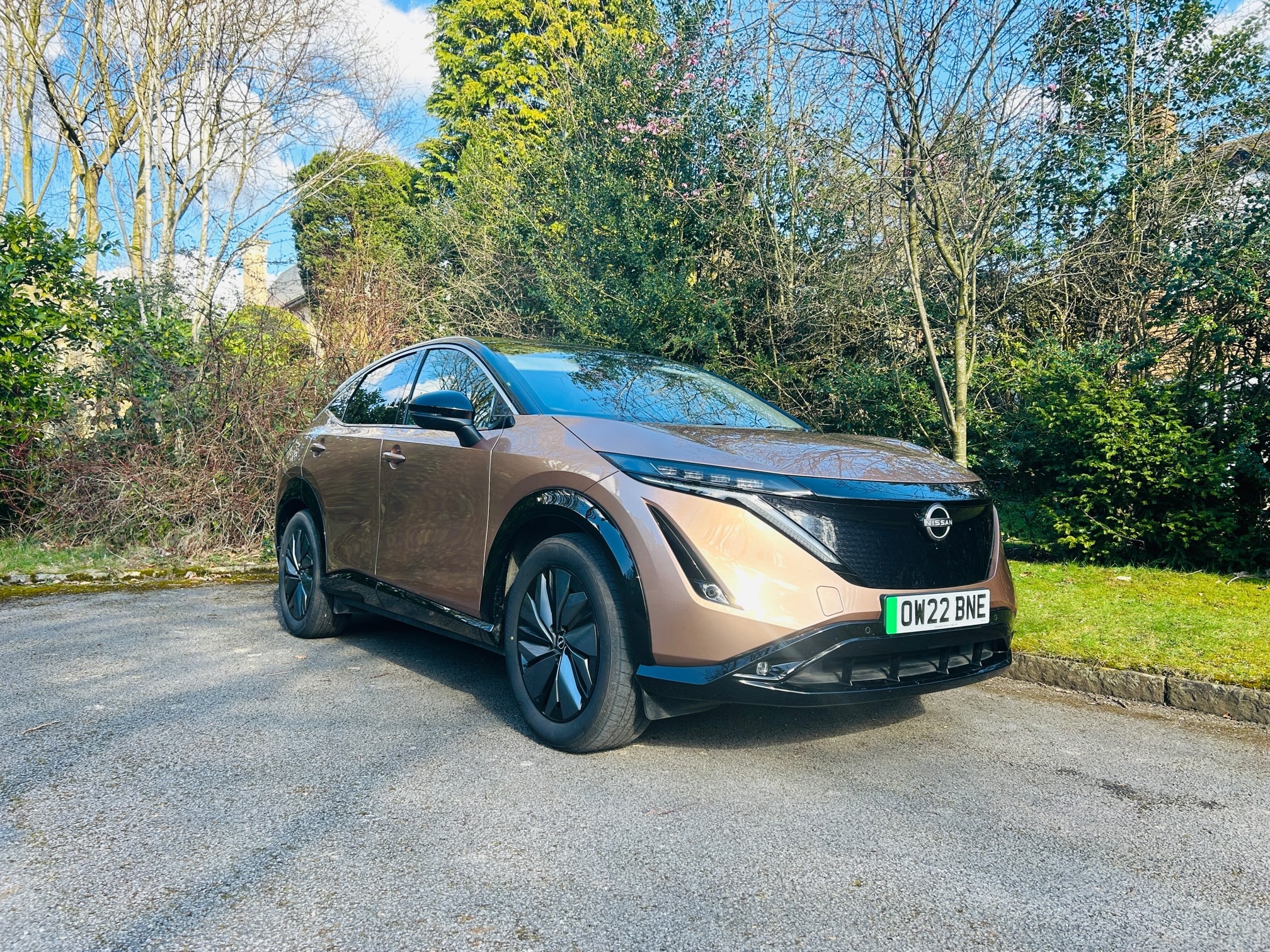
Based on the Renault-Nissan Alliance’s CMF-EV platform, it’s a five door SUV Crossover in the mould of the Hyundai IONIQ 5 & KIA EV6. Like the Leaf in 2010, it launches a new Nissan design ethos, with a top-quality interior inside a car that’s very spacious.
 Model range
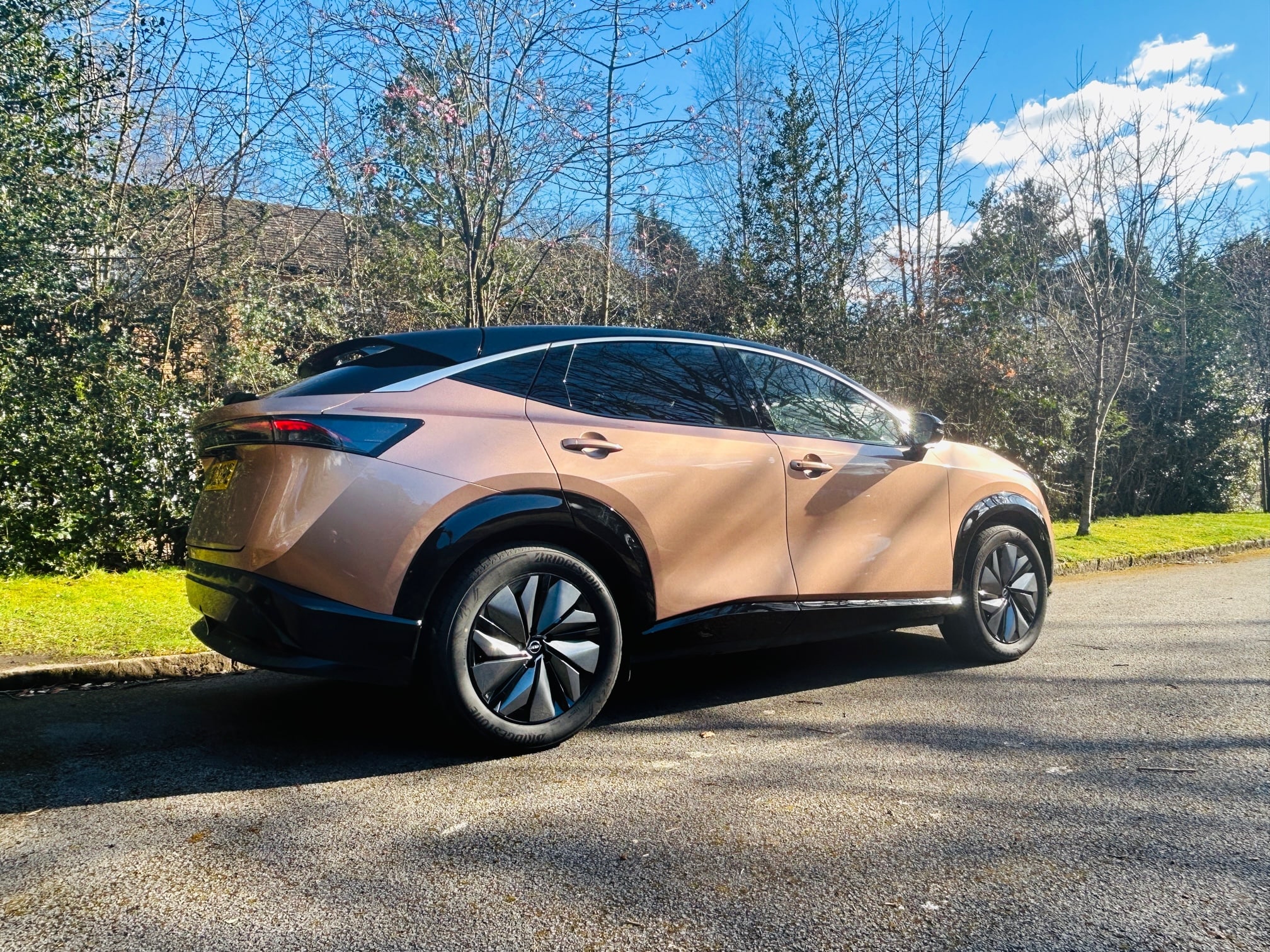
Choose from two batteries. The 63kWh with a choice of two trims Advance & Evolve, or the larger 87kWh battery offered in Advance, Evolve, e-4orce Advance or e-4orce Evolve, which are both all-wheel drive.
 Exterior
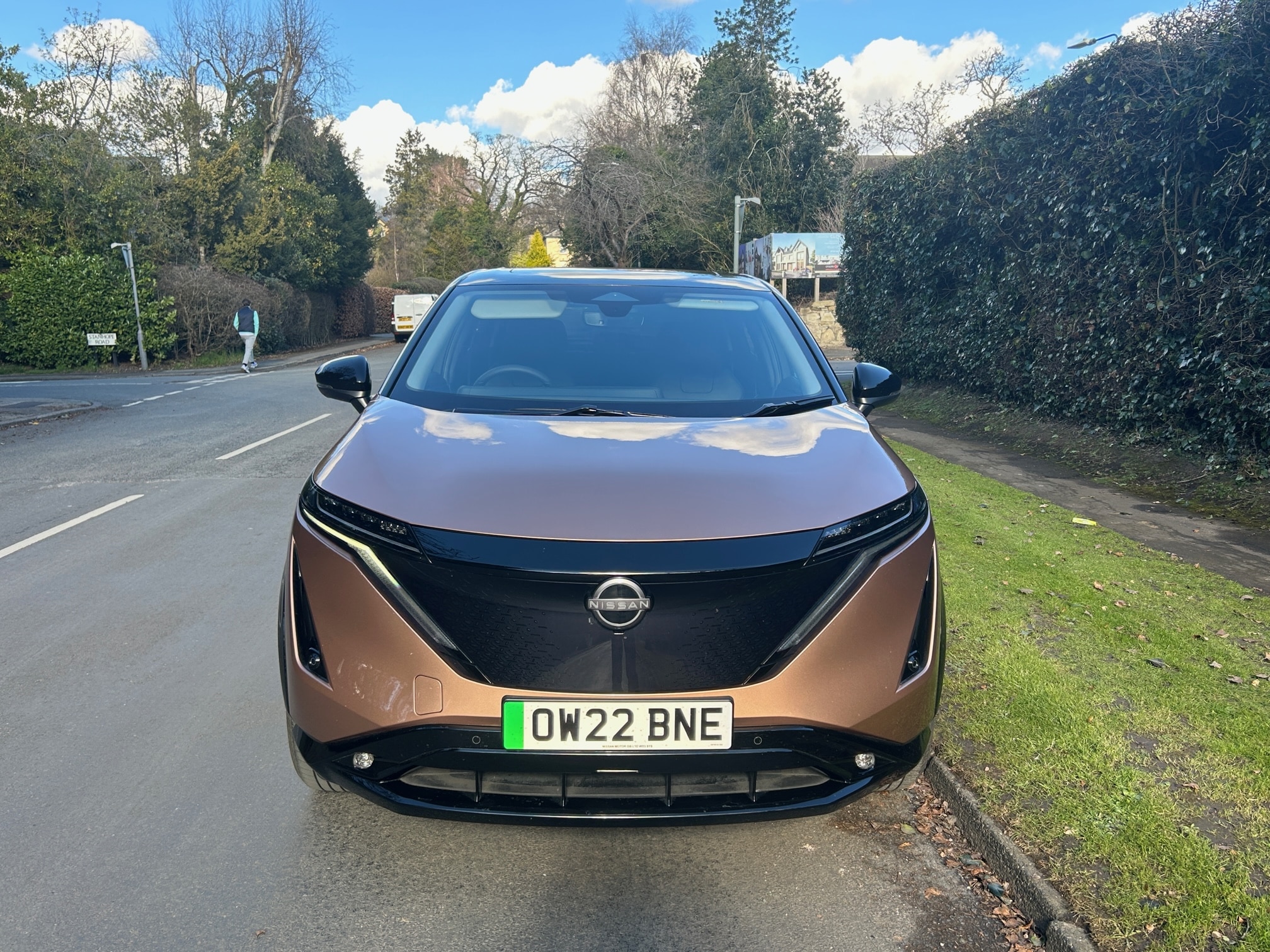
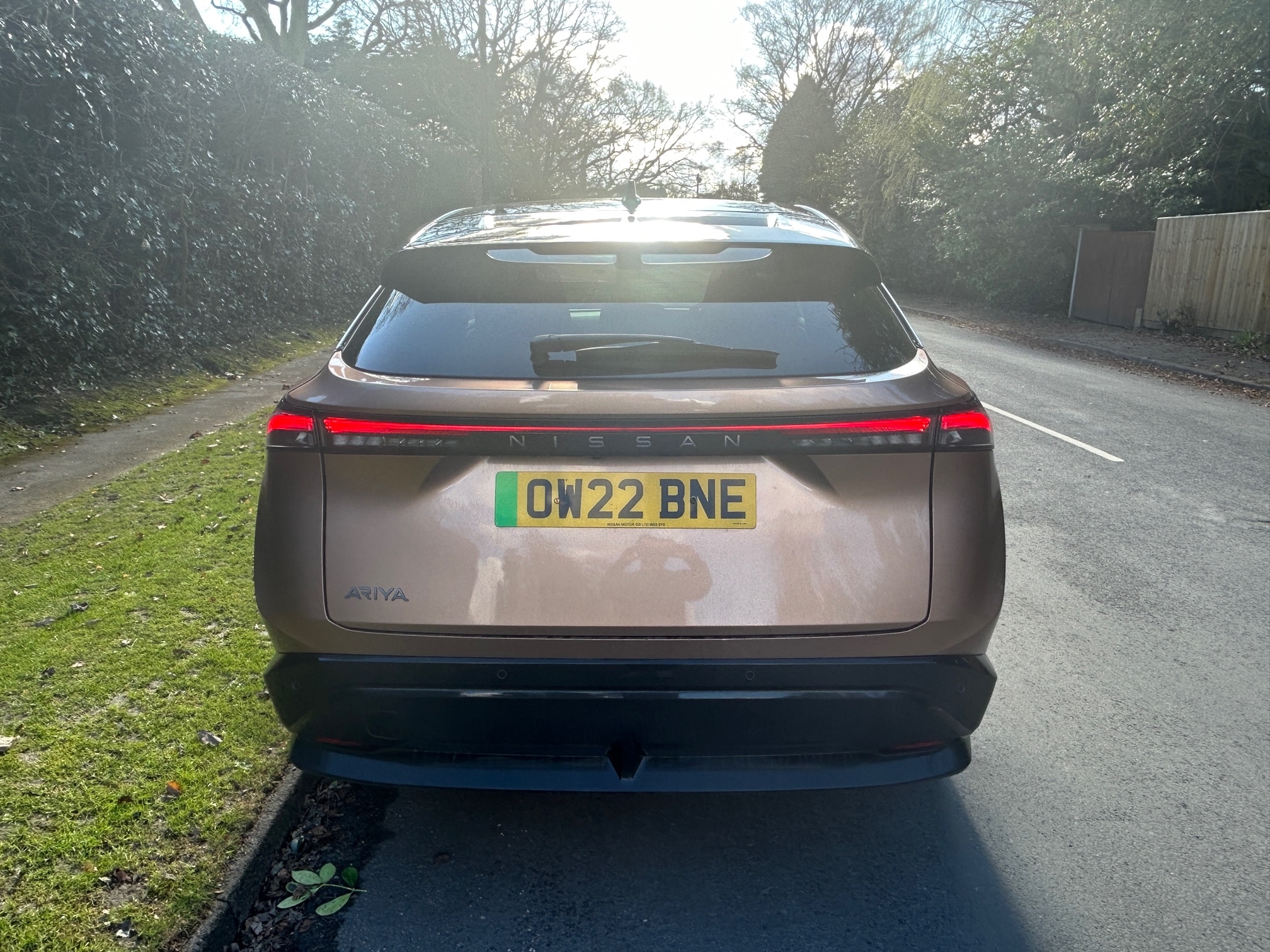
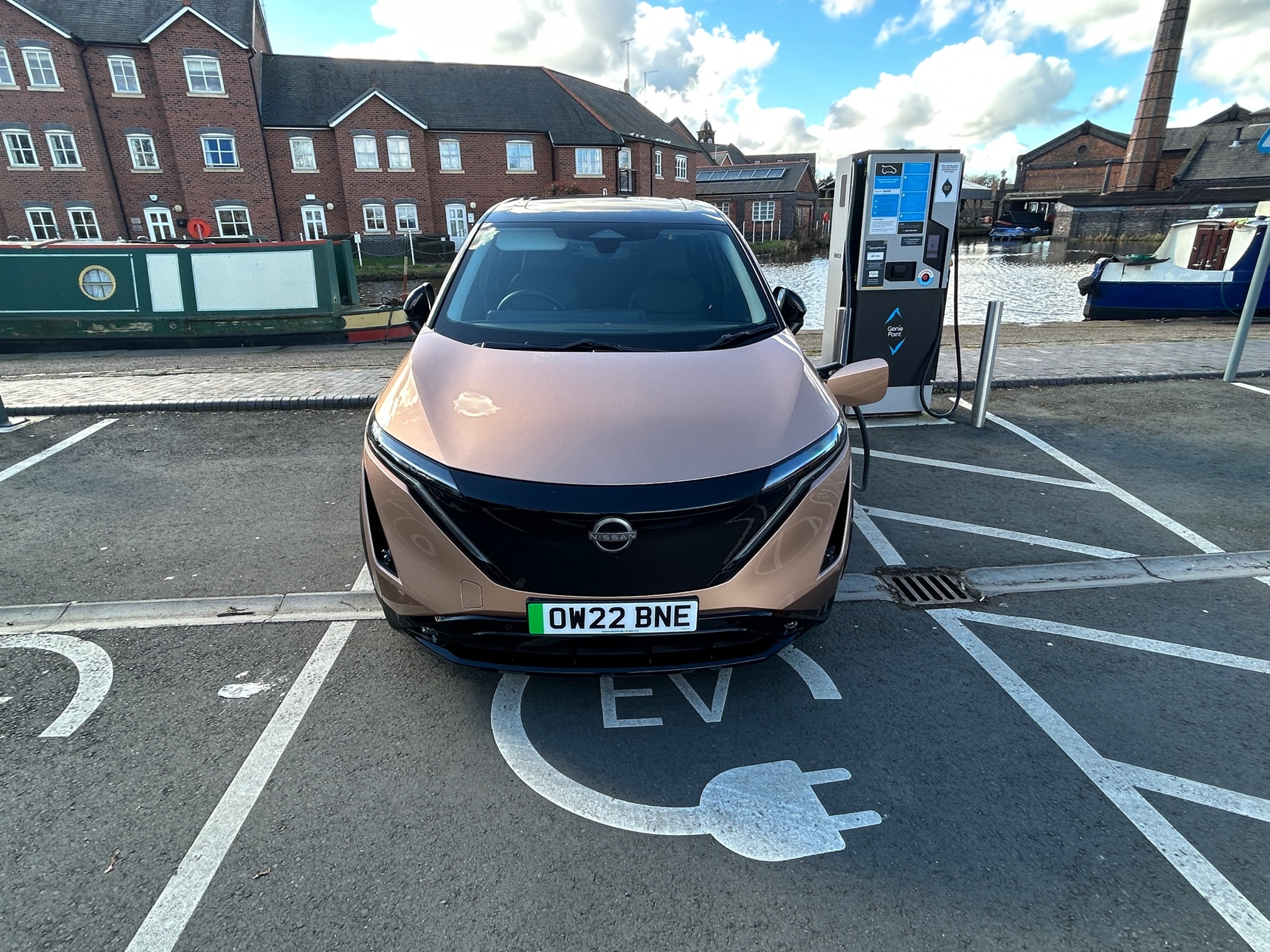
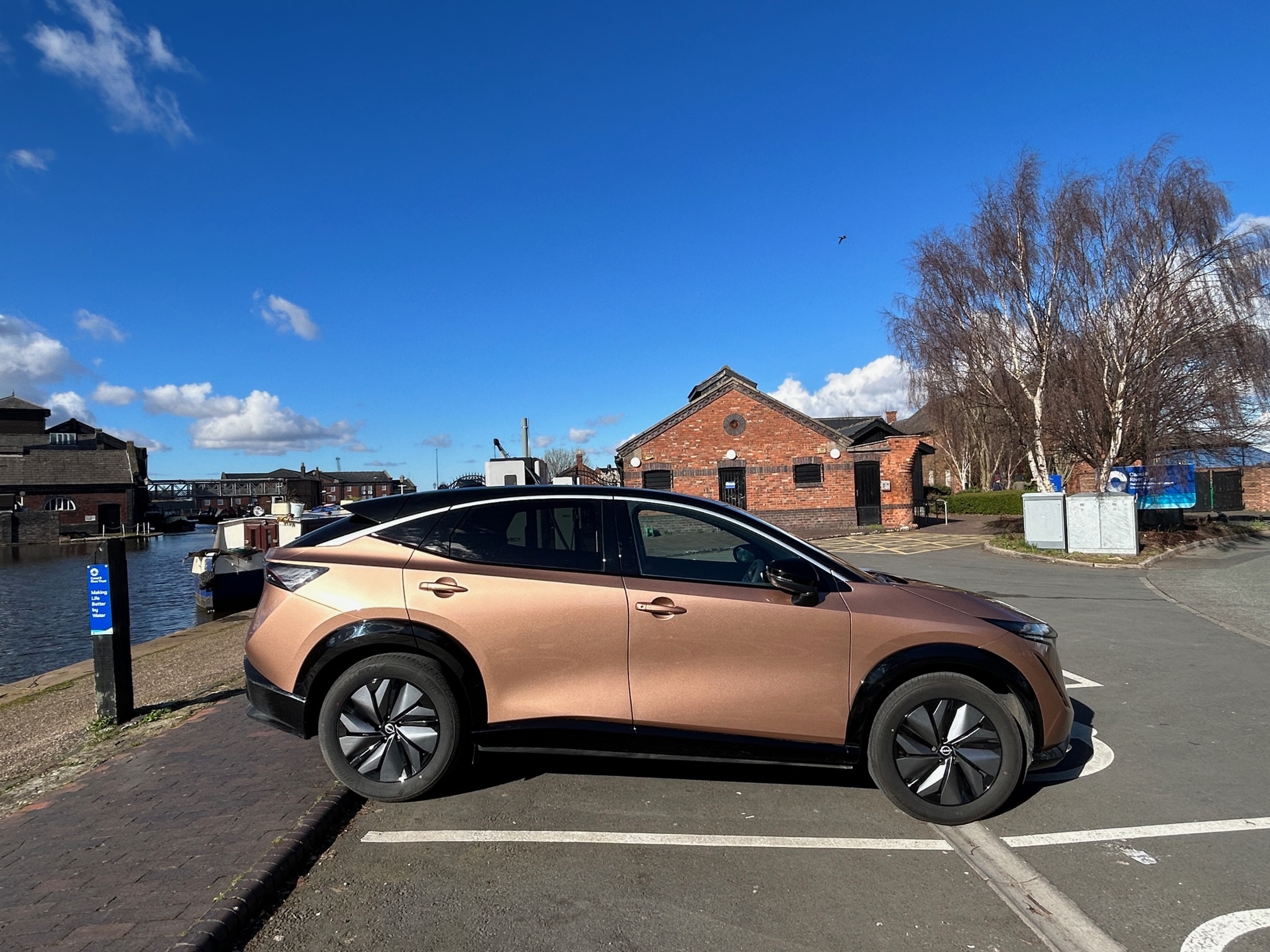
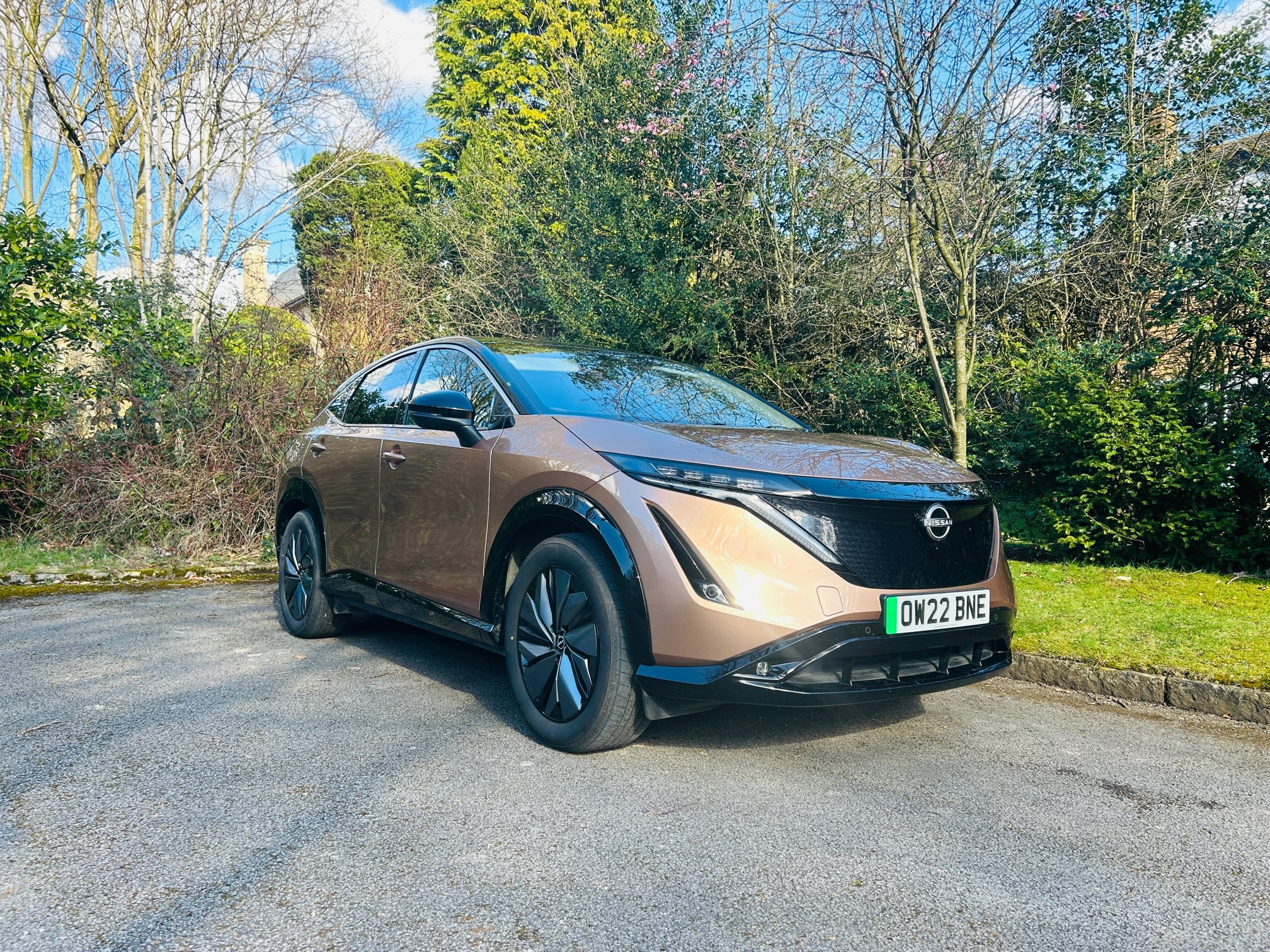
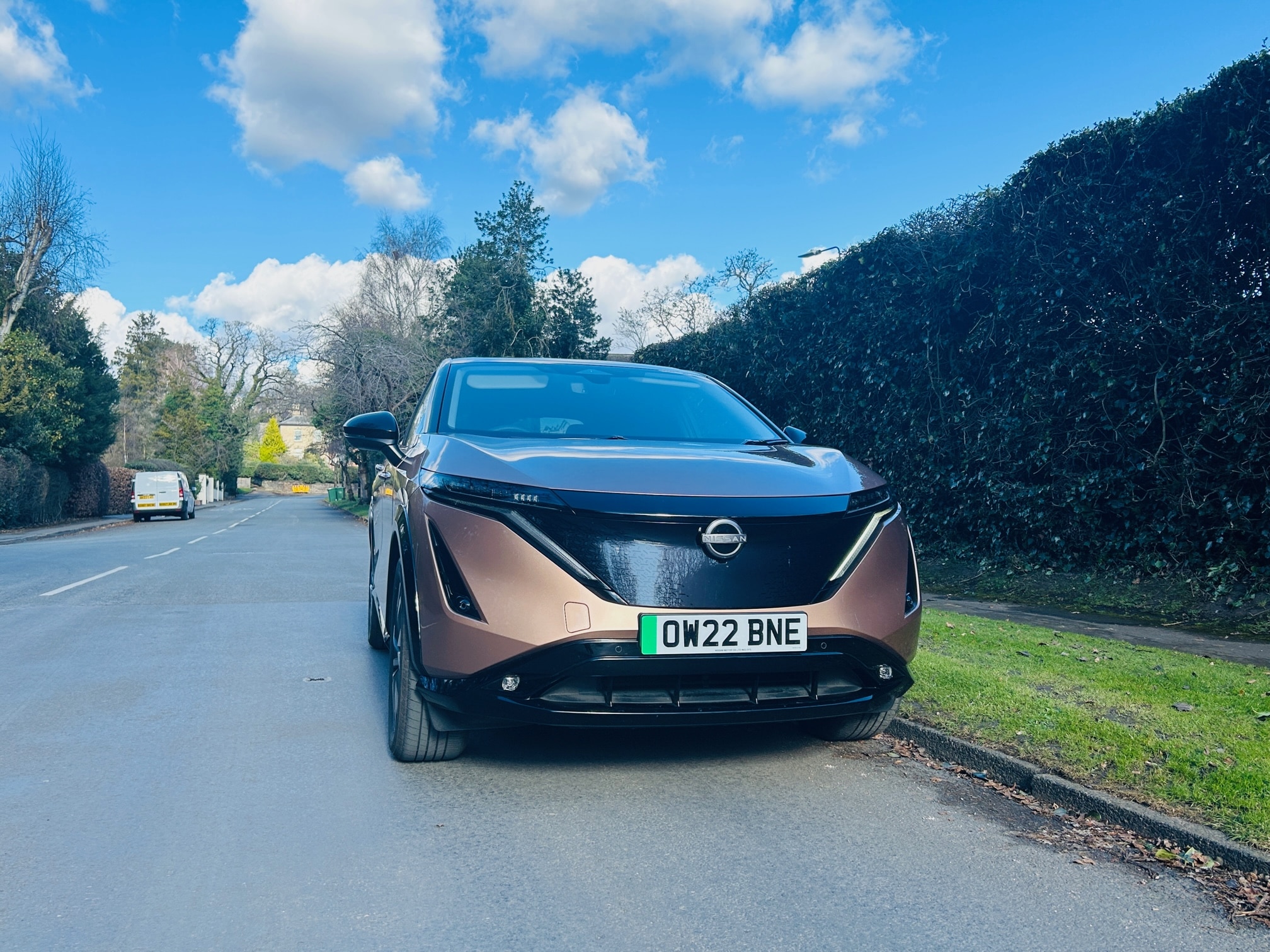
The Ariya looks good with slim LED headlights & a flat black grille up front. It’s coupe-shape offers a curved side profile, with a contrasting light blade & narrow rear window at the back. The rear end is slightly raised giving the car an aggressive stance. Overall it looks the part.
 Interior
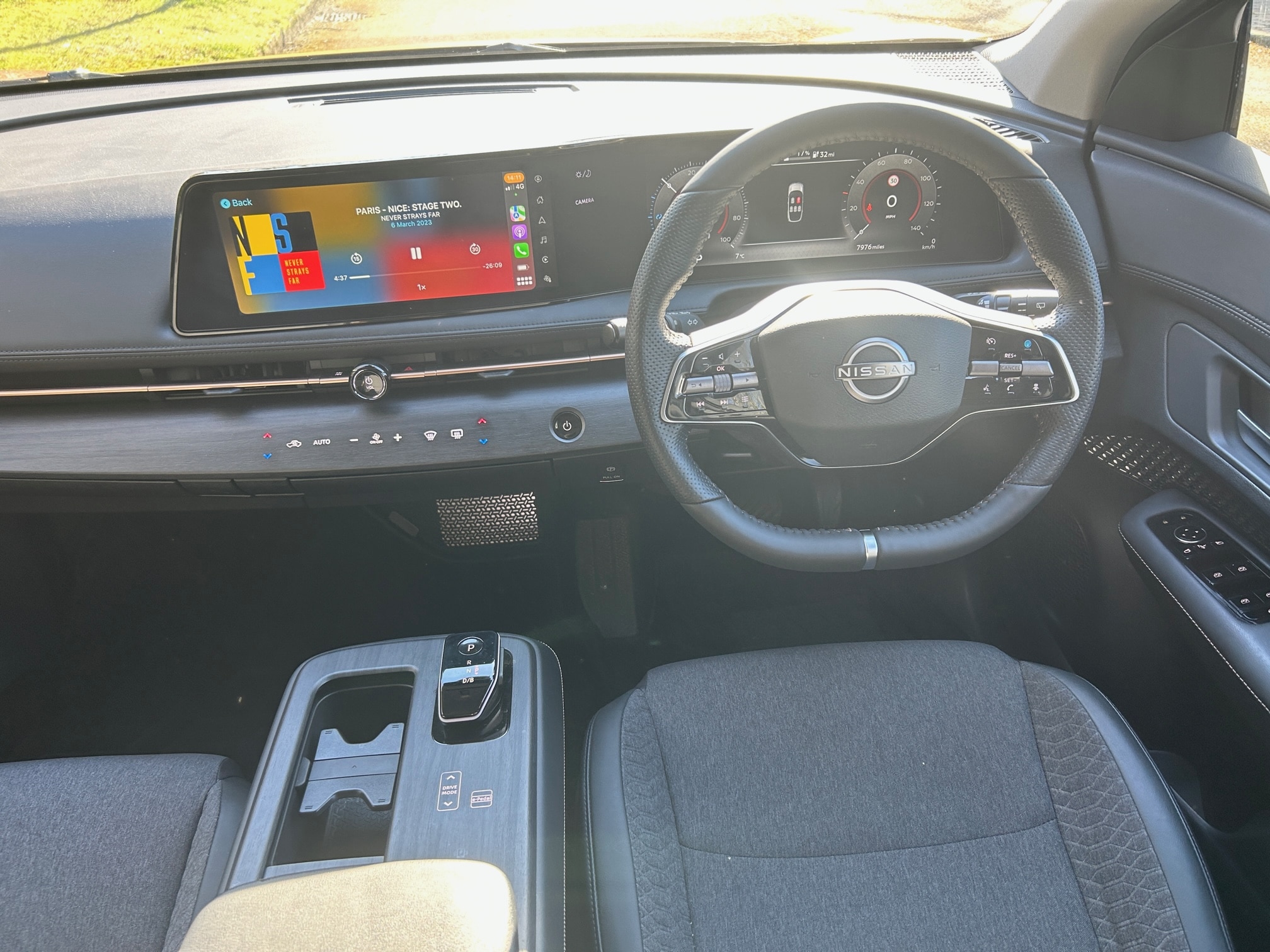
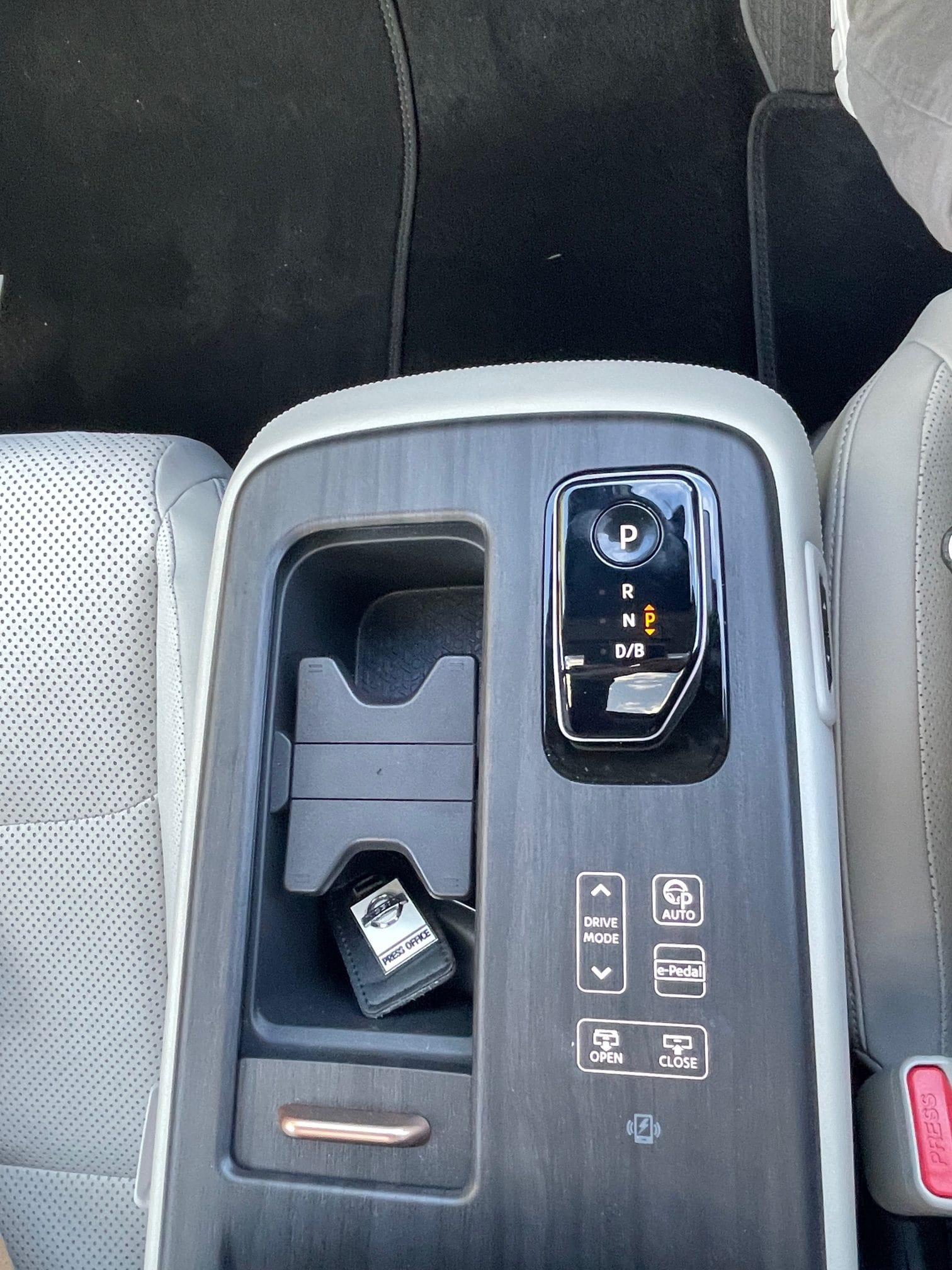
Nissan have really gone to town here. As per the vogue, it’s minimalist inside & features wood-effect trim, top-notch upholstery, Japanese lantern inspired ambient lighting & stylish cream & black colour ways. The haptic climate controls are hidden within the wood-inspired centre dash & on Advance spec models, you get the electronically adjustable floating centre console.
 Infotainment
The 12.3″ infotainment screen dominates the centre dash. It’s not as big as those found on the Ford Mustang Mach E or Tesla Model 3, but its plenty big enough. As far as usability goes, the screen functions are logical & work well, with Apple CarPlay & Android Auto included. The graphics aren’t the sharpest we;ve experienced, but the loading time is good. Overall, the system is way better than what you’ll find in other Nissan models.
 Specs
Specs
Advance offers 130kW DC CCS charging, automatic dual zone climate, Pro Pilot with Navi Link, the 12.3 TFT screen with 12.3″ navigation screen & a 360 degree all around view monitor.
Evolve adds an electric panoramic sunroof, the power moving centre console, ventilated & heated front seats, synthetic leather & suede seats, 10 Bose speakers & intelligent key with memory function.
Both e-4orce versions add All Wheel Drive with Snow Mode, front e-4ORCE entry guards, a rear e-4ORCE badge & dark chrome window mouldings.
 Battery, charging & range
The 63kWh battery offers 250 miles from a full charge. Utilise 130kW rapid charging & an 80% top-up takes just over half an hour. The larger 87kWh battery comes with on board 22kW charging & a range of 329 miles. On a home 7kWh charger like our own Rolec, https://www.rolecserv.com/ev-charging a full charge from 20% on the smaller battery would take 7 hours. As ever, get yourself a smart home charger, programme it to charge at night when electric rates are lower & it will cost you less too.
 Practicality
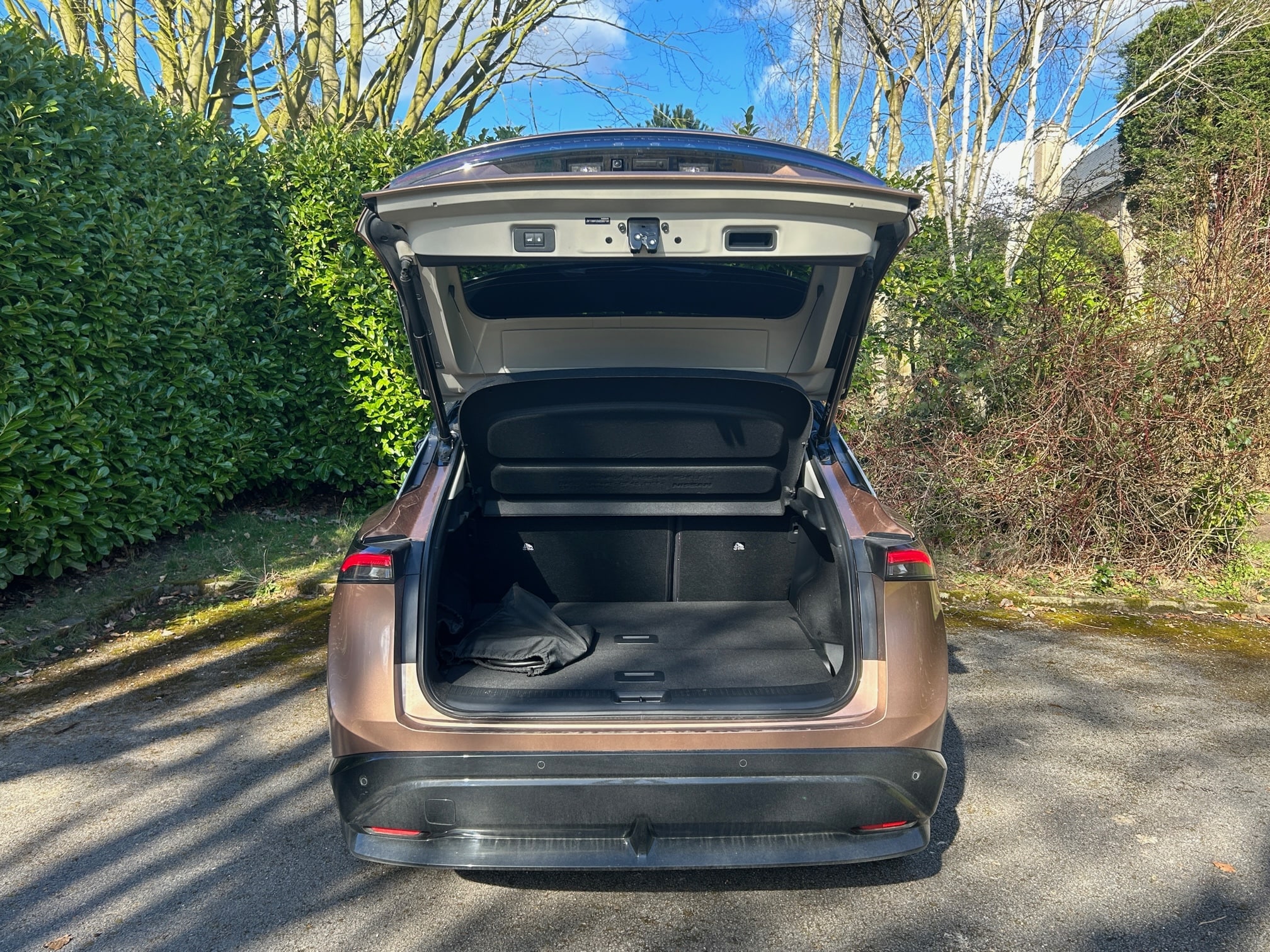
The Ariya has a significant foot print, measuring 4585mm long by 1850mm wide by 1660mm high. However, being electric means there’s loads more space inside. So, you get a good sized 466 litre boot, with space underneath for your charging cables & the bonus of a power tailgate.
The cabin is really light & roomy, with large door pockets, a glove box, central twin drinks holders, under armrest space, front & rear USB connection (Type-A & Type-C) & on our Evolve test car a wireless phone charger. Rear privacy glass & a rear armrest finish things off.
If you need to tow, then the twin-motor e-4orce model is the one to choose as it will tow up to 1,500kg, the single motor version only 750kg. But, be warned, this version only offers 408 litres of boot space.
 Driving & real world range
Like all electric cars, straight line performance is brilliant. The Ariya’s 215bhp front-mounted electric motor with 300Nm of torque offers plenty of smiles. It’s quiet, refined & smooth.
We were testing the 87kWh Evolve & despite the cars 2000kg weight, Nissan has done a fine job of hiding the imbalance caused by the battery, as it corners better than you’d expect.the suspension Unsurprisingly the suspensions a little on the firm side, with the battery showing itself here, but it’s still softer than in some competitors. Steering is light & generally positive & overall it’s a comfortable ride.
 On the road, you can shake things up a bit by selecting Sport Mode which sharpens the Ariya up. Top speed is 100 mph & 0-62mph takes 7.6 seconds. Or, you can stick to Eco mode & utilise the Ariya’s on-board brake regeneration to eke out that extra range.
Talking of which we managed to average 3.5kWh in our time with the Ariya so we’d guess a real world range of 290 -300 miles is infinitely possible putting it right up there with the Kia EV6 & Hyundai IONIQ & ahead in our book of the Skoda Enyaq & Volkswagen ID ranges.
 Pros
Pros
Company car drivers get 2% BIK, so you’ll pay as little as £160 a year on the entry level Advance 63kWh version. The Ariya’s interior is one of the best in the electric car sector. It’s also spacious inside & very comfortable. The Ariya also proved to be one of the better larger battery electric cars to drive, with sharp handling & strong performance.
 Cons
Cons
As with most electric cars, it suffers from a high entry price point. Our mid-range test car would set you back £53,590. Even though it’s one of the better handling electric SUV’s, it’s not as good to drive as a Nissan Qashqai.
 Conclusion
In 2021, both Kia & Hyundai came up with two of our favourite electric offerings with the EV6 & IONIQ 5. Whilst the Volkswagen ID5, Skoda Enyaq & Ford Mach-E are direct competitors, we would say that the Ariya belongs at the top table with the Kia & Hyundai. Not only does it look good, the attention to detail inside & build quality is excellent & it drives & handles well too. Furthermore, it’s real world range of 230 or 300 miles dependant on battery size, means range anxiety will take a back seat.
A house of the rising sun 4.5/5
