


Purists weren’t happy when Porsche launched the Cayenne SUV in 2002. Happily 24 years later the Cayenne is the brands best seller with over 1.3 million sold & Porsche’s success has seen every other premium brand launch a performance SUV including Bentley & Lamborghini. An electric Cayenne will arrive in Summer 2026 but until then company car drivers looking to lease in the premium SUV sector, can choose a Cayenne PHEV which was updated recently.
 Plug-in choices
Three versions are offered. Our test car the entry level E-Hybrid, S E-Hybrid & the range topping Turbo E-Hybrid. We’ll be concentrating on the former.
 Tell me more about the E Hybrid
The Cayenne PHEV now features a larger 25.8kWh battery that’s good in the E Hybrid for 48 electric miles. This is coupled to a twin-turbo V6 & 130kW electric motor so the power in E-Hybrid is 464bhp.
 E Hybrid engine & performance
Combining a V6 petrol engine with the electric motor gives the E-Hybrid a combined power of 470hp with 659Nm. Top speed is 158mph with a 0-62mph time of 4.9 seconds. It’s all done remarkably smoothly whilst underneath you can feel the power bubbling under the surface.
 Outside
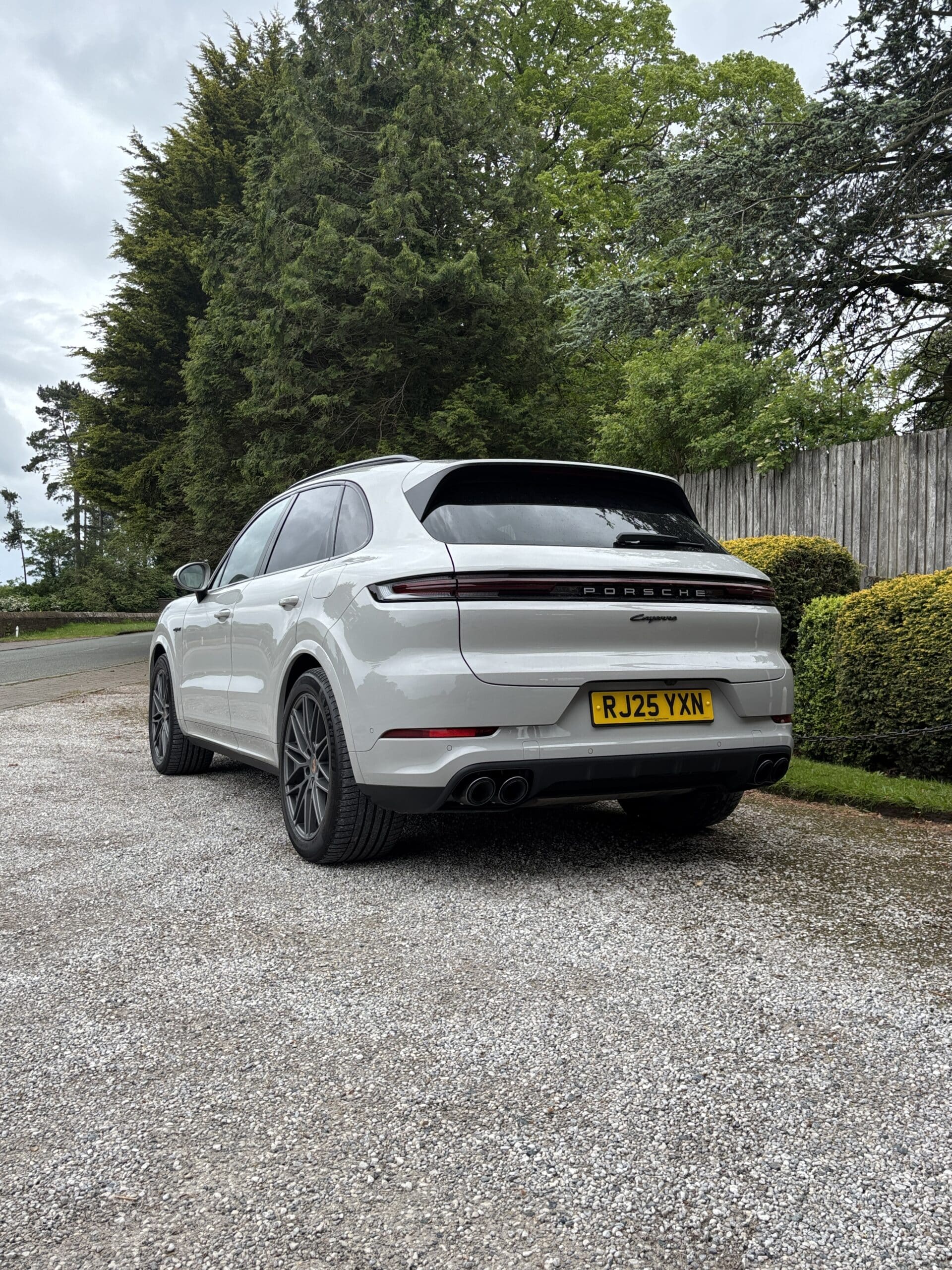
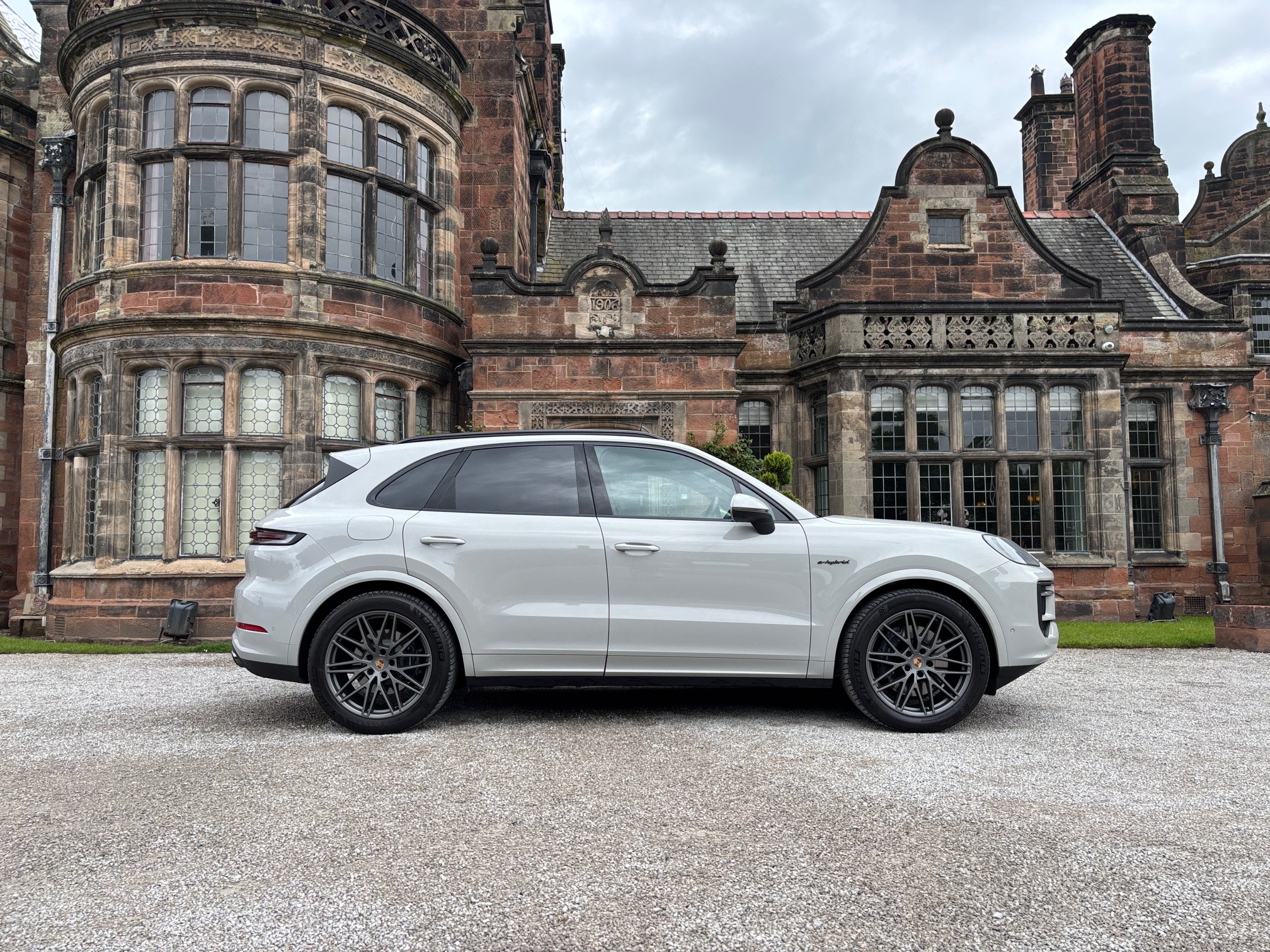
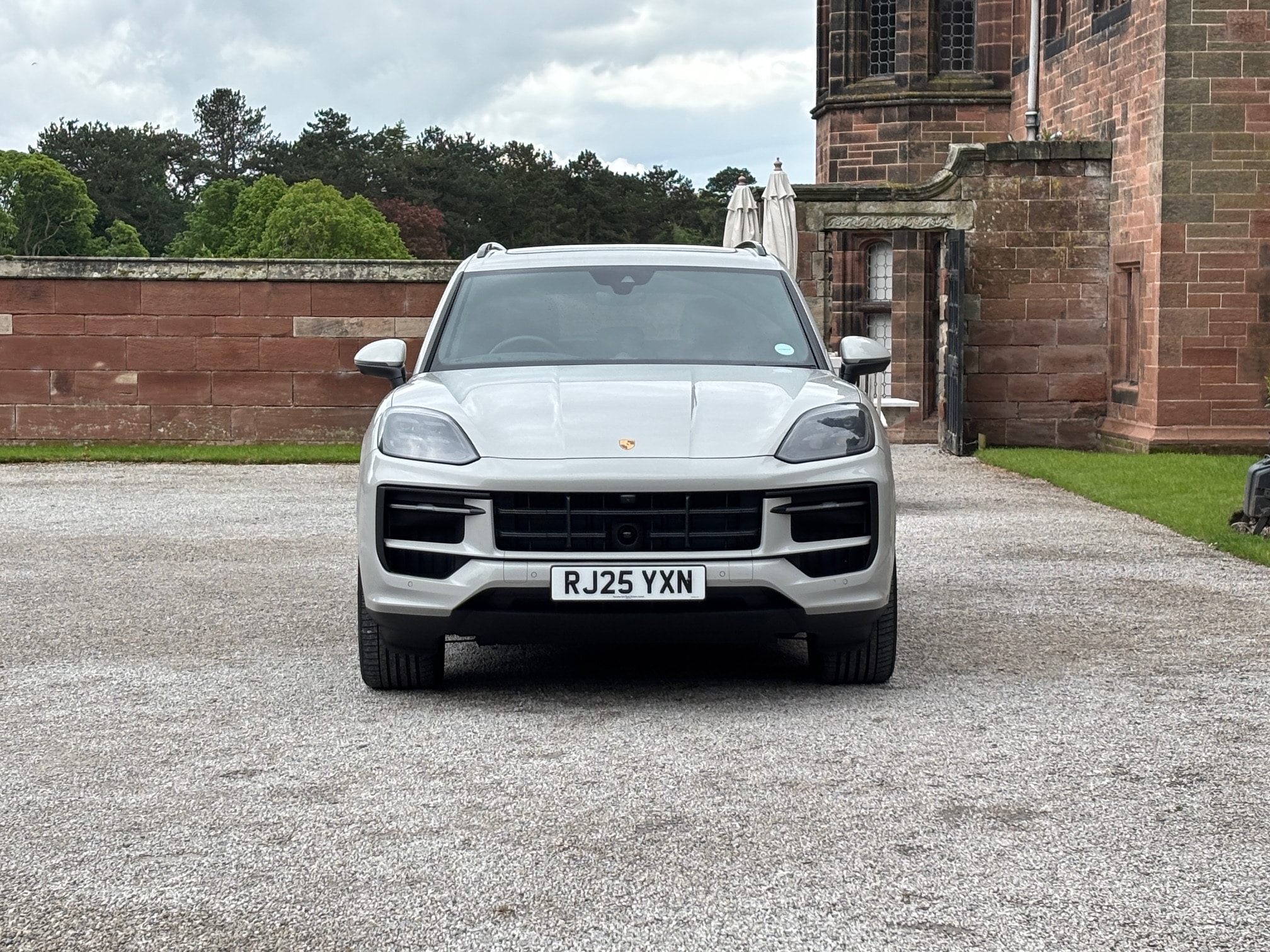
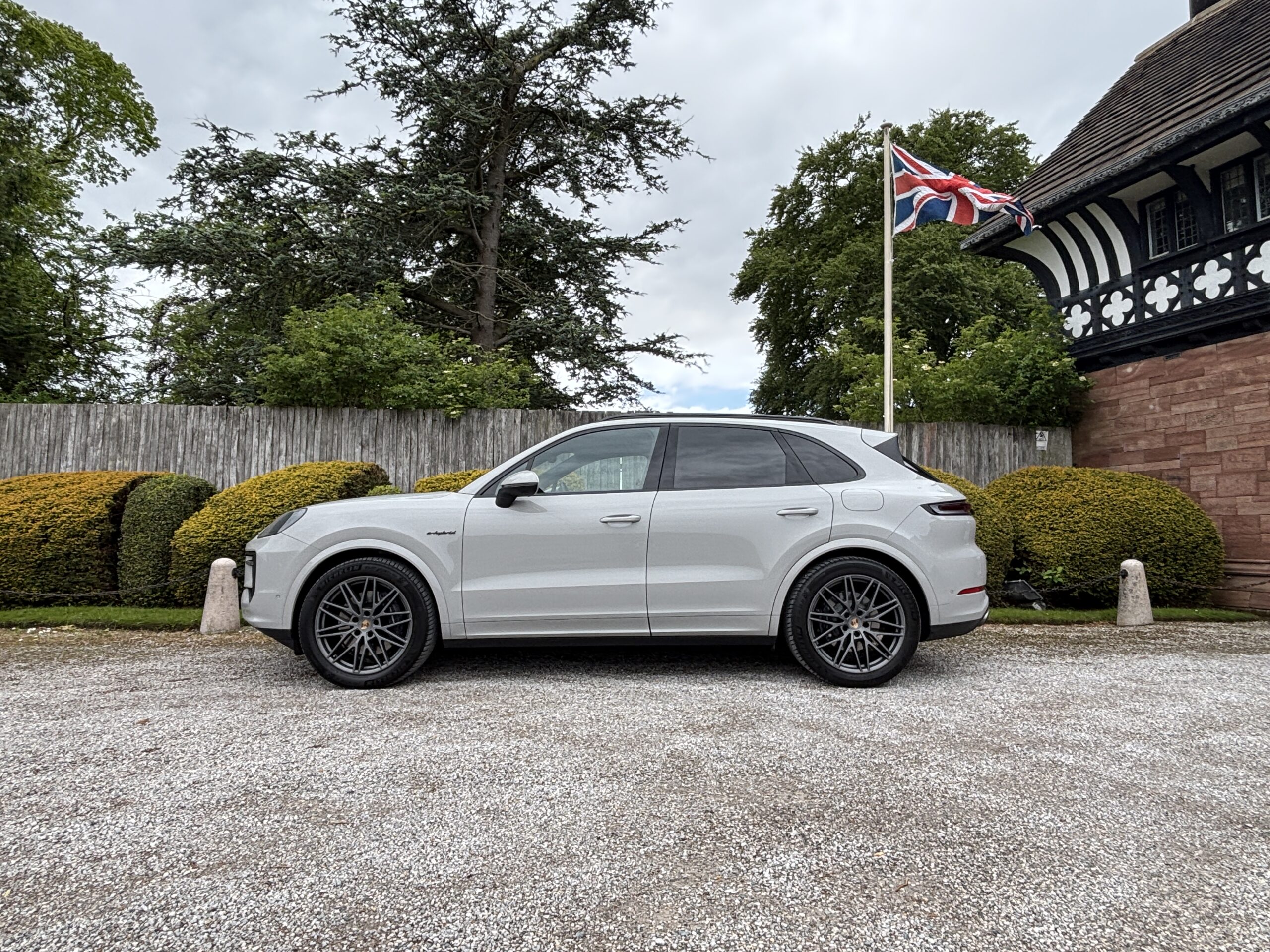
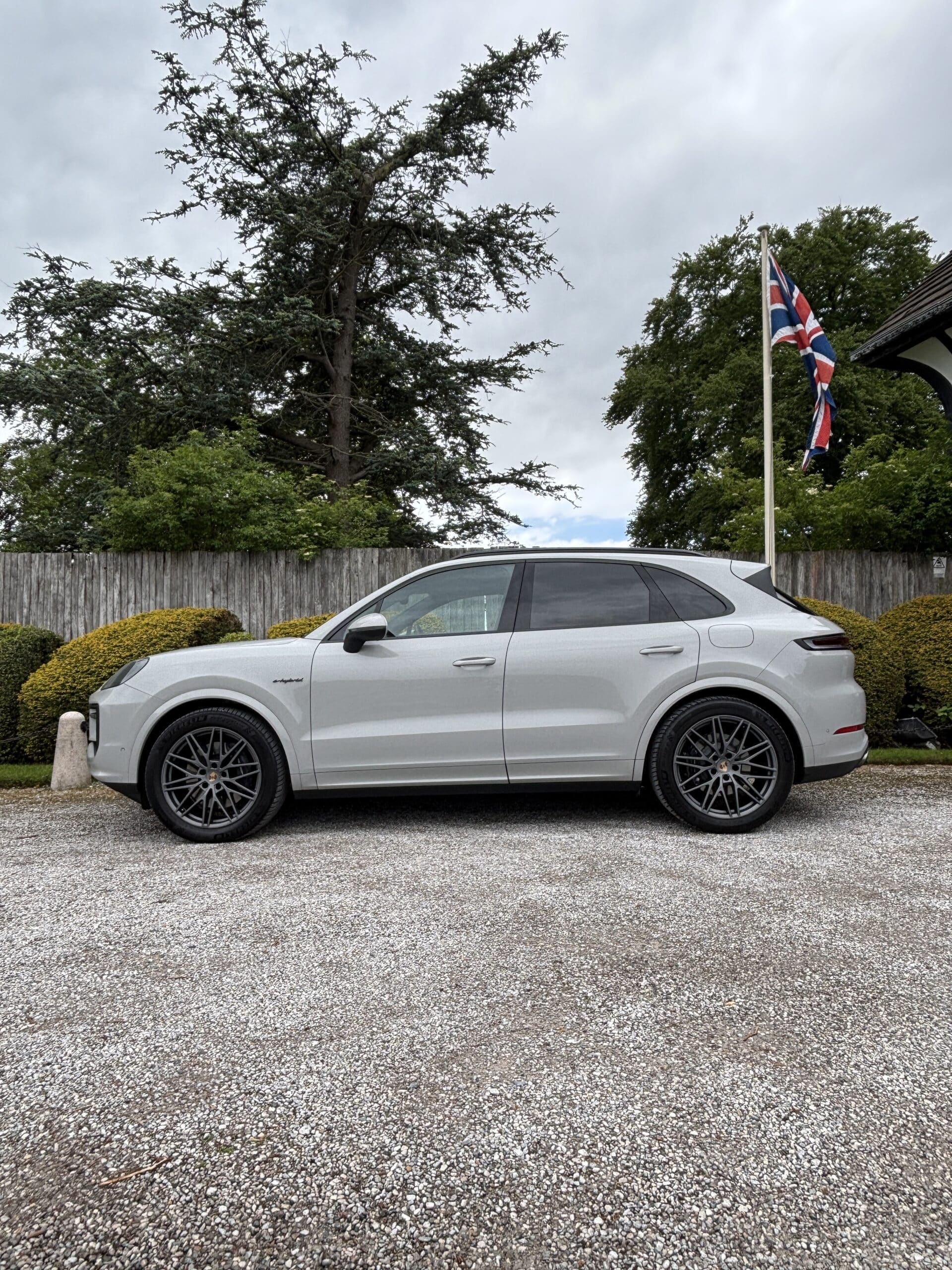
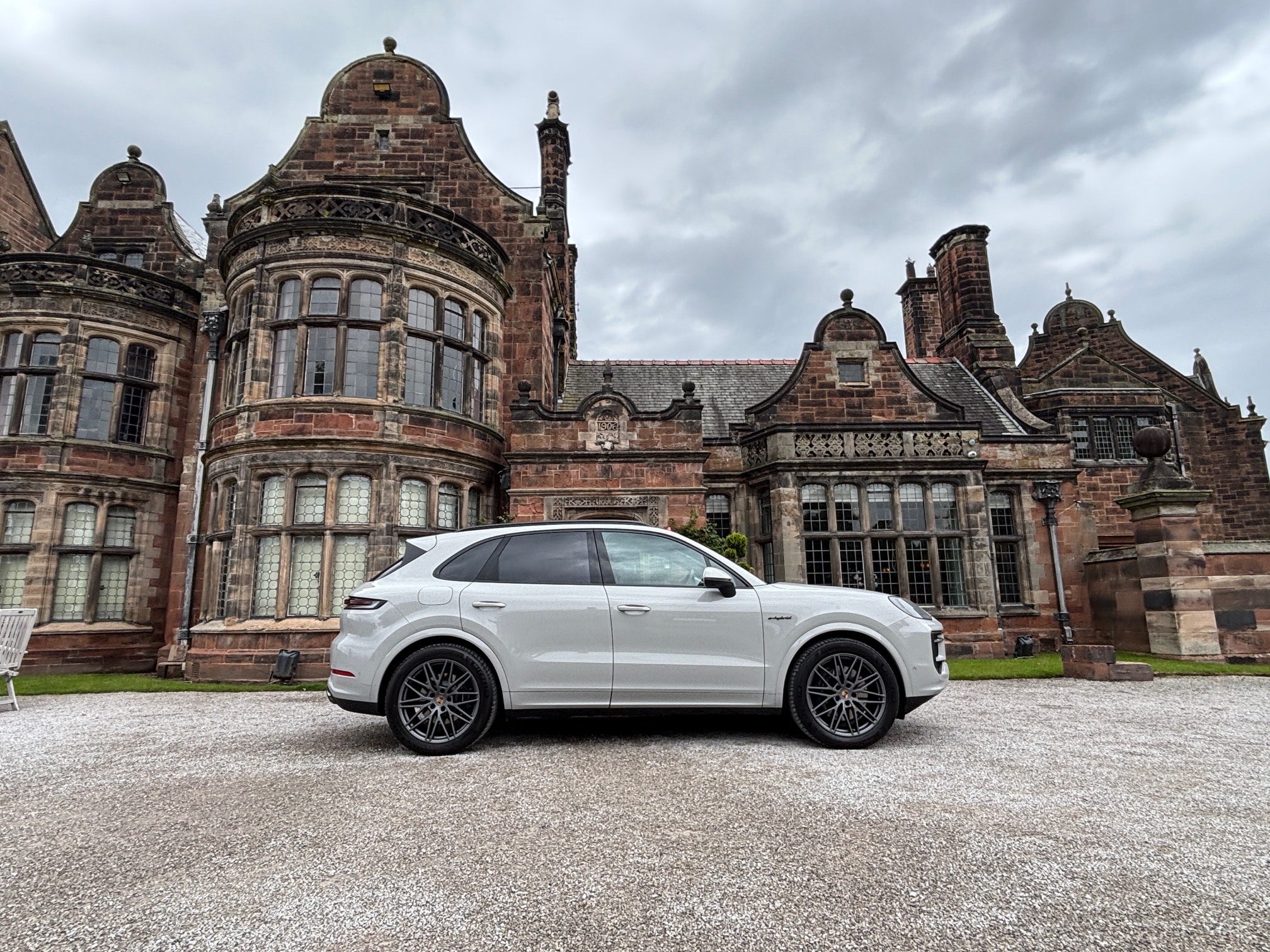
Recent updates include wider looking wheel arches, slimmer Matrix LED headlights, larger air intakes & a more sculpted bonnet at the front, with a revised LED light strip, lower mounted number plate, a neater tailgate design & larger diffuser finishing things of at the rear. There’s also new 21” & 22” wheel designs & some black exterior packages but in truth it’s all very subtle.
 Inside
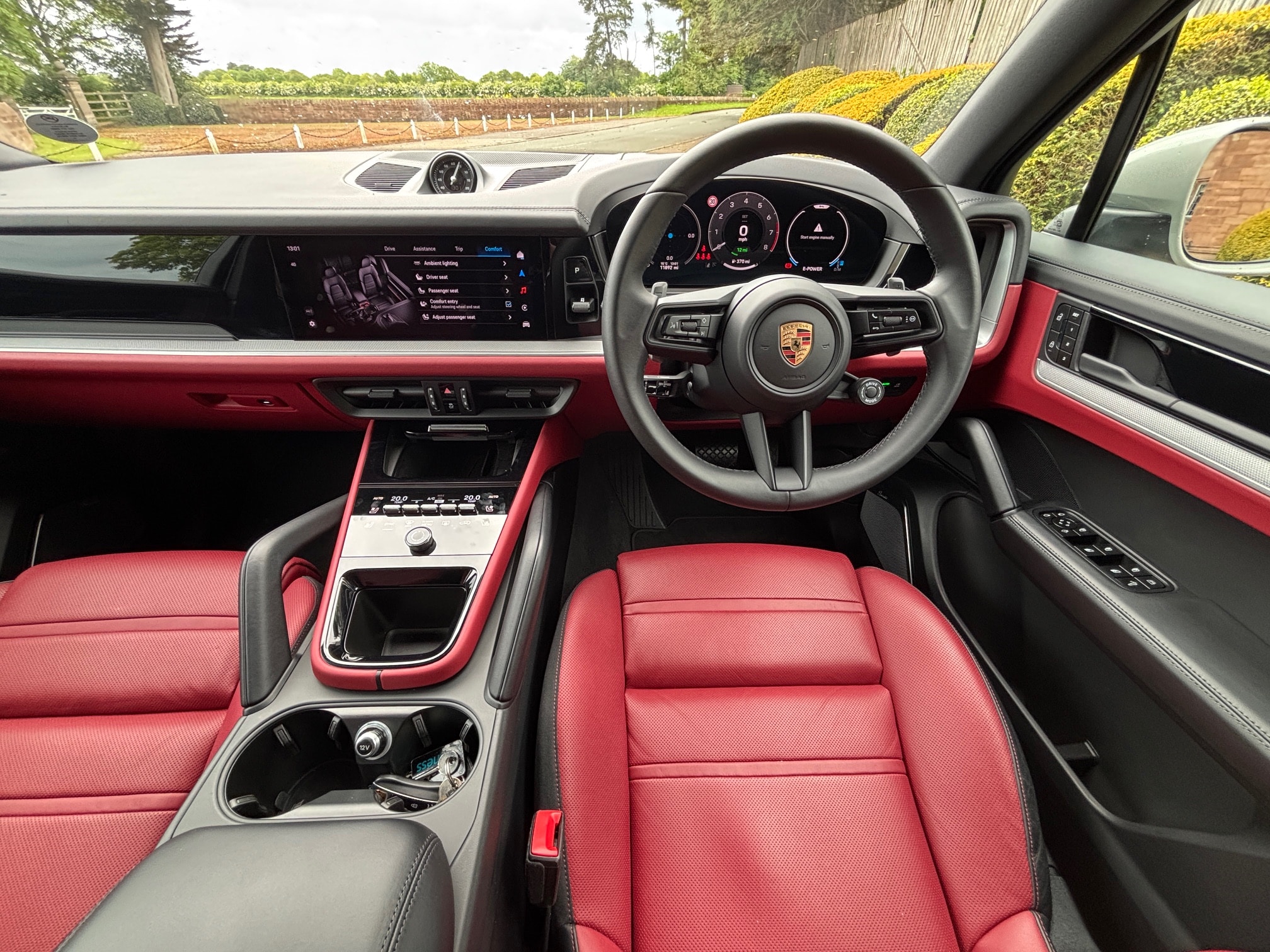
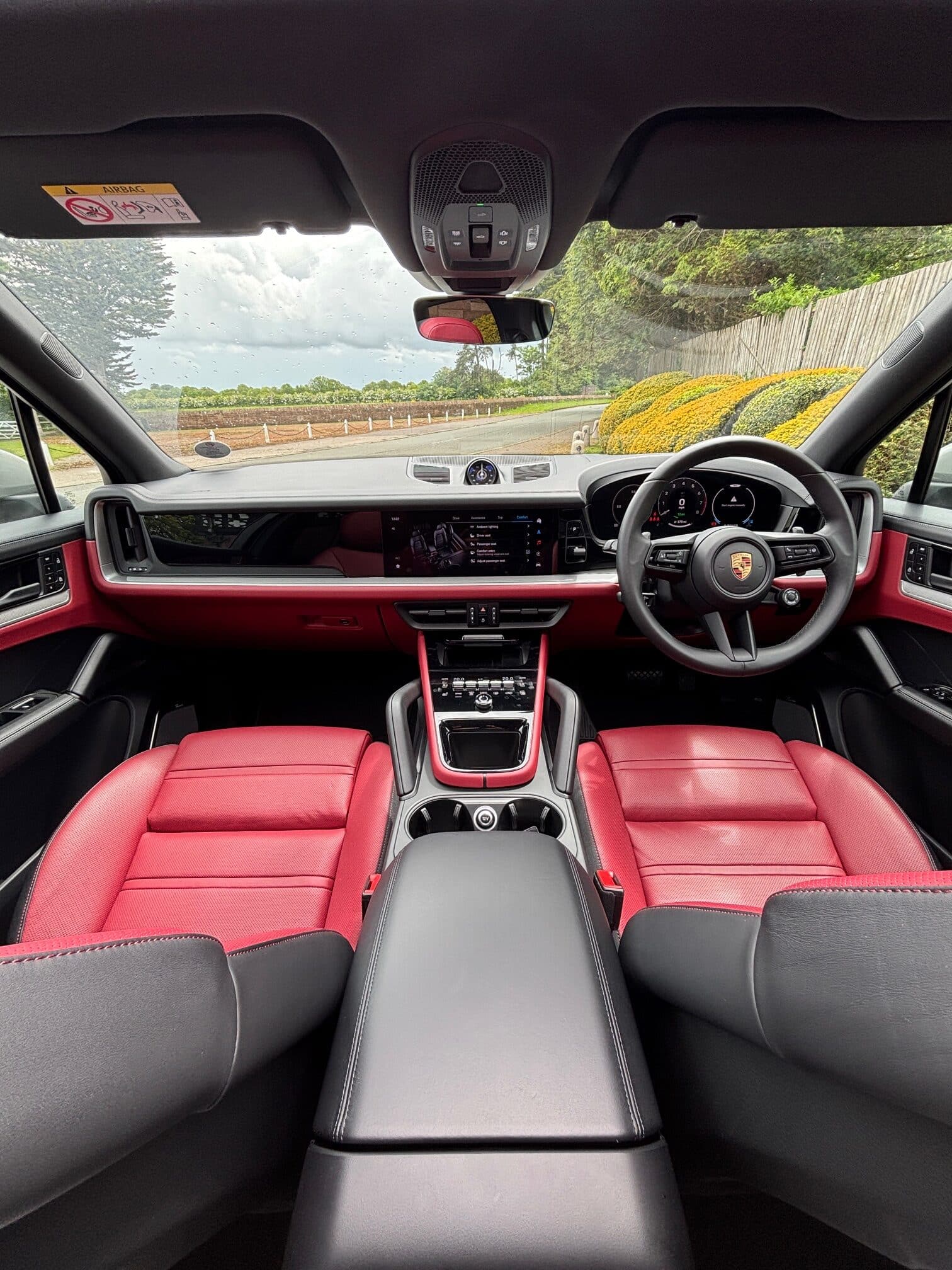
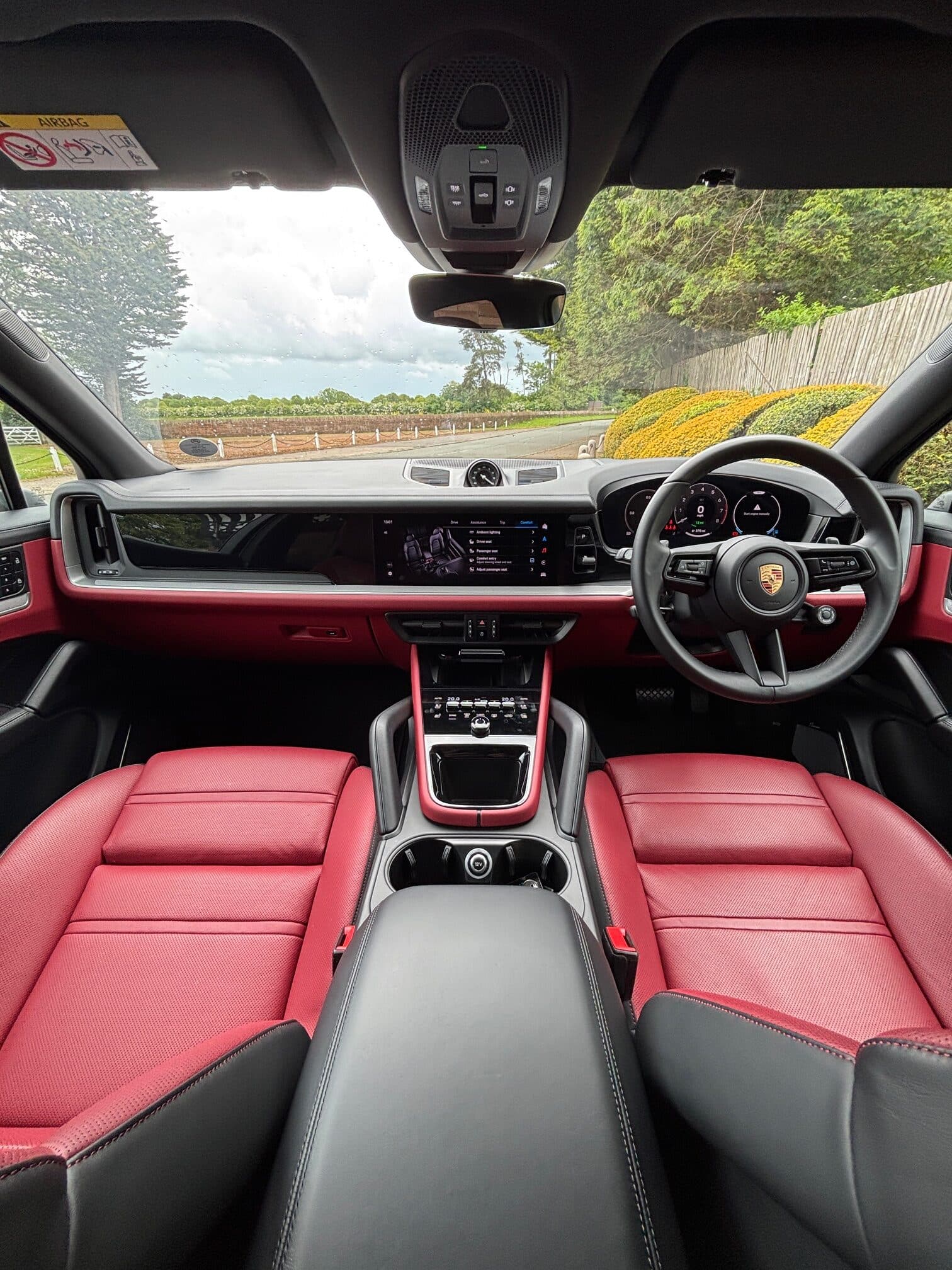
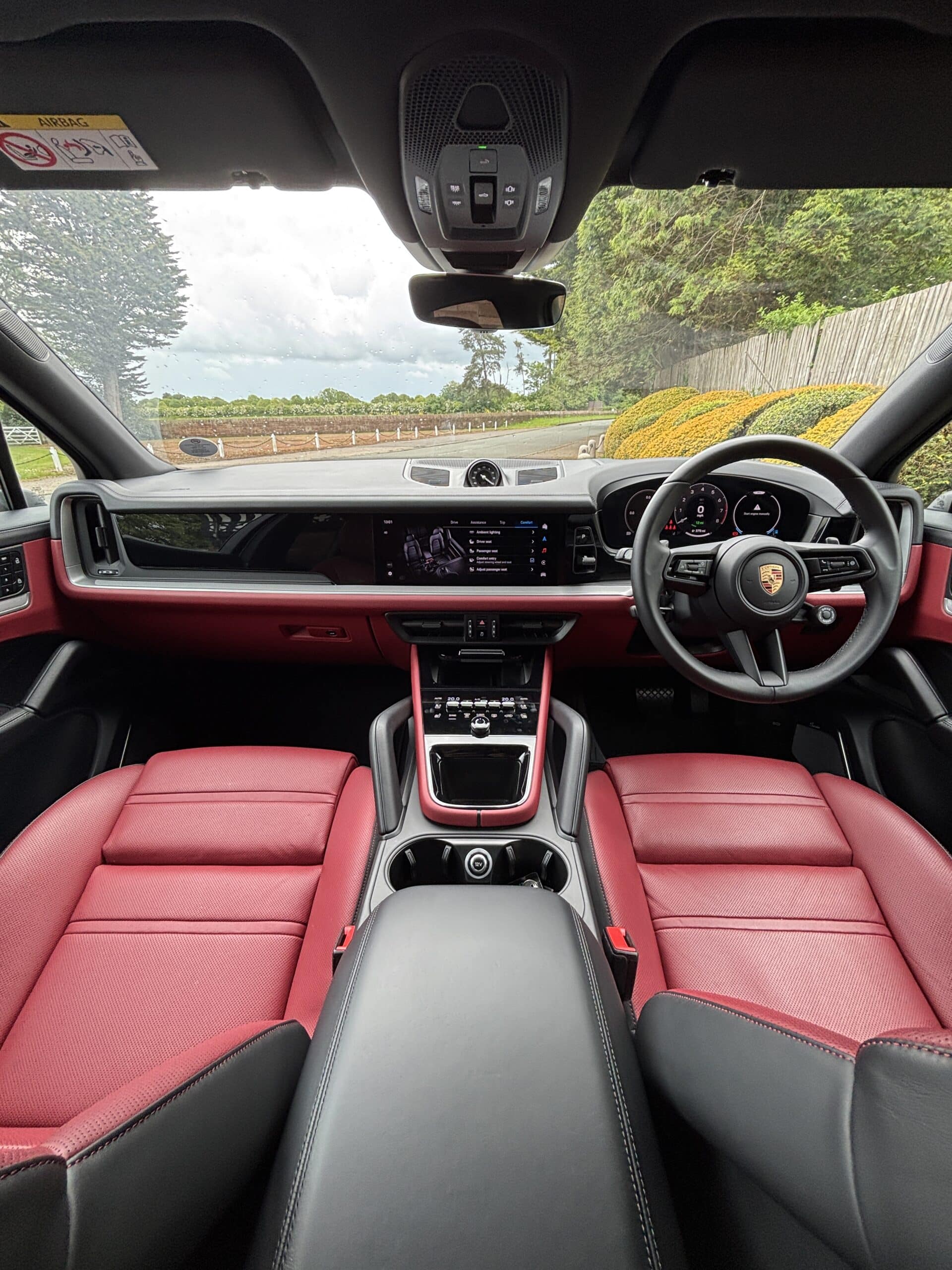
Influenced by the Taycan the updated Cayenne now comes with a ‘Porsche Driver Experience’ dashboard. It’s cleaner, neater & more on-trend than what came before & is decidedly uncomplicated compared to other offerings.
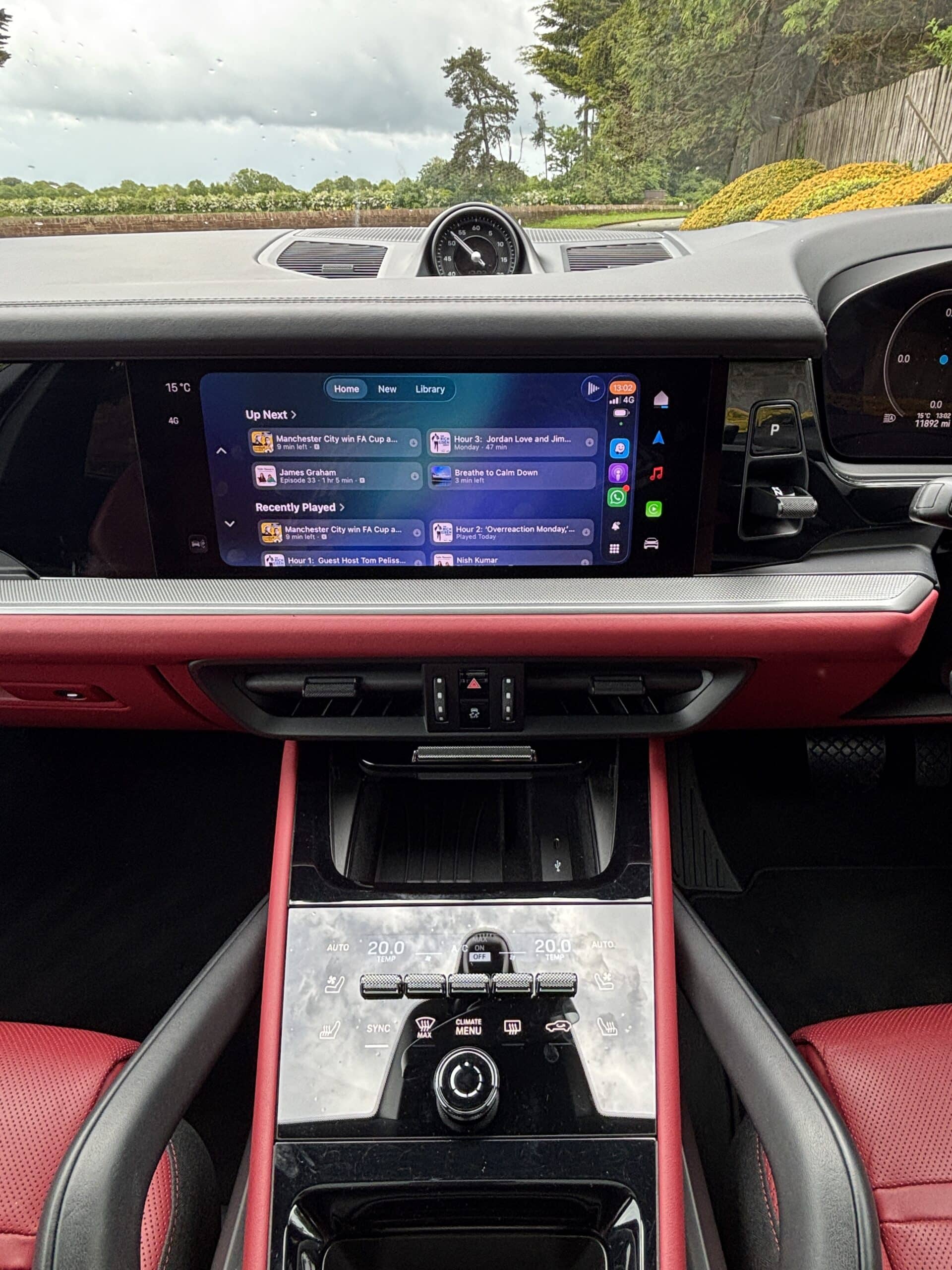
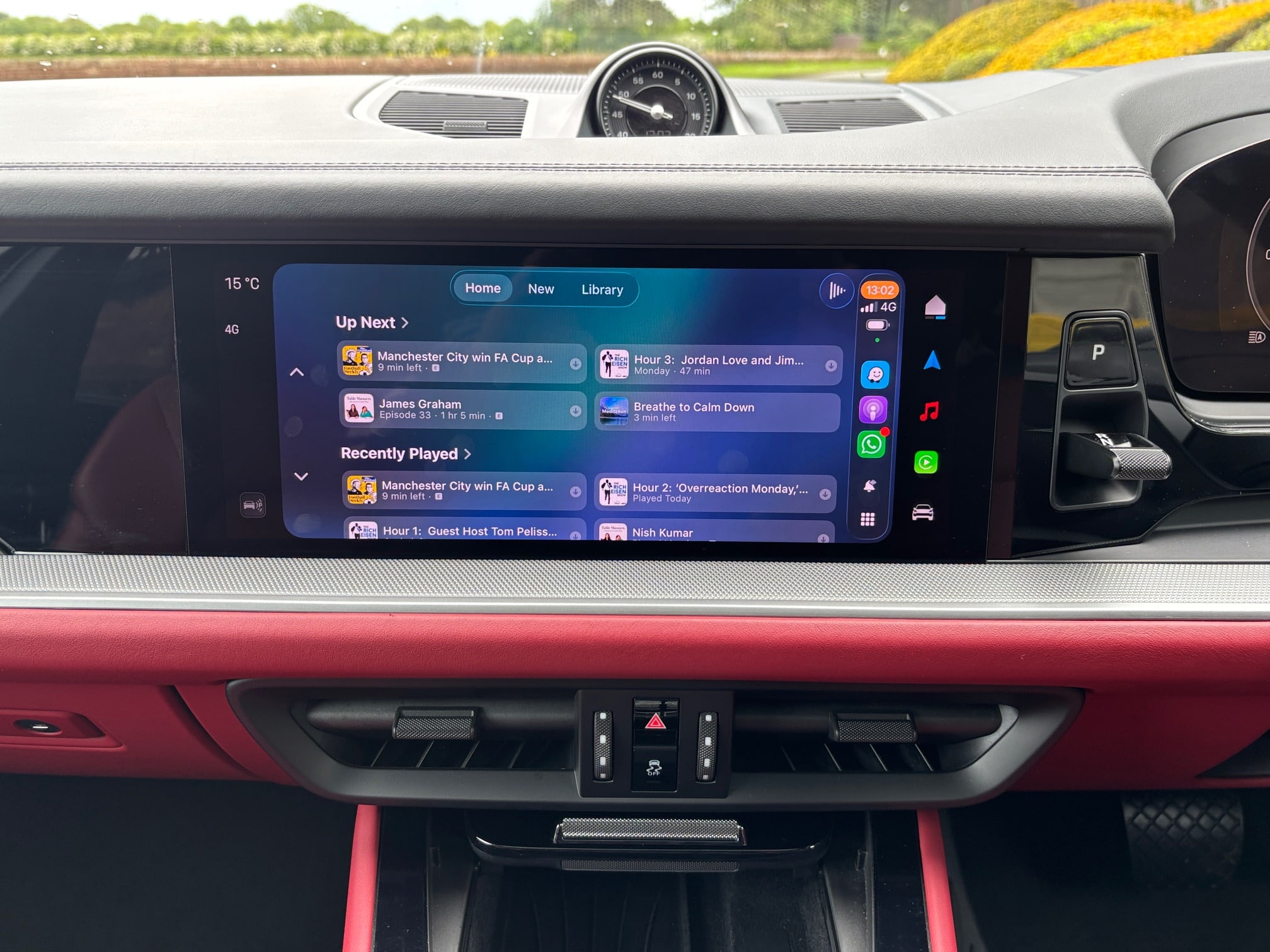 The driver gets a curved 12.6” information display with a smallish 12.3″ touchscreen in the centre dash. Below this sit some physical switches including for the climate functions & a wireless phone charger. A dash mounted Chrono & driving mode steering wheel selector finishes things off nicely. For the first time, buyers can specify a third 10.3” digital screen integrated into the dashboard directly in front of the passenger, which cleverly can’t be seen from the drivers seat.
 Infotainment
It’s not a complicated set-up from Porsche, making life much easier than in many other cars in 2026. There are several menu pages but each is logical & easy to work out. And compared to many a Chinese car or a Volvo, less menus=easier to remember, something others could take note of. Connecting wirelessly to CarPlay was quick & simple. The screen is also clear, bright & works quickly when touched. And we like the fact that the screen is large enough but not so large it takes over the dashboard.
 Finish
Everything is impeccably put together & features build quality that put many manufacturers to shame. As ever if you add a bit here & there the cost adds up with our test car featuring the addition of a two-tone leather interior in black & Bordeaux red which adds an additional £3,178 to the asking price.
 Standard spec
The E Hybrid does come with amongst others a wireless charging pad, wireless Apple CarPlay & Android Auto connectivity, 8-way electric Comfort seats, heated front seats, a Sport Chrono package.surround view with active parking, 20” Aero wheels, Matrix LED headlights, keyless entry & Porsche Active Suspension Management (PASM) – electronically controlled active damping system with manually selectable modes.
 Safety
Cabin practicality
The Cayenne isn’t the most practical large SUV, but it does come with large enough door pockets front & back to hold a bottle in, a small central open storage spot, twin cup holder’s & a centre armrest with storage beneath.
The seats are ultra comfortable & there’s loads of electric steering wheel & front seat adjustment to suit tall or short drivers, with plenty of leg & head room too. Rear space is also pretty good especially legroom & the rear seats recline a touch which is clever. Whilst the rear bench is wide enough for three adults, the centre seat is narrow & does feels cramped. Elsewhere, there’s a fold down armrest with cupholders & a slot between the front seats with two USB-C ports.
 Boot
Boot
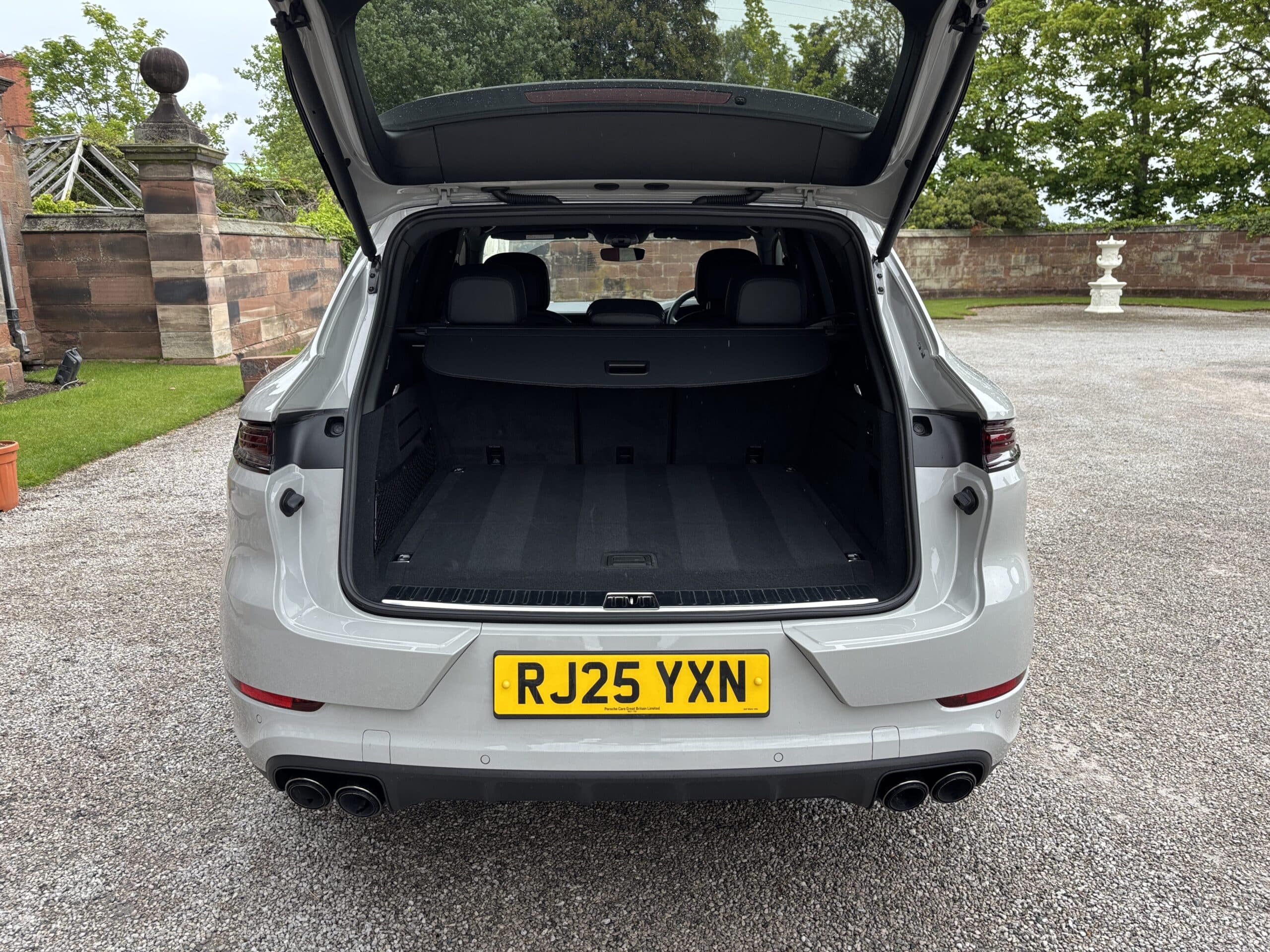
The PHEV’s boot space is smaller thanks to the battery but it still offers 627 litres of storage. The rear seats split in a 40:20:40 ratio, but there are no levers in the boot to fold these down & they don’t go completely flat either. Under the boot floor is a small storage area where you can store the charging cable. The opening is wide & the space is usefully square.
 Company car benefits
Put simply the improved electric range of 48 miles & CO2 emissions of only 94g/km put’s the Cayenne E Hybrid at 8% BIK.
 Charging
The addition of an 11kW AC on-board charger is more good news because it potentially cuts a full battery charging time to under two & a half hours. When we plugged in at home on our Rolec EVO charger the top-up took just under 4 hours costing us just £2.35, another major benefit in kind.https://www.rolecserv.com/ev-products/evo
 Porsche Charging Service (PCS)
For those of you considering a Porsche PHEV or EV it’s worth knowing about the Porsche Charging Service which makes charging away from home cheaper & more convenient. New Taycan, Macan EV & Cayenne/Panamera E-Hybrid customers receive three years free subscription to PCS Plus, giving access to a network of more than 800,000 charge points across Europe. Networks include Gridserve, Shell Recharge & Osprey. PCS offers standardised pricing (44p/kWh for AC & 59p/kWh for DC) across all networks, as well as discounted pricing at IONITY & Porsche Centre turbo chargers (39p/kWh). After three years, PCS Plus is available for £13.99/month.
 Driving modes
First things first, the Hybrid comes with multiple drive modes, including E Power, Hybrid Auto, Sport & Sport + after all this is a performance car. E Power lets the car run on electric power, great in town, the default mode is Hybrid Auto which chooses when best to blend petrol & electric power & Sport & Sport + which increase throttle response with shorter gear shifts & firmer suspension. Handily, there are also separate save & recharge options to ensure you keep the electric charge for where it’s most useful.
On the road
When you first get in & drive off you can really feel the cars weight, the kind of excess baggage that completely spoils many a plug-in or EV SUV when it comes to road manners. The Cayenne E Hybrid though manages through clever design & top-notch multi-link suspension, to handle beautifully whether in a straight line, around fast corners or even over terrible tarmac. I wasn’t expecting this at all. The only time the weight becomes noticeable is when you’re driving slowly at under 20mph in town really, but otherwise it’s very well hidden.
 And a word about the brakes. Six-piston calipers with 390 mm discs at the front with four-piston calipers with 358 mm discs at the rear will stop you faster than you thought capable. Engage Sport+ & things get a touch wilder, but even if you push this car it never ever feels out of control. Indeed if you want things to be more relaxing you can dial back to comfort mode & it still feels exciting. Talking of which the E Hybrid rides as smoothly as you’d expect especially as our test car had Adaptive Air Suspension & rear axle steering as extras, but we doubt you’d need either to be fair. The level of simple driving & steering feedback for such a large, upright & downright heavy SUV is remarkable. What ever Porsche put in their designers tea is obviously working.
 Motorway & driving range
A journey of just under 100 miles was our furthest motorway driving distance & at a constant 70mph whilst saving the battery range, the E-Hybrid was getting us 37 mpg in petrol only mode. Locally & on our daily commute we utilised the electric range which when fully charged showed 46 miles & this was enough to last us 4 days of 10 mile journeys before we needed to plug-in & charge. Exactly what a PHEV should do.
 Pros
Pros
 Cons
Cons Verdict
A Top of the Pops 4.75/5
Basic price £86,300 as tested £123,214
