


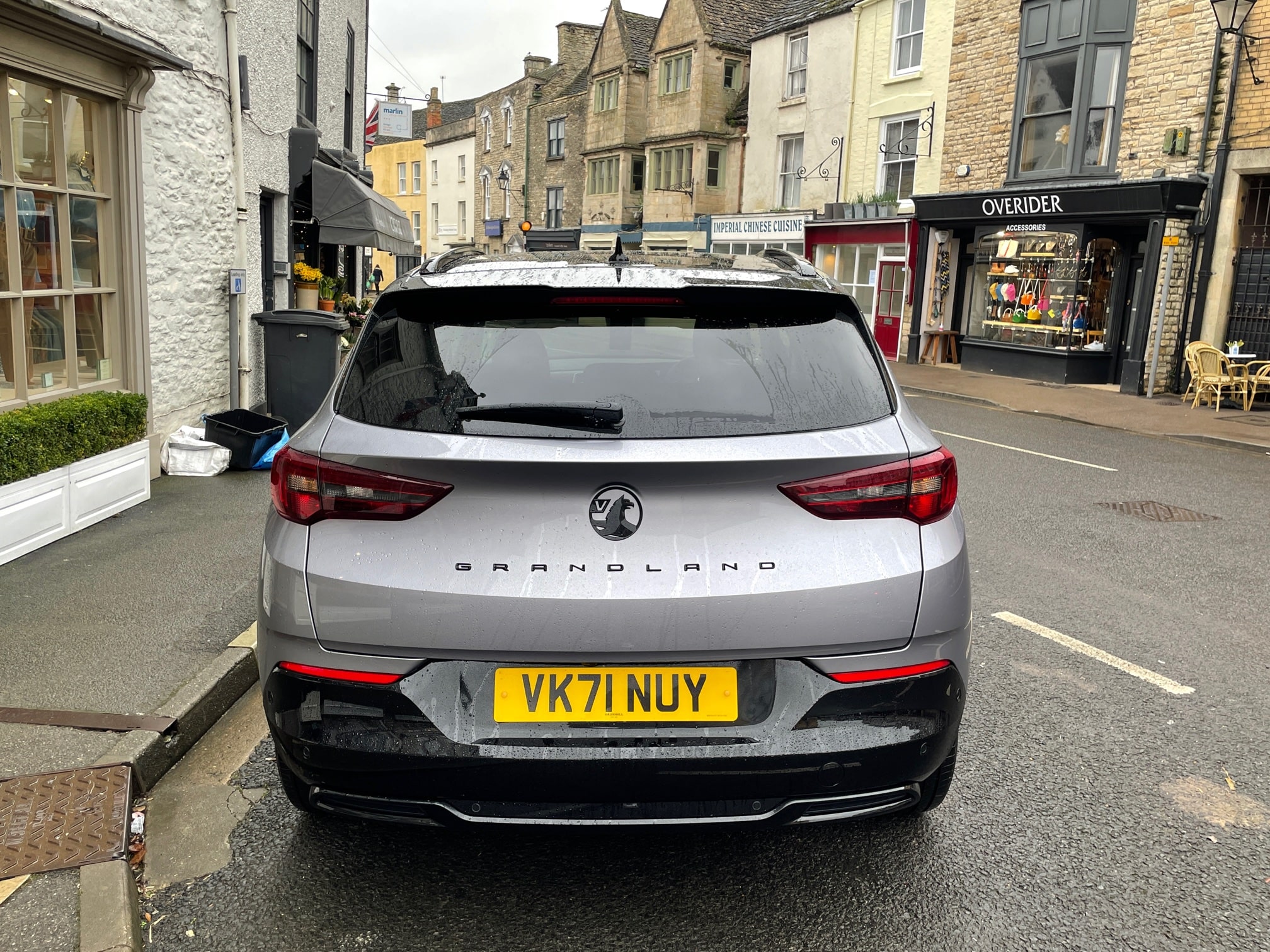
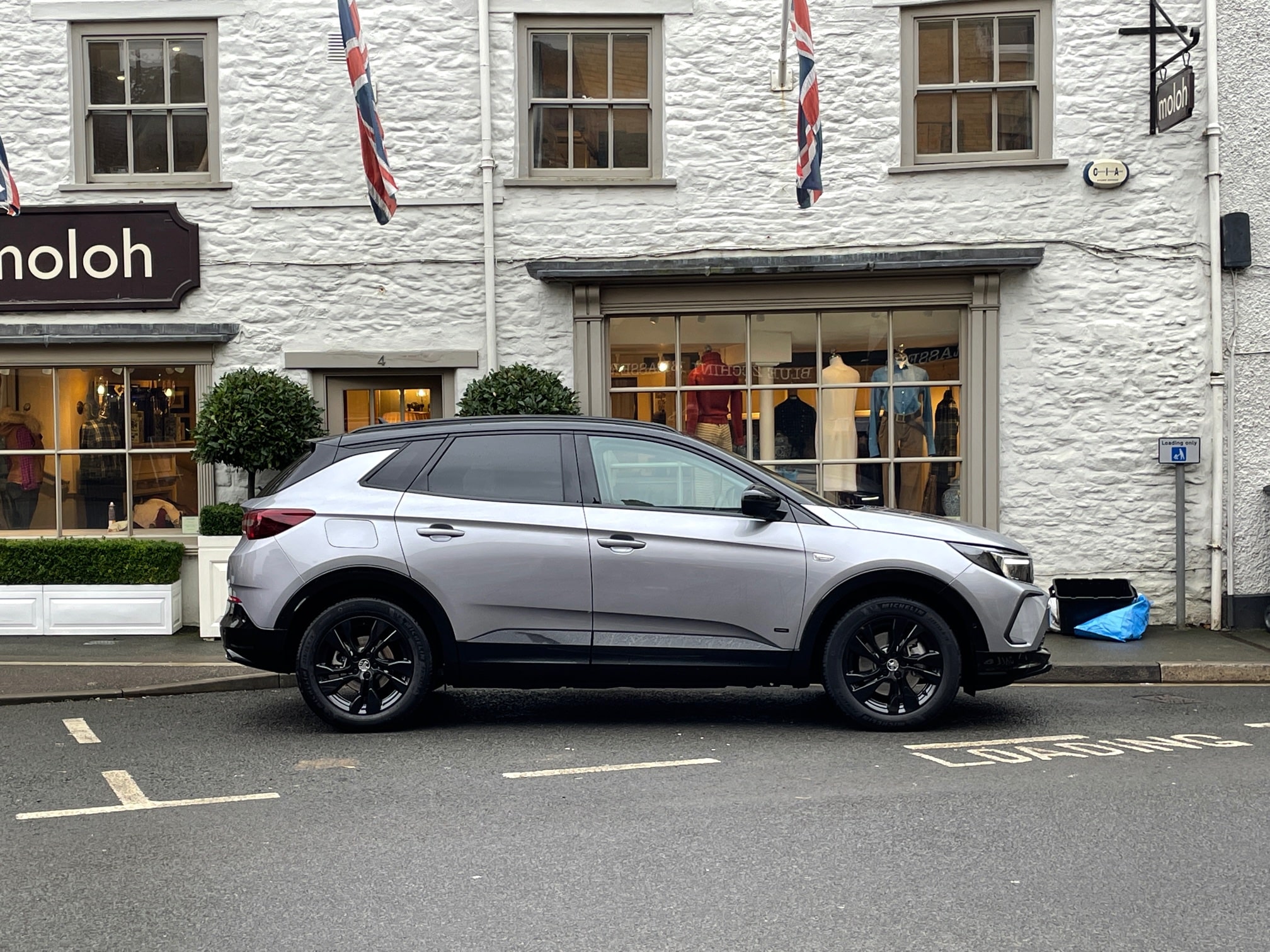
Vauxhalls Grandland-X has a new moniker & is now known simply as Grandland. The new name kick starts a model refresh for Vauxhall’s C SUV & we got to drive the fleet-friendly plug in version recently.
 What’s new ?
The shorter name Grandland, also ushers in a slimmed down model range that’s better equipped, visually different & substantially cheaper then the outgoing Grandland-X. It’s also been built on Vauxhall’s Efficient Modular Platform 2 (EMP2) – a multi-energy platform that supports both electrification as well as advanced petrol & diesel powertrains.
 Engine choices
Choose from three. A 1.2T 130 PS 6-speed manual & an 8-speed auto petrol; 1.5D 130PS 8-speed auto diesel & a 1.6T 225PS 8-speed auto PHEV.
 Model range & equipment
Vauxhall have also simplified the model range with now just three on offer; Design, GS Line & Ultimate. Design isn’t offered as a PHEV though & is only available in GS Line & Ultimate specs.
Entry level Design, features, 17″ alloys, LED headlights, tail lights & DRL’s, automatic lights & High Beam Assist, Lane Departure Warning, Lane Keep Assist, Automatic Emergency Braking, front & rear parking sensors, Speed Sign Recognition, cruise control, 7″ colour touchscreen, 7″ digital cluster, Bluetooth, Apple CarPlay/Android auto & dual-zone climate control.
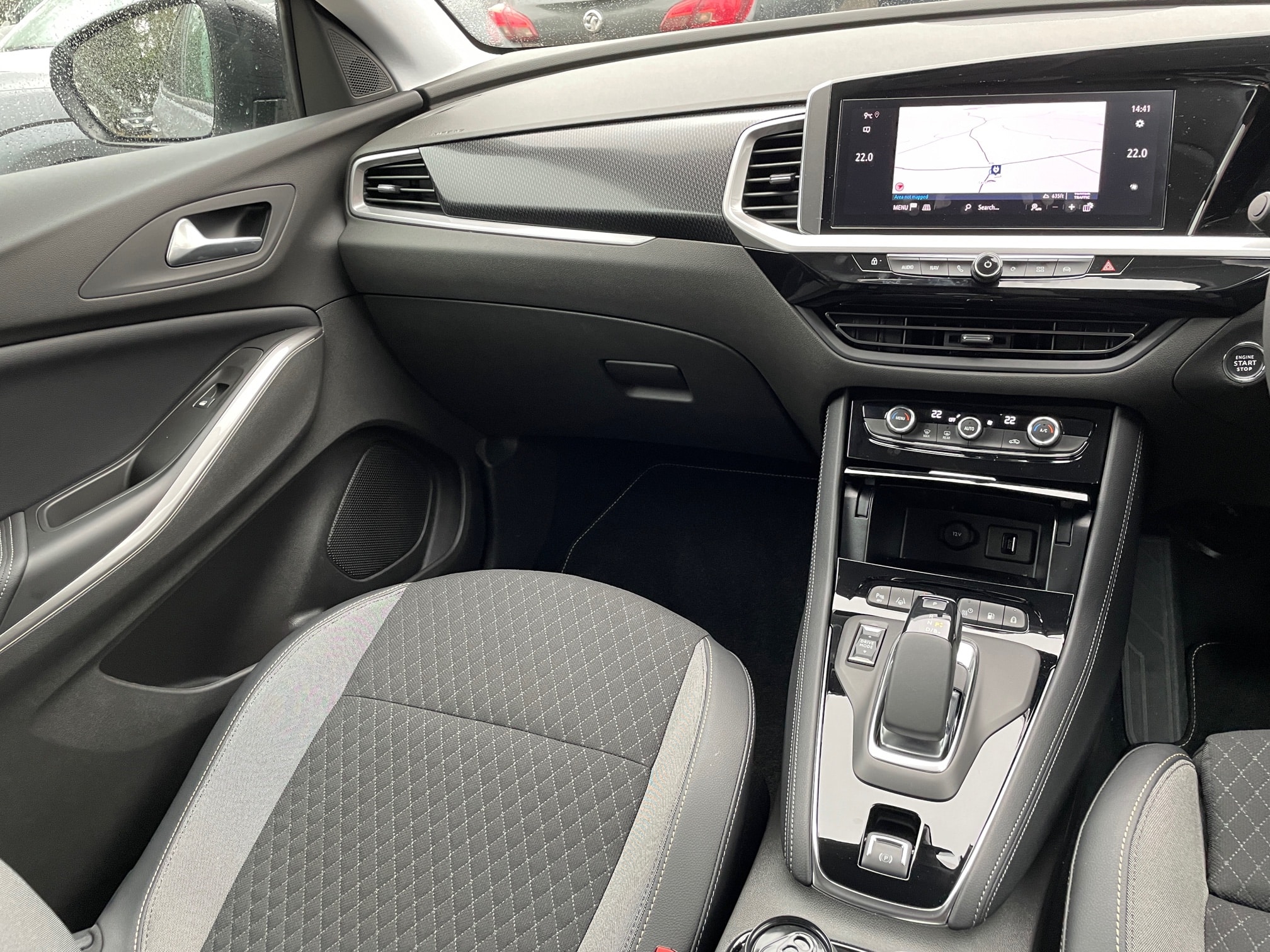
 GS Line adds 18″ high-gloss black alloys, a black two-tone roof, dark-tinted rear windows, 180° rear-view parking camera, Adaptive Cruise Control, Pure Panel Multimedia Navigation system, with a 10″ colour touchscreen & 12″ digital instrument cluster, SatNav & an ergonomic AGR-approved driver’s seat & sports-style passenger seat.
Range topping Ultimate comes with wireless charging, Alcantara seat trim, keyless entry & start, heated front seats, a heated steering wheel, a power operated tailgate with foot sensor, 19″ diamond-cut bi-colour alloy wheels, IntelliLux LED pixel headlights, 360° panoramic parking camera & Lane Positioning Assist.
The PHEV model also offers pre-conditioning & remote charging.
 Interior & exterior
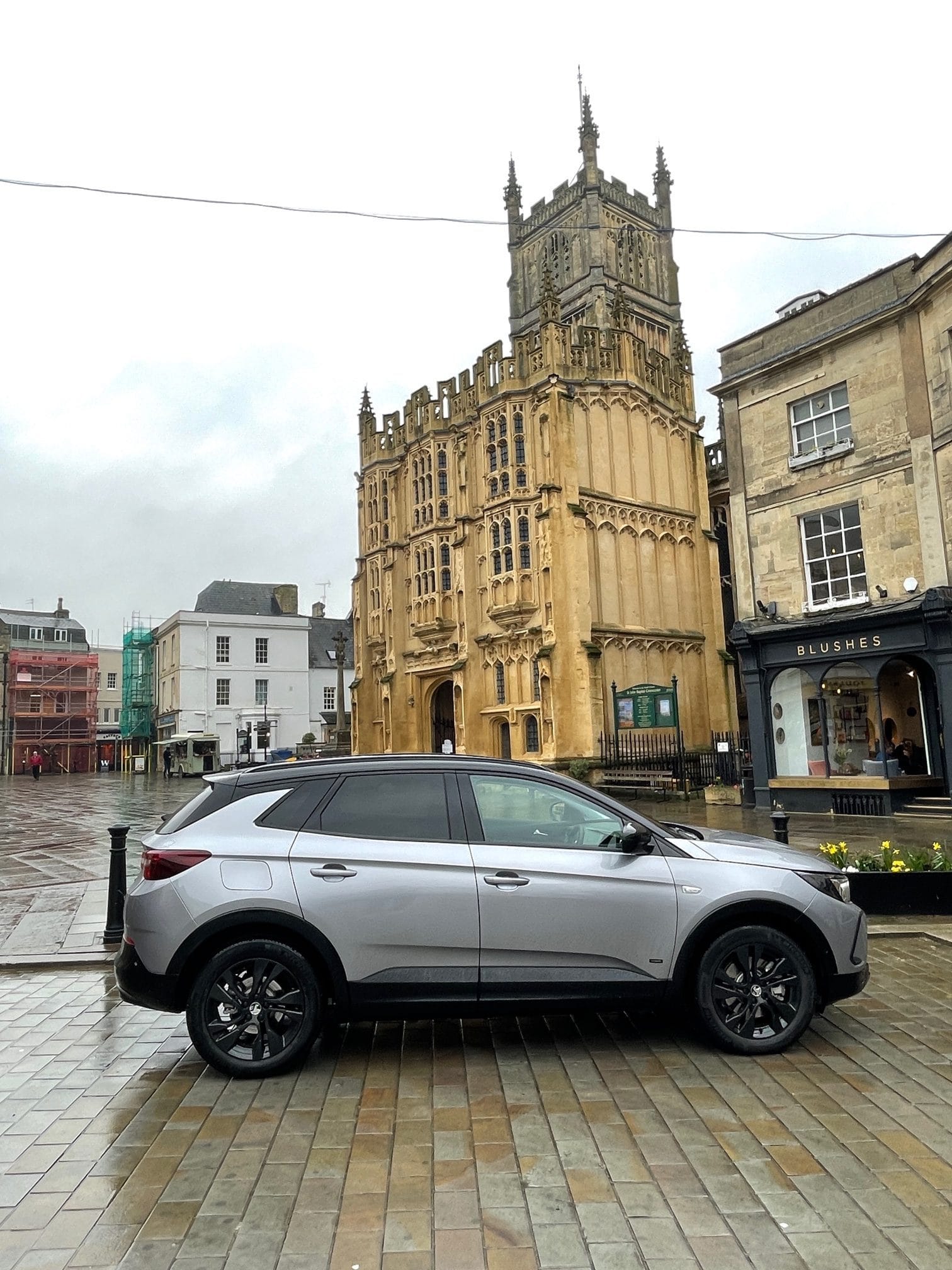
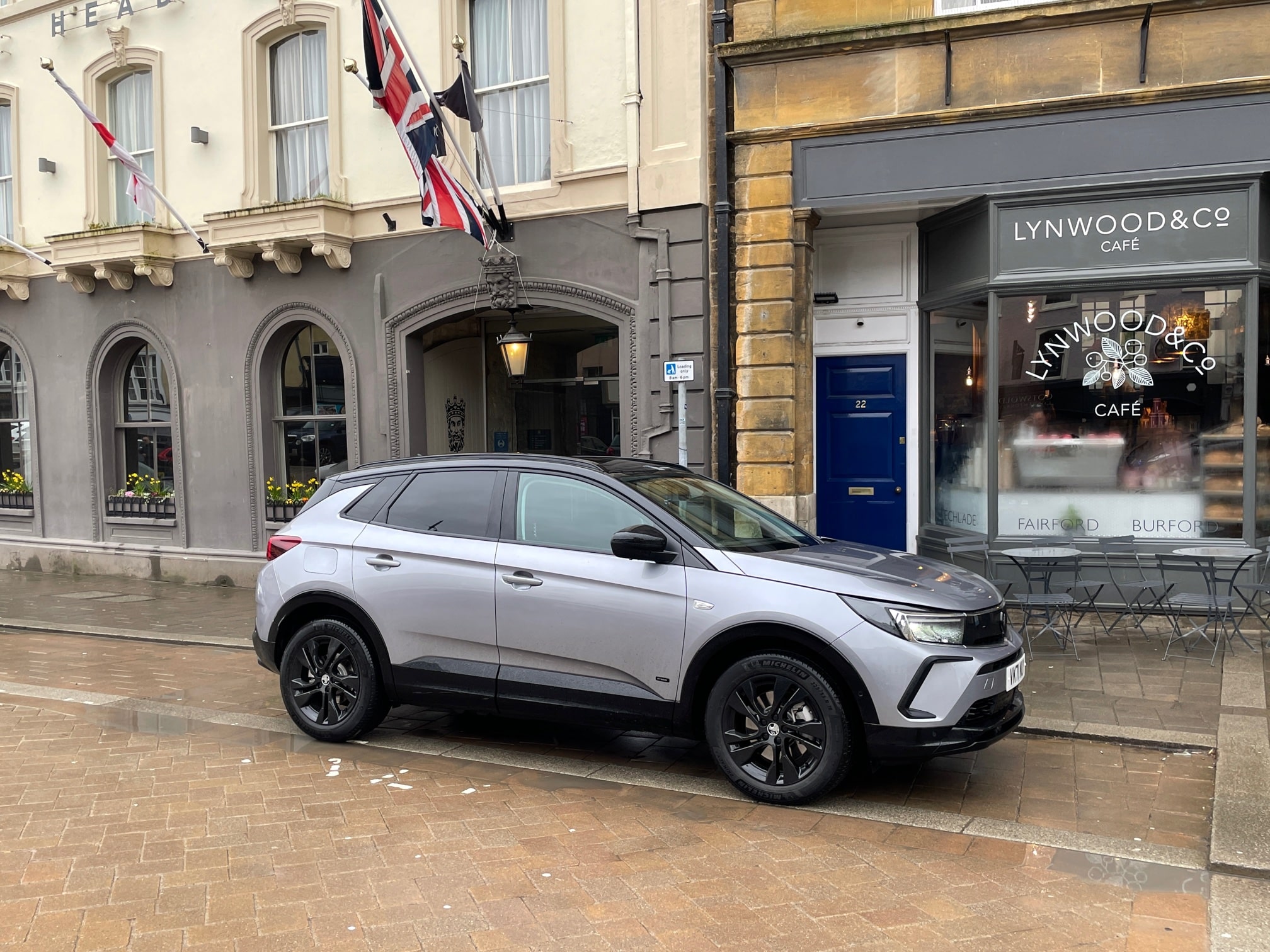
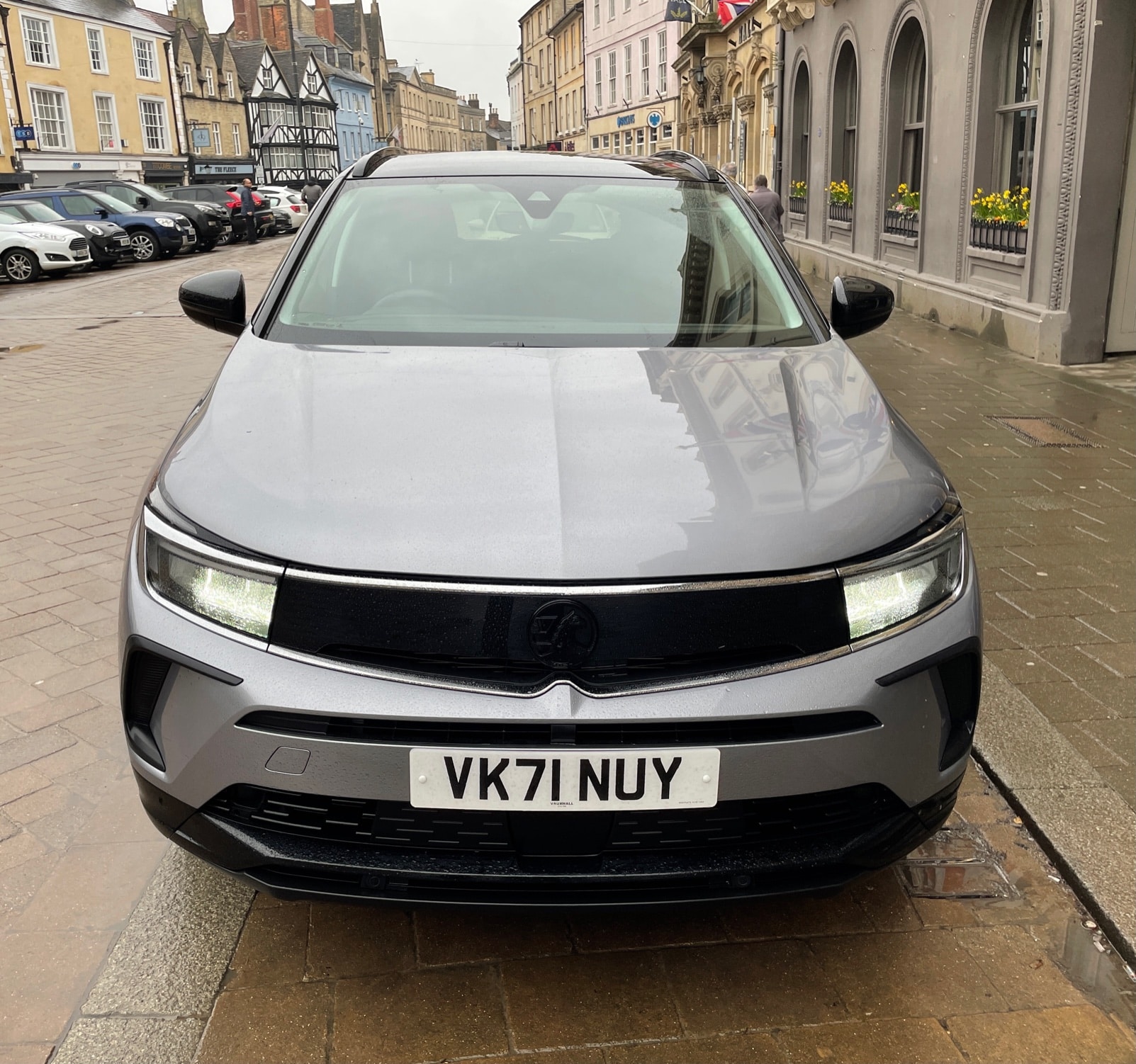
Whilst the Grandland doesn’t look that different to the outgoing Grandland X, there are some notable changes. There’s a new Vauxhall Vizor front end with wing-style headlights & a redesigned front bumper. At the rear, the Grandland name stretches across the rear hatch & there’s some subtle changes to the rear bumper.
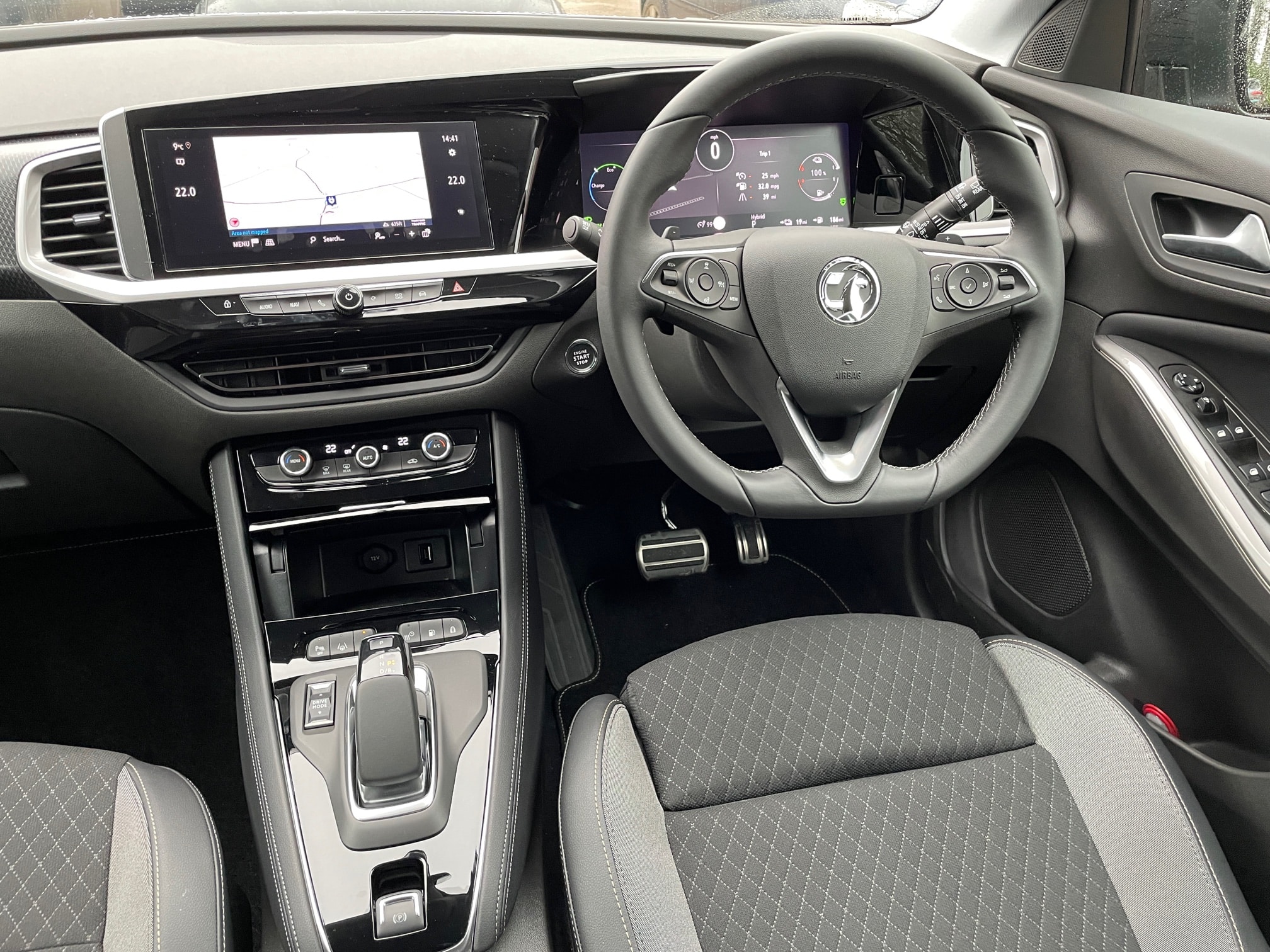
The interiors been sharpened up, so there’s a redesigned dashboard with PurePanel multimedia twin displays, with improved finishes to the dash front & top. The use of darker greys & blacks on the dash & seats also lifts the interior which previously was very grey. It feels more upmarket & all at a lower price point, which is good news for customers.
 Practicality
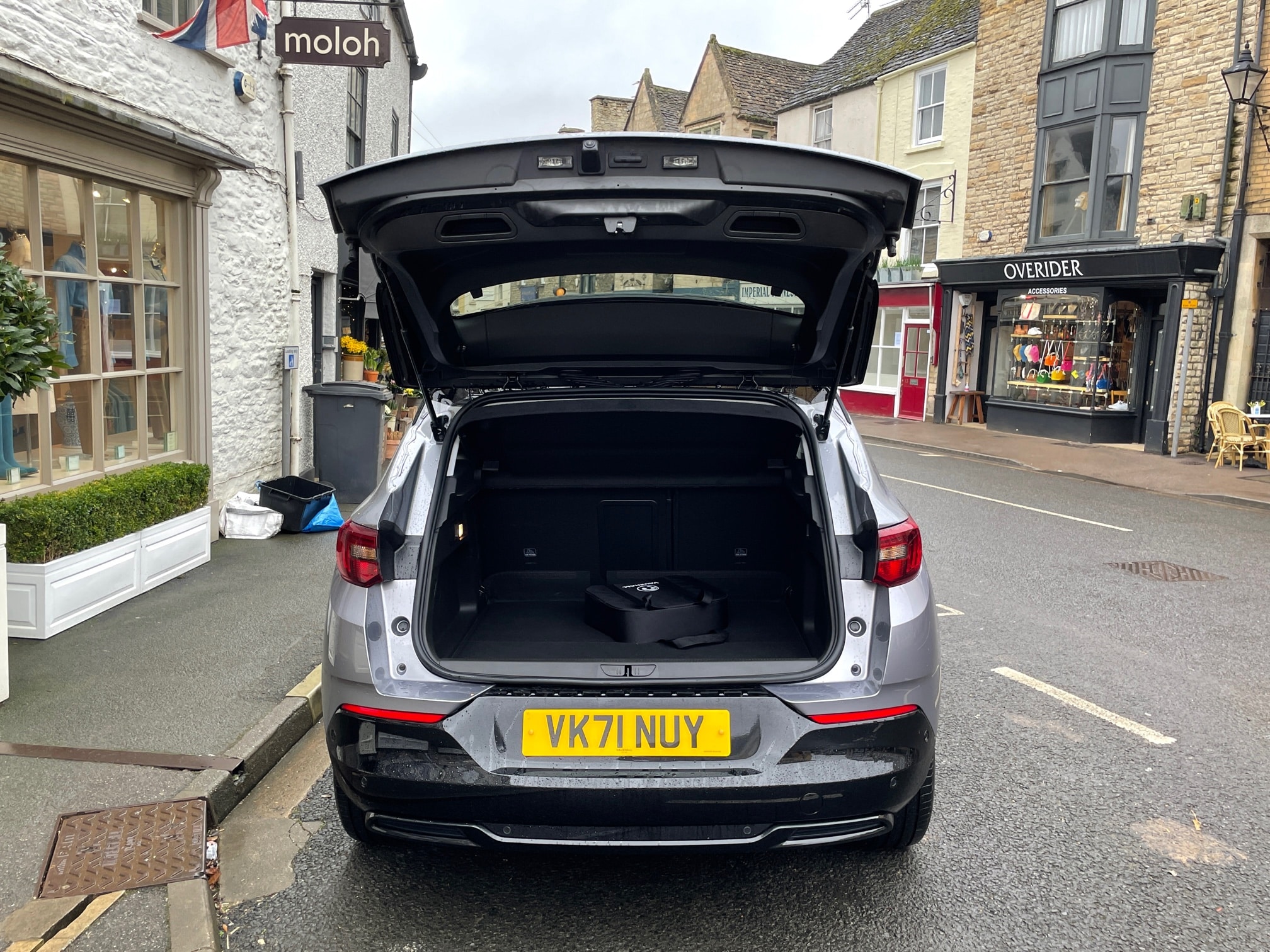
Both front seat passengers get good head & legroom whilst in the rear, thank’s to the almost flat floor, three adults will have decent leg room as well. Rear passengers also benefit from a fold down centre seat armrest with two cup holders that doubles as a ski hatch. Door pockets are generous & there’s a couple of drinks holders in the centre cubby & under armrest storage too.
Our test car featured a hands-free power tailgate with HYBRID-e offering a 390 litre boot, ( 514 litres in petrol or diesel format ) which extends to 1,528 litres when folding down the rear seats.
 Why should I pay more for the PHEV ?
It’s a good question. The cheapest way in to a Grandland is with the petrol 1.2T manual Design, which costs from £25,810. GS Line is likely to account for 60% of Grandland sales, so a better comparison is the GS Line turbo auto, costing £29,570 vs the GS Line PHEV, which costs £33,820, so £4,250 more expensive. Retail customers therefore, may well be better of taking the standard petrol Grandland, but for corporate customers, it’s a little more complicated.
For starters, the BIK on the plug-in is 11%, meaning that for a 40% tax payer on a three year lease, the low BIK represents almost a £6000 saving over the term of the lease. So,the plug-in makes an awful lot of sense.
 PHEV info & charging
The plug-in Grandland mates an 81kW motor to a 1.6T 4-cylinder petrol auto engine. They combine to offer 225PS. with the onboard 13.2kWh battery providing up to 39 miles of pure electric driving. Unlike pure EV’s which come with large batteries, the beauty of a PHEV is that the small battery, in this case 13.2kWh, can be charged quickly, for example from 0-100% in 3.5 hours on a home 7kWh charger, or if you select your PHEV with the optional 6.6kW On-Board-Charger, just 1.75 hours.
 Competitors
Ford Kuga PHEV, Volkswagen Tiguan PHEV, Citroen C5 Aircross PHEV & Hyundai Tucson PHEV, with an all-new KIA Sportage PHEV arriving shortly. The Grandland GS Line Hybrid-e is cheaper than these too.
 On the road
The Grandland Hybrid-e offers three driving modes; Electric, Hybrid & Sport. In Hybrid mode, the car automatically selects the most efficient method of propulsion, whist Electric allows you to utilise the cars battery range. Sport increases the fun, but decreases driving range.
In Electric Mode, the HYBRID-e silently moves off & over short distances & at lower speeds, you can really take advantage of the battery range. Speed up & it makes sense to drive in Hybrid where you get the best of both worlds. Push the boat out in Sport Mode & the 360Nm comes to the fore, with a 0-60mph time of 8.9 seconds & a top speed of 140mph achievable.
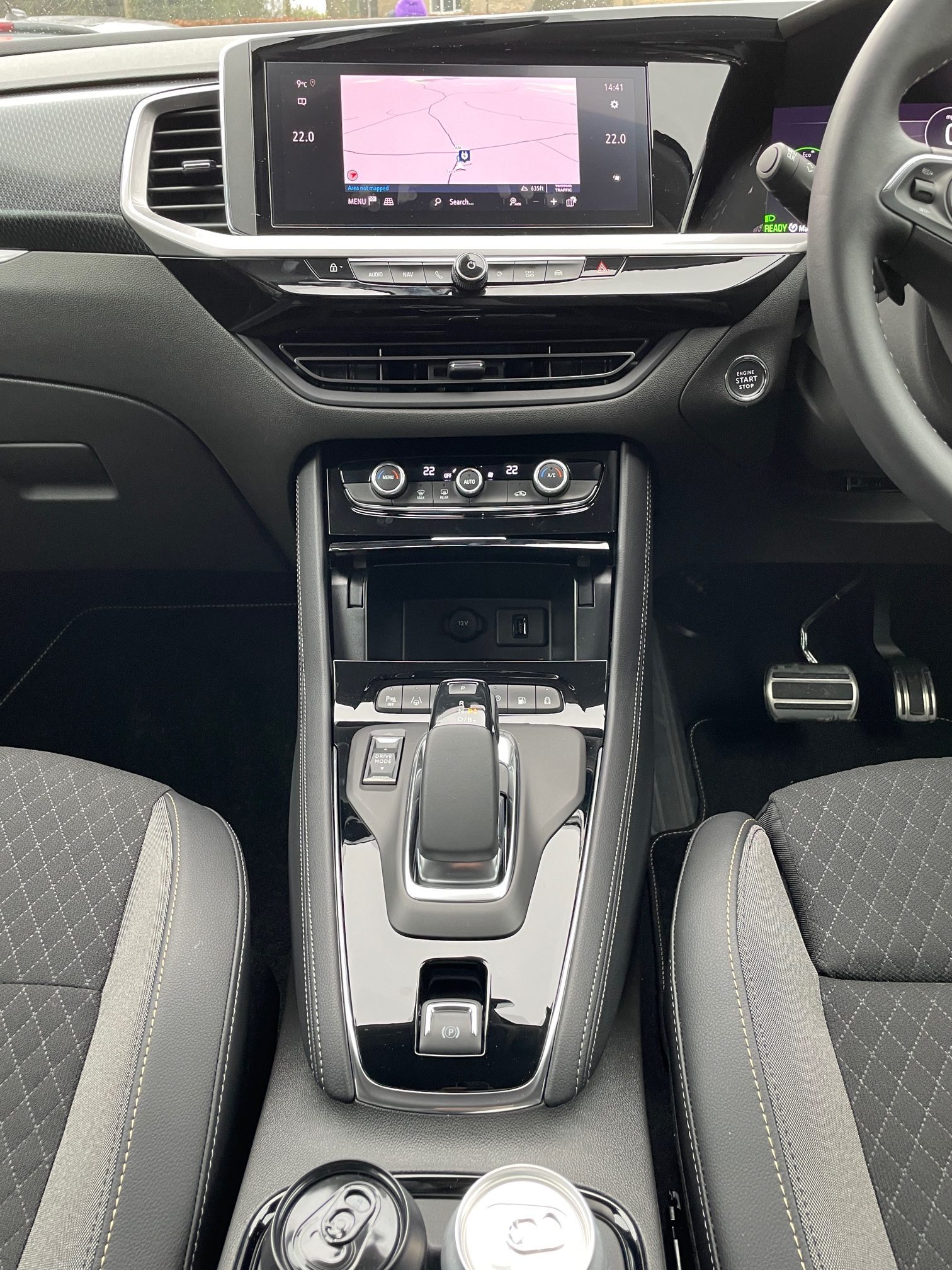
Over some challenging roads, the Grandland performed admirably, with the cars quiet engine, comfortable seats & auto-box making for serene progress. Apple CarPlay connects quickly & the new multi-media systems features decent graphics & a swift response when scrolling. We like the separate climate controls, so there’s no fiddling in the touchscreen required when you want to adjust the temperature. Tight corners, even at speed, are taken in the cars stride & the battery weight is not really noticeable as you drive along. Grand land feels more grown up than it’s predecessor & in the latest PHEV format, is a better car altogether.
 Fuel economy
On the latest WLTP testing, Vauxhall claim 192 mpg & with CO2 emissions of just 31g/km, company car drivers should take a serious interest. As we’ve said before though, the only way you’ll see any kind of fuel economy return close to 200 mpg, is if you drive in Electric only, plug-in after every short journey & utilise the range saver function. Furthermore, engage the B regeneration mode on the cars gear leaver & you’ll top it up as you go. We’d guess that if you don’t do these things regularly & many PHEV customers don’t, then 40 mpg is a more likely scenario.
 Pros
Pros
The Grandland is a vastly improved offering than the departing Grandland X. It’s now fitted with the latest tech & safety, oifers a quiet comfortable ride & uses a smooth 8-speed auto box.
The plug-in’s low BIK makes it attractive for fleet & in GS Line spec, it’s also cheaper to buy than the competition, as well as being £4,000 less than the old Grandland X HYBRID4.
Cons
It may look better than before, but it doesn’t stand out looks-wise vs the Hyundai Tucson or Citroen C5 Aircross.
 Overall
When comparing the Grandland to Grandland X, it’s clear that Vauxhall have massively improved the new model. It’s cheaper, comes better equipped, has improved engines, offers lower emissions & better fuel economy. The PHEV version is especially attractive for fleet customers & in 225PS guise, makes a really strong case to be your next family, company car. It may not look quite as exciting as the Tucson, nor as busy as the Sportage, but it now gives Vauxhall a much better opportunity to sell vehicles in the highly competitive C SUV sector.
Damn right it’s better than yours 3.75/5
