


When Volkswagen stopped building the Amarok, no one was quite sure if it would ever return. The good news is that it has. In conjunction with Ford & utilising Fords Ranger pick-up, the new Amarok landed in 2023 & here’s how we got on in one.
 What is it ?
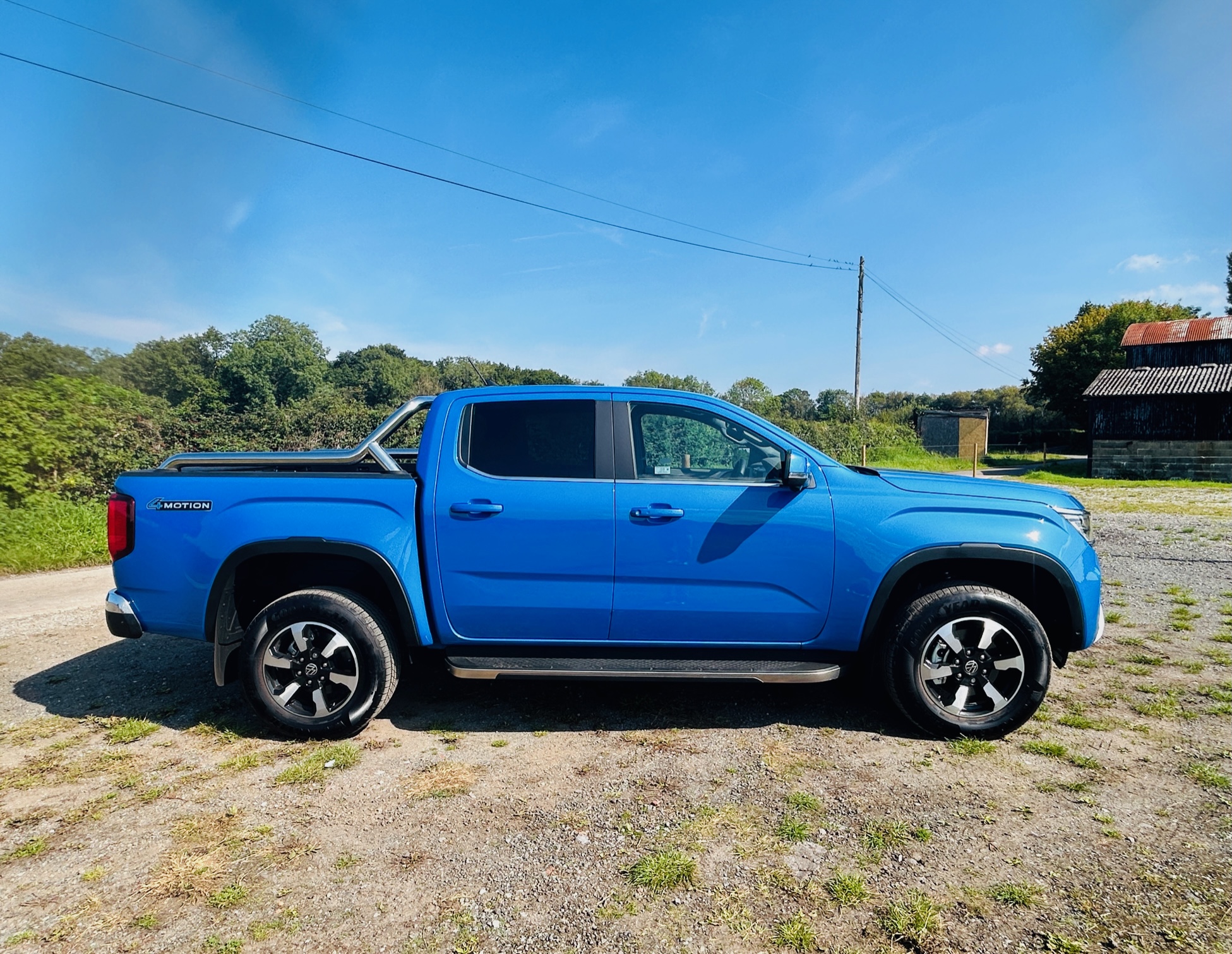
The Amarok uses the same engines, suspension, transmissions & electronics as the Ford Ranger. However, it’s only offered as a double cab & there’s no performance version either.
 Models & engines
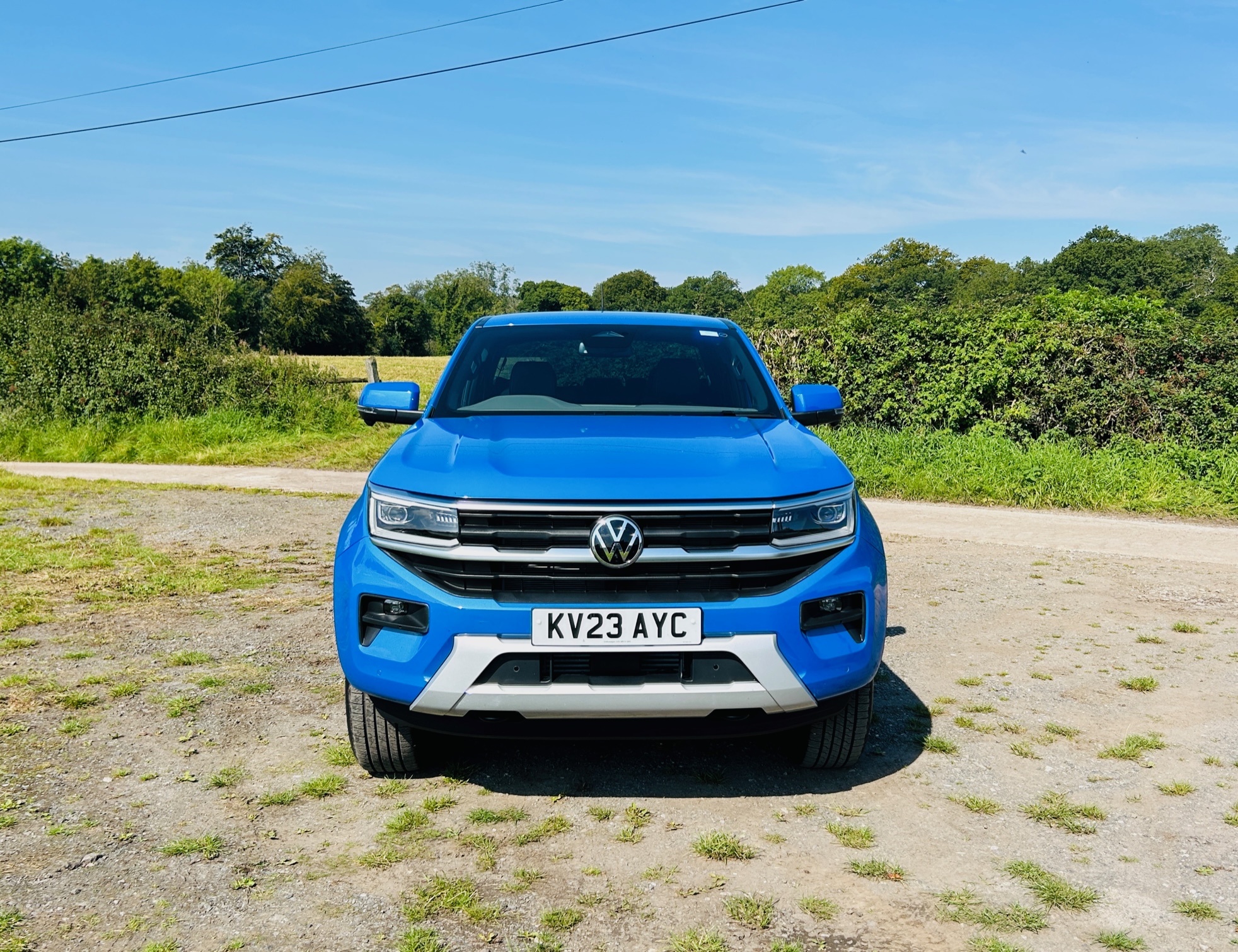
Choose from four specifications : Life, Style, PanAmericana & Aventura. The Life is the only model offered with the 2.0-litre four-cylinder diesel engine, paired with either a six-speed manual gearbox or 10-speed automatic transmission. Style offers customers a choice of both the 2.0-litre diesel or the 3.0-litre V6 diesel engine, both utilising the 10-speed auto box. PanAmericana & Aventura versions only feature the 3.0-litre V6 diesel under the bonnet, again with the 10-speed auto. Every model comes with VW’s 4MOTION 4WD as standard.
 Specifications
Life cost from £34,000 + vat & is fitted out more basically then the other models. So you get cloth upholstery with vinyl flooring, 17 ” alloys, a 10″ portrait infotainment touchscreen, Apple CarPlay, Android Auto & an 8″ digital driver’s display. You also get a decent amount of safety & driver aid’s built in including adaptive cruise control, front & rear parking sensors, a reversing camera, lane assist & road sign recognition.
Style brings with it a price of £41,450 + vat & posher micro fleece upholstery, carpets, 18″ alloys, matrix LED headlights, a 360 degree parking camera, park assist, wireless smartphone charging, a 12″ instrument display touchscreen & a roll hoop in the load bed.
 PanAmericana, which starts from over £47,000 + vat is more aggressive looking with black alloy wheels & exterior trim, an X-themed grille, full leather, a Harman Kardon sound system, rear diff lock & an under body guard.
Range topping Aventura will set you back a shade over £48,000 + vat. This features larger 21″ alloys, a heated steering wheel, plus more body chrome & silver trim.
 Exterior
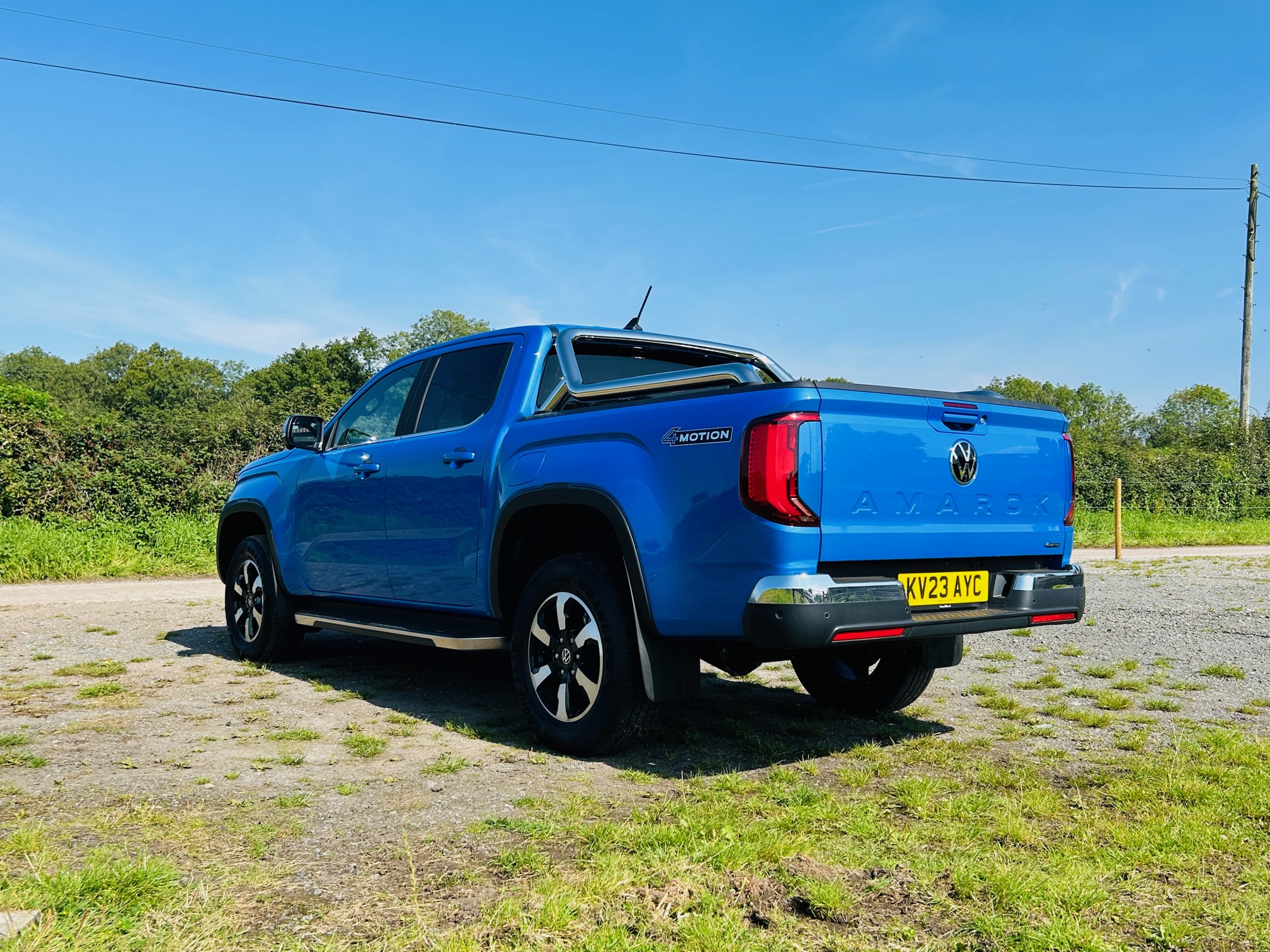
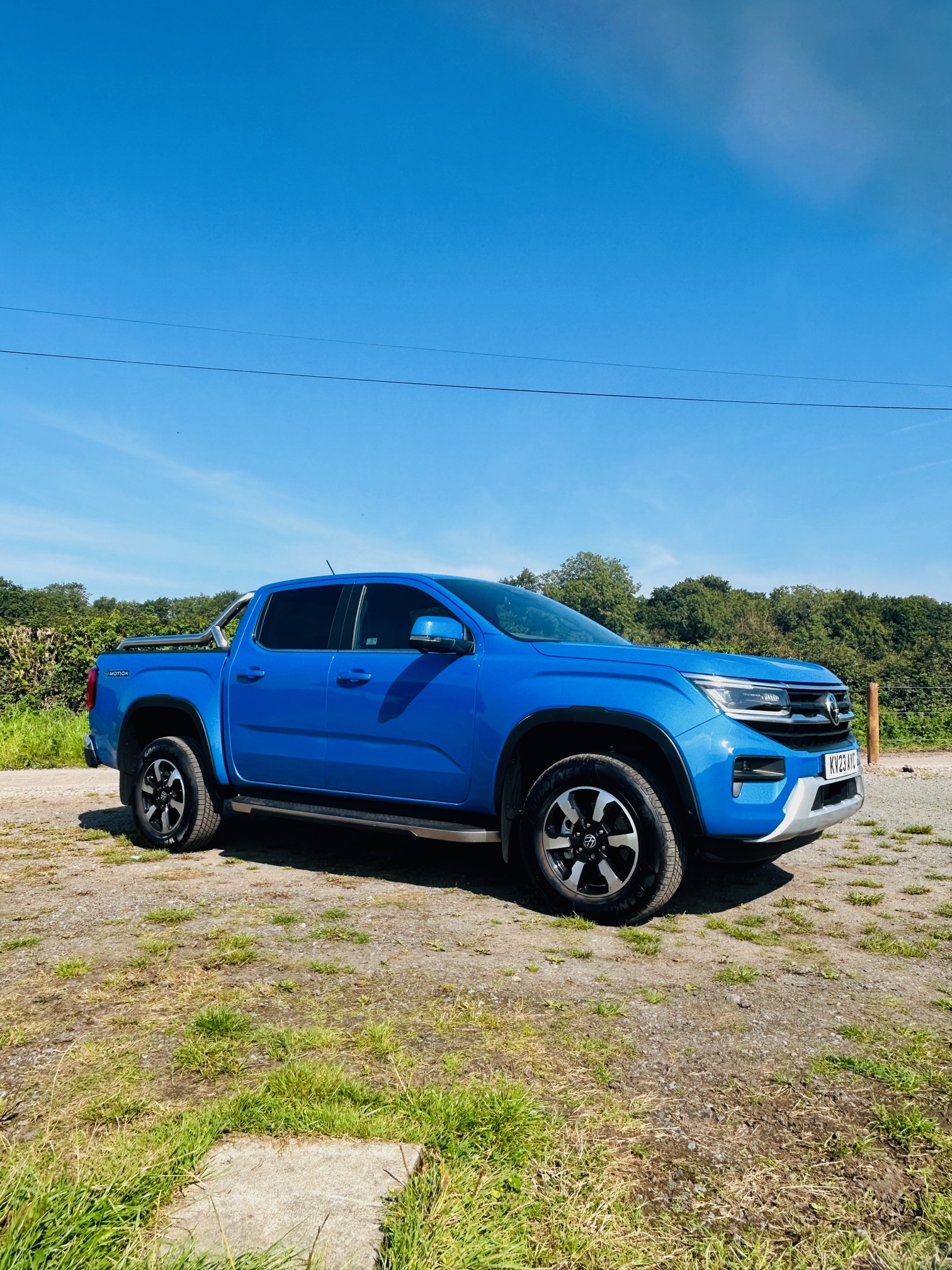
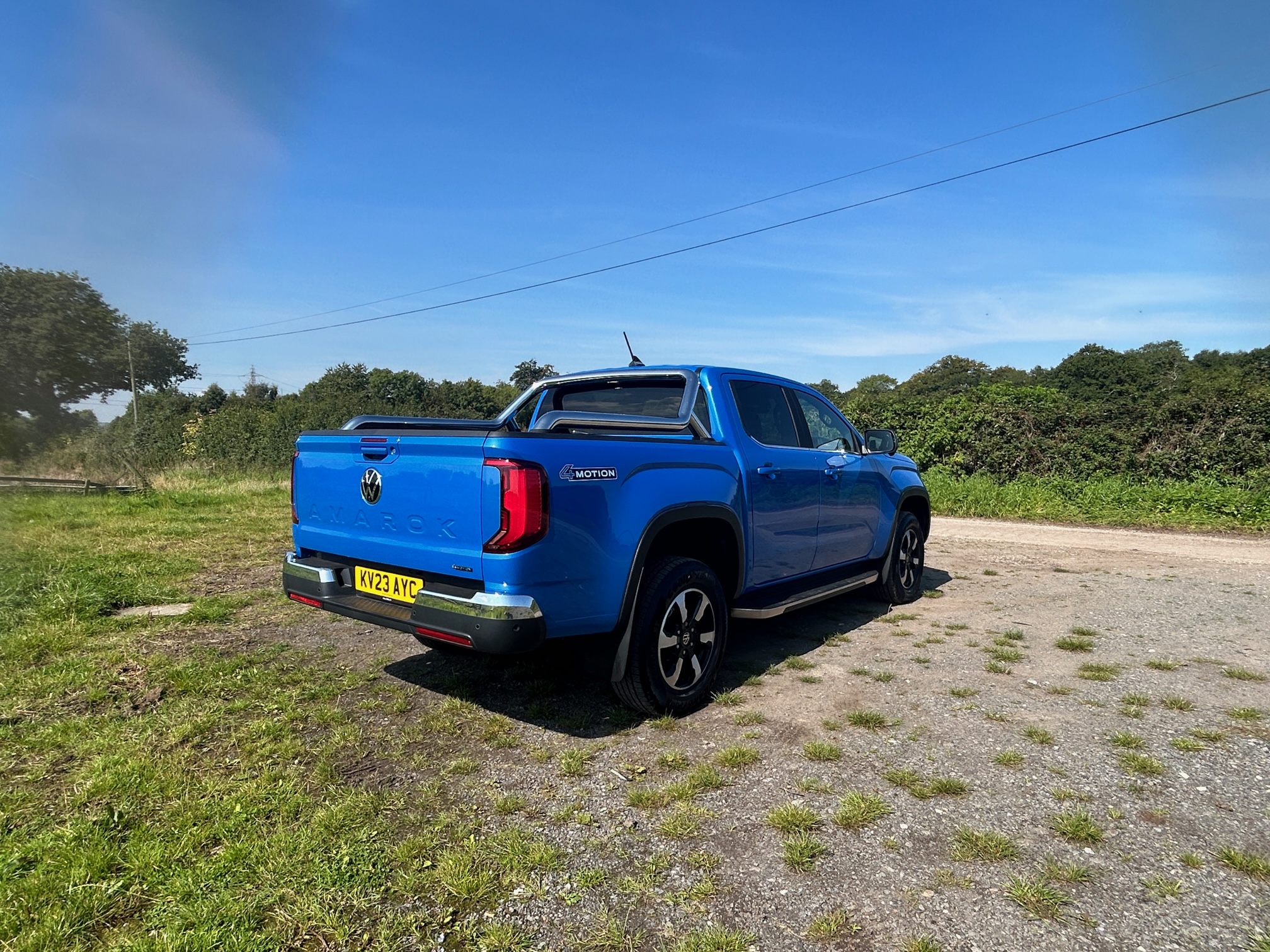
Whilst what’s under the skin is very much shared with Ford, the outside has been designed to look different to the Ranger. The radiator grille is more conservative than the Ranger’s with LED Matrix head & tail lights, Amarok embossed on the tailgate & unlike the Ranger, there’s no side step in the rear bumper.
 Inside
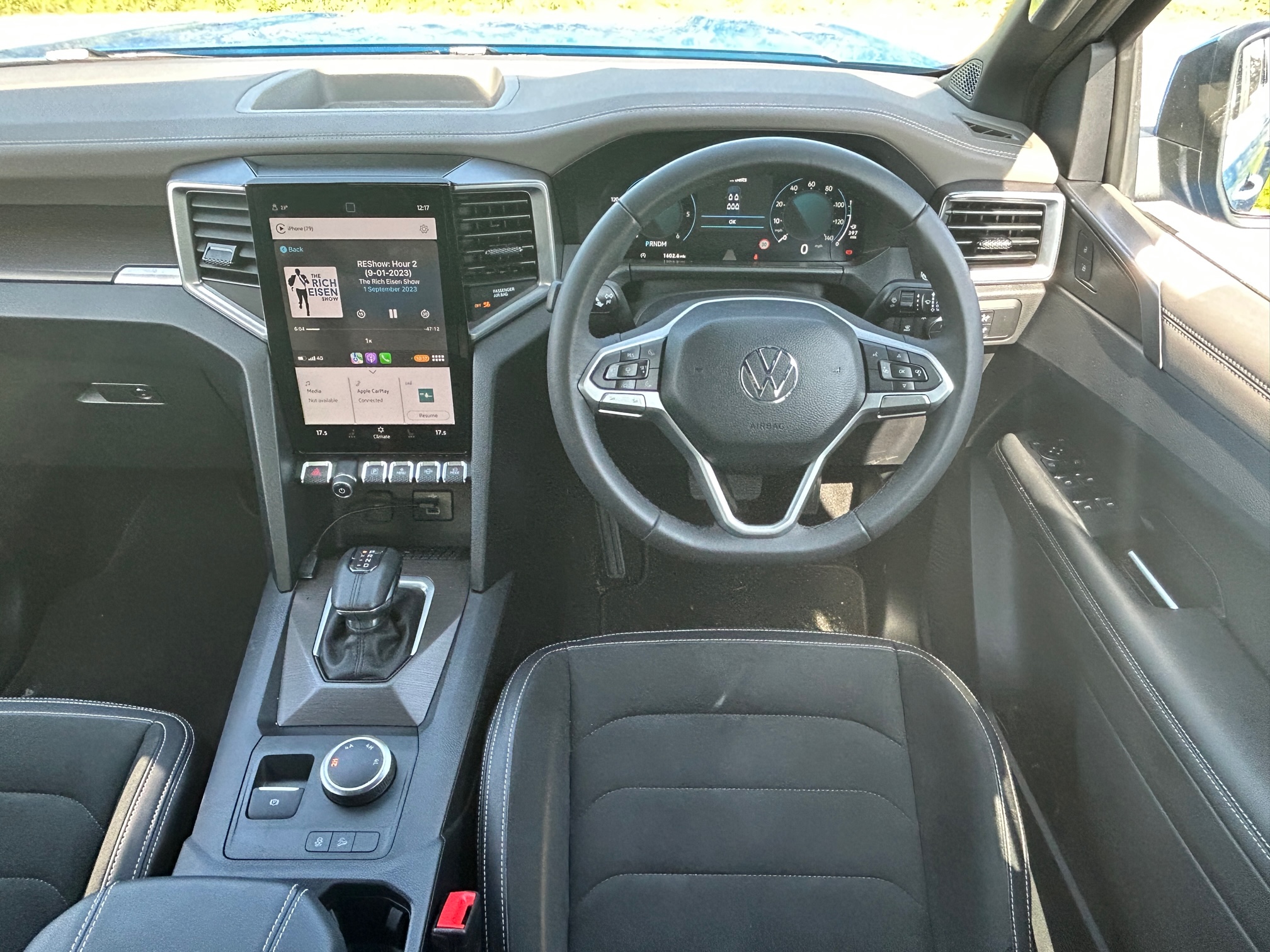
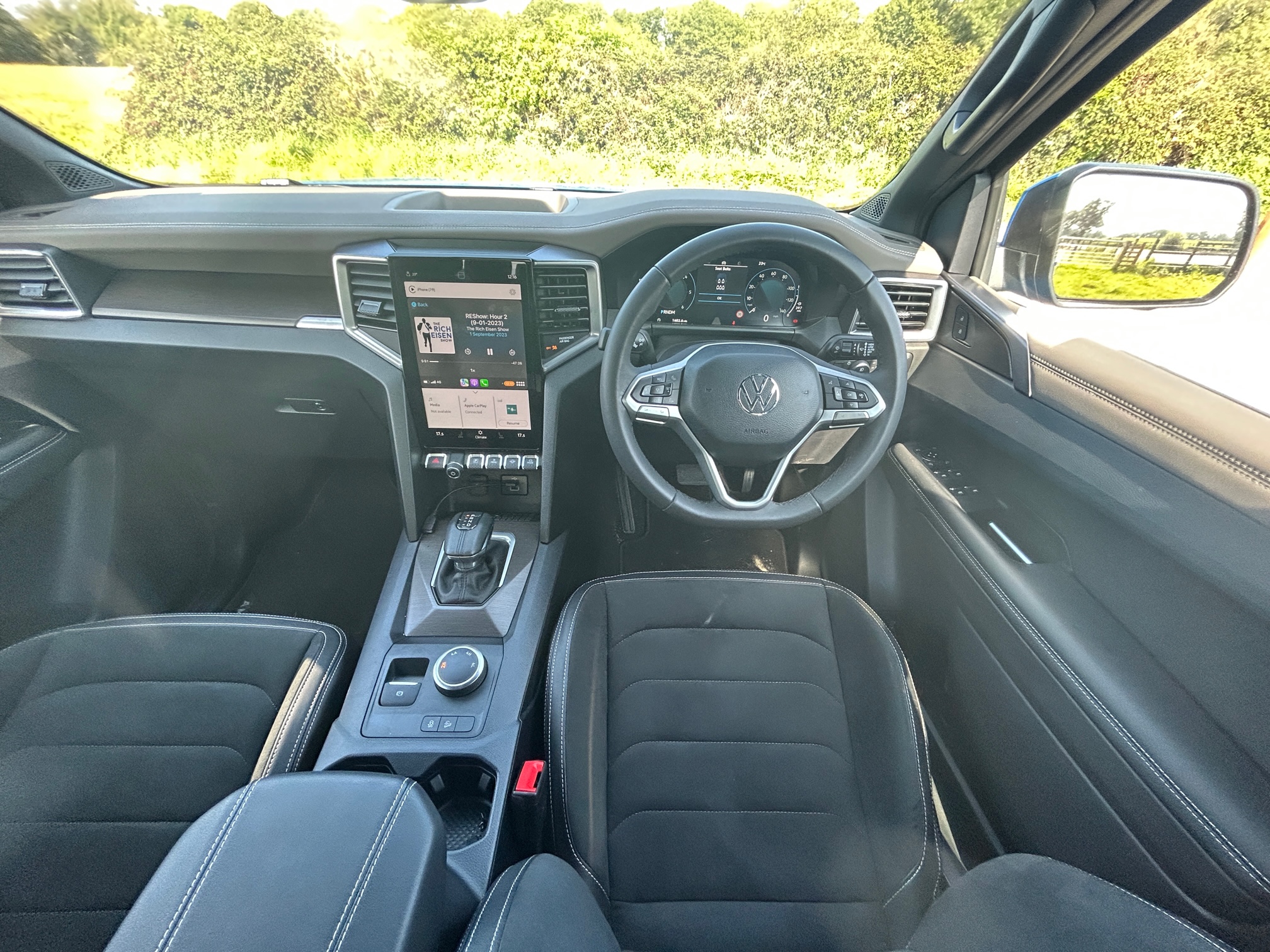
Again, whilst the dashboard set up & basic layout mirrors that found on the Ranger, the Amarok looks & feels more car-like. Underneath the touchscreen sits a selection of pushdown shortcut buttons including for the driving modes, hazards & parking. The gear lever is centrally located with the twin cup holders pushed further back than in the Ranger & the steering wheel spokes, indicator stalks, air vents & dashboard trim & finish feel more upmarket as well as different from the Ranger too.
 Infotainment
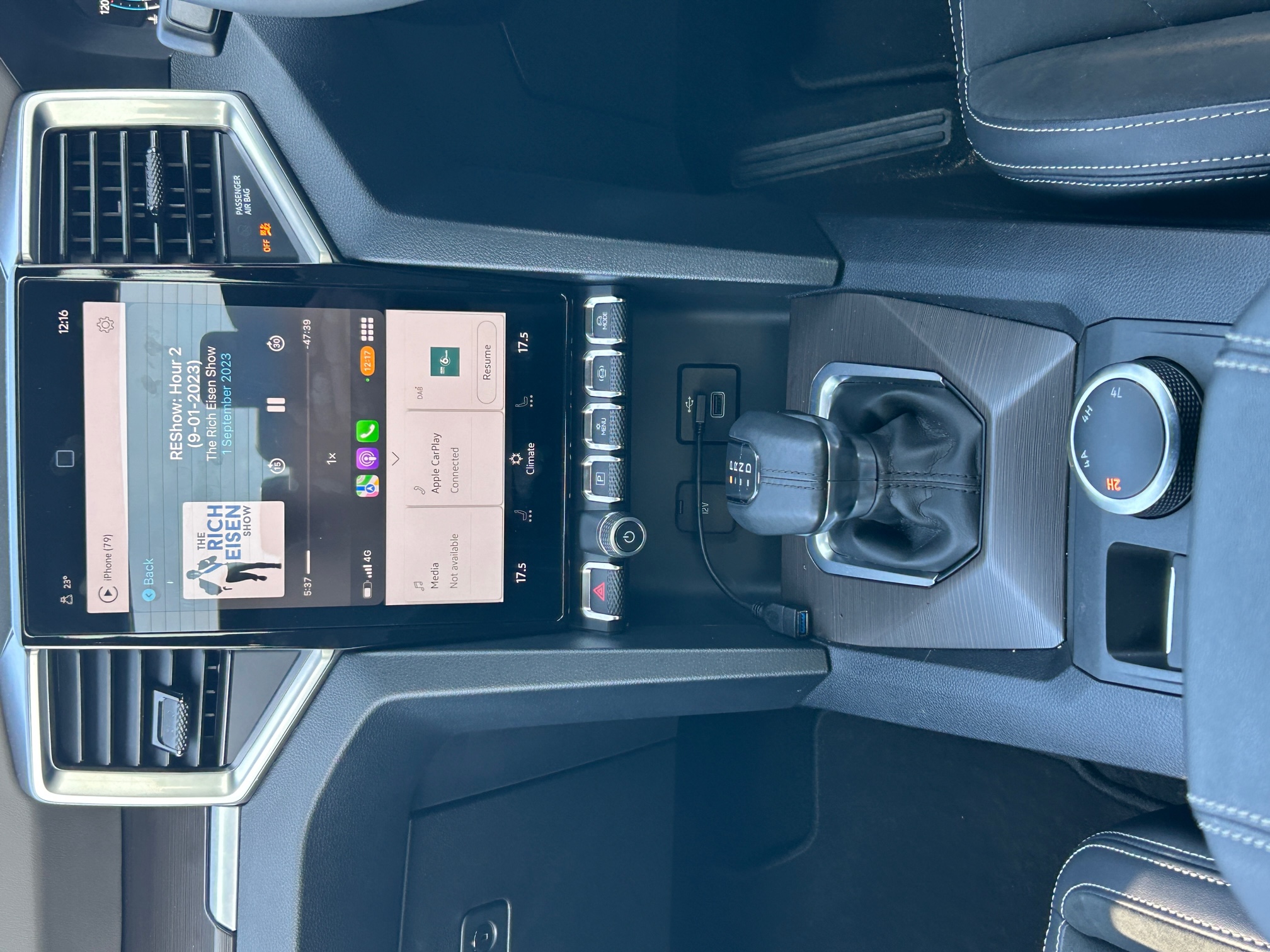
The large portrait touchscreen runs off VW’s own operating system that will be familiar to existing VW customers. As a VW driver myself I found it easy to acclimatise too, although the climate controls are hidden within the screen menus so are a bit fiddly.
The graphics are excellent & responses are fast. The short cut buttons below get you into the pick-up’s driving modes which come up on the screen ; Normal, ECO, Tow/Haul, Slippery, Mud/Ruts & DeepSnow/Sand. There’s twin USB”S underneath so you can charge or connect your phone, with our test Amarok featuring a wireless phone charger.
 Practicality
A new feature is the roof load capacity of 350kg. Amarok’s also longer than before at 5,350mm with a 173mm longer wheelbase of of 3,270mm, which means passengers get more space in the cabin. A selection of off road & driving modes means you can toggle been 2WD, RWD, selectable & permanent all-wheel-drive. You can choose your drive preference: from rear-wheel drive to selectable and permanent all-wheel drive with the preconfigured driving modes which are new as well. Amarok also comes with more than 25 assistance systems, over 20 of which are completely new on this Amarok.
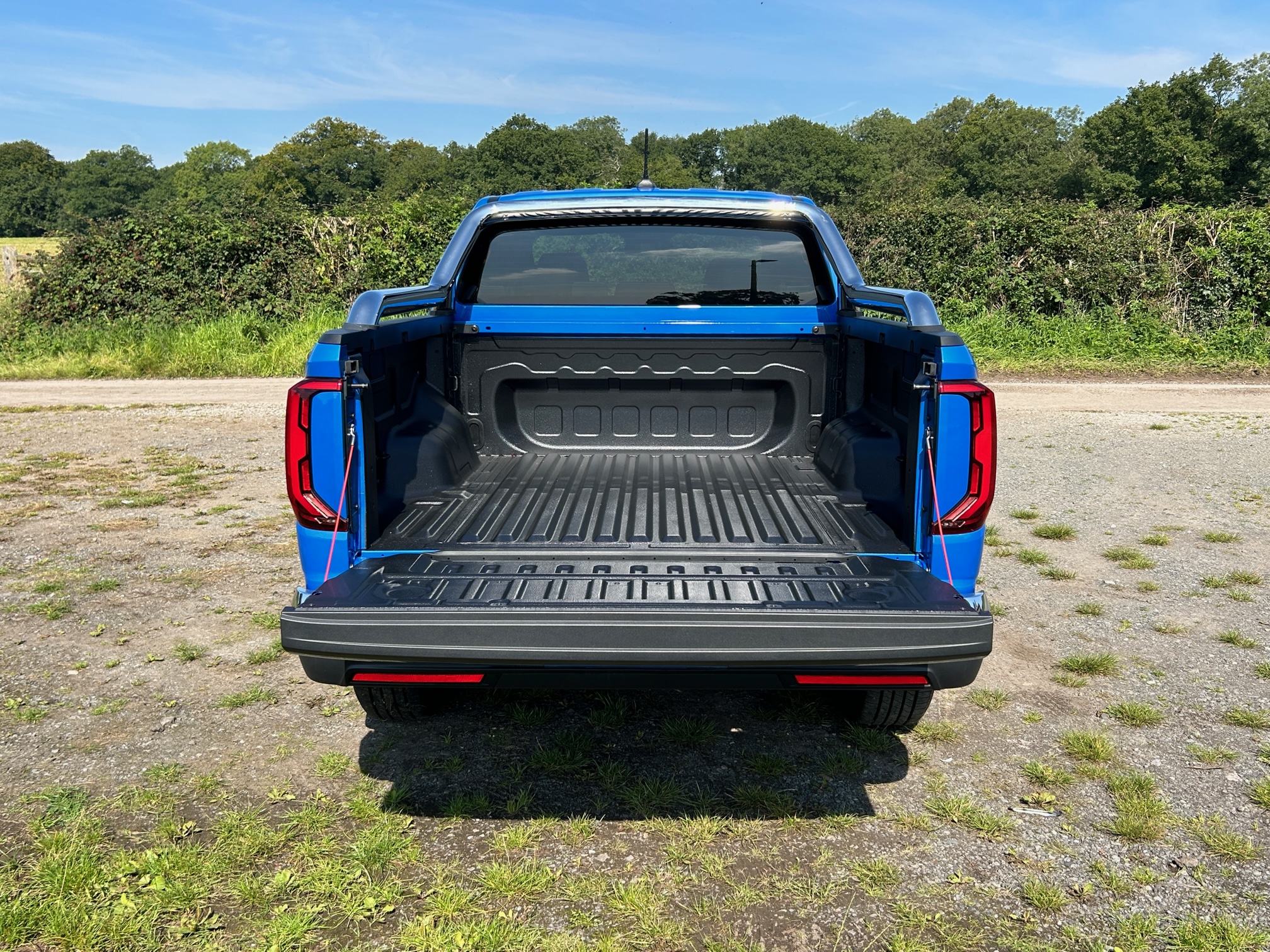
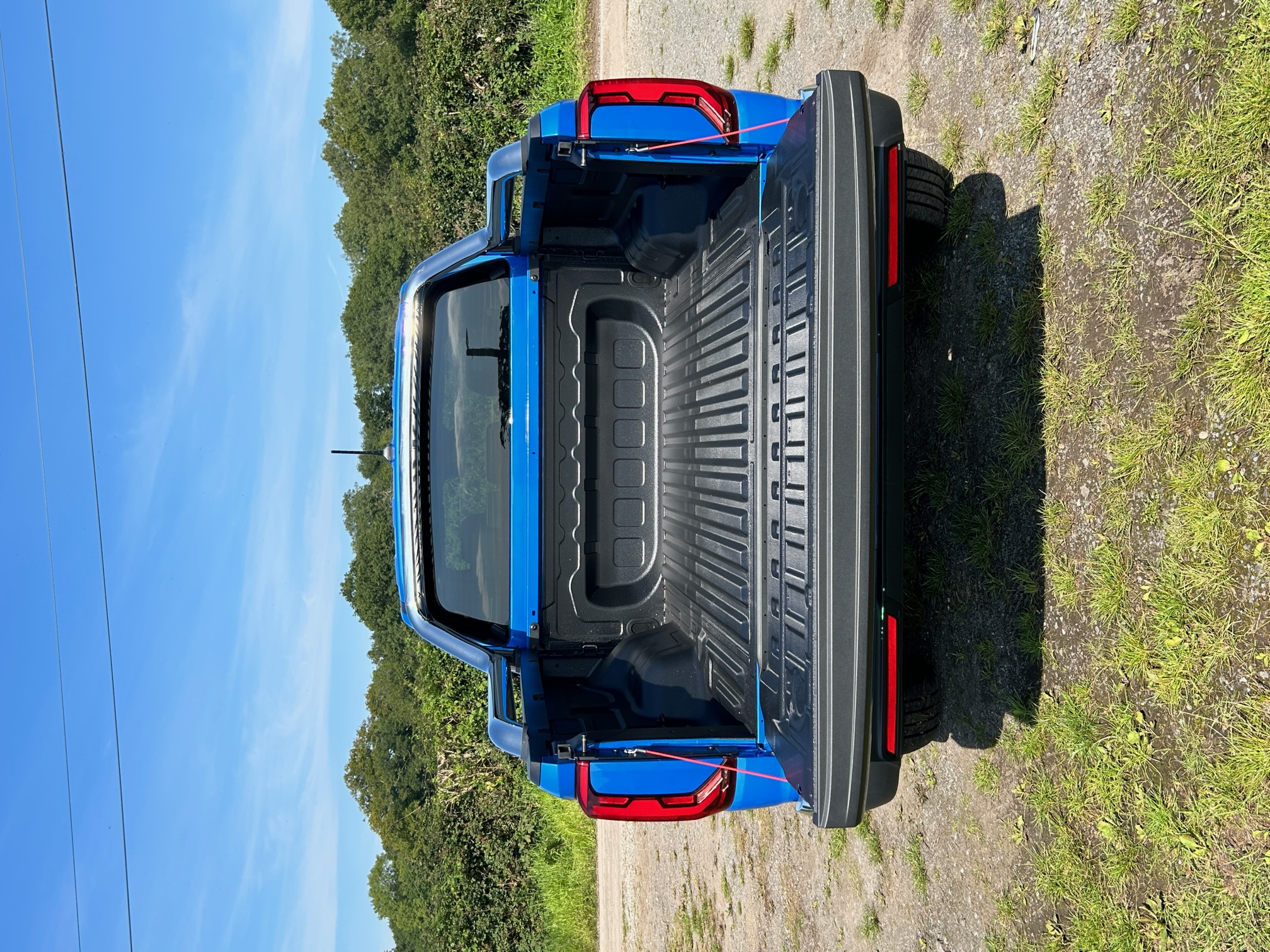
The load bed measures 1.62 metres long by 1.58 metres wide, with a maximum width of 1.22 metres between the rear wheel arches, so it’s large enough to accommodate two Euro pallets. You can hold the pallets in place with the six lashing eyes, plus the bed area features a 12v socket & LED lighting. Add ons include load bed covers or electric roll covers.
 In cabin practicality
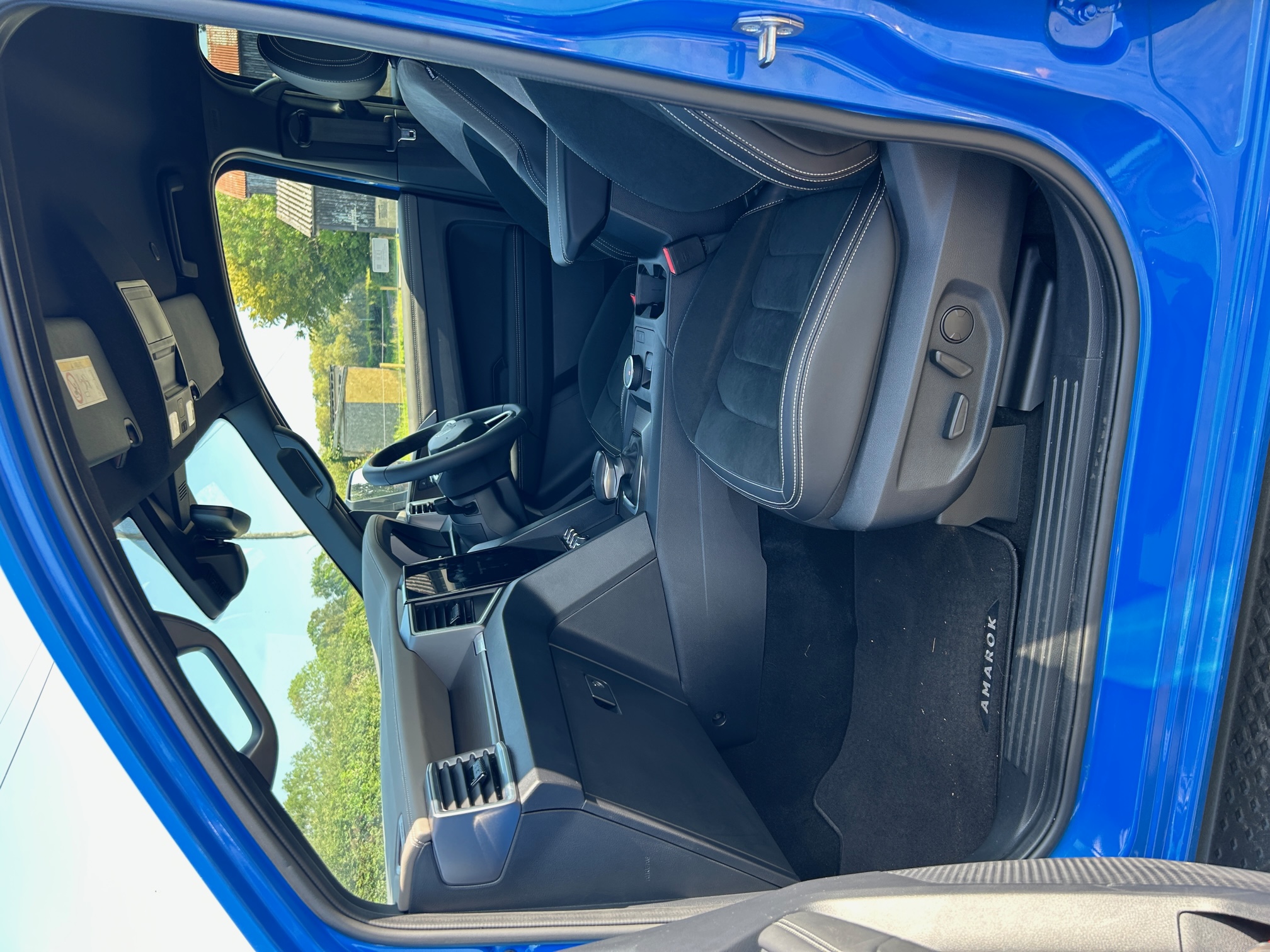
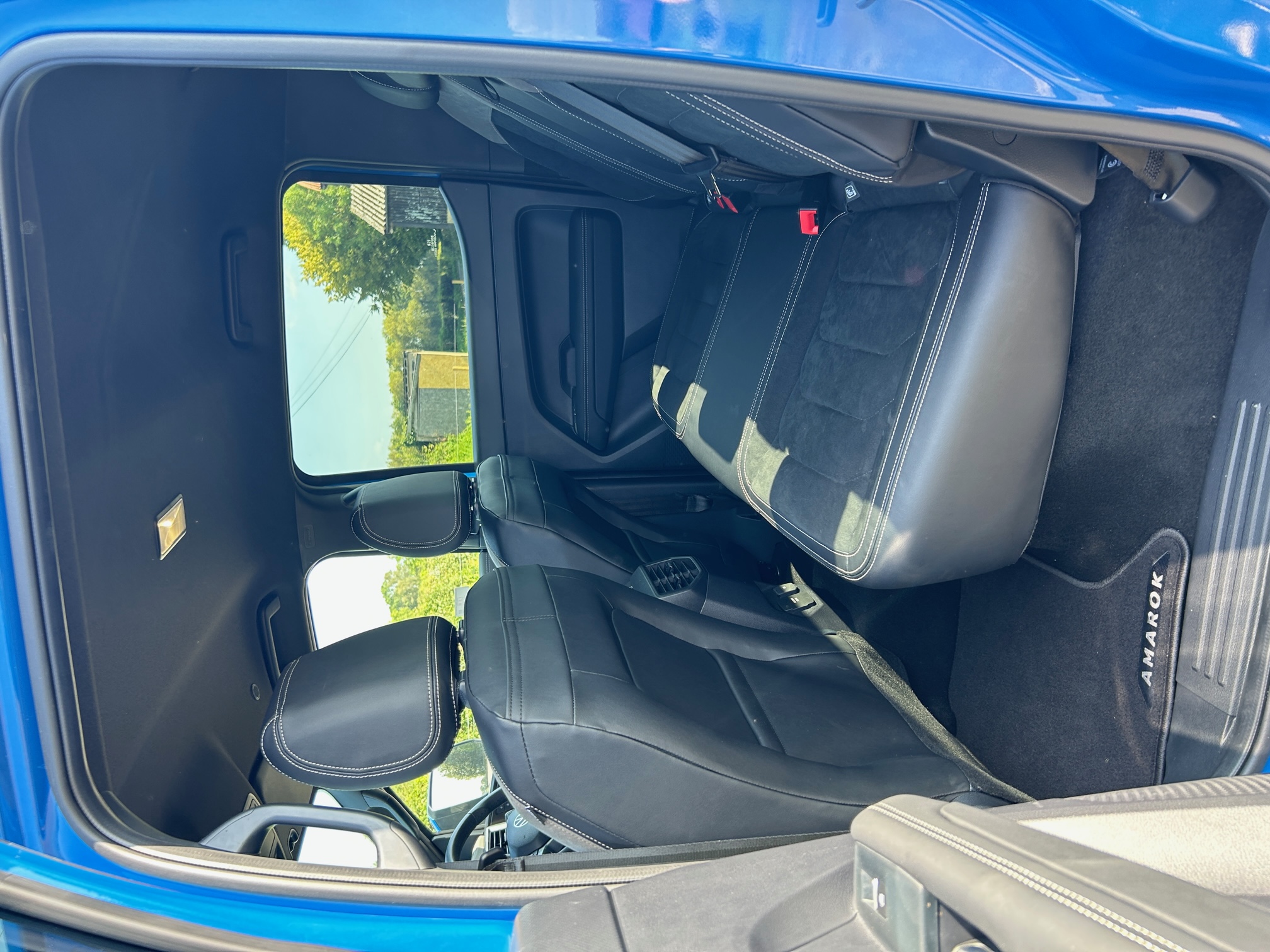
The longer wheelbase does add a little more room inside noticeably in the rear. Talking of the rear, there’s definitely room for three to sit side by side. Running boards & grab handles make getting in & out easier too.
We’ve mentioned the twin centre cupholders. You also get a big glovebox & front & rear door pockets, dash top storage area, front & rear 12v socket, two USB’s up front, none in the back though & under armrest storage. There are air vents in the rear as well.
 Emissions & fuel economy
Select the 2.0-litre diesel manual & you’ll average 33.6mpg, with the 10-speed auto 32,8mpg, 32.1mpg in Style trim. Choose the 3.0 litre in any trim & it’s 28.3mpg. CO2 emissions range from 221-245g/km for the manual Amarok Life to 265-271g/km for the range-topping Amarok Aventura. Our 200 mile week in the 2.0-litre Style auto saw us return 32.3mpg.
Taxation
All versions have a 1 tonne payload bar Aventura meaning this model is charged the flat rate of Benefit-in-Kind tax for LCVs, so one to avoid. All others qualify for the same annual Benefit-in-Kind rates, regardless of the list price. As we write these stand at £792 per annum for a basic-rate taxpayer, or £1,584 for a 40% earner.
 Driving & comfort
The cabin is lovely place to be, so that’s a good start. The front seats are comfortable & there’s plenty of seat & steering wheel adjustment offered. Ford’s tabloid shaped touchscreen looks good & works well in the Amarok. We would prefer separate climate control though.
The gear lever like Ford’s version is a little awkward to use. It features ergonomic buttons which have to be pressed by your left hand fingers in order to engage the vehicle & change gear. We found it a bit fiddly to use, especially getting into reverse a you tend to go to far back into drive.
Driving around our locale the 2.0-litre Amarok makes steady progress, with the 10-speed auto box hanging onto the gears a bit as the revs rise, before things settle down. Accelerate hard & the 2.0-litre diesel engine roars into life & becomes more audible in the cabin,
 The changes between gear ratios are made fairly smoothly & despite its size & weight the Amarok handles undulating terrain with aplomb. It was very hot the week we had it & the warm tarmac engaged a lovely tyre squeaking noise every time we made a sharp turn.
The large tyres do account for a bit of vibration through the pick-up floor & there’s some road noise. Unladen it’s not too bouncy up front either, with only the poorest road surfaces offering an unsettling ride.
If you do venture off road, ground clearance is 219mm & if required & you can wade at 800mm moving at 5mph. With an approach angle of 30 degrees & departure of 21, the Wildtrak will also get you pretty much anywhere you want to go.
On the motorway the Amarok is amazingly proficient. Quiet, comfortable & with adaptive cruise control on all versions, you just point & go. My familiarity with VW’s operating system meant connecting to the Apple Car Play was easy & making & receiving some hands free calls in CarPlay worked well also.
Despite it’s weight & length, it’s actually a pleasure to drive & with parking sensors & a rear view camera, easy to park as well. It’s definitely an evolution from the previous model & feels both more grown-up & more modern.
 The good
The Amarok is really nice to drive on road & will be massively capable off it. Compared to the Ford Ranger, the Volkswagens more car-like dash & finishes feel more upmarket. If you’re travelling long distances, the Amarok is a really good long distance performer with plenty of room on board for five. You’ll benefit from low BIK if you avoid the Aventura. Load bed size & towing capacity are first rate.
 The bad
Touchscreen climate controls aren’t the easiest to use. The gear lever takes a bit of getting used. The 2.0-litre engine is not as refined as the 3.0 version. All versions are expensive & fuel economy of 30mpg isn’t wonderful.
 Conclusion
Volkswagen have decided to forsake the working pick-up for a lifestyle one & have done a very good job indeed. It may be bigger than before, but thanks to a host of standard safety & driving-aid tech it’s actually much easier to drive, handle & park than its predecessor. Volkswagens build quality in the cabin shines through & despite being expensive, the monthly BIK of £66 – £132 if you lease one, is hard to complain about at least until the government changes this.
A pick-up we’d love to spend more time in. 4.5/5
Facts & figures
We were testing the Amarok Style 205PS 2.0 litre TDI 10-speed auto 4MOTION.Power. This comes with 500Nm & selectable 4WD.
Top speed is 112mph
0-62mph will take 10.2 seconds.
The fuel tank is 80 litres plus the AdBlue tank runs at 19.3 litres.
Warranty is 3 years / 100,000 miles; 3 years paint;12 years body protection.
Breakdown assistance. 3 years Volkswagen Assistance (UK & Europe).
