


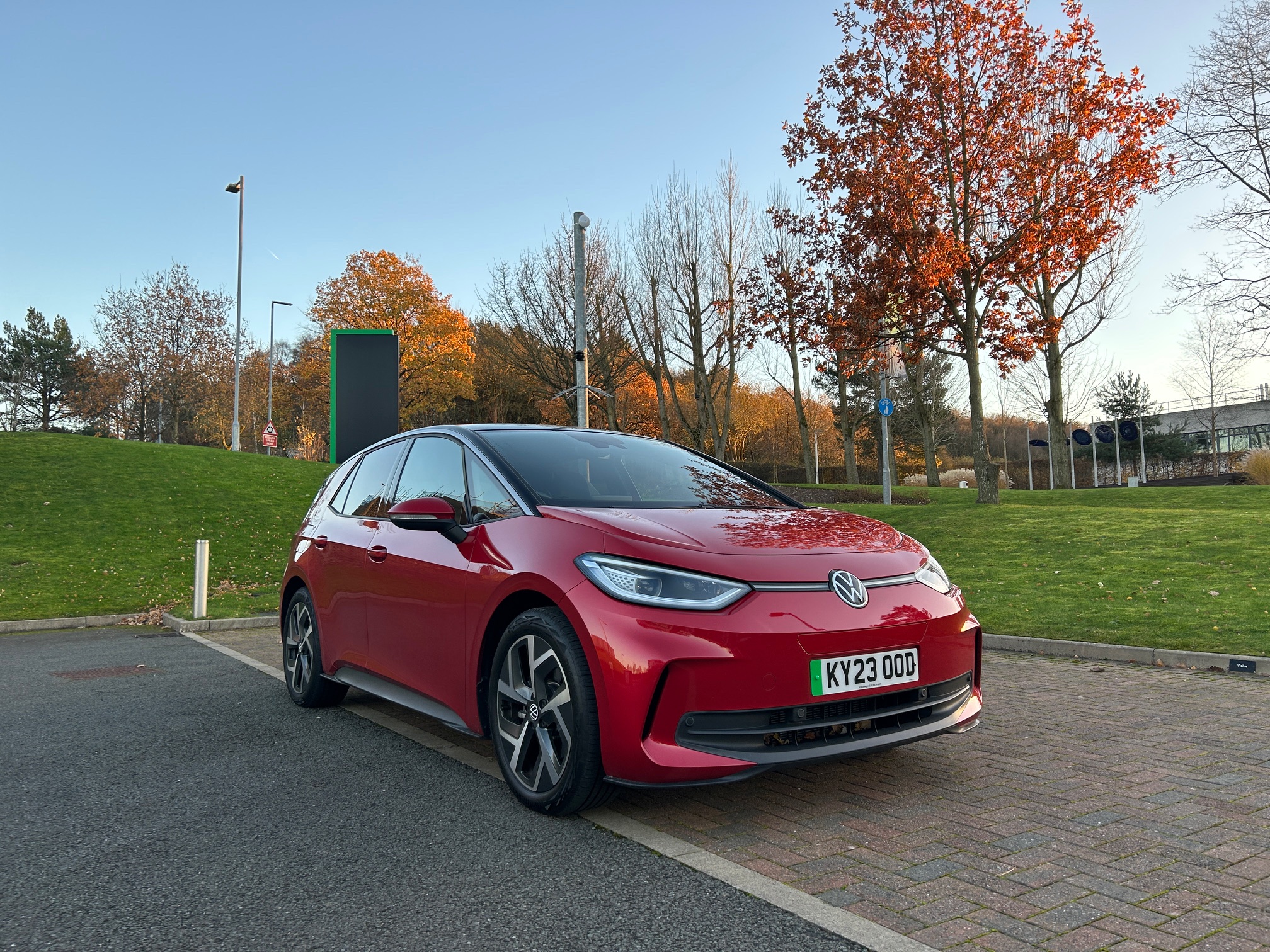
The first member of the Volkswagens brand-new family of ID-badged all-electric models was the ID.3 hatchback. It made its debut in 2019 when we drove it & although we praised it for it’s range, ride & comfort, the interior was a bit of a disappointment. Volkswagen clearly listened to us & to their customers because it’s recently had a mid-life facelift.
 What’s new
Volkswagen initially offered the ID.3 with a choice of eight trim levels which was highly confusing. Thankfully this has now been streamlined to a far more digestible two; ID.3 Pro & ID.3 Pro S. Both use a 201bhp electric motor to drive the rear wheels with Pro featuring a 58kWh battery offering a 265 miles range, whilst the ID.3 Pro S comes with the larger 77kWh battery that increases range to 347 miles.
 Exterior
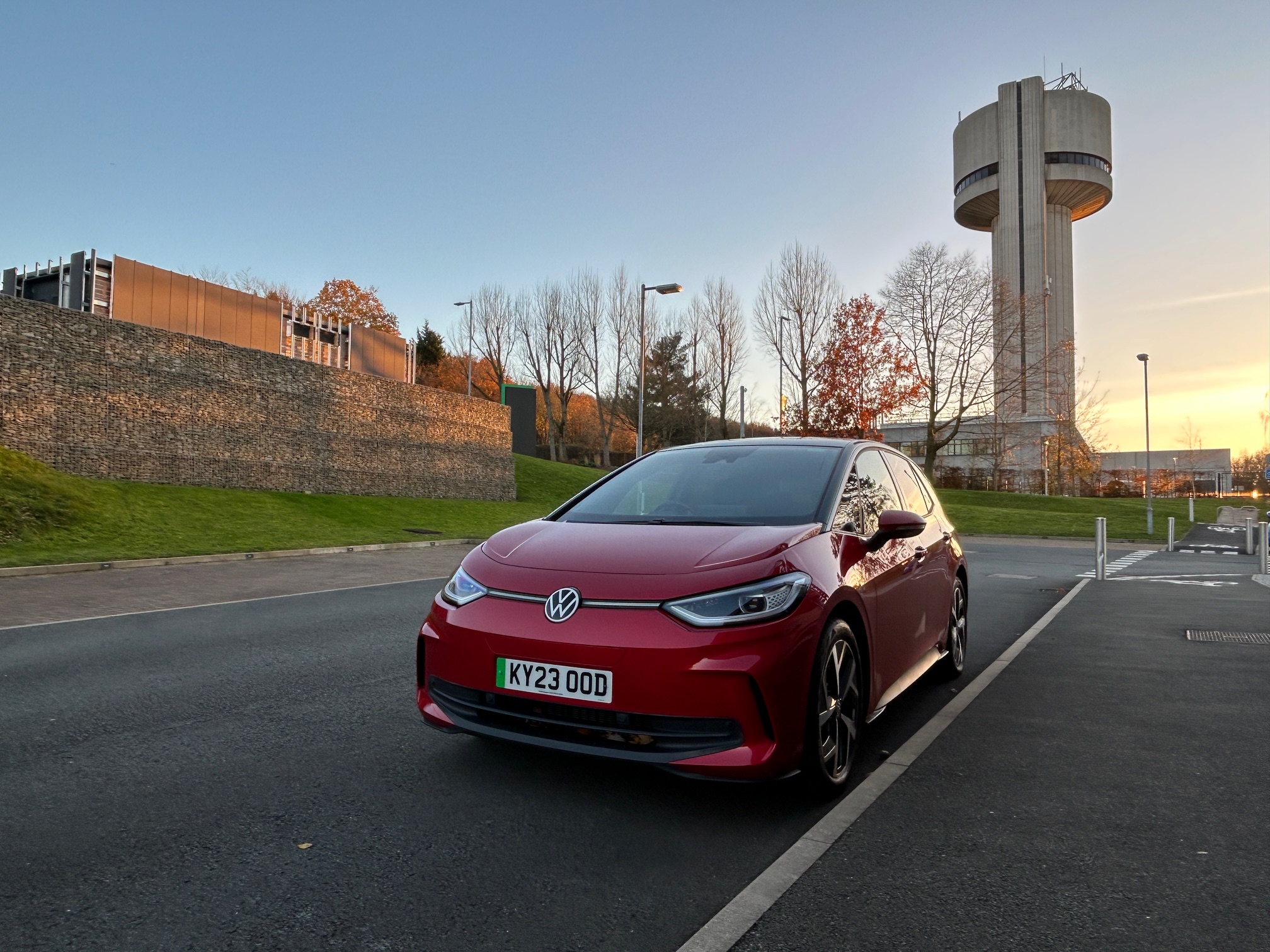
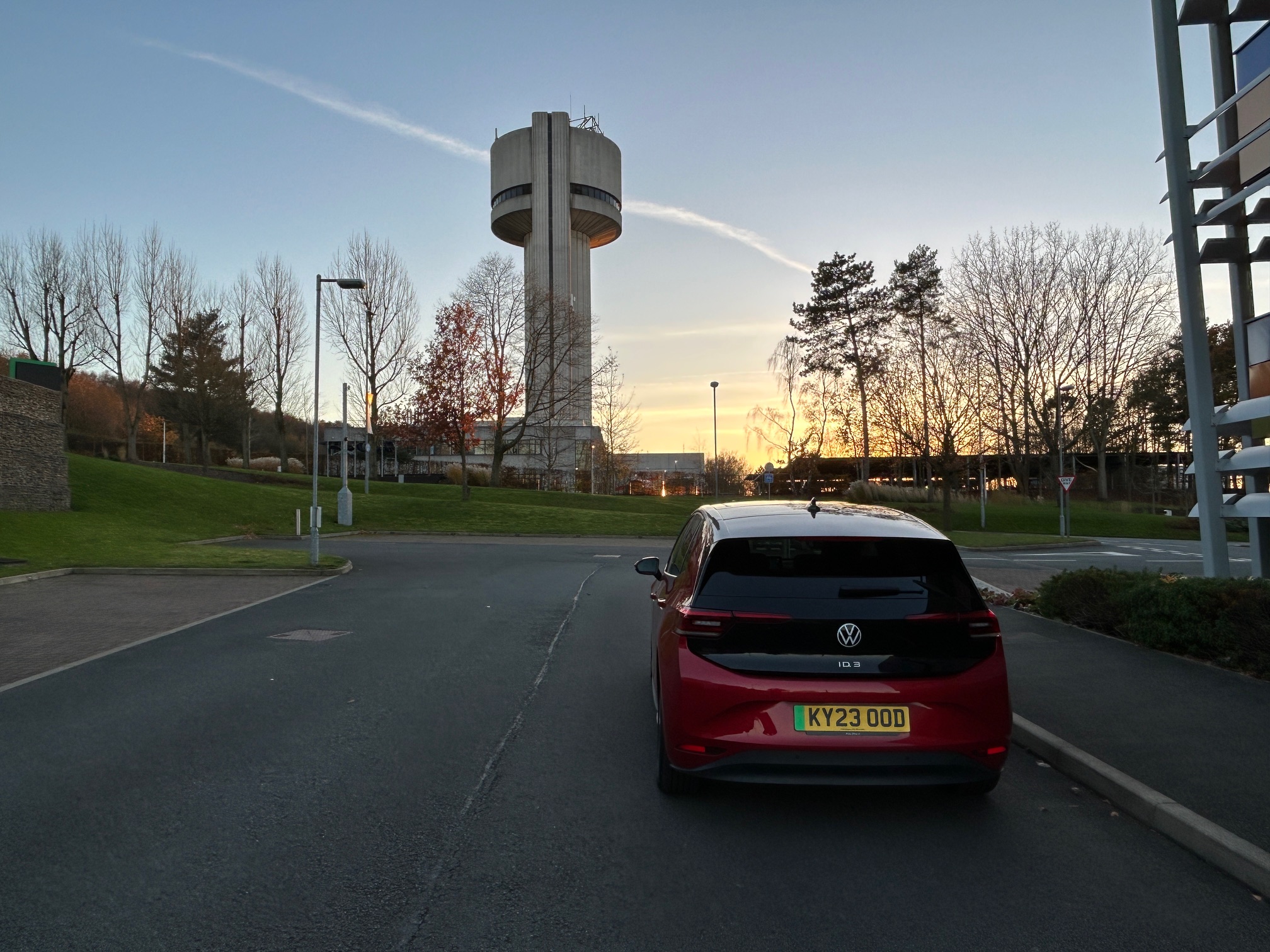
Upgrades here include a new front bumper with the black panel at the base of the windscreen removed, which improves the bonnet proportions. To the rear you have revised tail-lights in an X motif when illuminated. It’s still more SUV shaped than hatchback though.
 Interior
The updated interior feels more plush than before with far better seat fabrics used & a better quality of foam backed plastic on the dashboard & larger softer door surfaces as well. You still get the centrally mounted 10″ infotainment touchscreen, a 5.3″ dash panel display, flat bottomed steering wheel & a gear lever on the right end of the centre console that you twist to select from Drive, Reverse or Neutral. What was always good about ID.3 was the spacious interior, which still offers more room inside than a Volkswagen T-Roc.
 Equipment
Both models are equipped to a high level, with keyless start, LED headlights, front & rear parking sensors, climate control & heated front seats. Standard safety kit includes automatic emergency braking with cyclist & pedestrian monitoring, a driver fatigue alert system, a dynamic traffic sign display, Lane Assist & adaptive cruise control. Extra packs such as Interior Pack or Pack Plus, Driver Assistance Pack or Pack Plus, Exterior Pack or Pack Plus add things such as matrix LED headlights, an augmented-reality head-up display, extra sound insulation & semi autonomous driving.
 Practicality
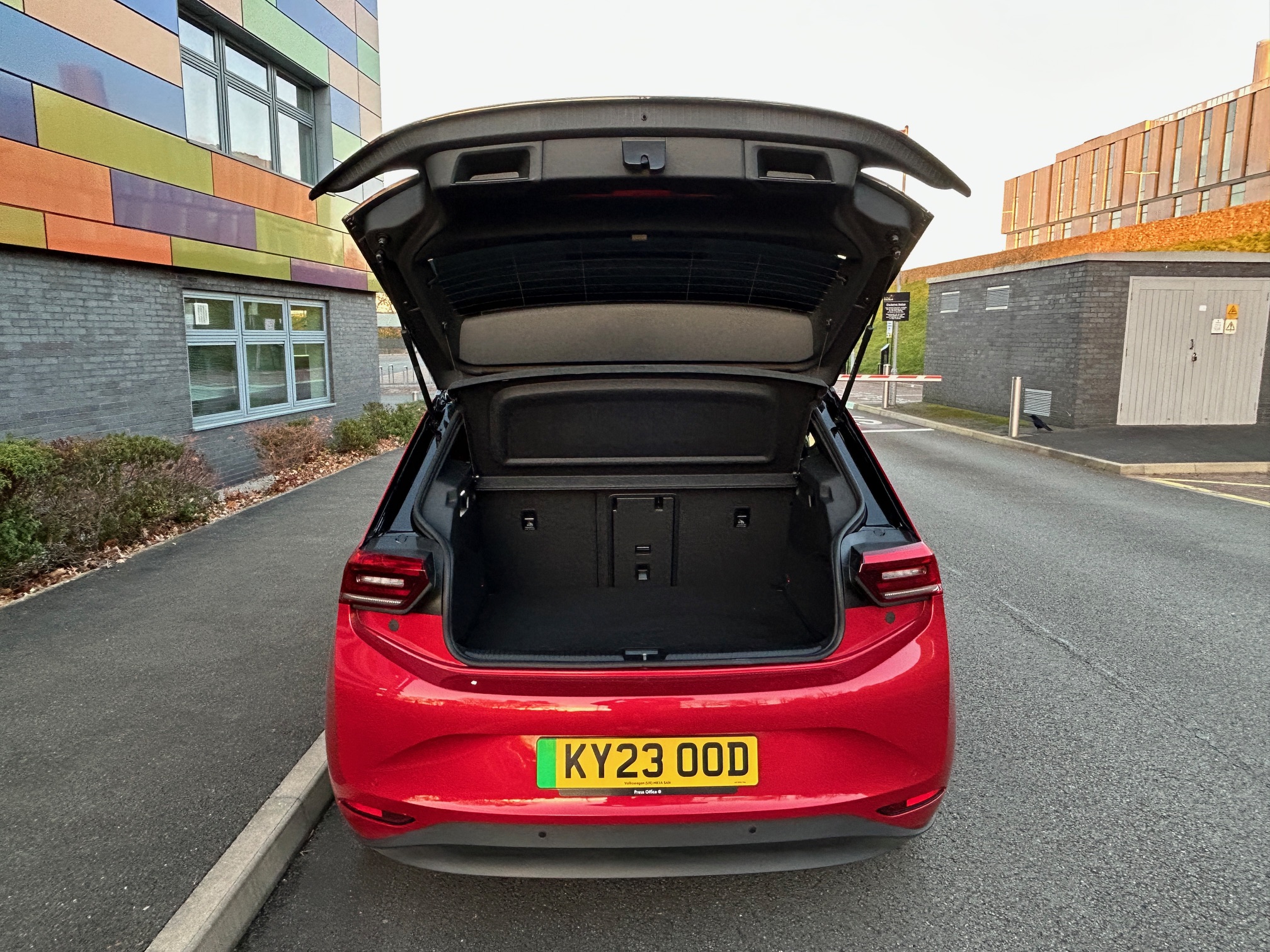
Considering the the ID.3 is only marginally larger than the Golf, the interior space is excellent. There’s loads of room up front, a flat rear floor & space on the rear seat, large enough for three adults. ID.3 comes with a 385-litre boot capacity. If you fold the rear seats down, the useful space increases to 1,267-litres. There are two charging cables supplied with a bag for each, which fit neatly under the boot floor when not in use.
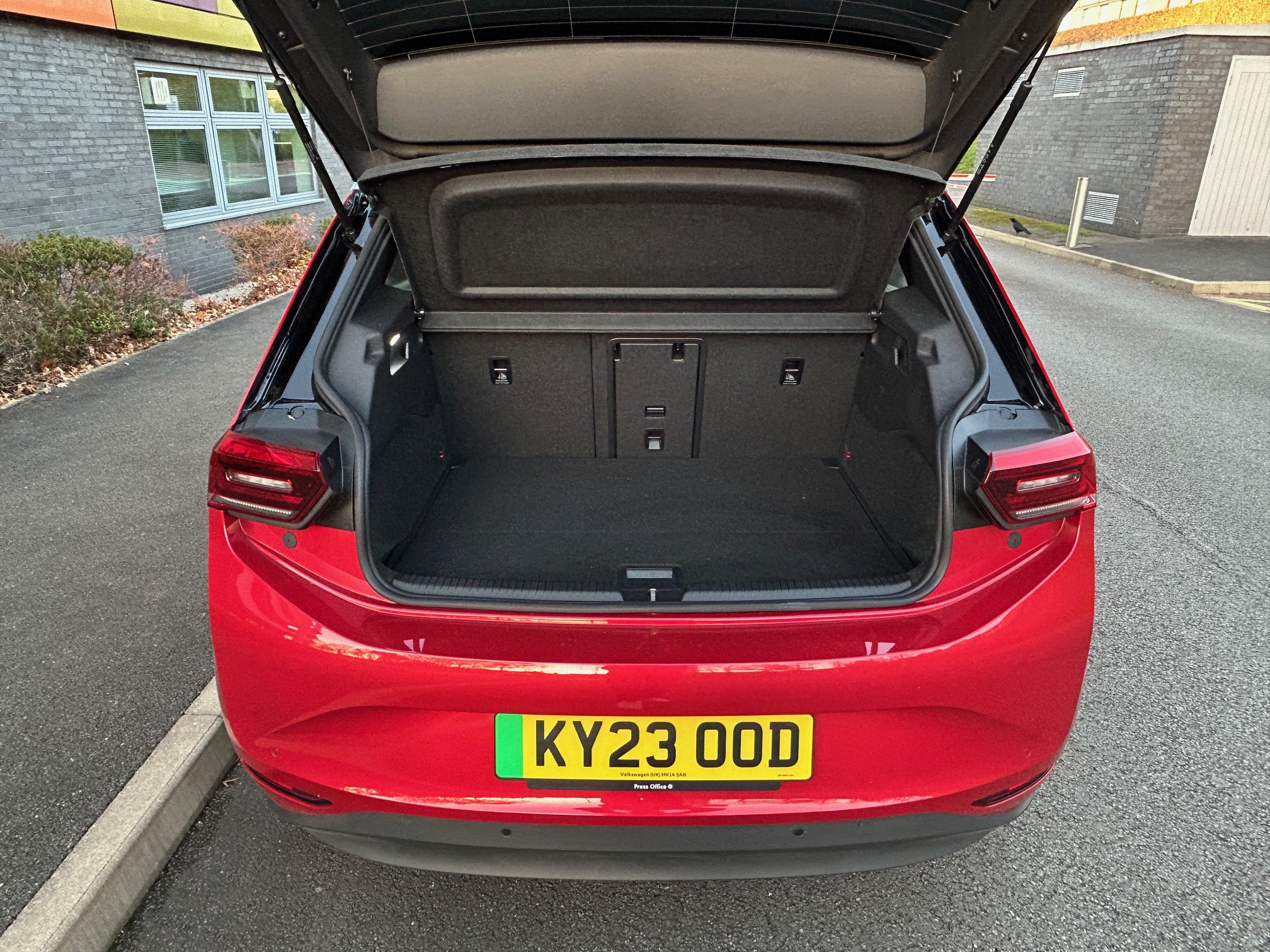 Cabin storage is above average, with four deep door pockets, lots of useful space between the front seats under a sliding cover, 2x front & 2x rear USB-C connectors, a convenient mobile phone holder & a rear fold down armrest with two cup holders inside.
 Real world driving
We like to drive all electric vehicles on the motorway, on faster A & B roads up to 60mph & of course in town. A 70 mile motorway journey at 70mph saw us use up 90 miles of range, which is impressive. Slow down to under 60mph & you get a 1:1 ratio of miles travelled to range used & on urban roads, travelling between 20 & 40 mph, where you can get the most out of the brake regeneration, you’ll actually get better than this.
 Whilst range anxiety accompanies any electric vehicle purchase, the ID.3 fitted with the 58kWh battery on our test car only ever showed a maximum range of 200 miles. Ho when can VW claim a 265 mile range ? To enhance battery range, you can select from two regenerative brake modes. In Drive mode the car coasts & by simply twisting the gear lever to select the B function, you get into the cars proper region braking. Unlike some EV’s, the strength of the regen on ID.3 is not that high, so you’ll do need to use the footbrake more. This caveat though, also makes the ID.3 surprisingly enjoyable to drive & of course if you’re driving over short distances your battery will re charge & you may just get close to VW’s claimed range.
 Driving
The ID.3 may be heavy, weighing in at at 1,794kg, but the 201bhp electric motor which offers 150kW or 204PS & 310Nm of torque, means that swift progress is not an issue. It will hit 62mph from standstill in 7.3 seconds, before moving onto a limited top speed of 99mph.
The single-speed automatic transmission & rear wheel drive set-up make for serene progress. A real bonus is that compared to some electric cars, it rides really well & also quietly over poorly maintained roads. The battery weight does mean that it’s built more for driving in town & on the motorway, rather then navigating winding, undulating roads. All in all, it offers a very composed ride.
 Day to day
The infotainment is touch-sensitive & controlled by a 10″ touchscreen. The latest version of the ID.3’s software is faster than before , but problems do remain. Having to go into the touchscreen to access the heating controls, like on so many new cars is a negative. And disappointingly as with the originally launched ID.3 the haptic controls are over sensitive, so it’s easy to nudge these accidentally. And super annoyingly, the climate adjustment ones don’t illuminate at night.
 On the plus side, Apple CarPlay, Android Auto, SatNav & wireless smartphone charging are all standard & something that’s easy to get used to is the keyless-entry-and-go system. As long as you have the key, the ID.3 will unlock itself & when you push the brake pedal the engine will start. Select Drive from the twisty gear lever & away you go. When you come to stop, you just press Park, get out & the car will switch itself off & lock behind you.
 Warranty
Volkswagen offers a three-year/60,000-mile warranty, with separate cover for the ID.3’s battery, which is for up to eight years or 100,000 miles. The ID.3 benefits from three years roadside assistance, whereas other Volkswagen cars are limited to 12 months, so another tick here.
 Pros
For company car drivers, ID.3 offers just 2% BIK. A 230 mile driving range is infinitely doable. The interior is far better than before as is the more simplified model choice. It’s also very roomy inside & offers a comfortable ride.
Cons
The infotainment system is still an issue especially the unlit climate controls. The range of 200-250 miles is average nowadays.
 Conclusion
Kudos to Volkswagen, they didn’t get it right with the original ID.3 & have made some changes that have much improved the car both inside & out. It’s still comes with a family-friendly spacious cabin with room for five & both versions feature a decent amount of safety. It’s also remains good fun to drive especially around town. The main negative still remains though, the infotainment system which can be down right frustrating at times. Thankfully VW are changing this in 2024 which we are very pleased about.
Nearly but not quite 4/5
