


Volkswagen have launched a new SUV, the Tayron pronounced Tie Ron. In effect it replaces the seven-seat Tiguan Allspace in the VW car range & most importantly for the fleet sector, is offered with a plug-in hybrid drivetrain. We popped down to a damp Worcestershire to put it through its paces.
 Tell me more ?
Built on the brands MQB evo platform, the new Tayron is seven centimetres longer (4,792 mm) than the Tiguan Allspace, so offers even more room for passengers especially those in the third row of seats. The boots larger too with up to 705/1,915 litres with the five-seat model & 850/1,905 litres in the seven-seat version. The Tayron also marks the debut on a non- electric Volkswagen of an illuminated VW logo front & rear, red in this case.
 Model choice
A familiar line-up of five trims is being offered on Tayron. Entry model Life costs from £40,130, then you step up through Elegance £42,700, R-Line £43,105, Match £44,515 & range topping R-Line Edition £47,490.
 Engine line-up
It’s comprehensive, with a selection of six engines, each paired with a six- or seven-speed automatic direct-shift gearbox (DSG). Two 2.0-litre 4-Motion TSI petrol models with 204 PS or 265 PS. A single 2.0-litre TDI FWD with 150PS, a 1.5 eTSI mild hybrid 150 PS & two plug-in hybrid FWD models, offered with either 204 or 272 PS & an electric range of ups to 75 miles WLTP. R-Line & R Line Edition are the only trims available with the more powerful 272PS PHEV, whilst the lower powered version is available on every trim level. With the inclusion of the battery the plug-ins fuel tank is just 45 litres in size, whilst on all other versions it’s 55 litres
 Specification
All versions are generously equipped. Life comes with 18” Napoli black diamond turned alloys, adaptive chassis control, a leather-wrapped multi-function steering wheel with shift paddles, automatic headlight control, LED lights & daytime running lights, heat insulating windows, 12.9-inch infotainment display, two USB-C ports in the front, two USB-C charging sockets on the centre console in rear, eight speakers, 10.25-inch Digital Cockpit Pro, SatNav, voice activation, DAB radio, wireless App-Connect, inductive smartphone charging, keyless go, Park Assist Plus with Park Distance Control, a rear-view camera system & three zone Climatronic air conditioning. Elegance adds larger 19” Catania alloys, surround lighting with welcome light, heated front seats with massage function, area view & rear view camera & body coloured exterior mirrors & doors handles. Match features 18” Bologna wheels & a tilting sliding panoramic sunroof with rear panoramic sunroof.
 R-Line & R-Line Edition go with 20” alloys, dynamic headlight range, R-Line bumpers with chrome air intake & R-Line decorative material set, including aluminium front scuff plates, black roof lining & brushed stainless steel pedals.
The PHEV also adds a start-stop system with battery regeneration & two charging cables.
 Safety
Advanced assist systems include adaptive cruise control (ACC), lane change system (Side Assist), lane keeping system (Lane Assist), oncoming vehicle braking when turning function, automatic emergency braking including pedestrian & cyclist monitoring (Front Assist), Park Assist Plus, a rear-view camera system, dynamic road sign display & VW’s new exit warning system.
 Tayron eHybrid engines
For company car drivers the two plug-in options will work best as both offer low BIK. The 204 PS (150 kW) has a top sped of 130mph, will go from 0-62mph in 8.6 seconds & comes with an electric range in Elegance trim of 76 miles courtesy of its 19.7kWh battery. The more powerful engine 272 PS (200 kW) will go to 134mph, has a 0-62mph time of 7.3 seconds & in R-Line trim offers an electric range of 73 miles. Combined WLTP ranges from 608-686 mpg.
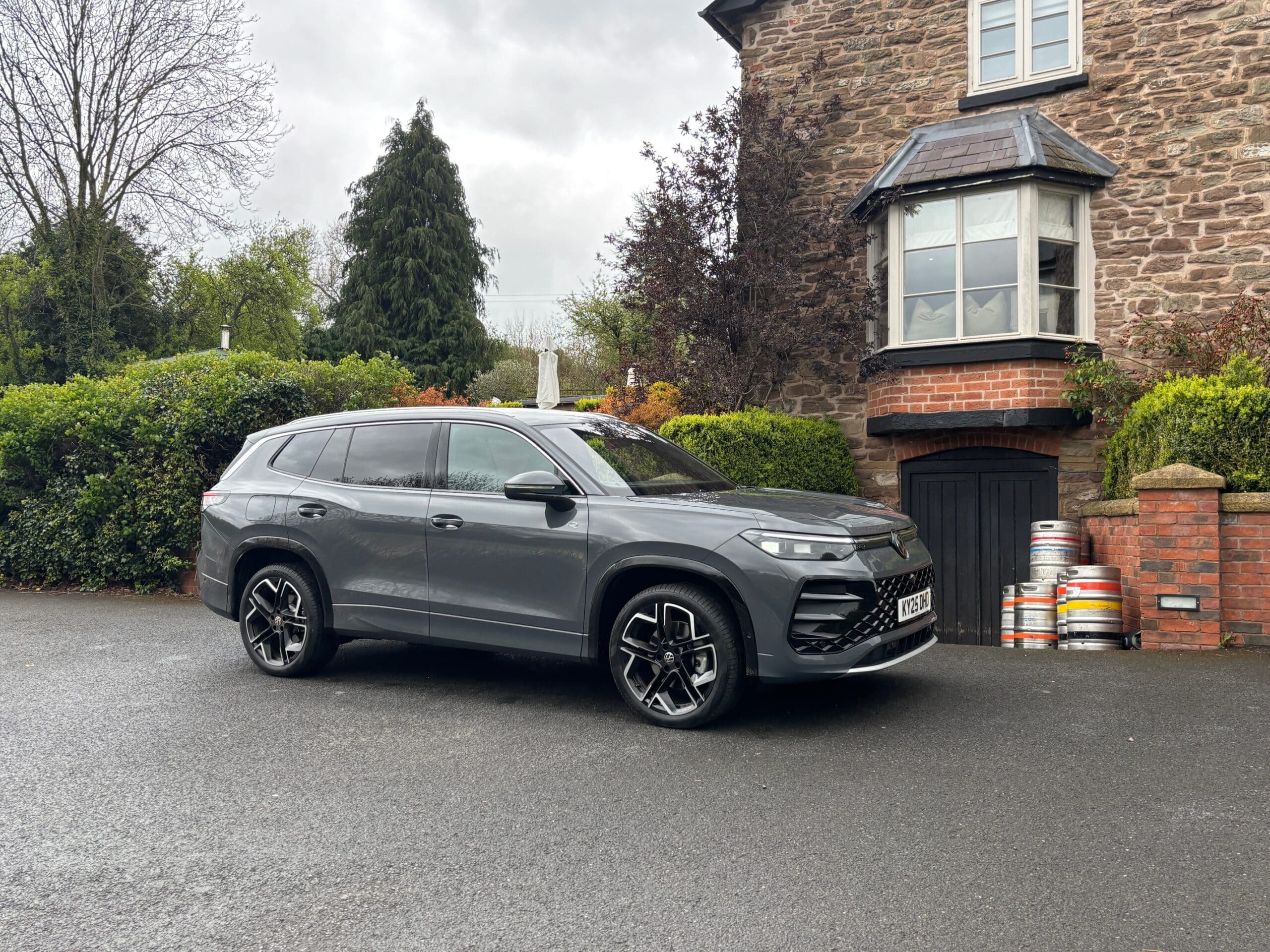 Outside
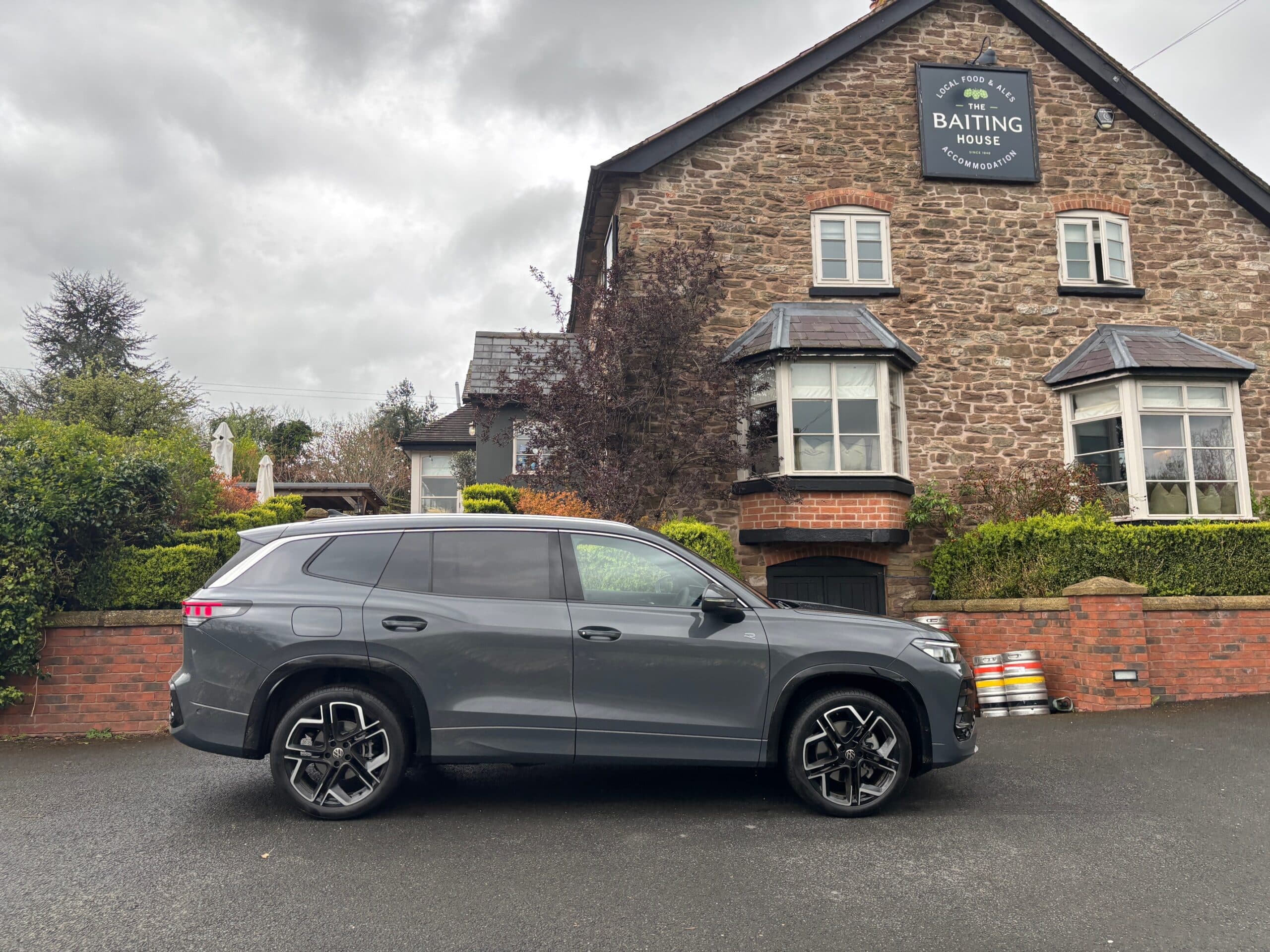
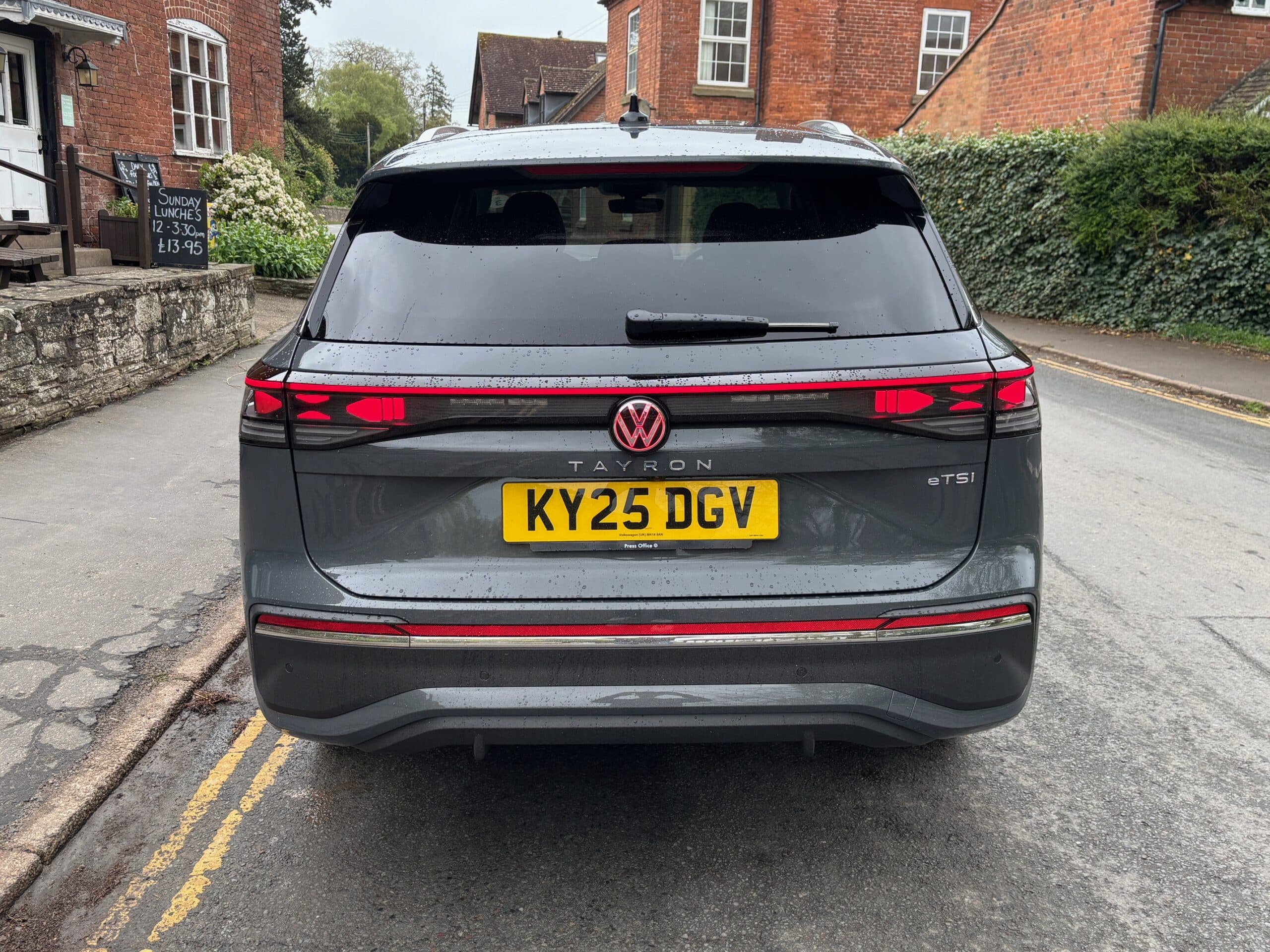
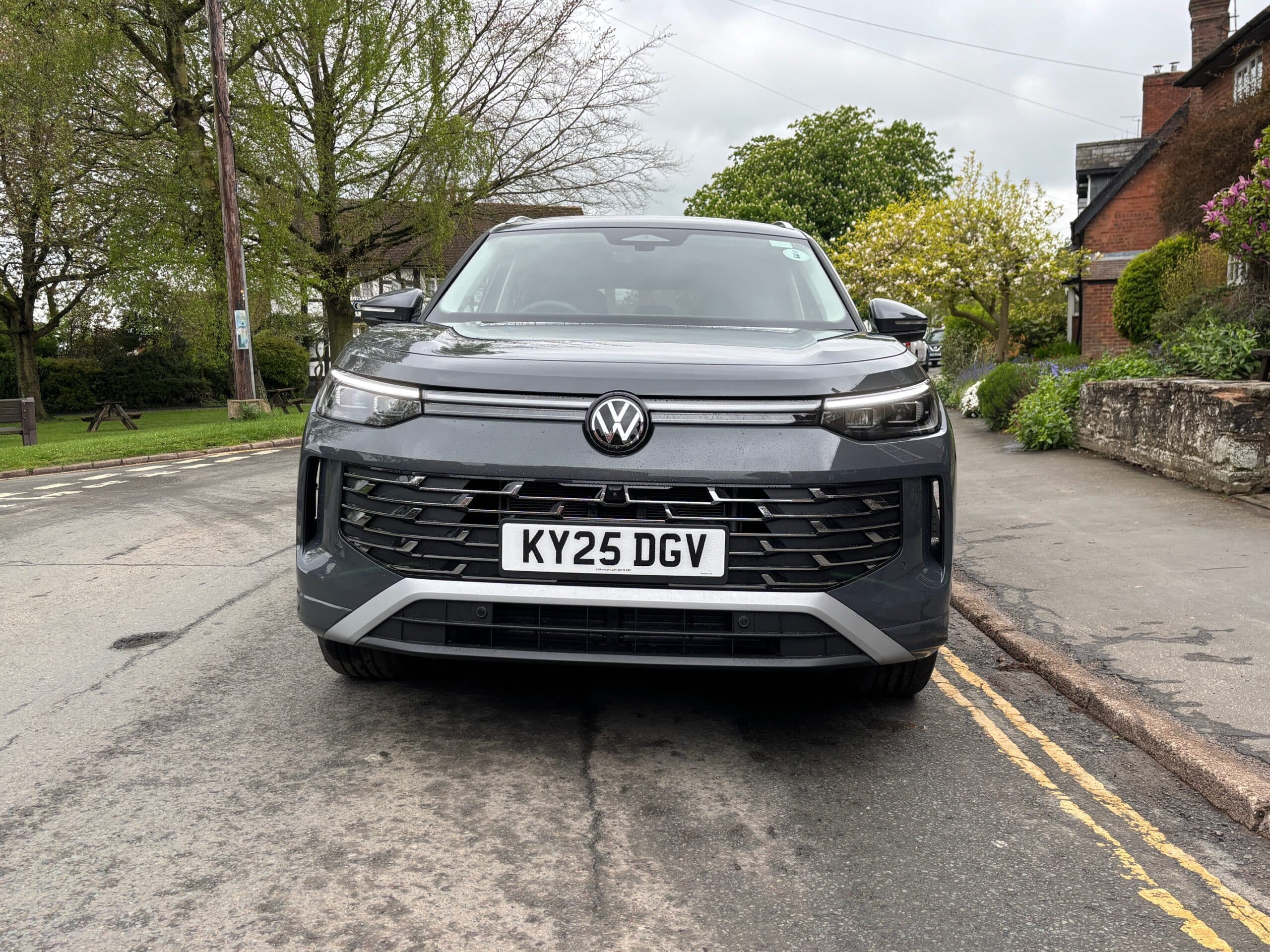
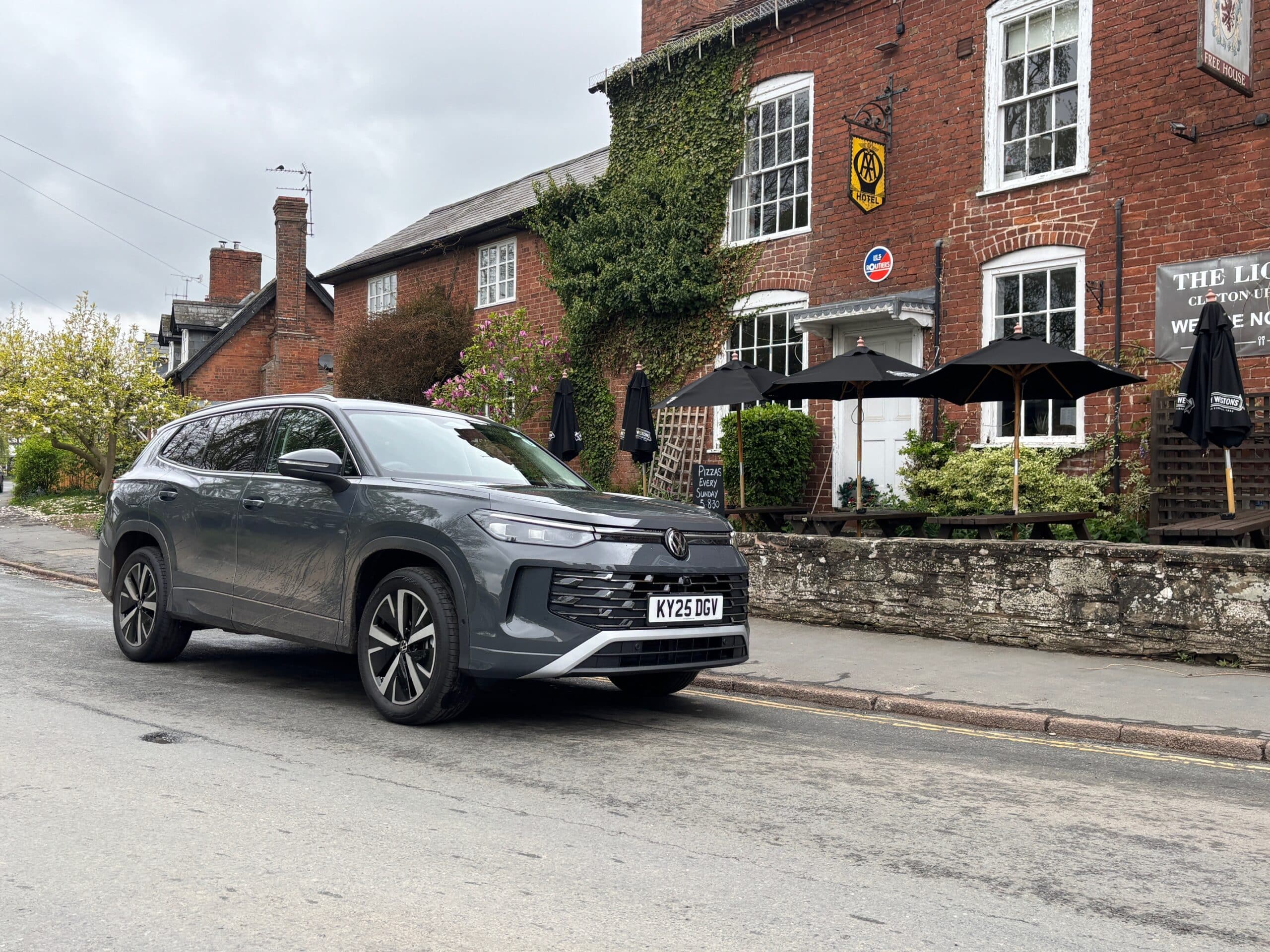
The Tayron adopts a familiar Volkswagen Group shape so an almost Tiguan-esque front three quarters with a few added centimetres between the C & D pillar & boot hatch which give it the extra length. The front headlights are high with the illuminated VW logo & horizontal LED bar below. The side features squared off wheel arches & the rear a continuous horizontal LED bar, while a narrow LED strip is integrated high up in this bar extending into the tail light clusters to emphasise the car’s width. As it runs towards the middle, this horizontal bar becomes narrower, meaning the lower half of the red-illuminated Volkswagen badge appears to be free-standing. An elongated Tiguan probably best describes it.
 Inside
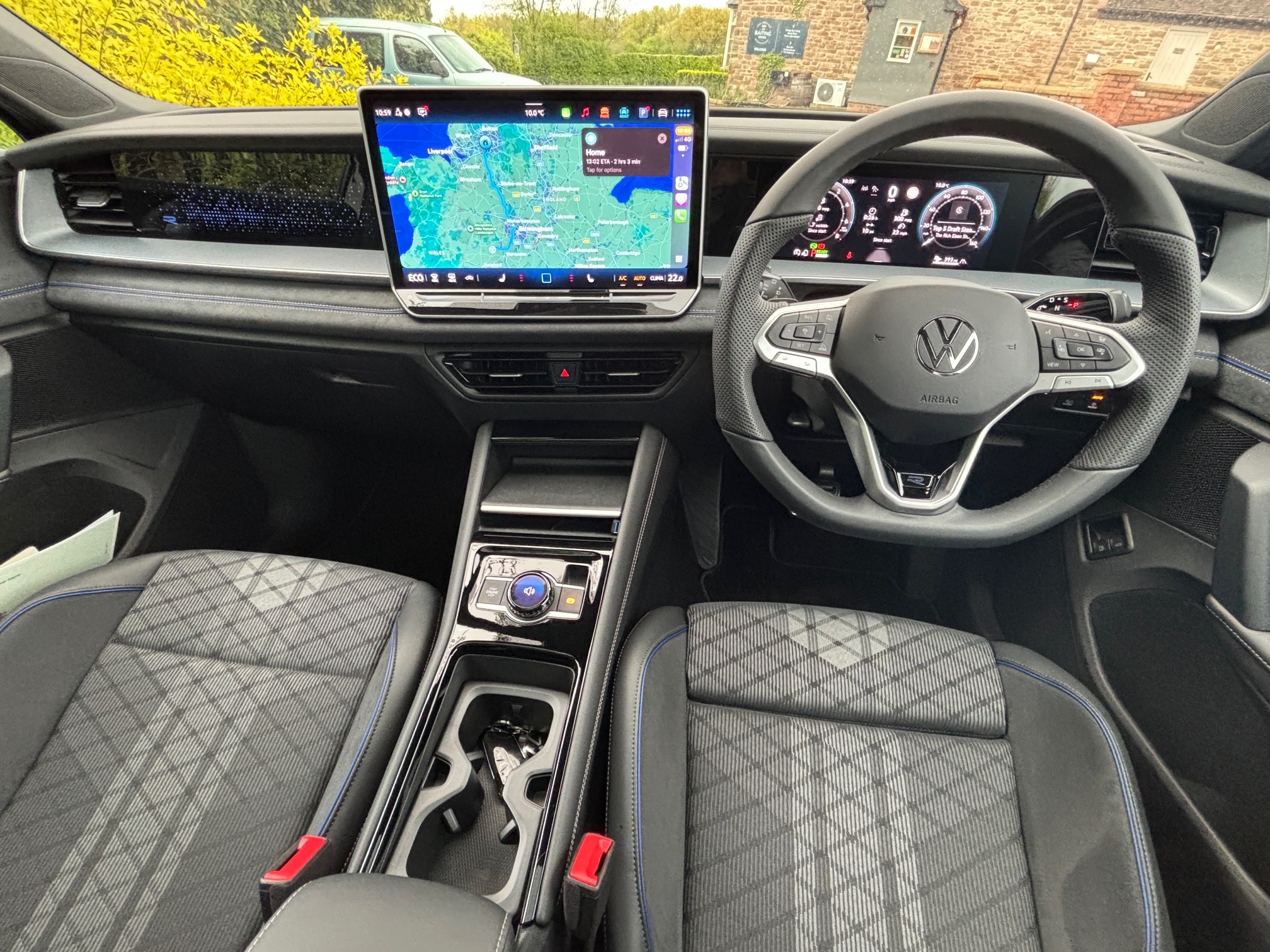
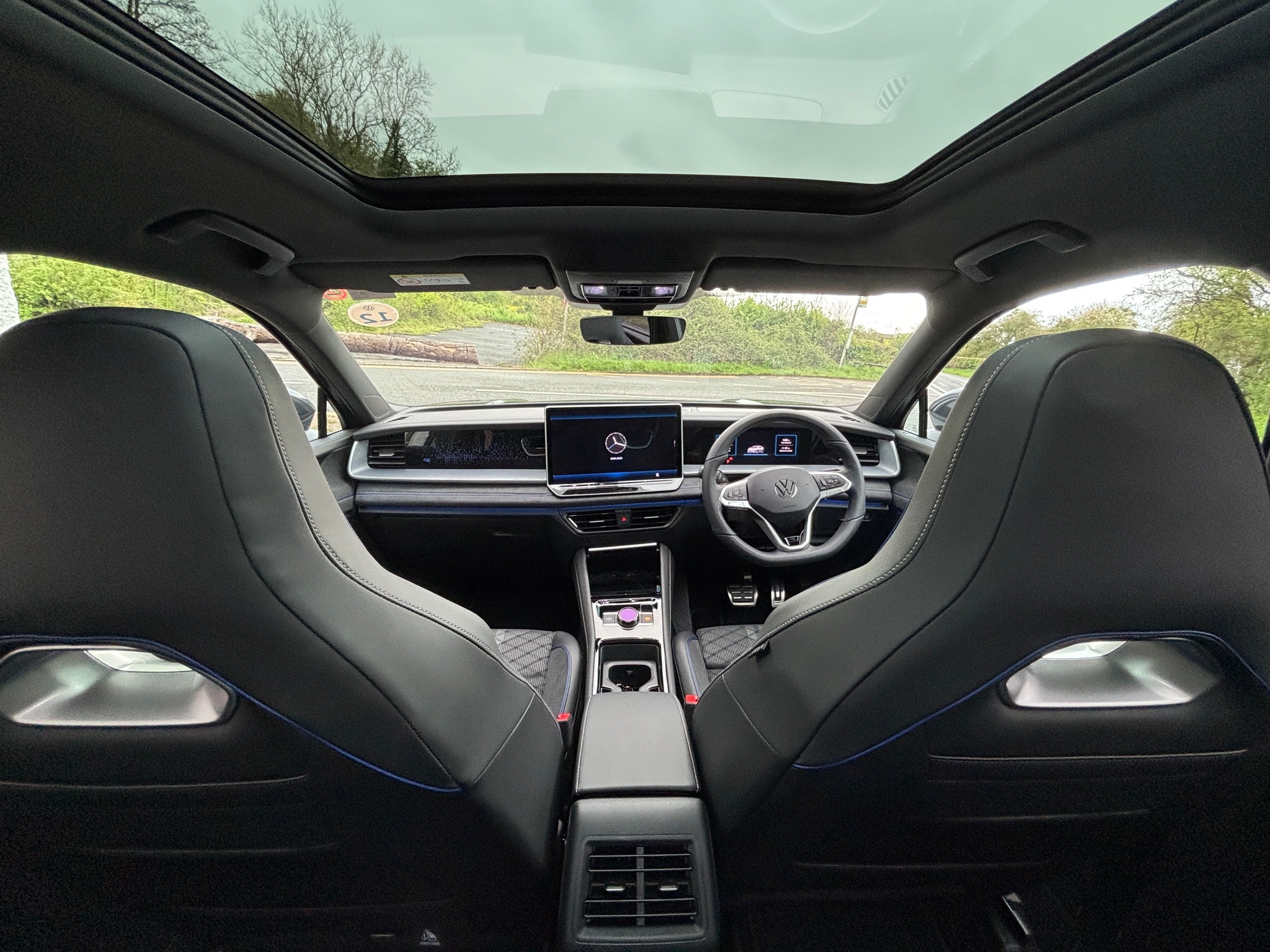
Volkswagen have stuck to a uniform grey/black/chrome colour combo for the fixtures, fittings & seat finishes, with some ambient blue-lights on the dash front to brighten things up a bit. It’s all nicely put together & feels & looks more modern than a Skoda Kodiaq. It’s also a lot more logical than VW’s of late with no haptic controls, replaced with logical buttons on the steering wheel for example. Climate is still adjusted via the screen but a series of icons across the screen top give you shortcuts to menus where you can adjust things more easily, for example turning off some safety features such as speed warning.
 Lifted from the Tiguan is the ‘driving experience’ switch in the middle of the centre console. It’s literally a rotary dial that helps you switch between the presets for volume, driving modes, lighting. Again a good idea & easy to use. Familiar VW steering wheel controls for cruise & adaptive cruise control are on the left with the infotainment ones on the right. Underneath the screen you’ll find some touch-sensitive sliders that can control the volume or temperature, but we’re not fans.
 Infotainment
The large central home screen shows the SatNav & infotainment plus outside temperature. The driving mode icon is also located at the top so here you can choose between Eco, Comfort, Sport & Individual driving modes. Default is Normal. Connecting wirelessly to CarPlay is quick & the Apple icons sit handily on the right of the screen for easy driver inputs. Overall the system is fast & responsive with large, bright, clear graphics. Another nice touch onboard our test model were the twin wireless phone chargers, which sit beneath the screen with a neat cover to keep your phone out of site when you’re driving.
The 12.9-inch touchscreen which comes as standard is probably all you’ll need. If you do spend an extra £1000 for the larger 15-inch one, this will add a head-up display, four USB C ports, Volkswagen’s ‘IDA’ voice assistant, the wireless smartphone charger & SatNav. We connected wirelessly to CarPlay & Waze & the 10.25-inch driver display is large & clear, so we’d stick with the smaller set-up.
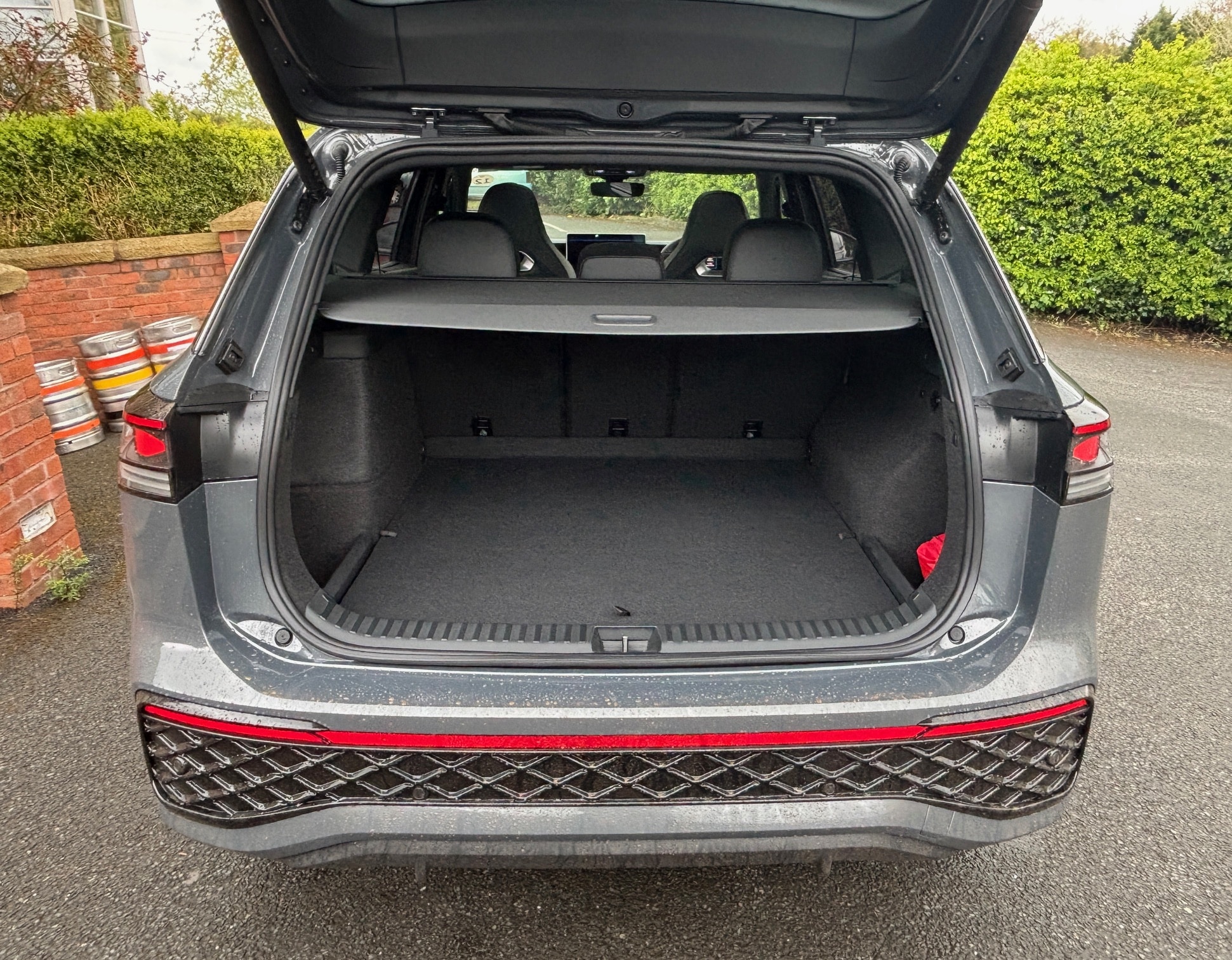 Practicality boot
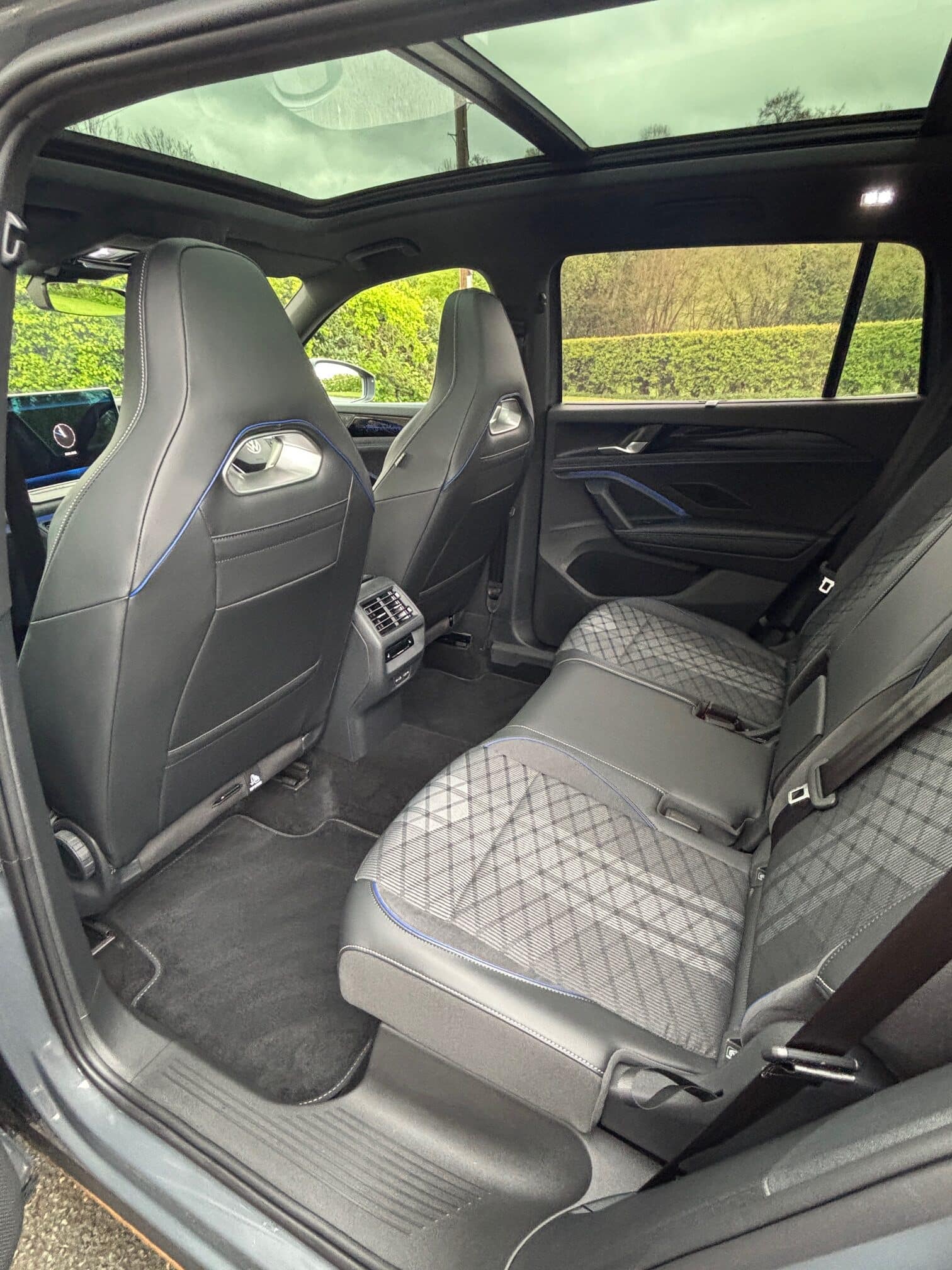
The plug-in is only offered with five-seats, so if you want seven- seats it’s off the menu. In five-seat formation the Tayron offers loads of passenger room in both the front & the rear. Legroom is brilliant in the second row, evenfor the centre rear occupant & headrooms impressive too. We sat in the second row of seats in the seven-seater & whilst legroom does take a hit, when you clamber into the third row of seats, these do offer surprisingly good space, although as with competitors getting in & out isn’t that easy.
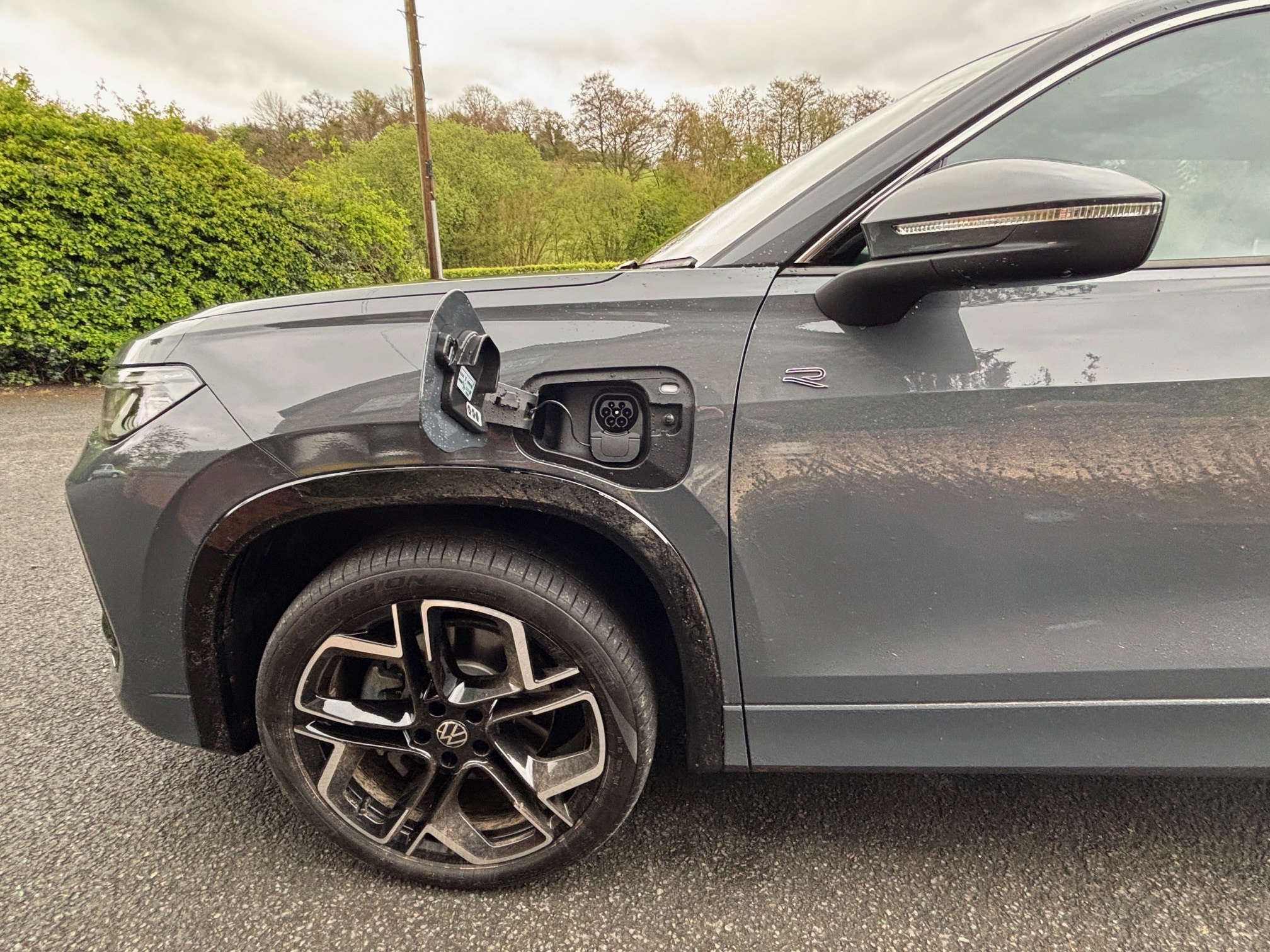
In the plug-in model, the location of the battery under the boot floor reduces the 5-seaters storage to 705 litres. Good news through, is that underneath you’ll find a storage section that’s large enough to hide your charging cable. When you take they out, the cable plugs into the front right side of the Tayron.
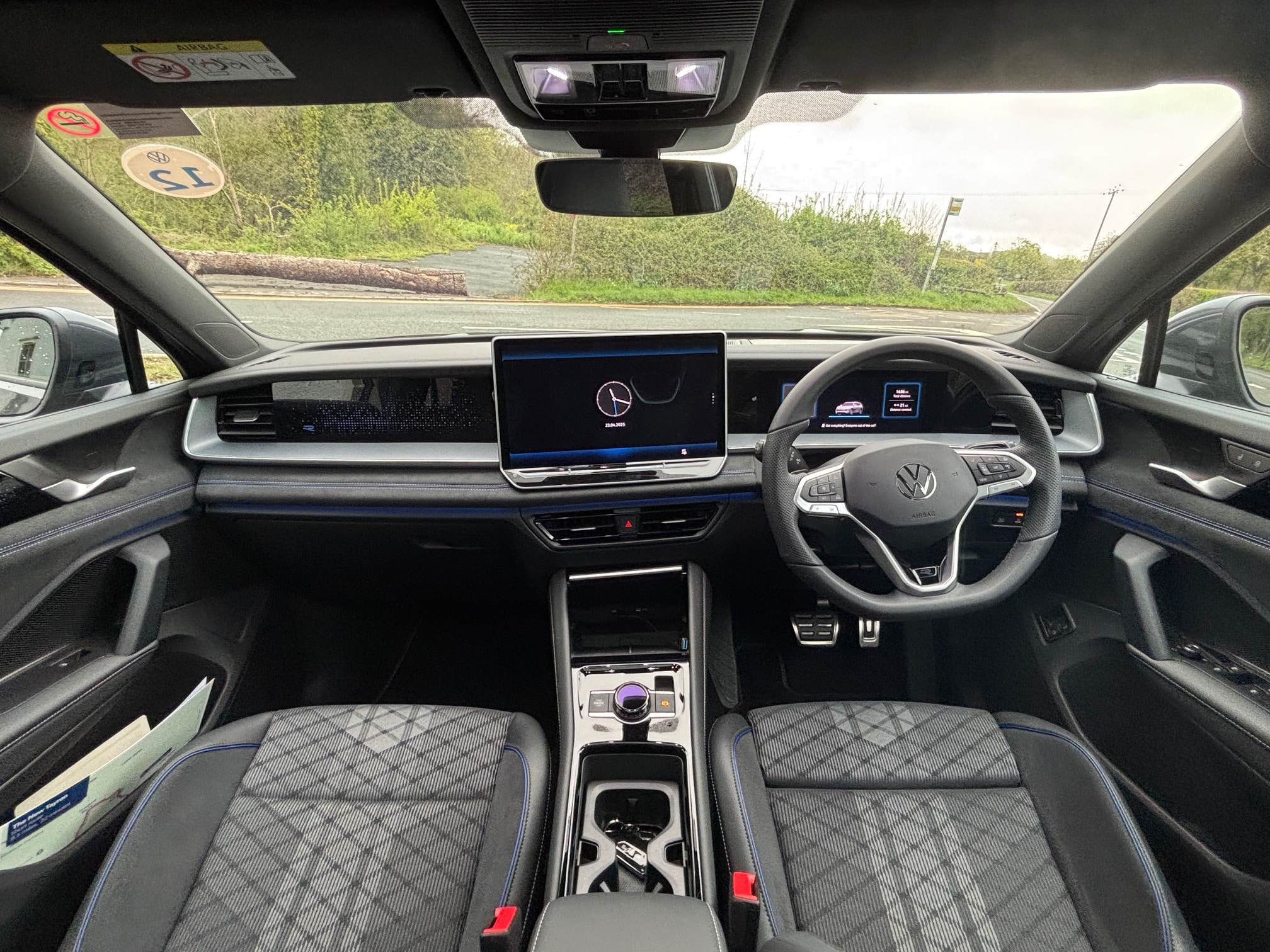 Practicality cabin
There’s a height & reach adjustable steering column, on our test car, two front USB C connections with two more in the rear, two 12V outlets, one in the centre console & the other located in the rear luggage compartment. The glovebox is a good size as are the door pockets which are fabric lined & there are twin adjustable cup holders in between the front seats. The armrest lifts up to reveal more storage beneath. In the back the front seats have pockets on the back of them, you get decent sized door pockets, separate climate controls & a centre fold down armrest with cool twin pull out cup-holders. This extension can be swivelled left or right & has a joint at the front where tablets and smartphones can be locked in place. Very useful for big or little occupants.
 DrivingAlthough it’s not that much bigger than a Tiguan, the longer wheelbase sees the Tayron sitting more comfortably on the road than its smaller sibling. And again, the heavier PHEV comes with more precise steering we felt than the lighter eTSI, even when there were two of us on board. At motorway speeds the Tayron plug-in is refined, aided by the standard-fit acoustic glass which keeps the wind & road noise at bay. The 1.5eTSI mild-hybrid isn’t quite as good we’d wager & lacks some of the more expensive R-Lines goodies as well. We also drive 20 mile in Electric mode & the PHEV is super-quiet using electric power even at 60mph. Volkswagen has done an excellent job of masking the extra weight in the plug-in & have actually made it more fun than the mild-hybrid, which was a surprise.
 Charging & MPG
 Competition
 Pros
 Cons
 Verdict
 What the eHybrid also does really well is to make you forget that t’s got a heavy battery underneath by offering some rather enjoyable driving dynamics & is arguably a more complete car than the smaller Tiguan eHybrid. Wheat the cheaper Elegance spec coupled to the 1.5 eTSI engine is good value for money, it’s not as good to drive as the PHEV, nor as exciting either. We’d choose the car we tested the 204 PS plug-in as the pick of the range in the company car sector. If you choose one you won’t be disappointed.
