


Hyundai are coming a touch late to the B sector electric market. Following on from the excellent IONIQ 5, 6 & 9 & cute-as-can be Inster the IONIQ 3 has finally arrived. We took to the wild roads of mid-Wales to give it the once over.
 Tell me more ?
It’s off to a good start looking like a mini Genesis GV60. And it comes with 22kW charging the First Hyundai to do this. In effect it’s a competitor for the Kia EV2, Renault 5, Peugeot 208 electric & the new VW ID Polo.
 Model choice & driving range
The familiar Hyundai specs are on offer, so choose from Advance, Premium, Ultimate & N Line Evo. And from two batteries, Standard Range 42kWh & a 214 mile range or Long Range 61kWh with a 308 mile range.
 Performance
Strangely the smaller battery comes with more power, 147 PS, whereas the larger one has 135PS. Lithium Iron Phosphate vs Nickel Manganese Cobalt may explain this. So, Standard Range takes 8.7 second to reach 62mph the Long Range model 9.5 seconds, with both going on to a top speed of 106mph
 Outside
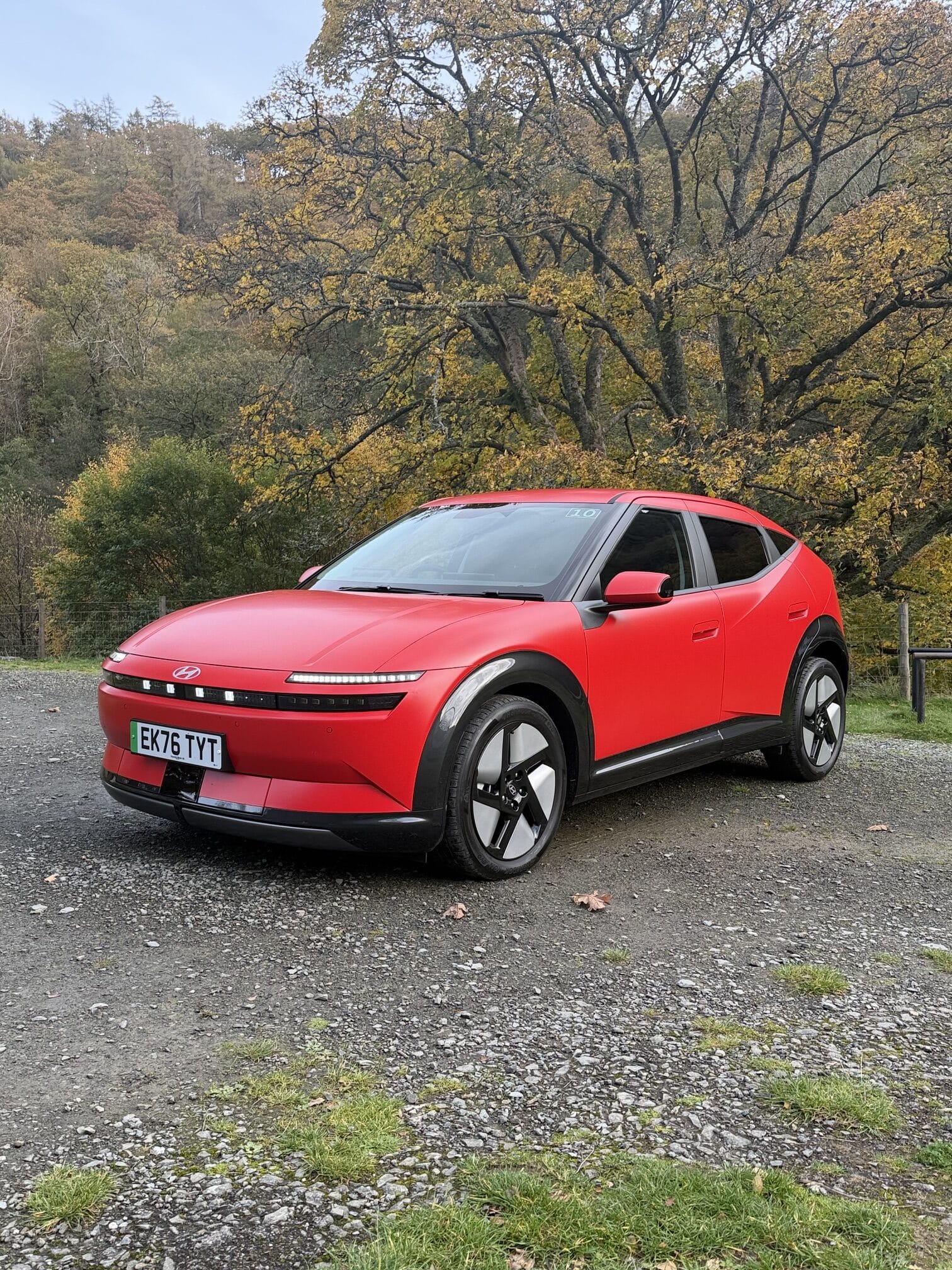
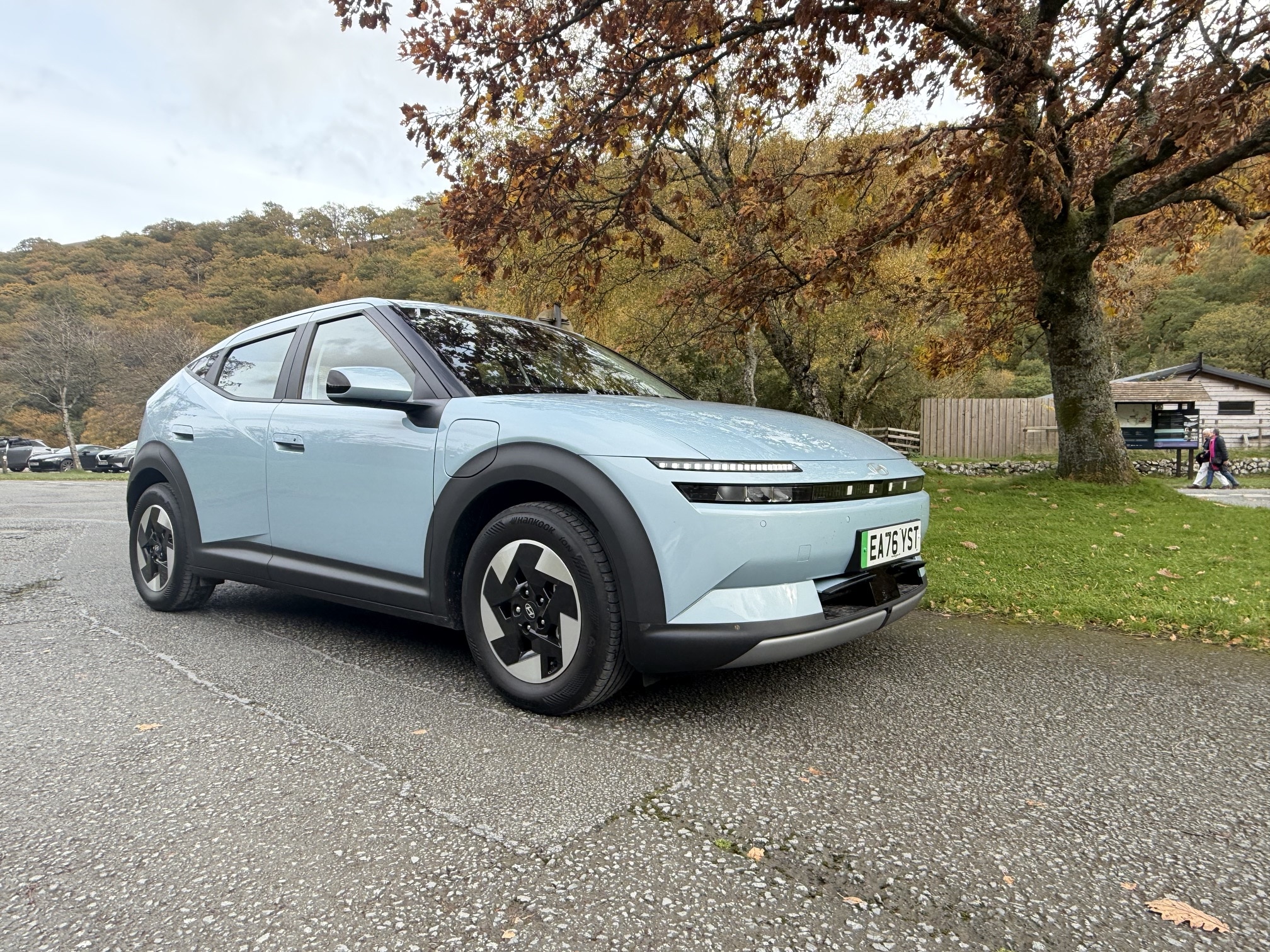
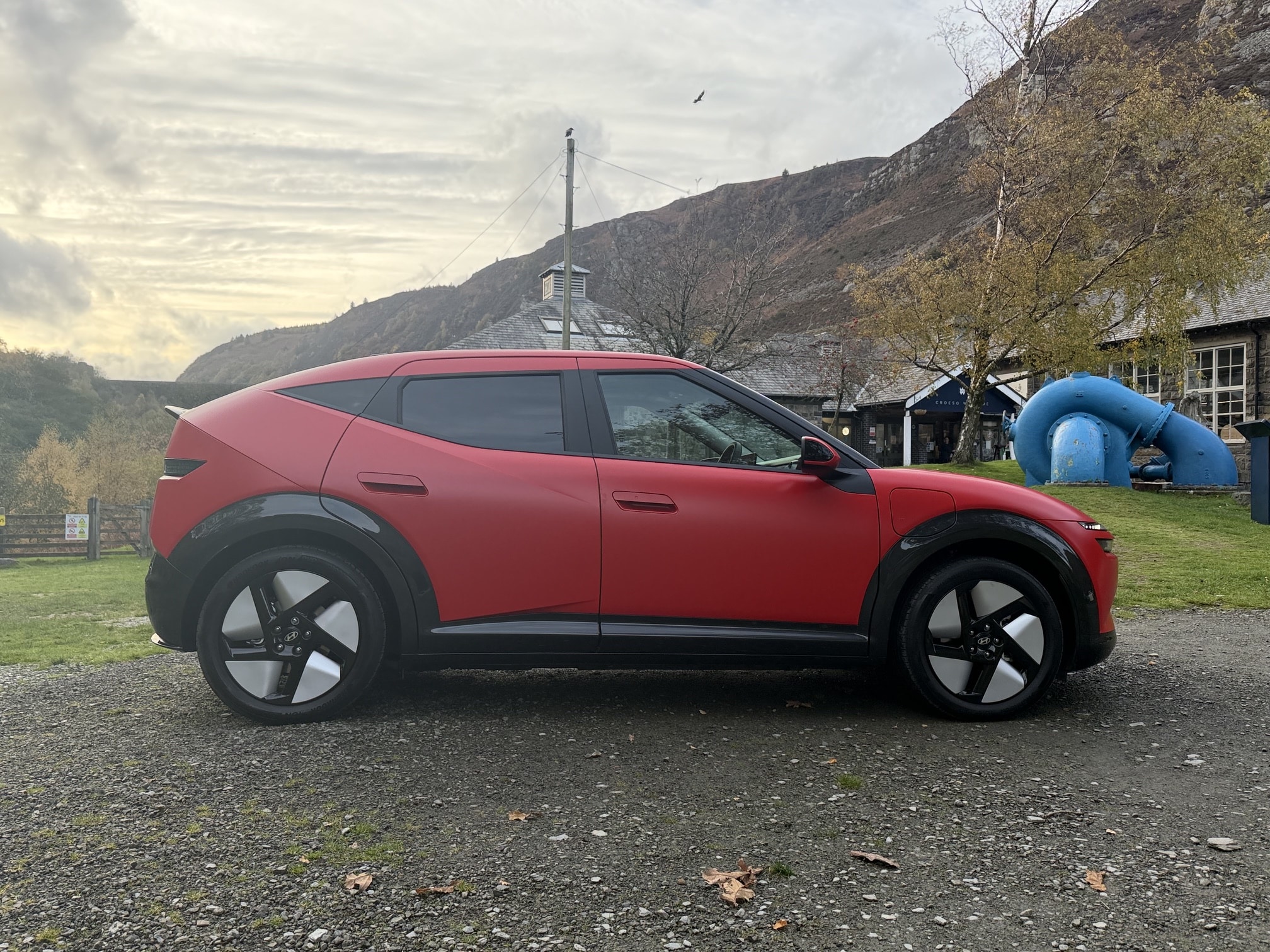
The Genesis profile aside, the new 3 is less boxy than most of the competition with a sleek ‘Aero Hatch’look as Hyundai call it. At the front you get Hyundais pixel lighting & slim corner headlights. The sides sweep back & the windows narrow & at the rear, are more LED lights & boot width spoiler & IONIQ 3 lettering across the lower hatch, reminding us of the Honda CR-Z.
 Inside
Hyundai are to be congratulated here as it’s nicely realised. The seats are very comfortable with a slight curve. There’s a floating centre binnacle, an oval steering wheel, physical buttons for climate sitting below the 12.9” or 14.6” touchscreen. The quality of the finishes, textures & plastics is very good, especially when the Advance model can be had sub government grant for well under 20k.
 Infotainment
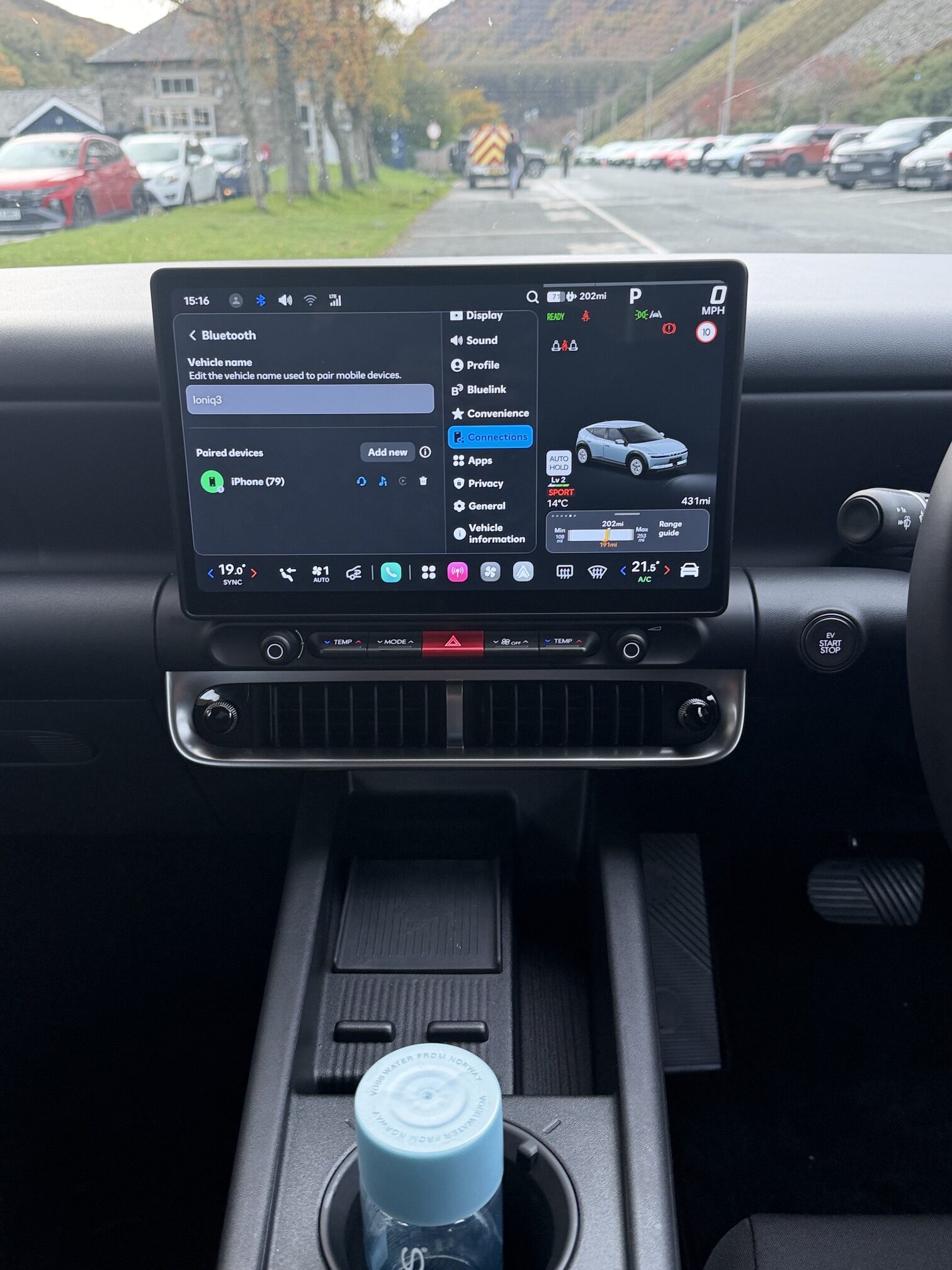
Hyundai’s new Pleos Connect infotainment system, which is designed to replicate a smartphone interface runs the software so you get a large landscape screen with clear if small icons & super-fast response times.
 Talking of which both Apple CarPlay & Android Auto wireless connectivity are included with the drivers display sitting above the steering wheel & it’s really clear set-up which we really like. As we do the short cuts you can configure to quickly turn off some of the cars over eager safety warnings, by setting these up on the steering wheel.
 Not so good though is that Advance spec doesn’t have the driver display so relies on the speed readout on the central screen which we don’t much like as your eyes drift away from the road ahead. Advance doesn’t come with Sat Nav either, so you’ll need to connect your smartphone to access a navigation app.
 Equipment
Advance does though come with 16-inch wheels, dual-zone climate control, adaptive cruise control, front & rear parking sensors, a reversing camera & the smaller 12.9” touchscreen. Premium adds 17-inch alloys, battery preconditioning, blind spot monitoring, a wireless phone charger, V2L & the drivers display. Ultimate comes next with 18-inch wheels, heated front seats, a heated steering wheel, metal-effect exterior trim, adaptive headlights & ambient lighting. N Line EVO complete the line-up with bodykit, 19-inch wheels, a large sportier rear wing, N Line upholstery, 360 degree camera & the larger touchscreen.
Whilst N Line looks the part it shaves 20 miles off the cars driving range & felt decidedly slower than the Long Range Advance model we also drove which we still haven’t figured out.
 Charging
Another oddity is that the Standard Range beats the Long Range’s 110kW maximum charging rate with speeds of up to 119kW, although differences in charging curves mean both can be topped up from 10-80 per cent in 30 minutes. In our experience public fast chargers tend charge at 100kW or lower so both are competitive. As ever charge at home whenever you can when cheaper overnight tariffs are available. A full charge of the larger battery from 0-100% would take 8 hours 35 mins. https://www.rolecserv.com/ev-products/evo
 Cabin practicality
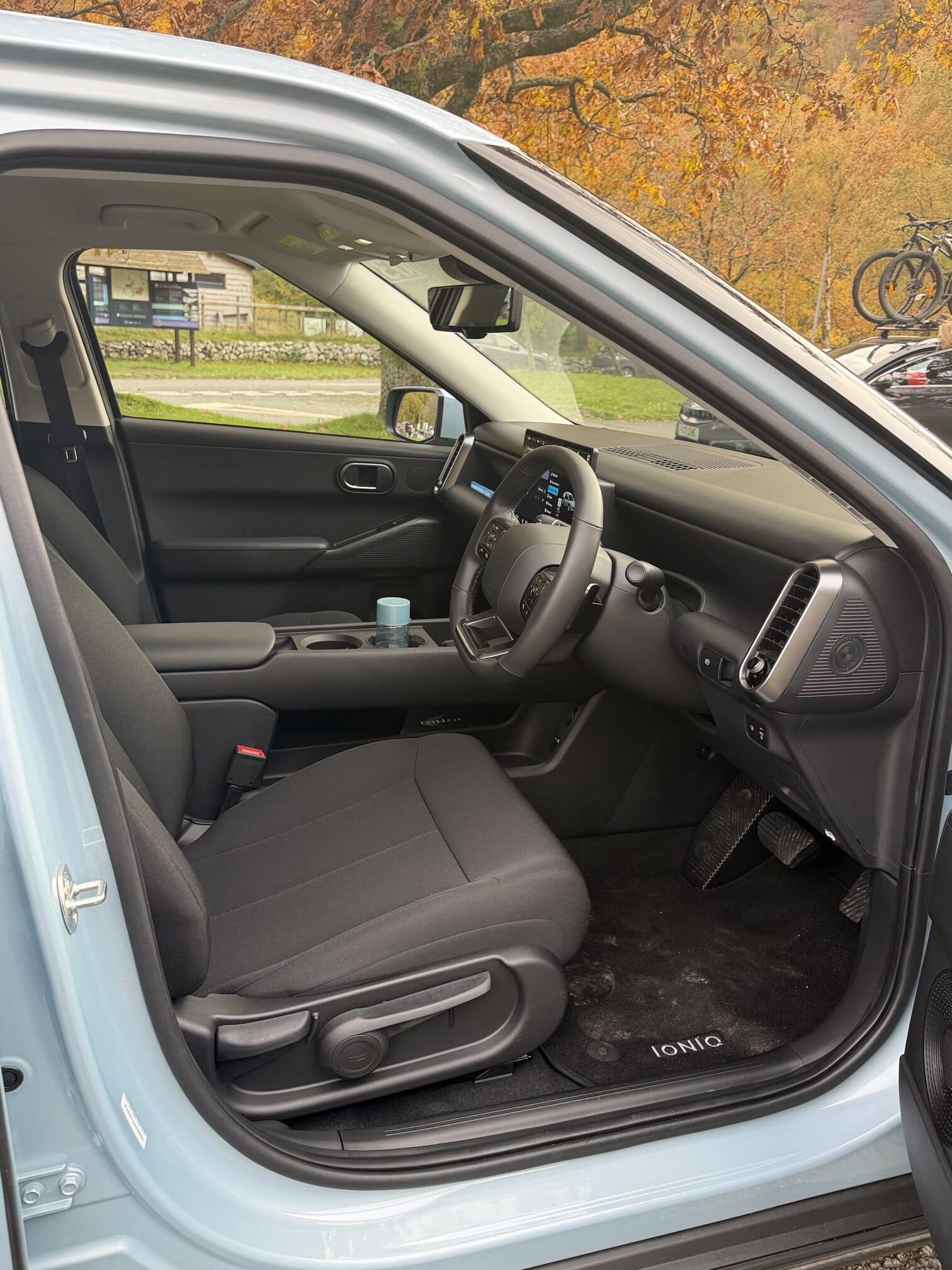
Twin centre cup holders, slim but long door pockets, a lower down area in the centre, a medium sized glove box & under armrest space with one front & two rear USB’s. A wireless charger fan features on some versions.
The cabin comes with plenty of front & rear leg & headroom but it’s probably not large enough for three to sit comfortably in the rear. One thing we like is the inclusion of physical climate buttons. However Hyundai has decided to put the wiper & light function on the touchscreen which we’re not fans of.
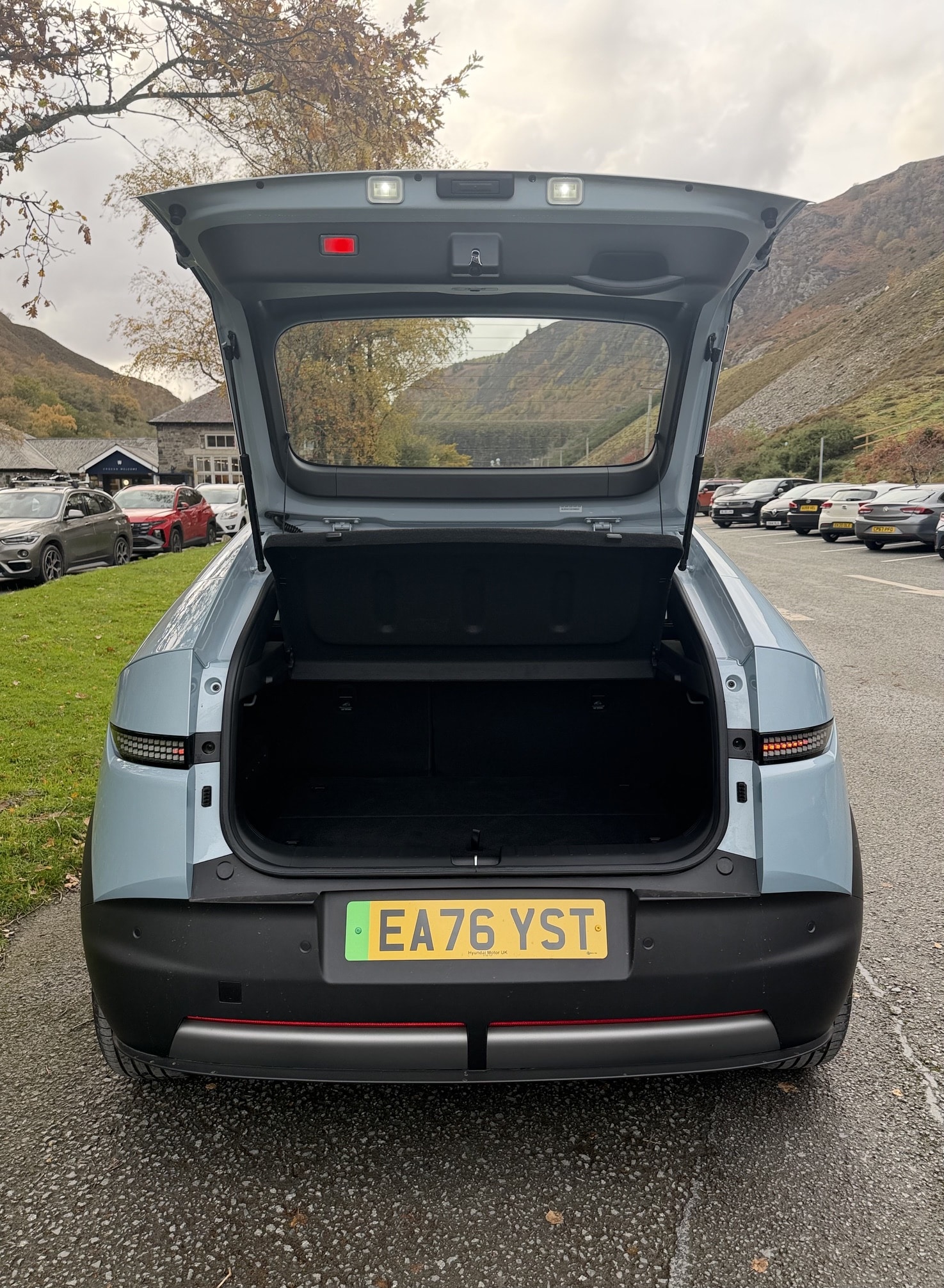
 It’s worth knowing that the rear window is impeded by the spoiler so reverse parking isn’t as easy as in other cars, whilst the boot is a generous at 441 litres with Hyundai’s Megabox storage void under the floor accounting for a third of this.
 Driving
First up was the Long Range Advance which definitely feels nippier than the N Line we drove after. The cars sits low down to the road so offers a road-hugging feel which we took advantage of on some winding Welsh roads. The drivetrain is controlled rather than exciting, so there isn’t that much in the way of super fast acceleration & at the top end & once over 50mph, the power dissipates & the car feels sluggish. And you’ll notice a bit of wind & road noise at higher speeds but it’s not that intrusive.
 Steering though is excellent being light & precise & if you go into Sport mode the extra weight added makes this even better & it really shines on tight corners. In the N Line model the lack of top end power was more noticeable, but the IONIQ 3 hasn’t really been set up to compete with a Cupra Raval, more sister brands Kia EV2 & in that respect it’s a touch more exciting to drive than its Korean counterpart.
 Safety
Whilst our driving route didn’t take us on a motorway we’ve no doubt that with all of the onboard safety, such as Lane Keep Assist, Smart Cruise Control & Lane Follow Assist will aid drivers in tackling the UK’s motorway networks safely.
 Regeneration & drive modes
 Eco, Nomal & Sport offer drivers the usual driving mode options, so less power in Eco means a longer driving range, Normal sits in the middle & Sport tightens up the throttle for a bit more power & some weight to the steering.
 Pros
Incredibly competitively priced, looks the mustard & is very well kitted out. Rides & handles better than most of its competitors. Features one of the best brake regeneration set-up’s of any car.
 Cons
 Verdict
A handsome devil 3.75/5
Prices as tested
Advance Long Range £25,745
N Line EVO Long Range £35,695
