


Fifteen years is an eternity in the world of car manufacture. Toyota waited that long to reintroduce their Camry model, which in the current Toyota range, replaces the now defunct Avensis. It comes with a hybrid-only engine line-up, which is it’s unique selling point, pitched as it is, into a sector dominated by the German marques. In reality, the Camry really goes head to head with the likes of the Skoda Superb, Vauxhall Insignia, Peugeot 508 & Ford Mondeo. Where it scores highly, is in it’s low company car tax costs, which make it a serious contender if you are looking for a large five-seat saloon as your next company vehicle.
Company Car & Van recently tested the Lexus ES, which is a more expensive Camry & to be perfectly honest, we prefer the Toyota. Not only is it substantially cheaper, our Excel model retails at £31,295, the cheapest Lexus ES costs £35,150, it’s been put together with the precision that Lexus is famous for. It also features the exact same 2,487cc, 215bhp engine which offers a combined fuel economy of 53.3mpg.
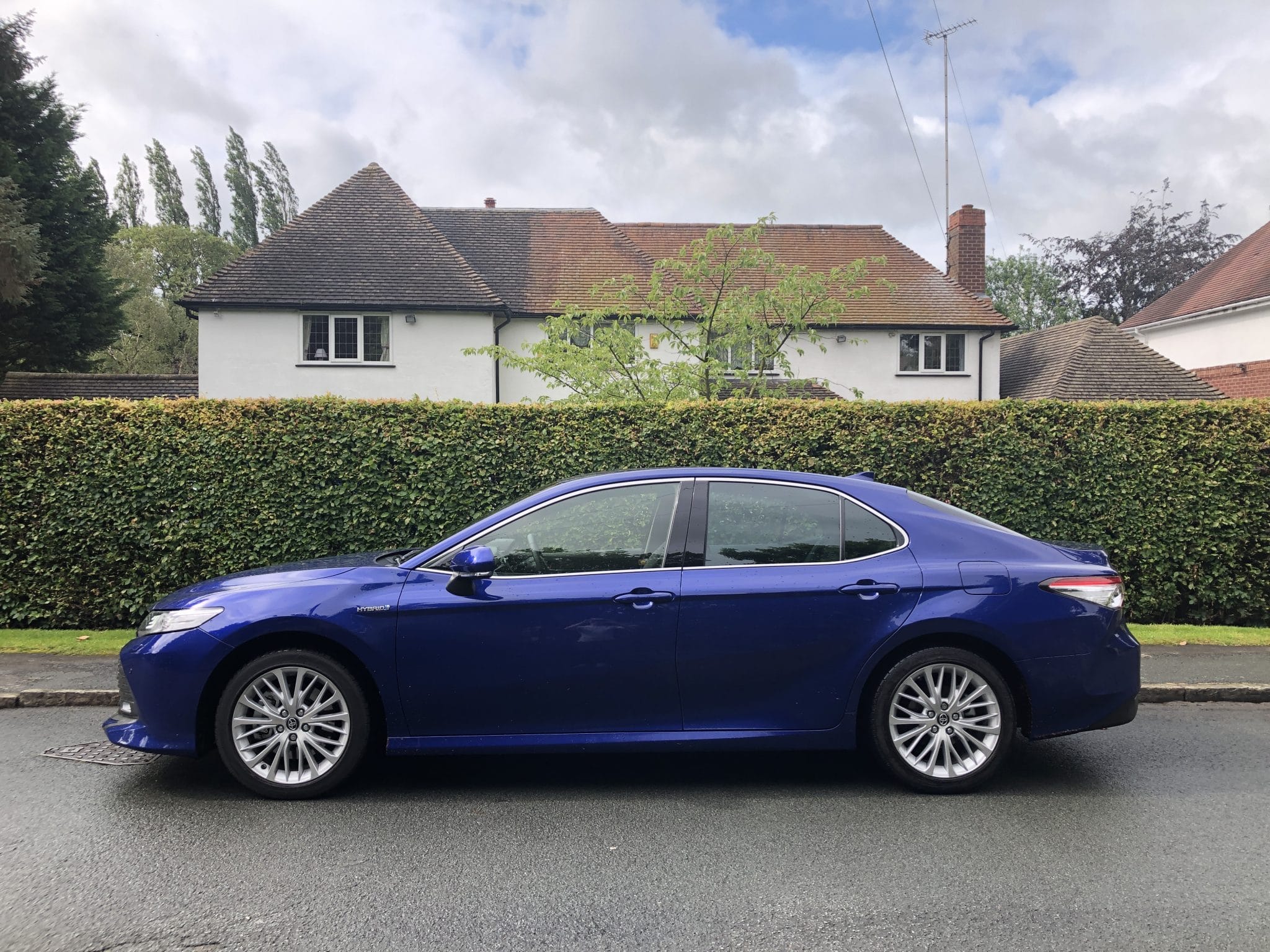
There are just two models in the Camry range. Entry level Design which costs £29,995 & the model we were testing the Excel. The Design is hardly poorly equipped, coming as it does with 17″ – 9-spoke alloys, a 7″ touchscreen with SatNav, DAB, 6 speakers, Bluetooth, a reversing camera, Adaptive Cruise Control, full leather with electric, heated front seats with power-adjustable lumbar support, privacy glass, smart entry with push button start & front & rear parking sensors. Excel adds a wireless phone charger, Intelligent Clearance Sonar with front & rear parking sensors & Rear Cross Traffic Alert.
The Camry’s interior is exceptional. The dashboard is solid & features upmarket wood & chrome finishes & top notch soft touch plastics across it’s top. Whereas Lexus model’s come with a fiddly touch pad to access the infotainment functions, the Toyota features a far simpler touchscreen which is easily reached from either front seats. Here you can select which function you want to use & there’s even a CD player ! All that’s missing is the lack of connectivity to Apple CarPlay or Android Auto. Toyota will, we are told be addressing this in due course.
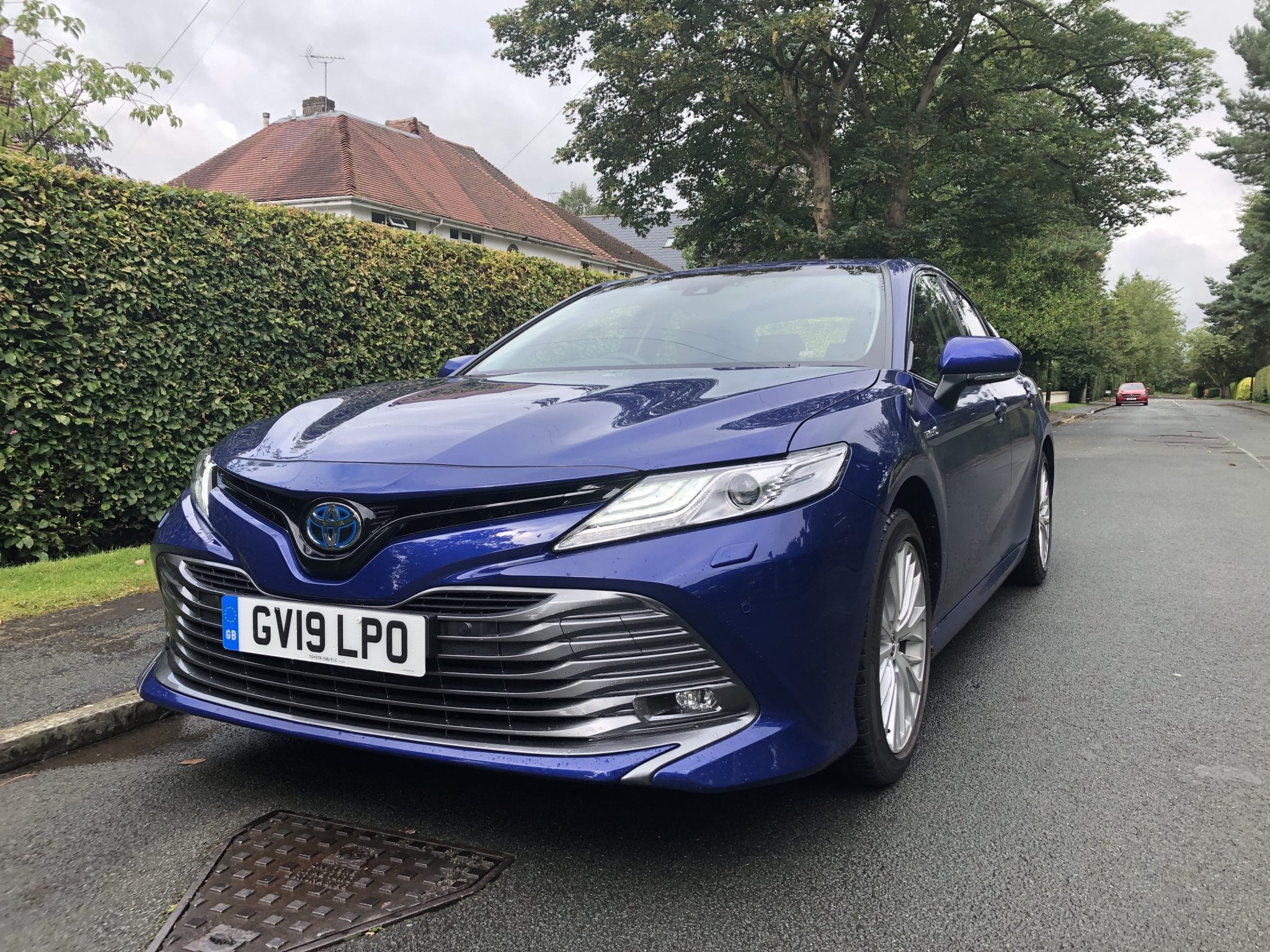
A good reason for choosing a large saloon is interior cabin space & the Camry doesn’t disappoint. The driver is cocooned by a wrap around dashboard but there’s still plenty of leg & head room, with even more space for the front seat passenger. In the rear, three adults will find enough space to sit comfortably. The boot is about average for the class coming as it does with 524 litres. Underneath the flat floor is a space saver wheel.
Cabin storage space consists of four door pockets which are relatively small, but will each take at least a single drinking bottle. A medium sized glove box, rear seat pockets, a useful covered arm rest with storage underneath, two cup holders in the centre console & two more within the fold down rear seat armrest. Our test model featured a mobile phone charger, a single USB with 12v socket up front, with two more USB connections in the centre rear.
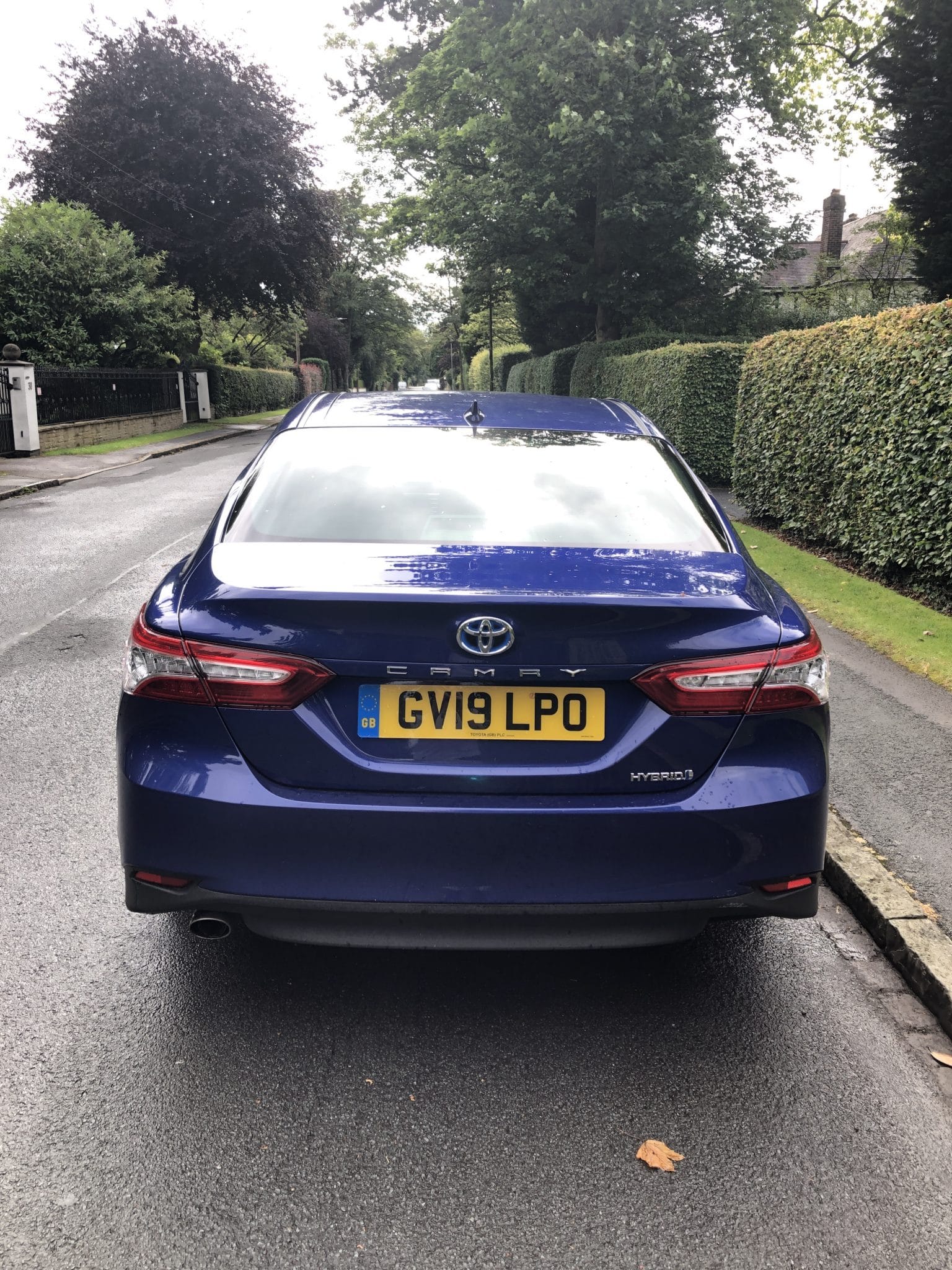
Very much like the Lexus ES, the Camry is an outstanding motorway companion & it’s on these long hauls that it really shines. It’s quiet to be in & effortless to drive, with the excellent Toyota Adaptive Cruise Control, utilised through the steering wheel buttons, further enhancing this.
Despite the ubiquitous Toyota/Lexus CVT gearbox, which can be a little frustrating, in the Camry, it actually feel’s perfectly matched with the 215bhp & 2.5 litre petrol engine working in harmony. The Camry is also quiet & refined in town. I cannot think of anything I’d rather be stuck in a city or motorway traffic jam in, than the Camry.

In the USA, Toyota sells 400,000 Camry’s annually & in a country where most drive in a straight line over long distances, this is no surprise. European customer’s favour smaller, nimble cars & until recently diesels as well, so UK sales are not expected to be huge.
Toyota see’s 80% of sales coming from the fleet sector & the Camry should do well in this area, if they can get across the BIK saving’s you’ll make if you choose one. A BIK rate of 23% means that it undercuts most of the competition. Add in a combined fuel economy of 53.3mpg & CO2 emissions of 101g/km & business customers should take note. Yes the Camry isn’t an Audi, or BMW, but it offers a decent enough tax saving if you are in the mid-range saloon sector & should not be ignored.

We spent the first few days in the Camry driving locally in town, where we still managed to average 46.3 mpg. On our one long motorway trip to Leeds & back, approximately 140 miles, this rose to a highly pleasing 55.7mpg. Add in Toyota’s famed reliability, a dealer network who are always on hand to help & it’s continued position atop the JD Power survey & choosing a Camry would not be a gamble.
If you’ve stuck with me to this point in the review, hopefully you’ll realise by now, that I really liked the Camry. Admittedly, it’s not the best looking model in the sector & wouldn’t get asked to appear on a car version of “Love Island.” And, with a top speed of 112mph & a 0-62mph time of 8.3 seconds, it won’t ruffle any feather’s.
On a positive note, the Camry is an honest car, will do a splendid job of making your daily commute incredibly relaxing , matches the equivalent diesel when it comes to mpg, ticks the hybrid box & from a company car taxation perspective, will also save you a substantial amount of money.
The new Camry is bang on trend & is the most surprisingly, in a good way, car we’ve driven this year.
An almighty fine 4/5
